
Modified Starch Solutions for Heat Stability
Build the body your product needs after processing. Explore starch selection for sauces, soups and prepared foods, matched to your recipe, heating conditions and finished-texture target.
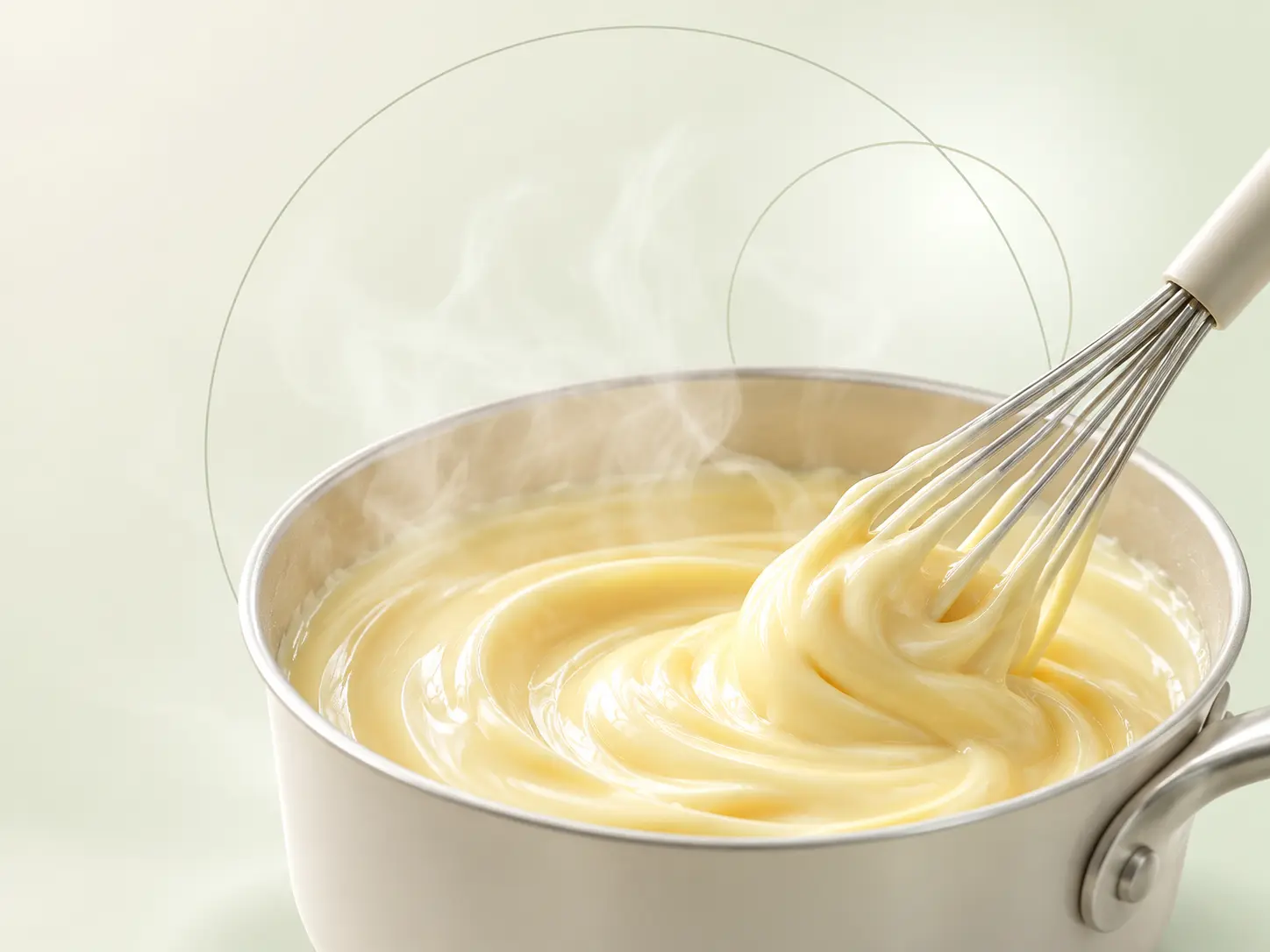
Is your product losing body during heat processing?
Identify what changes, when it changes and the conditions around it. Compare samples at a consistent measurement temperature before drawing conclusions.
Thinning during cooking
Review the temperature history, cooking time and mixing conditions. Record when the target body develops and when it begins to change.
Consistency changes during holding
Compare flow and coating at defined intervals. Include evaporation and any other changes to the formulation during the holding step.
The cooled texture misses the target
Assess final consistency, uniformity and visible lumps at the intended use temperature rather than relying on the hot sample alone.
Production differs from the bench trial
Check heating method, addition order, mixing and pumping. Match the trial to the conditions experienced by the product on the line.
Evaluate the complete heating process
Temperature, time, mechanical exposure and recipe conditions belong in the same evaluation.
- 01Dispersion
- 02Heating
- 03Holding
- 04Cooling
- 05Finished-product evaluation
Temperature & time
Record the heating curve, maximum product temperature and holding time. Include cooling when it affects the required final texture.
Mixing & pumping
Document the equipment and mechanical conditions. Consider shear resistance alongside thermal processing.
Formulation conditions
Share pH, salt, sugar, fat and other major solids. Review acid and salt conditions as part of the complete recipe.
From cooked sauces to demanding thermal processes
Use the application to define what needs to be measured. A product photograph illustrates the application; grade suitability comes from process-specific evaluation.
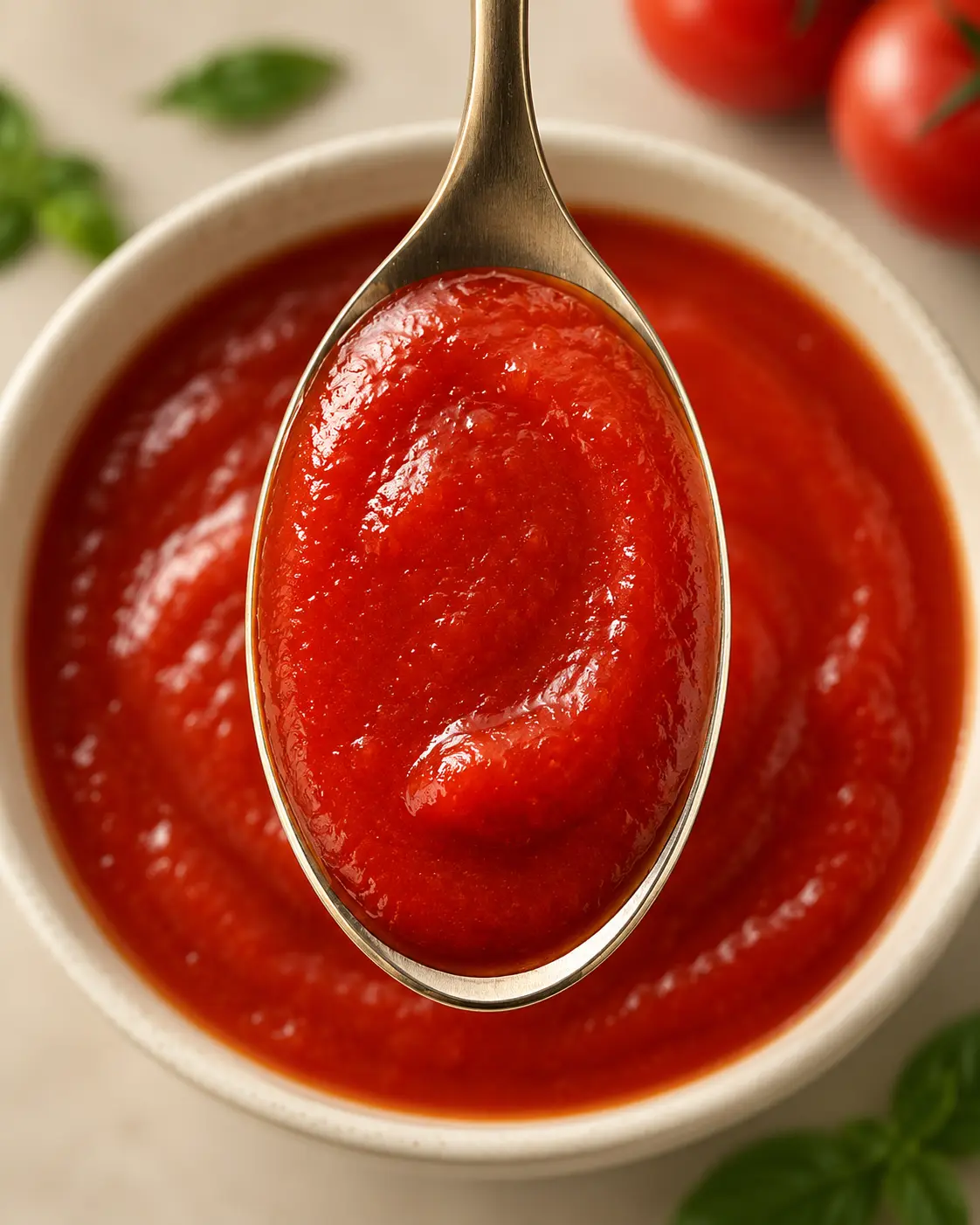
Cooked Sauces & Gravies
Evaluate body, flow and coating through cooking, hot holding and cooling in the complete seasoning formulation.
Explore sauce applications →
Soups & Prepared Meals
Review the soup or thickened phase after the real cooking and reheating process, at the intended serving temperature.
Explore prepared dish applications →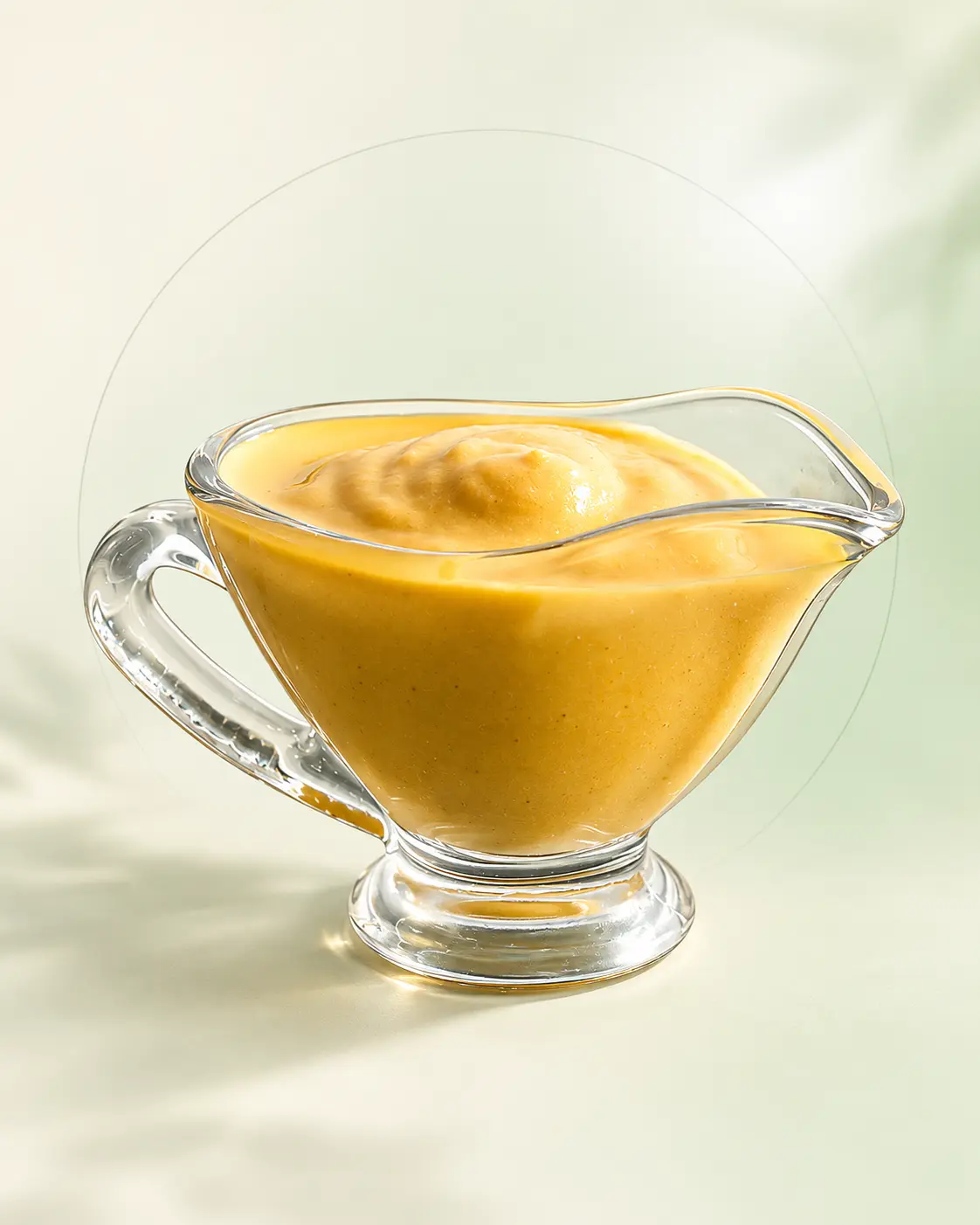
Dairy Sauces & Custards
Compare candidate grades in the complete milk-protein and fat system, including the relevant heating and cooling stages.
Explore cheese sauce applications →
Retort & High-Temperature Processes
Share the actual time-temperature-pressure history, equipment and packaging. Evaluate UHT and retort as separate processes.
Discuss your thermal process →Choose starch around your heating conditions
Share the information below to help narrow candidate grades and define a useful application trial.
| Selection factor | Information to share | What to assess |
|---|---|---|
| Application & texture | Product type, target flow and intended serving state | Relevant finished-product quality targets |
| Formulation | Starch dosage, pH, salt, sugar, fat and other major ingredients | Performance in the complete recipe |
| Heating | Heating method, maximum product temperature and time-temperature curve | Viscosity development and processing changes |
| Holding | Holding temperature, duration and agitation | Consistency throughout the holding stage |
| Mechanical processing | Mixing, pumping, homogenization and equipment settings | Combined thermal and mechanical exposure |
| Cooling & storage | Cooling method, measurement temperature and storage conditions | Texture after processing and during storage |
E1422 / Acetylated Distarch Adipate
Review available grades against your cooking process, formulation and final texture target.
View E1422 product information →E1442 / Hydroxypropyl Distarch Phosphate
Discuss grade options, preparation requirements and the application tests relevant to your thermal process.
View E1442 product information →An E-number identifies a modification type, not a universal maximum processing temperature. Confirm the specific grade, preparation requirements and suitability in your actual process.
Tianjiang’s Guide to Heat Stability Evaluation
Compare viscosity development and breakdown together, then verify the candidate in your own formulation and equipment.
Pasting comparison conditions
6% w/w starch suspension, dry basis; Micro Visco-Amylo-Graph. Values are in Brabender Units (BU). Sample percentages describe cross-linking reagent levels during preparation, not food dosage or measured cross-linking degree.
Peak = peak viscosity; breakdown = peak minus trough; final = viscosity at the end of the test. Numerical values and ± terms are retained. These comparisons do not establish retort or UHT performance.
Compare viscosity development and breakdown
| Sample | Peak | Breakdown | Final |
|---|---|---|---|
| Native normal maize | 96 ± 2.0 | 20 ± 3.0 | 144 ± 4.5 |
| Cross-linked, 0.1% reagent | 108 ± 1.0 | 3 ± 1.0 | 181 ± 1.5 |
Breakdown — mean values
Common 0–30 BU scale; ± terms appear in the table.
Read both measuresConsider viscosity development alongside breakdown.
Balance stability with target thickening
| Sample | Peak | Breakdown | Final |
|---|---|---|---|
| Native waxy maize | 237 ± 4.0 | 134 ± 3.0 | 133 ± 4.5 |
| Cross-linked, 0.1% reagent | 551 ± 13 | 95 ± 2.0 | 580 ± 11 |
| Cross-linked, 0.5% reagent | 267 ± 8.0 | 0 | 365 ± 2.5 |
Mean values; common 0–600 BU scale. PV = peak; BD = breakdown.
Zero breakdown is not the whole targetCheck the viscosity required for the application.
These pasting examples guide evaluation, not a Tianjiang grade specification or a universal product ranking. Use actual time-temperature histories, including shear, pressure and packaging where relevant, to evaluate UHT and retort separately.
Build a test plan for your process
Fix the comparison basis
Identify the reference and candidate grade. Document dosage, hydration, addition order and the complete formulation.
Reproduce the thermal history
Record actual product temperature, holding time and mechanical exposure. Match the relevant stages of your manufacturing process.
Measure the intended state
Assess body, flow, coating, uniformity and texture after consistent conditioning and at the intended use temperature.
| Evaluation area | Information to record | Comparison control |
|---|---|---|
| Preparation | Dispersion, hydration and ingredient addition order | Same preparation basis |
| Heating & holding | Product temperature curve, holding time and equipment | Comparable actual thermal exposure |
| Mechanical exposure | Mixing, pumping or homogenization conditions | Recorded equipment settings |
| Viscosity | Before/after readings, instrument and test settings | Same temperature and measurement method |
| Texture & appearance | Flow, coating, uniformity, lumps and water separation | Same observation time and conditioning |
| Cooling & storage | Cooling method and quality at defined storage intervals | Same final temperature and storage conditions |
From processing challenge to application trial
Share your process
Describe your application, current quality issue and known temperature, time and mixing conditions.
Discuss grade options
Contact Tianjiang to review candidate grades, technical information and sample requirements.
Evaluate in your formulation
Compare candidates in your actual recipe and equipment, then assess the final product against defined quality targets.
Heat-stable starch: frequently asked questions
What is heat stability in modified starch?
It is a performance requirement defined around an application and thermal process. Specify the required body, flow and final texture, together with the heating, holding and cooling conditions.
Why does viscosity change during heating?
Viscosity development and subsequent change should be considered alongside preparation, cooking duration, mechanical exposure and the recipe. Compare samples using consistent conditioning and measurement methods.
Is higher peak viscosity always better?
No. Peak viscosity is one measurement. Review breakdown, the required final body, flow and finished-product texture together before choosing a grade.
How should starch be evaluated for hot holding?
Reproduce the intended holding temperature, duration and agitation. Compare samples at defined intervals, recording evaporation or any changes in solids concentration.
Can a pasting test confirm retort or UHT suitability?
A pasting comparison alone does not confirm suitability. Evaluate the actual formulation with the relevant thermal, mechanical and packaging conditions; UHT and retort require separate process-specific assessments.
What information is needed for a recommendation?
Start with the application, current starch and dosage, recipe, heating curve, holding time, mixing and downstream steps. Include your final texture target and any known storage requirements.
Find the right starch for your heat-processed formulation
Tell us what you make and what needs to improve. Contact Tianjiang to discuss grade options, technical information and sample availability.
Prefer email? sales@tianjiangmodifiedstarch.com
Helpful details for your enquiry
- Application and current quality issue
- Current starch and dosage
- Heating temperature and holding time
- Mixing and downstream processing
- Target texture and sample needs
Not sure of every parameter? Start with what you know.