
Global Noodle Formulations
Explore wheat noodles, rice noodles, glass noodles and pasta through ingredient frameworks, forming methods and starch-system choices.

Start with the Structure and the Calculation Basis
Select the product format before choosing a starch. Classic products may need no added modified starch.
Wheat Gluten Network
Wheat protein develops through mixing, resting and forming. Evaluate dough extensibility, strand strength and cooking loss.
Rice Starch Gel
Rice noodles rely on gelatinization and setting. Amylose level, pregelatinization and cooling affect forming and strand integrity.
Isolated Starch Gel
Mung bean, sweet potato, potato and other starch blends depend on binder preparation, cooking and controlled aging.
Konjac Glucomannan Gel
Konjac is a hydrocolloid rather than starch. Its alkaline, heat-set gel requires its own formulation and process controls.
Where Starch Selection Can Make a Difference
| Product format | Starch direction | Trial focus |
|---|---|---|
| Instant noodles | Native starch 0–12 per100flour as an initial framework; compare selected modified grades | Rehydration,oil uptake,bite and cooking loss |
| Frozen cooked noodles | Grade-specific modified tapioca trials; optional native-starch bands are not modified-starch dosage specifications | Cracking,purge and texture after reheating |
| Rice noodles | Pregelatinized high-amylose starch replacement examples5/10/15%; tapioca blends depend on format | Forming,strand breakage and cooking loss |
| Long-life wet noodles | Pregelatinized/etherified candidate systems; an85:15flour/starch blend is one example | Texture after the validated preservation process |
| Frozen skins | Exploratory starch band2–10 per100flour | Cracking,skin moisture and rapid freezing |
| Classic wheat noodles and pasta | No added modified starch may be required | Respect product identity and desired bite |
Find Your Noodle Family
Search names, ingredients, hydration, forming routes or storage formats. Local names are retained for recognition.
No matching entries. Try a broader term or clear the search.
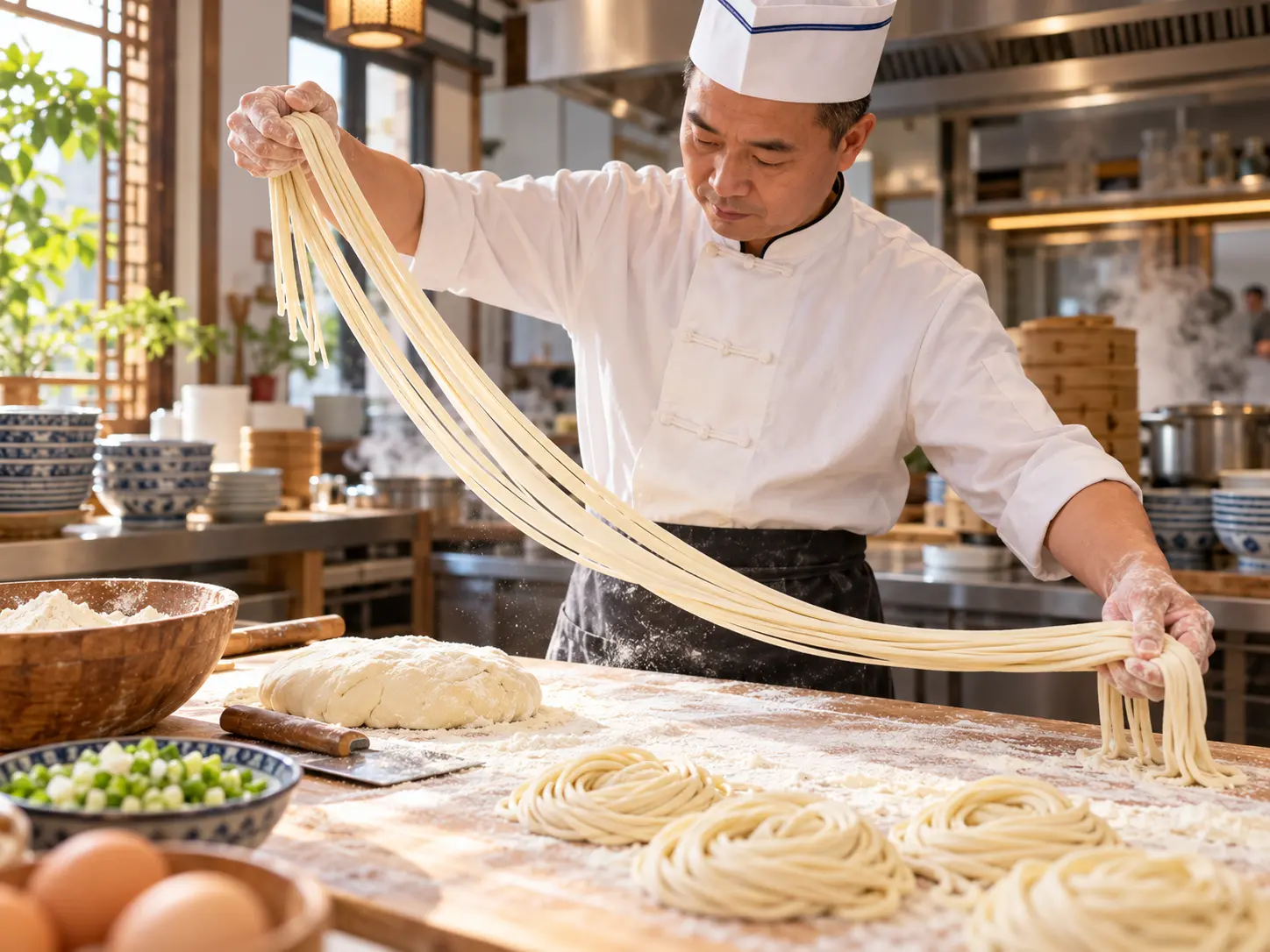
Chinese Fresh Wheat Noodles
Product directory
Chinese Fresh Noodle Base System
Parts by weight; flour = 100 unless the rows state another basis.
| Ingredient / parameter | Starting level / description |
|---|---|
| Wheat flour (protein 9.5–12.5% | Variable |
| white-flour ash about ≤0.55%) | 100 |
| Water | 33–37 (white salted model:35) |
| Salt | 1–2 |
Process & evaluation
Rest at least 20–30 minutes. Compound-sheet and reduce thickness progressively; indicative reduction per pass:30–40% maximum. Dust cut strands. Finished moisture:about32–38%.
Lanzhou Lamian · Hand-pulled
Parts by weight; flour = 100 unless the rows state another basis.
| Ingredient / parameter | Starting level / description |
|---|---|
| Medium/strong wheat flour (protein about11–13%) | 100 |
| Water | 50 |
| Salt | 1 |
| Traditional penghui alkaline ingredient | 1, incorporated as a solution after resting |
Process & evaluation
Knead and rest repeatedly for extensibility, then pull to the required width. Indicative cooking time:seconds to2 minutes. Penghui and modern food-grade alkali are not interchangeable by mass without checking composition.
Regan Mian System · Wuhan
Parts by weight; flour = 100 unless the rows state another basis.
| Ingredient / parameter | Starting level / description |
|---|---|
| Prepared alkaline noodles | 100 |
| Sesame oil | coat after precooking |
| Sesame paste topping | adjust with soy sauce and sesame oil |
Process & evaluation
Basis:prepared noodles=100. Precook firm, coat with oil, spread and cool, then briefly reheat before topping. This is a preparation framework rather than a dough formula. Control the holding conditions separately.
Alkaline and Kansui Noodles
Product directory
The Kansui System
Parts by weight; flour = 100 unless the rows state another basis.
| Ingredient / parameter | Starting level / description |
|---|---|
| Wheat flour (protein9–13%) | 100 |
| Water | 26–38 |
| Salt | 0–2 (often1–2 with alkali) |
| Alkaline salts | about0.5–1.5 |
| Dry alkaline noodle model | Na₂CO₃0.8 + NaCl2.0 + water35 |
Process & evaluation
Dissolve salts before mixing. Keep sheeted-noodle dough crumbly; rest30 minutes to several hours, then compound-sheet and cut. Indicative dough pH:9–10.5; cooking:30seconds–3minutes. Alkali blends vary; a9:1 sodium/potassium blend is only one example.
Cantonese Wonton & Bamboo-pressed Noodles
Parts by weight; flour = 100 unless the rows state another basis.
| Ingredient / parameter | Starting level / description |
|---|---|
| Wheat flour | 100 |
| Total liquid including egg | about30–35 |
| Egg | variable, traditionally duck egg |
| Kansui | small amount adjusted to target |
Process & evaluation
Egg and alkali jointly affect color, bite and surface feel. Bamboo pressing changes the forming method rather than defining a separate ingredient formula.
Japanese Non-alkaline Noodles
Product directory
Udon
Parts by weight; flour = 100 unless the rows state another basis.
| Ingredient / parameter | Starting level / description |
|---|---|
| Wheat flour (protein8–10% | Variable |
| starch amylose about22%) | 100 |
| Water | about41–50 |
| Salt | 2–4 |
| Optional potato/tapioca starch | 5–15 |
Process & evaluation
Rest about1–4hours; sheet to2.5–4mm and cut2–4mm. A brine example uses46parts of10% brine per100flour, delivering41.4water and4.6salt. Raw moisture:about35–40%. Keep optional starch distinct from the classic flour-water-salt formula.
Soba — Juwari / Ni-hachi / Commercial
Parts by weight; flour = 100 unless the rows state another basis.
| Ingredient / parameter | Starting level / description |
|---|---|
| Juwari buckwheat/wheat | 100/0 |
| Ni-hachi buckwheat/wheat | 80/20 |
| Commercial wheat fraction | 40–80% (buckwheat20–60%) |
| Juwari water | about45–50 |
| Industrial salt | 1–2 |
Process & evaluation
Pure buckwheat lacks a gluten network; hot-water mixing is one binding route. Wheat supports binding in ni-hachi. Indicative dried moisture:12–14%. Sarashina uses refined core flour; inaka uses coarser flour; cha soba includes tea. Product names and labeling require market-specific checks.
Dried Wheat Noodles
Product directory
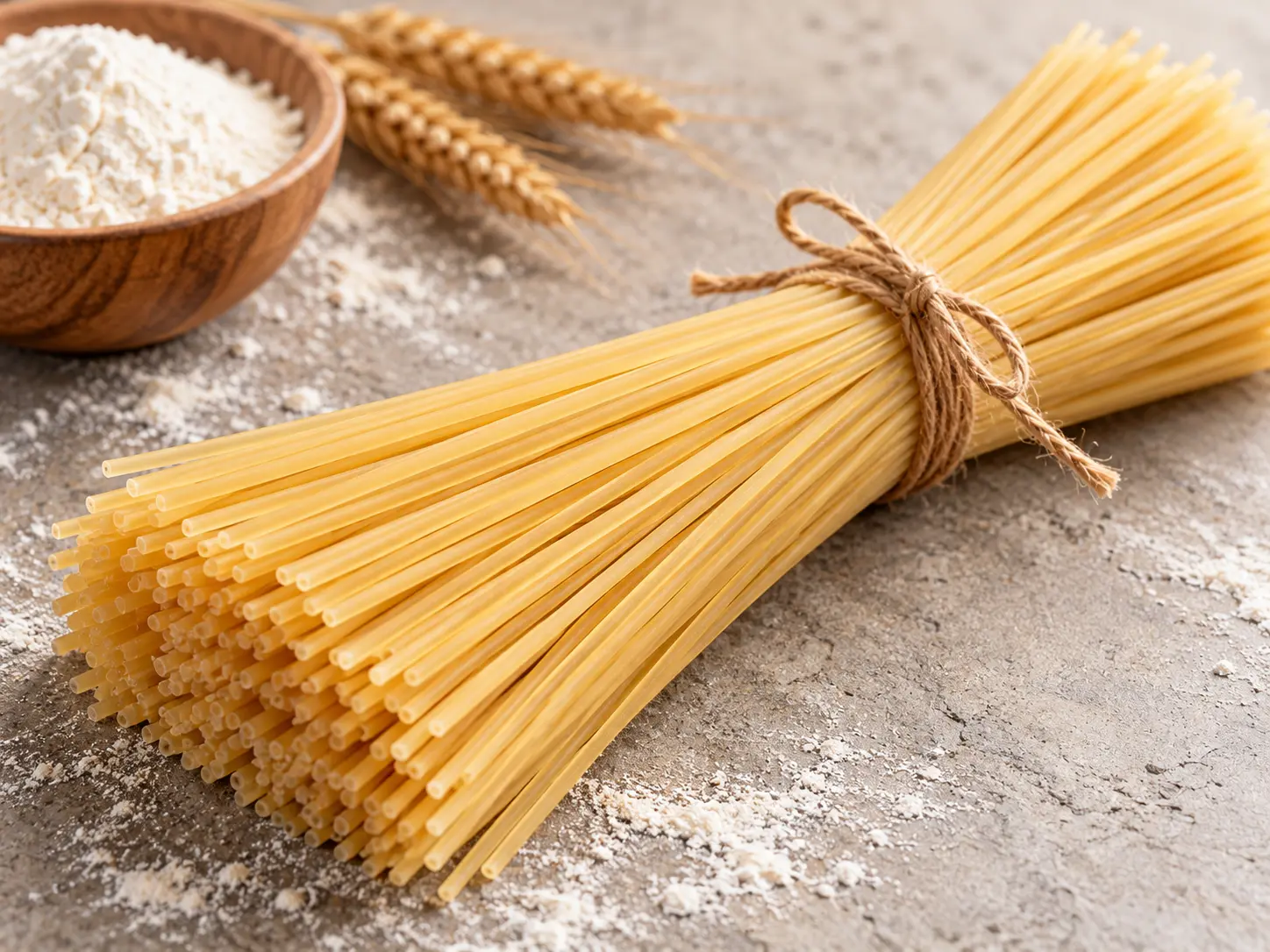
Dried Wheat Noodle System
Parts by weight; flour = 100 unless the rows state another basis.
| Ingredient / parameter | Starting level / description |
|---|---|
| Wheat flour (protein9–12%) | 100 |
| Water | 30–35 |
| Salt | 1–3 |
| Finished moisture (finished-product basis) | about10–13.5% |
Process & evaluation
Use staged drying and controlled cooling to limit cracking. Optional buckwheat blending:about10–30%. Fine misua-style noodles may use salt3–6 and cook in under1minute. Storage life depends on moisture, packaging and validation.
Egg Noodles
Product directory
Egg Noodle Framework
Parts by weight; flour = 100 unless the rows state another basis.
| Ingredient / parameter | Starting level / description |
|---|---|
| Wheat flour | 100 |
| Whole egg liquid | 20–40 |
| Water | adjust total liquid to about30–38 |
| Salt | 1–2 |
| Optional alkali | 0.2–0.5 |
| Dried egg solids in dried noodles | about3–10 |
| Traditional yolk-rich extreme | up to about30yolks/kg flour |
Process & evaluation
Count egg within liquid addition. A whole egg may weigh55–60g and contain about75% water; total egg liquid and actual water are different measures. Some no-added-water egg doughs obtain all liquid from egg.
Instant Noodles
Product directory
Instant Noodle Block — Base Framework
Parts by weight; flour = 100 unless the rows state another basis.
| Ingredient / parameter | Starting level / description |
|---|---|
| Wheat flour (protein9.5–11.5% | Variable |
| ash0.5–0.7%) | 100 |
| Water | 30–38 |
| Salt or alkaline system | 1–3 |
| Alternative low-alkali system | 0.1–0.2 |
| Starch | 0–12 |
| Dough oil | 1–3 |
| Vital wheat gluten | about2 |
Process & evaluation
Native tapioca or potato starch can be the starting starch system. Compare modified or pregelatinized alternatives only for a defined target. Phosphates, guar and alginate are other formulation options; salt and alkali entries represent alternative systems, not mandatory cumulative additions.
Instant Noodle Process Band
Mixed measures or composition framework: follow the basis stated in each row.
| Ingredient / parameter | Starting level / description |
|---|---|
| Final sheet thickness | about0.9–1.1mm |
| Steaming | about100°C for1.5–3min |
| Frying example | 145–160°C for60–90s |
| Wider frying window | 125–160°C for1–2min |
| Indicative fried oil/moisture | 17–23% oil /3–8% moisture |
| Predrying variant oil target | 11–15% |
| Non-fried staged hot-air drying | about70–120°C |
Process & evaluation
Steam to gelatinize before dehydration. One frying example is145°C/70s with about4% final moisture. Indicative hot-air final moisture:about10–12%. Confirm rehydration, oil uptake and endpoint moisture for the actual line; these are process examples, not safety schedules.
Seasoning & Oil Sachet Systems
Mixed measures or composition framework: follow the basis stated in each row.
| Ingredient / parameter | Starting level / description |
|---|---|
| Powder sachet | salt,MSG,sugar,soy sauce powder,hydrolyzed protein,yeast extract,spices,maltodextrin and optional I+G |
| Oil sachet | sesame,chili,scallion or seasoned palm oil |
| Vegetable/protein sachet | dried cabbage,carrot,scallion,soy protein,shrimp or meat |
| Multi-sachet format | kecap manis,chili sauce and flavored oil |
Process & evaluation
Composition framework only; no fixed percentages. Dry mixed noodles may use4–5sachets. Establish sodium, allergen declarations and ingredient proportions for the intended product.
Italian and European Pasta
Product directory
Dried Durum Pasta — Base Framework
Parts by weight; flour = 100 unless the rows state another basis.
| Ingredient / parameter | Starting level / description |
|---|---|
| Durum semolina | base flour |
| Mixing water | about20–30% |
| Illustrative finished moisture | 12.5% |
| Example protein range (dry basis) | 12–13% minimum |
Process & evaluation
Extrude under controlled temperature; an indicative dough limit is about50°C. Bronze dies give a rougher surface; smooth dies give a smoother finish. Drying examples:50–60°C for18–24h or longer, or75–90°C for6–10h. These are formulation/process examples, not legal specifications or shelf-life guarantees.
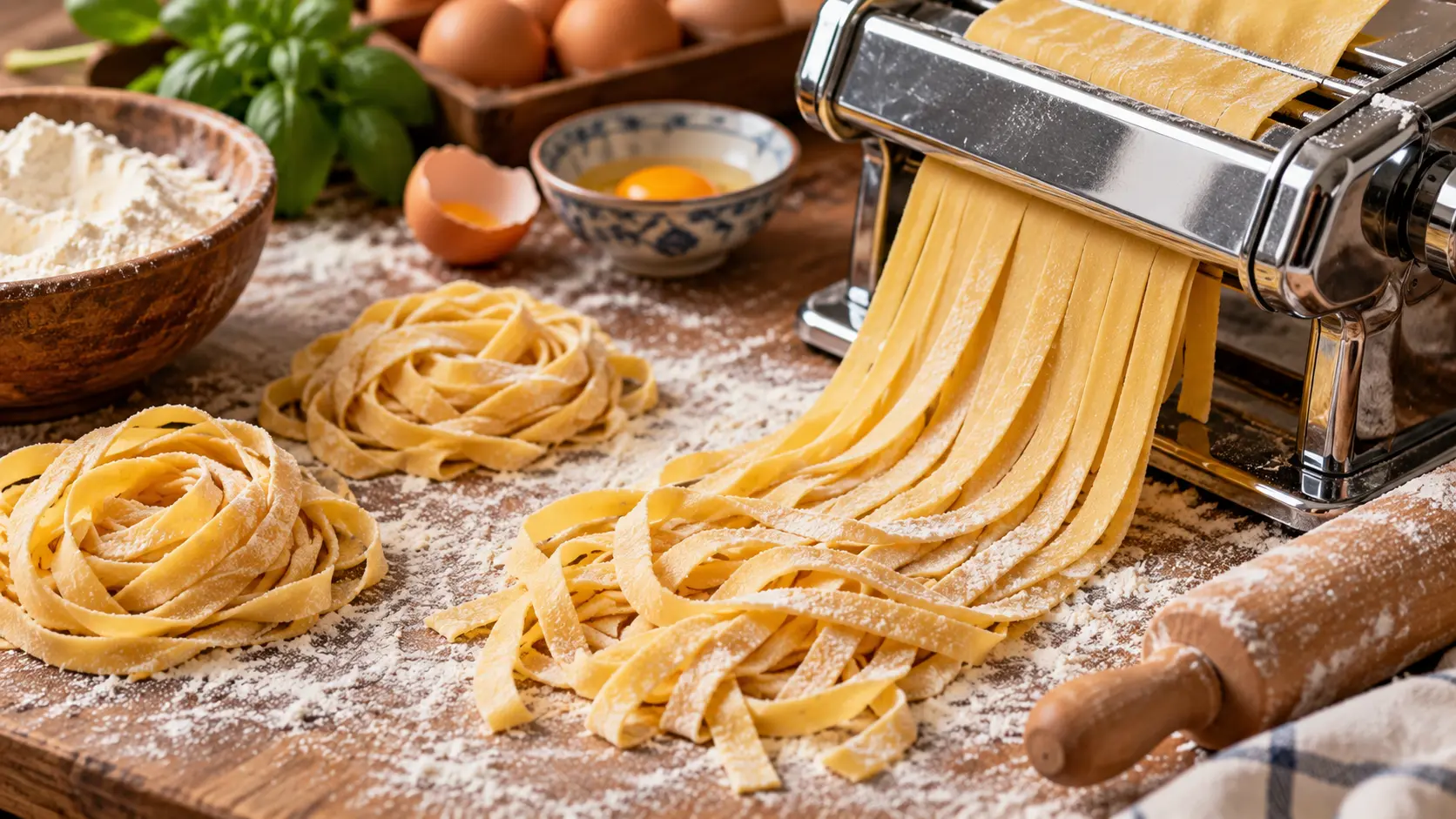
Fresh Egg Pasta
Parts by weight; flour = 100 unless the rows state another basis.
| Ingredient / parameter | Starting level / description |
|---|---|
| 00 flour or00/semolina blend | 100 (blend70:30–50:50) |
| Whole egg | about55–60 |
| Salt | often omitted from dough |
| Added water | often omitted in classic sfoglia |
Process & evaluation
Rest wrapped for about30minutes. Sheet cut pasta to about1mm; filled-pasta skins may be thinner. Indicative moisture:30–33%. Commercial chilled formats may use pasteurized egg and validated pasteurization/modified-atmosphere packaging.
Spätzle — Batter Noodles
Parts by weight; flour = 100 unless the rows state another basis.
| Ingredient / parameter | Starting level / description |
|---|---|
| Flour (traditional Dunst) | 100 |
| Egg | about50–60 |
| Water or milk | about40–60, adjusted to flow |
| Salt | about2 |
Process & evaluation
Beat to a slow-flowing batter and rest about30minutes. Press or scrape into boiling water. Total liquid addition can exceed100parts per100flour. Nokedli and galuska are related forms.
Gnocchi — Adjacent Dough
Mixed measures or composition framework: follow the basis stated in each row.
| Ingredient / parameter | Starting level / description |
|---|---|
| Cooked potato | about65–75% of dough |
| Flour | about25–35% (example300–400g perkg potato) |
| Egg | about1perkg potato |
| Dry extrusion example | durum45 / potato flakes55 |
| Example dry egg solids/salt | about3% /1% |
Process & evaluation
Keep dough mixing gentle. An extrusion example uses dough moisture31.1% and dries to7.43%; these are example endpoints. Chilled formats may use2–4°C and modified-atmosphere packaging with a validated shelf life. Potato, flour and egg ranges require normalization before batching.
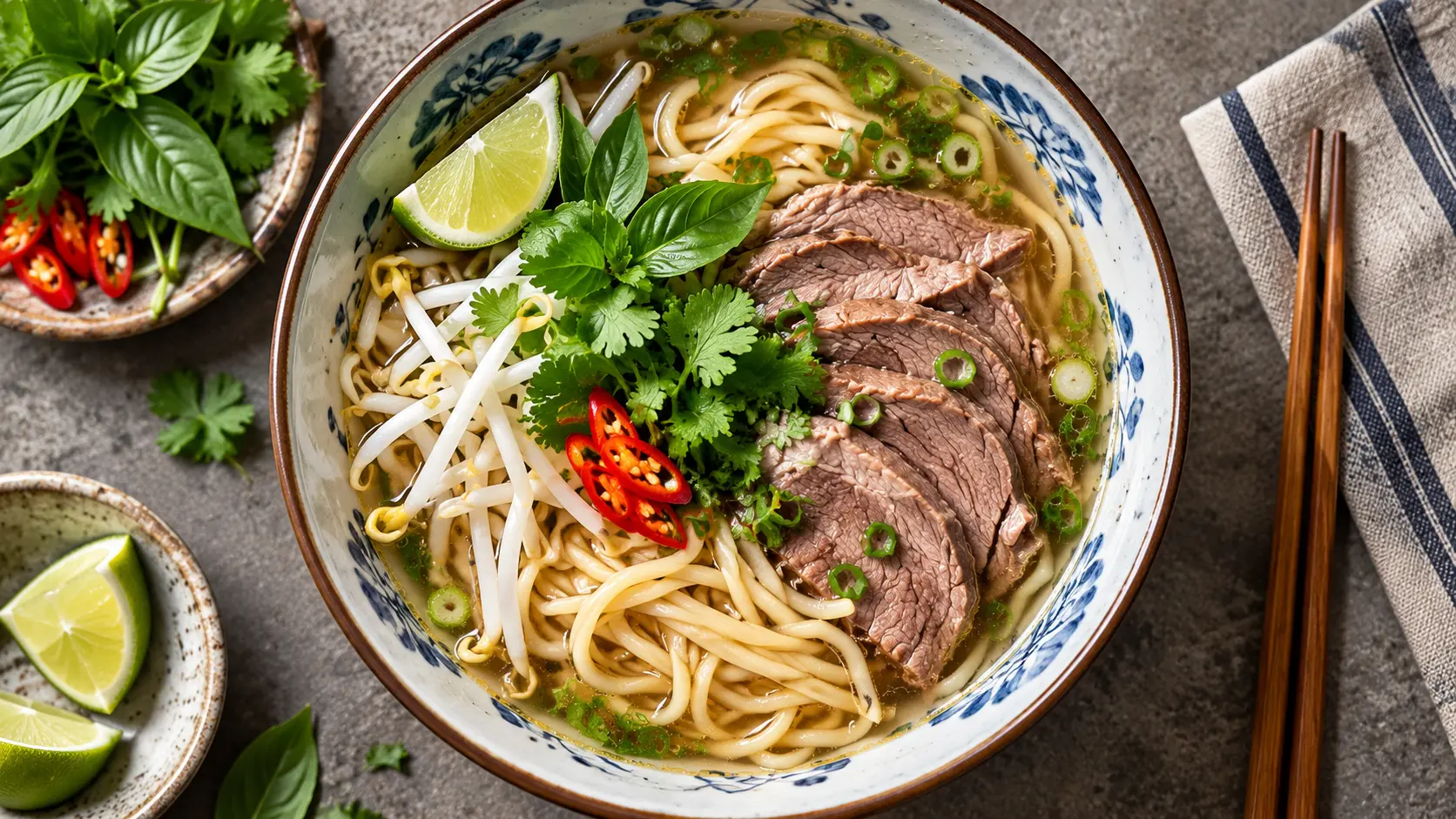
Rice Noodles
Product directory
Extruded Rice Noodles — Bún / Mixian / Mifen
Parts by weight; flour = 100 unless the rows state another basis.
| Ingredient / parameter | Starting level / description |
|---|---|
| Aged rice flour (amylose about22–28%) | 100 flour basis |
| Pre-extrusion total moisture | about30–40% |
| Binding route | pregelatinize part of rice flour or use barrel steam |
| Blend example | rice70% / corn starch25% / potato starch5% |
Process & evaluation
A30% total-moisture example uses steam gelatinization, higher-speed screw cooking and lower-speed forming. Cook, rinse and dry when required. Indicative dried moisture:10–13%. Evaluate strand breakage, cooking loss and rehydration.
Steamed-sheet Rice Noodles — He Fen / Phở Sheet
Parts by weight; flour = 100 unless the rows state another basis.
| Ingredient / parameter | Starting level / description |
|---|---|
| Rice flour | 100 |
| Slurry water | about200–350 |
| Optional tapioca starch | about5–15 |
Process & evaluation
Steam a thin slurry into sheets, lightly oil and cut. He fen strips may be3–10mm wide. Fresh sheets require controlled handling; indicative dried-strip moisture:11–13%.
Cheung Fun — Steamed Rice Rolls
Parts by weight; flour = 100 unless the rows state another basis.
| Ingredient / parameter | Starting level / description |
|---|---|
| Rice flour | 100 |
| Wheat starch and/or tapioca starch | about15–50 |
| Water | about250–350 |
| Salt | less than1 |
| Oil | about1–3 |
Process & evaluation
Basis:rice flour=100, with other starches added on top; normalize the complete blend for production. Steam sheets about2–4minutes and roll with filling. Wheat starch and tapioca alter clarity, softness and chew. Bánh cuốn and bánh ướt are related sheet formats.
Hủ Tiếu — Tapioca-cut Rice Noodle
Mixed measures or composition framework: follow the basis stated in each row.
| Ingredient / parameter | Starting level / description |
|---|---|
| Rice flour | about60–80% of dry blend |
| Tapioca starch | about20–40% of dry blend |
Process & evaluation
The higher tapioca fraction changes clarity and elastic bite. Form by extrusion and manage gelatinization, cooling and drying. Pair selected proportions to total100%.
Glass and Starch Noodles
Product directory
Glass Noodle Process Archetype
Parts by weight; flour = 100 unless the rows state another basis.
| Ingredient / parameter | Starting level / description |
|---|---|
| Dry starch | 100 |
| Pregelatinized binder portion | about5–10% of starch |
| Dough moisture | about40–50% |
| Finished moisture | about8–13% |
Process & evaluation
Cook part of the starch into a binder, mix, extrude into hot water, cook and cool. Traditional freezing/aging may take24–28h before separating and drying. One variant uses mung bean starch60/hot water40 at95°C,0.8mm strands and95°C steam for5min, followed by rinsing and5°C conditioning.
Longkou Fensi — Mung Bean Archetype
Parts by weight; flour = 100 unless the rows state another basis.
| Ingredient / parameter | Starting level / description |
|---|---|
| Mung bean starch | up to100% of starch blend |
| Alternative starch components | pea,corn or potato starch |
Process & evaluation
Manage gelatinization, aging and drying to obtain strand integrity. Ingredient choice changes gel strength and cooking behavior. Wun sen,miến and sotanghon include related starch-noodle traditions.
Dangmyeon — Sweet Potato Starch
Parts by weight; flour = 100 unless the rows state another basis.
| Ingredient / parameter | Starting level / description |
|---|---|
| Sweet potato starch | up to100% of starch blend |
| Optional blend components | corn or potato starch |
Process & evaluation
Prepare binder, extrude, cook, cool/age and dry. Dangmyeon is generally thicker and elastic; napjak describes flat wide formats. Confirm desired cooking tolerance in the actual blend.
Konjac Shirataki — Glucomannan Gel
Mixed measures or composition framework: follow the basis stated in each row.
| Ingredient / parameter | Starting level / description |
|---|---|
| Konjac glucomannan powder | about2–4% wet basis (example3%) |
| Ca(OH)₂ | example0.4–0.6% of konjac powder |
| Powder/water example range | 1:10 to1:30–40 |
| Finished water | about94–97% (example94.10%) |
Process & evaluation
KGM is a hydrocolloid, not starch or flour. Alkali and heating produce an irreversible gel. Powder-water ratios and wet-basis concentrations describe different examples and must not be combined as one formula. Wet packaging, heat treatment and storage require product validation.
Cold Buckwheat and Starch Noodles
Product directory
Naengmyeon — Two Systems
Mixed measures or composition framework: follow the basis stated in each row.
| Ingredient / parameter | Starting level / description |
|---|---|
| Pyongyang style | buckwheat with potato/sweet potato starch and sometimes wheat |
| Hamhung style | potato/sweet potato starch with variable buckwheat |
| Commercial example | wheat68%,sweet potato starch13.1%,buckwheat4.4%,salt0.4% |
| Traditional buckwheat range | about80–100% in selected styles |
Process & evaluation
Mix firm dough with hot water, press into boiling water and rapidly chill after cooking. Indicative cooking:under1minute for selected fine strands. The commercial example is partial ingredient information, not a complete100% formula. Milmyeon is a related wheat/starch style.
Central and West Asian Noodles
Product directory
Laghman — Hand-pulled, Central Asia
Parts by weight; flour = 100 unless the rows state another basis.
| Ingredient / parameter | Starting level / description |
|---|---|
| Wheat flour | 100 |
| Water | about45–55 |
| Salt | 1–2 |
| Alkali | omitted in the traditional Laghman example |
Process & evaluation
Oil and rest dough ropes, coil and stretch. Kesme is rolled and cut; reshteh is a thin salted noodle; thenthuk is torn dough. Match hydration to forming method rather than transferring one value across every style.
Frozen, Chilled and Long-life Formats
Product directory
Frozen Cooked Noodles
Parts by weight; flour = 100 unless the rows state another basis.
| Ingredient / parameter | Starting level / description |
|---|---|
| Wheat flour | 100 |
| Water | 35 |
| Salt system | NaCl1–3 |
| Alternative kansui system | 0.5–1.5 (exampleNa/K9:1) |
| Modified tapioca starch | candidate for grade-specific trials |
Process & evaluation
Cook, chill, drain, portion and freeze quickly. A small-scale example uses−40°C air to a−18°C core; a30g portion takes about60min. Store at−18°C under a validated cold chain. Laboratory freezing times do not transfer directly to industrial loads.
LL (Long-life) Noodles
Mixed measures or composition framework: follow the basis stated in each row.
| Ingredient / parameter | Starting level / description |
|---|---|
| Process sequence | cook,acid treat,seal and heat process |
| Surface-pH example | 3.5–5.5 |
| Heat-treatment example | 60–100°C |
| Ethanol in coating-oil example | 1–5% |
| Flour/starch example | 85:15 |
Process & evaluation
These values describe separate long-life wet-noodle examples, not a combined preservation recipe. Pregelatinized or etherified starch can be screened for texture after acid/heat exposure. A scheduled process and storage life require independent product and microbiological validation.
Chilled Raw Chuka — Example Framework
Parts by weight; flour = 100 unless the rows state another basis.
| Ingredient / parameter | Starting level / description |
|---|---|
| Wheat flour | 100 |
| Salt | 2.0–2.5 |
| Kansui | 0.6–0.8 |
| Oil | 0.5–2 |
| Ethanol | 2.0–3.5 |
| Sodium lactate | 1–2.5 |
| Water | 26–29 |
| Water activity example | 0.86–0.89 |
Process & evaluation
Illustrative chilled raw-noodle system. A separate semi-dried approach targets about17–30% moisture and uses ethanol3–5%. These figures are not a preservation guarantee; validate composition, water activity, packaging, temperature and microbiological performance together.
Wonton and Dumpling Skins
Product directory
Wonton & Siu Mai Skins
Parts by weight; flour = 100 unless the rows state another basis.
| Ingredient / parameter | Starting level / description |
|---|---|
| Wheat flour (protein about11–12%) | 100 |
| Water including egg | about30–35 |
| Whole egg and/or kansui | adjust to target |
| Salt | about1 |
| Sheet thickness | less than0.7mm |
Process & evaluation
Sheet, cut, dust with corn starch and stack. Alkali affects yellow color, bite and surface feel. Siu mai skins are related, often round with thinner edges. Storage depends on handling and preservation route.
Gyoza vs Jiaozi Skins
Parts by weight; flour = 100 unless the rows state another basis.
| Ingredient / parameter | Starting level / description |
|---|---|
| Japanese gyoza flour | 100 |
| Gyoza hot-water addition | about45–55 |
| Northern jiaozi cold-water addition | about50–55 |
| Jiaozi salt | 0–1 |
| Indicative skin thickness | about0.8–1mm |
Process & evaluation
Gyoza may use hot-water mixing without egg or alkali. Cold-water dough favors a different bite in boiled dumplings; partially scalded dough is another route for steamed skins. Keep the center slightly thicker when needed.
Frozen Skins — Anti-cracking
Parts by weight; flour = 100 unless the rows state another basis.
| Ingredient / parameter | Starting level / description |
|---|---|
| Crosslinked/acetylated starch screening range | about2–10 per100flour |
| Supporting controls | skin moisture and rapid freezing |
Process & evaluation
Treat the range as an exploratory trial band, not a commercial specification. Compare starch grades with moisture control, freezing rate and package protection. Evaluate cracking, cooking loss and texture at−18°C storage conditions.
Specialty and Gluten-free Systems
Product directory
Legume & High-protein Systems
Mixed measures or composition framework: follow the basis stated in each row.
| Ingredient / parameter | Starting level / description |
|---|---|
| Legume pasta base | chickpea,lentil or pea flour |
| Yellow pea noodle example | 100% pea base |
| Vital gluten reference | about2 in an instant-noodle system, variable in high-protein products |
| Other protein options | soy or egg white |
Process & evaluation
Legume flour forms through a starch-protein matrix rather than wheat gluten. Redesign extrusion and drying for the flour blend. Products containing added wheat gluten are not gluten-free.
Gluten-free Noodle Systems
Mixed measures or composition framework: follow the basis stated in each row.
| Ingredient / parameter | Starting level / description |
|---|---|
| Rice pasta | 100% rice flour route |
| Rice/corn pasta | blend with controlled gelatinization and aging |
| Optional gum/emulsifier system | indicative less than1–2%, grade-dependent |
| Fresh sheeted gluten-free dough | pregelatinized binder and/or hydrocolloids |
Process & evaluation
A gluten-free label requires ingredient and cross-contact controls, not only a flour choice. Pure buckwheat and suitable starch-noodle formulas are additional routes. Resistant-starch or low-GI positioning requires separate substantiation.
Compare the Water Ladder
| Format | Indicative addition / moisture | Basis |
|---|---|---|
| Hakata ramen | Water25–30 | Per100flour |
| Tokyo ramen | Water32–35 | Per100flour |
| Sapporo ramen | Water35–38 | Per100flour |
| Kitakata ramen | Water38–42 | Per100flour |
| Tsukemen | Water35–40 | Per100flour |
| Cantonese wonton noodles | Liquid30–35 | Includes egg liquid |
| Hokkien / Okinawa-style | Water30–35 | Per100flour |
| Sheeted fresh wheat | Water30–37 | Per100flour |
| Hand-pulled Laghman | Water45–55 | Per100flour |
| Rice sheet slurry | Water200–350 | Per100rice flour |
| Konjac wet noodles | Water94–97% | Finished-product basis |
Build a Noodle Formulation Trial Around Your Line
Define the Product and Baseline
Specify flour or starch base, strand dimensions, processing route, pack and final use. Set a reference for cooking loss, firmness, stickiness and breakage.
Change One Defined Factor
Compare selected starch grades and dosages with controlled hydration, mixing, resting, forming and cooking. Check frozen or chilled quality through the intended storage route.