TIANJIANG / BATTERS, BREADINGS & COATINGS
Crispy Fried Pork Formulation with Modified Starch
Crispy fried pork must deliver more than an attractive crust immediately after frying.Commercial products must maintain strong coating adhesion, controlled batter pickup, crisp texture, juicy pork, consistent color and low sogginess through foodservice holding, delivery, frozen storage or final reheating.Tianjiang modified starch helps manufacturers engineer the interface between pork and coating for more reliable commercial frying performance.

01 / ENGINEER THE COATING
Crispy Fried Pork for Food Manufacturers
Commercial coating performance is controlled by pork surface moisture, marinade pickup, predust, batter viscosity, starch selection, breading particle size, frying conditions and post-fry moisture migration.
Coating Adhesion
Reduce batter blow-off and breading loss during frying, packing and reheating.
Long-Lasting Crunch
Slow the transition from crispy crust to soft, moist coating during holding.
Uniform Pickup
Control coating weight from piece to piece for predictable yield and sensory consistency.
Lower Sogginess
Reduce moisture migration from the pork into the fried coating.
Frozen Reheat Stability
Maintain an acceptable crust after freezing and final consumer or foodservice reheating.
Juicy Pork Interior
Balance coating crispness with meat yield, tenderness and internal juiciness.
02 / FOUR COMMERCIAL COATING SYSTEMS
Four Crispy Fried Pork Coating Platforms
The Tianjiang platform covers Chinese-style crispy pork strips, Japanese panko pork cutlets, frozen breaded pork fritters and extra-crunch pork bites for takeaway and foodservice.

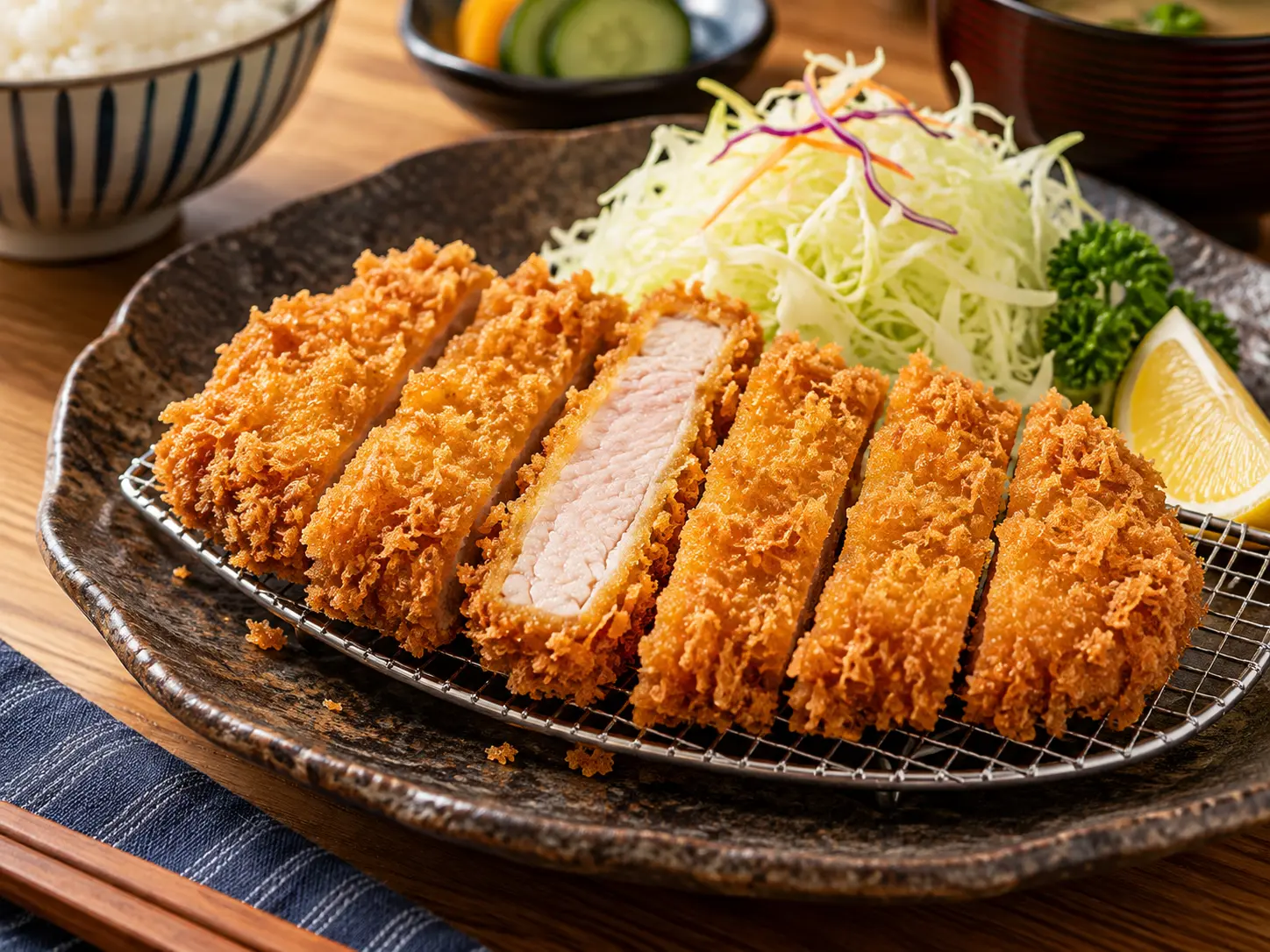
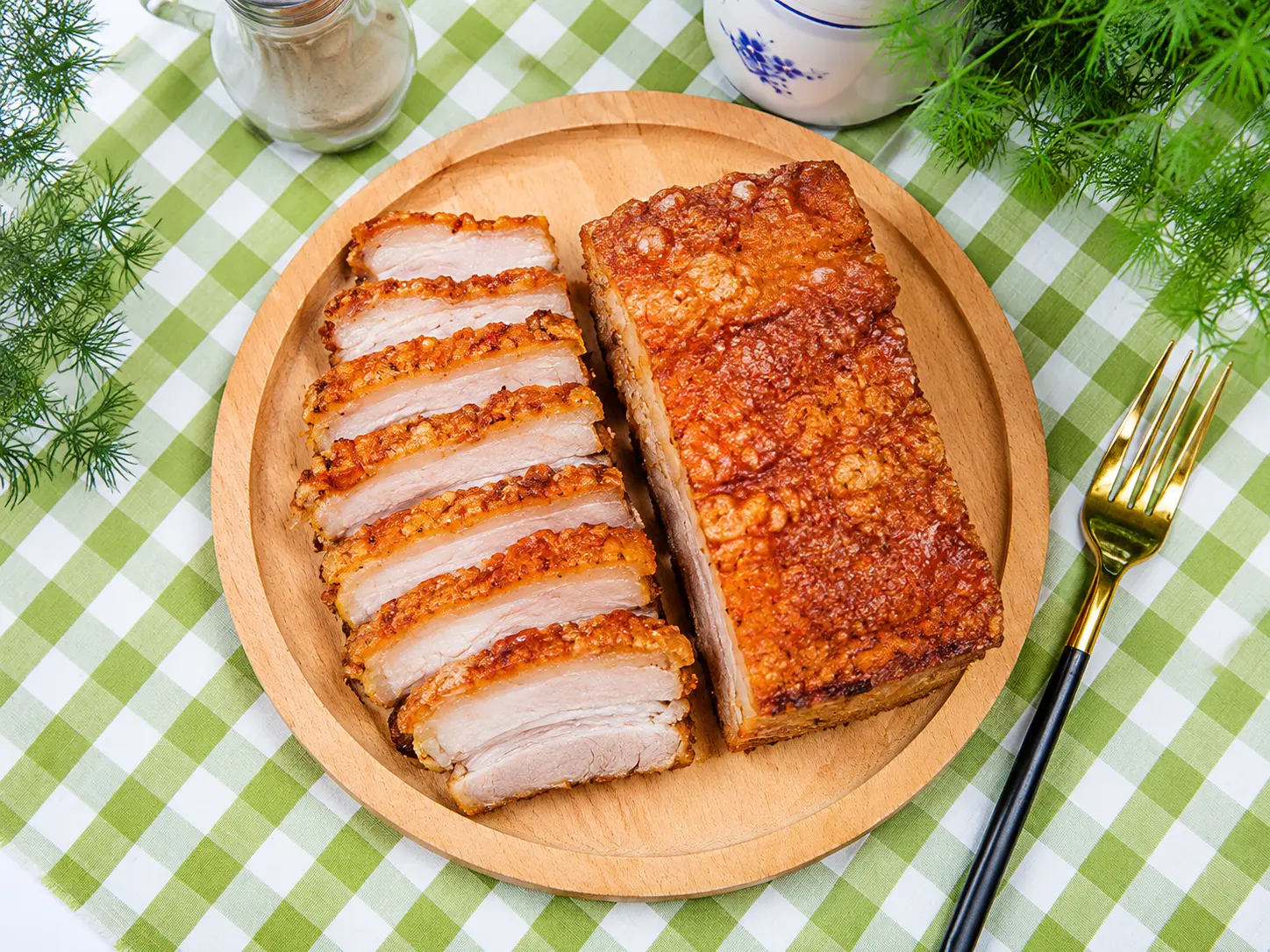
Serving reference: sliced fried pork.
Tianjiang Commercial-Scale Production Formula TJ-CFP-01Chinese-Style Crispy Pork Strips
A wet-batter coating designed for light, porous and brittle crunch with good adhesion and juicy pork strips.

Japanese Panko Pork Cutlet
An industrialized predust, binder batter and panko system based on the classic Japanese tonkatsu architecture.

Serving reference: a finished breaded pork cutlet.
Tianjiang Commercial-Scale Production Formula TJ-CFP-03Frozen Breaded Pork Fritter
A commercial frozen system for industrial pork fritters requiring uniform coating, strong adhesion and reliable final frying or reheating.
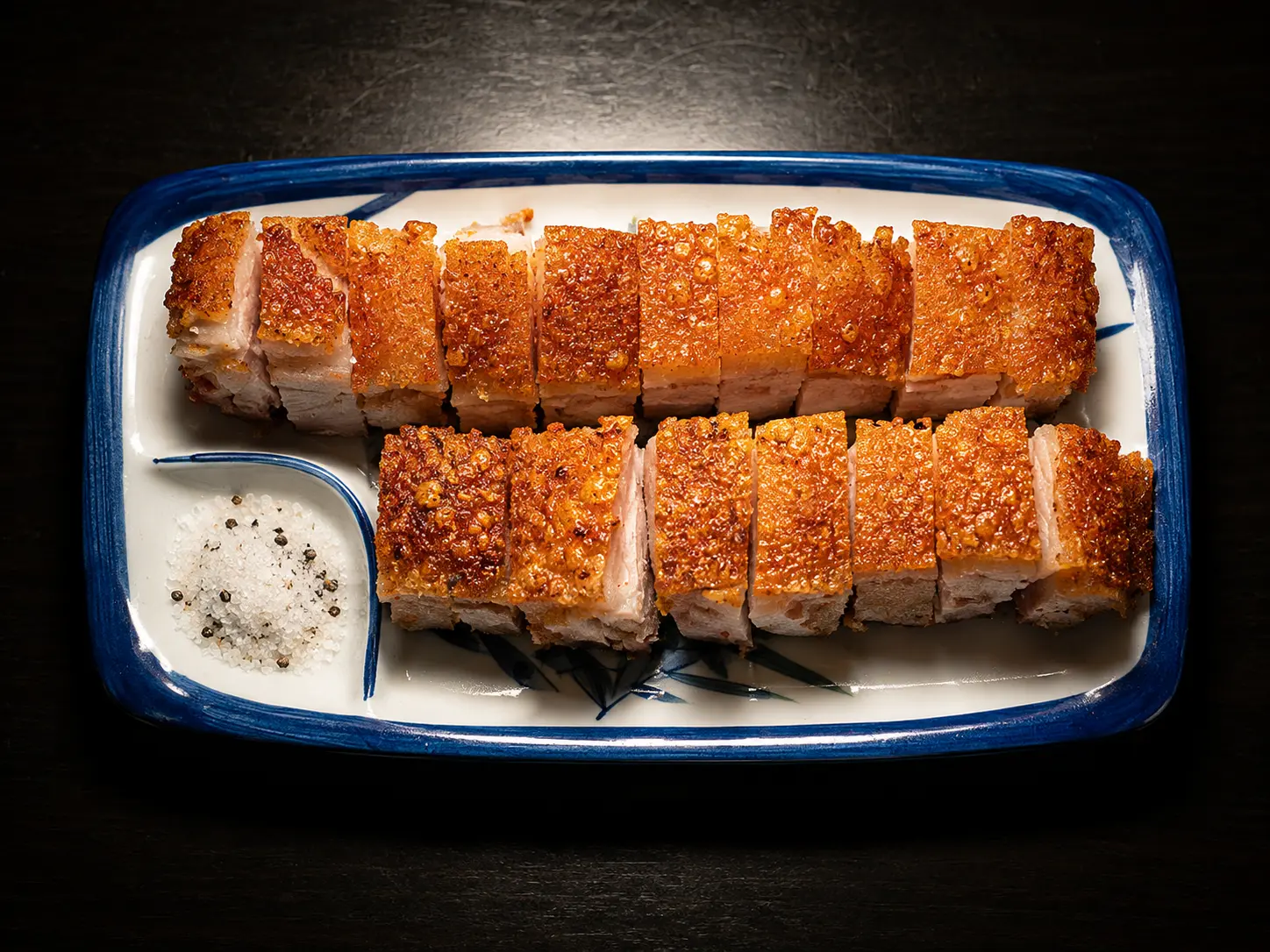
Serving reference: breaded pork pieces.
Tianjiang Commercial-Scale Production Formula TJ-CFP-04Extra-Crunch Pork Bites
A high-crispness coating for foodservice, takeaway and delivery products requiring a rough, audible crunchy crust.
These Tianjiang formulas are independently developed commercial-scale application starting points. Public commercial ingredient declarations, traditional coating architectures and starch-industry technical guidance were used to establish the application direction; no proprietary third-party percentage formula is reproduced.
03 / INDUSTRIAL COATING CALCULATOR
Crispy Fried Pork Batch & Coating Calculator
Calculate the complete coating system from raw pork through marination, predusting, wet batter, breading, modified starch consumption and estimated fried yield.
Commercial Pork Coating Production Calculator
A. Production Pickup Calculation
| Production Phase | Pickup Basis | Pickup % | Required Mass | Process Function |
|---|---|---|---|---|
| Total Coated Raw Product | Before frying | — | — | Final mass entering fryer / par-fry system |
B. Marinade Formula
| Marinade Ingredient | % of Marinade | Production Mass | Function |
|---|---|---|---|
| Total Marinade | 100.00 | — | Applied at selected pickup |
C. Tianjiang Dry Coating Blend
| Dry Blend Ingredient | Blend % | Production Mass | Primary Function |
|---|---|---|---|
| Total Dry Blend Used | 100.00 | — | Predust + wet-batter dry solids |
TJ-CFP-01 ready.
When the modified-starch level is changed, the calculator automatically replaces an equal amount of the primary flour so the dry coating blend remains exactly 100%. This allows plant trials to compare starch functionality without unintentionally increasing total coating solids.

04 / MODIFIED STARCH PERFORMANCE
Why Modified Starch Matters in Crispy Fried Pork
During frying, water inside the coating rapidly becomes steam while starch gelatinizes, protein sets and the outer layer dehydrates.The starch system helps determine whether the final coating is thin or thick, dense or porous, crisp or hard, and whether it remains attached to the meat.
Coating Adhesion
Improve the connection between pork, predust and wet batter.Film Formation
Create a continuous coating structure around the meat surface.Crisp Texture
Support brittle, crunchy structure rather than a soft flour-heavy crust.Uniform Pickup
Stabilize batter viscosity for more consistent coating weight.Moisture Control
Slow migration of internal meat moisture into the fried crust.Frozen Reheating
Suitable grades can help restore a more acceptable coating texture after frozen storage.
05 / CONTROL THE COMPLETE COATING LINE
Crispy Fried Pork Manufacturing Process
A high-performing starch cannot compensate for uncontrolled meat temperature, surface moisture, batter temperature, pickup or frying conditions.The complete coating process should be standardized before starch comparison.
-
Select Pork
Standardize cut, fat content, thickness and raw-meat temperature.
-
Portion
Cut strips, bites or cutlets to controlled dimensions.
-
Marinate / Tumble
Apply the target marinade pickup without leaving excessive free liquid.
-
Condition the Surface
Control external moisture before the predust or wet batter stage.
-
Apply Predust
Create the first adhesion layer between meat and wet coating.
-
Prepare Batter
Control dry blend, water ratio, temperature and mixing time.
-
Control Batter Pickup
Measure viscosity and pickup rather than relying only on visual judgment.
-
Apply Crumb / Panko
For breaded systems, standardize particle size, coverage and compression.
-
Allow Coating Set
Use a controlled short rest when required to improve adhesion.
-
Fry or Par-Fry
Control oil temperature, loading, time and product dimensions.
-
De-Oil / Cool
Remove surface oil and control condensation before packing or freezing.
-
Freeze & Reheat Test
For frozen products, validate coating texture after the actual commercial reheating route.
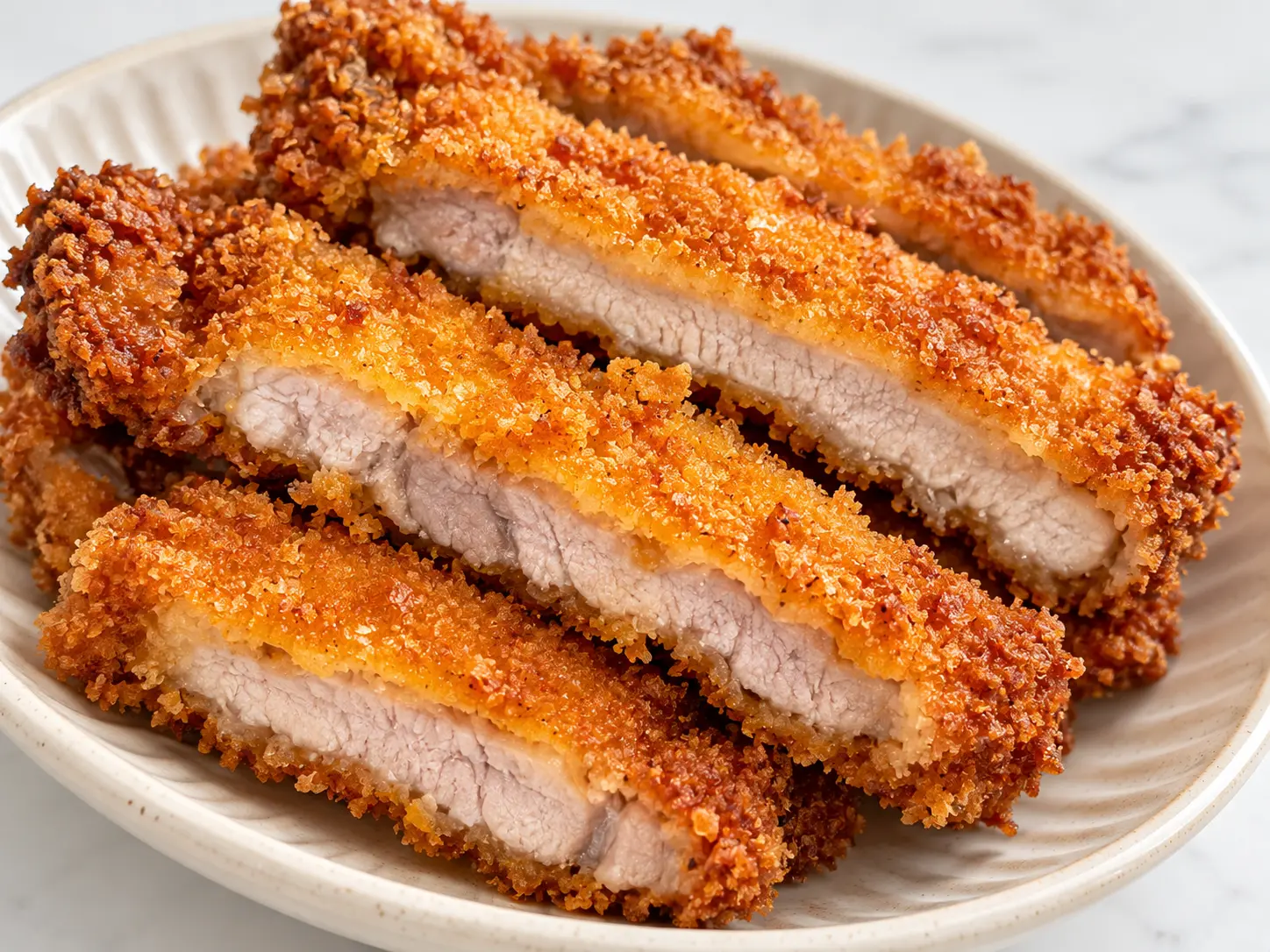
Finished Coating & Cutlet References
Finished pork cutlets illustrate breadcrumb coverage, crust appearance and serving formats for product development discussions.


06 / APPLICATION LAB
Crispy Fried Pork Coating Performance Testing
The best coating is not necessarily the crispiest sample at minute zero.Commercial testing should measure how the coating behaves during production, holding, delivery, freezing and reheating.
Coating Pickup
Measure total coating mass as a percentage of marinated meat.
Adhesion Loss
Measure coating that falls off after frying, handling and packaging.
Crunch Retention
Compare texture at 0, 30, 60 and 120 minutes after frying.
Oil Uptake
Compare surface greasiness and total oil absorption between coating systems.
Cook Yield
Measure mass retention from coated raw product to finished fried product.
Color Uniformity
Compare browning, blistering and color consistency.
Frozen Reheat Texture
Evaluate crunch after frozen storage and the intended reheating process.
Meat Juiciness
Balance a dry crisp crust with a tender, juicy pork interior.
07 / DIAGNOSE THE COATING FAILURE
Crispy Fried Pork Formulation Troubleshooting
Keep pork dimensions, meat temperature, marinade pickup, batter temperature, frying oil and frying load constant when comparing modified starch systems.
| Observation | Likely Factors | Controlled Next Trial |
|---|---|---|
| Coating falls off the pork | Wet meat surface, weak predust, low batter adhesion or insufficient setting. | Screen a Tianjiang adhesion-oriented starch while holding pickup constant. |
| Coating becomes soft quickly | Moisture migration, dense coating structure or unsuitable starch/flour ratio. | Increase the functional crisping starch fraction while reducing primary flour equally. |
| Crust is too hard | Excess dry solids, over-frying or excessive high-crisp starch. | Reduce batter solids before increasing water elsewhere in the formula. |
| Product feels greasy | Low frying temperature, poor crust setting or excessive porous oil uptake. | Standardize frying conditions before changing the starch blend. |
| Batter pickup is too high | Batter viscosity or solids may be too high. | Reduce solids or use a starch profile with more controlled viscosity. |
| Batter pickup is too low | Low viscosity, weak meat adhesion or insufficient predust. | Adjust starch functionality and predust pickup before increasing total solids. |
| Frozen product reheats soggy | Moisture migration, condensation or weak coating structure. | Screen a frozen-reheat coating starch using the actual reheating method. |
| Uneven browning | Inconsistent pickup, coating thickness, oil loading or reducing-sugar distribution. | Standardize coating mass before adjusting color ingredients. |
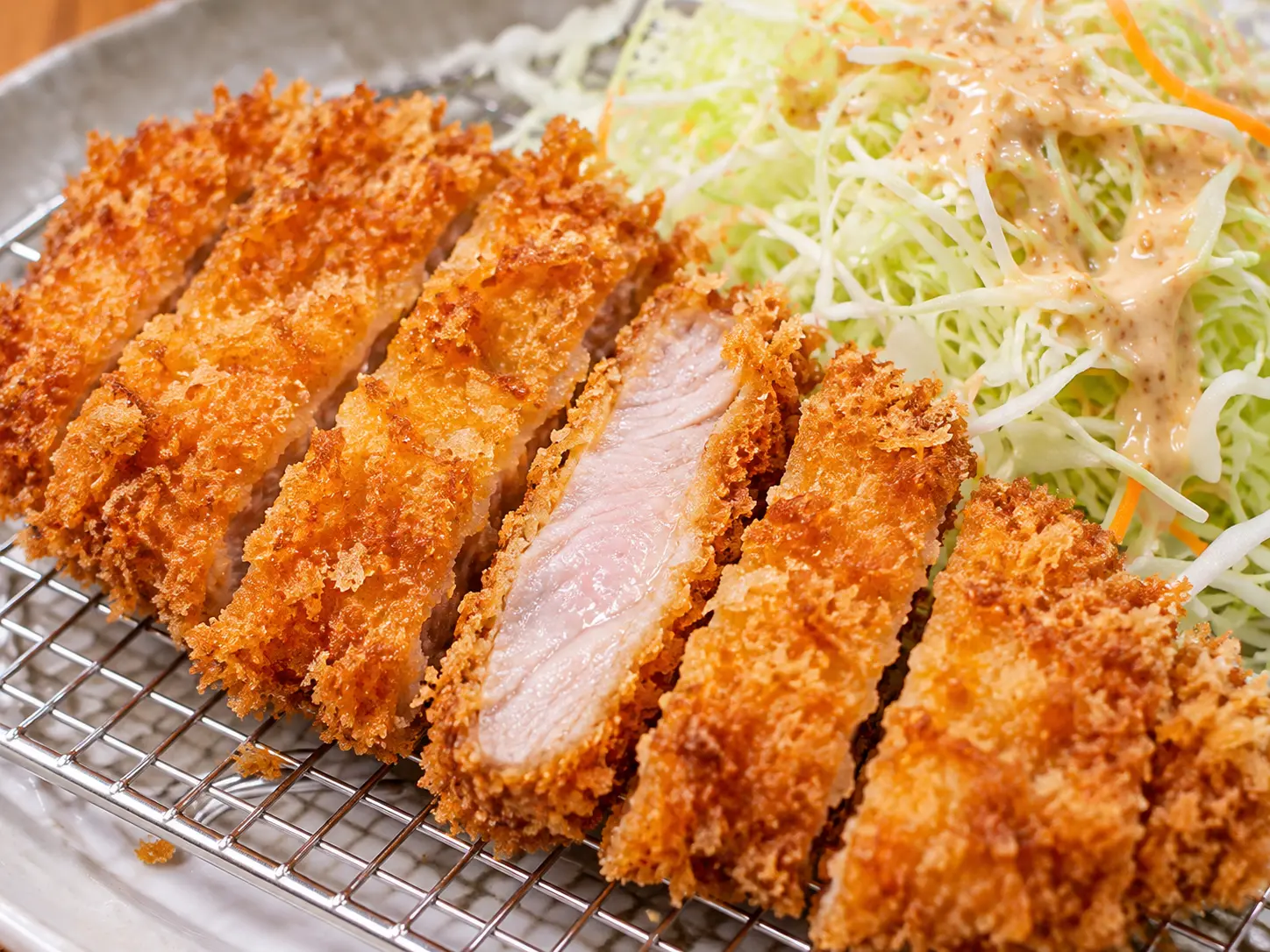
Sliced Tonkatsu & Garnish
Cutlet & Vegetable Presentation
08 / SELECT STARCH BY COATING TARGET
How to Select Modified Starch for Crispy Fried Pork
The optimum Tianjiang grade depends on whether the manufacturer needs thin crispness, heavy crunch, strong adhesion, frozen reheating or extended foodservice holding.
Adhesion Grade
For coatings that separate from pork during frying or handling.
Long-Hold Crispness Grade
For foodservice, takeaway and delivery products requiring longer texture retention.
Thin-Film Crisp Grade
For lighter coatings requiring a thin, brittle and clean bite.
Frozen Reheat Grade
For frozen breaded pork requiring improved coating texture after final reheating.
Modified Tapioca Starch
Suitable grades can support light porous crunch, adhesion and flexible coating structure.
Modified Corn Starch
Suitable grades can provide film formation, coating integrity and firm crisp structure.
09 / TECHNICAL QUESTIONS
Crispy Fried Pork FAQs
Application guidance for fried-food manufacturers, prepared-food factories, foodservice suppliers, R&D teams and modified-starch buyers.
Why Is Modified Starch Used in Crispy Fried Pork?
Suitable modified starch can improve coating adhesion, batter pickup, film formation, crisp texture and texture retention after frying.
Which Starch Is Best for Crispy Fried Pork Batter?
The best starch depends on the desired coating.Modified tapioca starch can be screened for lighter, crisp and porous coatings, while suitable modified corn starch can be evaluated where stronger film formation and coating integrity are required.
Why Does Fried Pork Become Soggy?
Moisture migrates from the hot pork interior into the dry crust after frying.Coating structure, starch type, batter solids, frying conditions and holding environment all affect how quickly crispness declines.
How Can Batter Adhesion Be Improved?
Control meat surface moisture, use an appropriate predust, maintain stable batter viscosity and select a starch with suitable adhesion and film-forming functionality.
Can Modified Starch Improve Frozen Breaded Pork?
Suitable modified starch can be screened to improve coating integrity and reheated texture in frozen breaded pork systems. The complete freeze-and-reheat cycle should be included in the plant trial.
Does More Modified Starch Mean More Crispness?
Not necessarily.Too much functional starch can make the crust hard, brittle or unbalanced.The starch level should be optimized together with flour, water, batter solids and coating pickup.
What Information Should I Send Tianjiang?
Provide the pork cut, piece size, marinade pickup, predust, batter composition, batter solids, coating pickup, frying conditions, holding target, freezing system and final reheating method.
10 / TALK TO TIANJIANG
Develop Your Next Crispy Fried Pork Formula
Send Tianjiang your current batter, predust, breading and processing conditions.Our application team can help screen a modified-starch grade for stronger adhesion, longer crispness, controlled pickup or frozen reheating.