
TIANJIANG / INSTANT RICE NOODLES FORMULATION
Instant Rice Noodles Formulation with Modified Starch
This instant rice noodles formulation platform uses Tianjiang modified starch to help manufacturers achieve faster rehydration, greater strand elasticity, lower breakage, controlled water absorption, reduced mushiness and consistent texture through steaming, extrusion, drying and consumer preparation.

01 / DEFINE THE FINAL RICE NOODLE
Instant Rice Noodles Solutions for Manufacturers and R&D Teams
The starch system must be selected together with rice variety, amylose level, particle size, pre-gelatinization, strand geometry, drying method and target preparation time.
Fast Rehydration
Allow hot water to penetrate rapidly without creating an over-soft surface.
Low Breakage
Improve strand integrity during drying, transport and consumer preparation.
Elastic Texture
Develop a resilient bite instead of a brittle or paste-like texture.
Reduced Mushiness
Control excessive water absorption during soup contact and hot holding.
Clean Strand Separation
Reduce adhesion and clumping after rehydration.
Drying Stability
Maintain structure through hot-air drying, steaming or instantization.
02 / FOUR GLOBAL RICE NOODLE DIRECTIONS
Four Instant Rice Noodles Formulation Platforms
The platforms cover thin cup rice vermicelli, flat pho-style noodles, whole-grain rice ramen and instant fresh rice noodles.
Images illustrate rice noodle formats and serving ideas. Ingredient composition, rehydration time and texture targets should be confirmed through formulation and production trials.

Thin Instant Rice Vermicelli
A thin, quick-preparation noodle designed for cup soups and short hot-water rehydration cycles.

Flat Pho-Style Instant Rice Noodles
A wider flat noodle designed for smooth texture, clean strand separation and stability in hot broth.
Brown Rice & Millet Rice Ramen
A whole-grain, gluten-free platform designed to improve strand integrity and reduce sticking in higher-fiber noodles.

Instant Fresh Rice Noodles
A high-moisture ready-meal platform designed for low breakage, elasticity and rapid reheating.

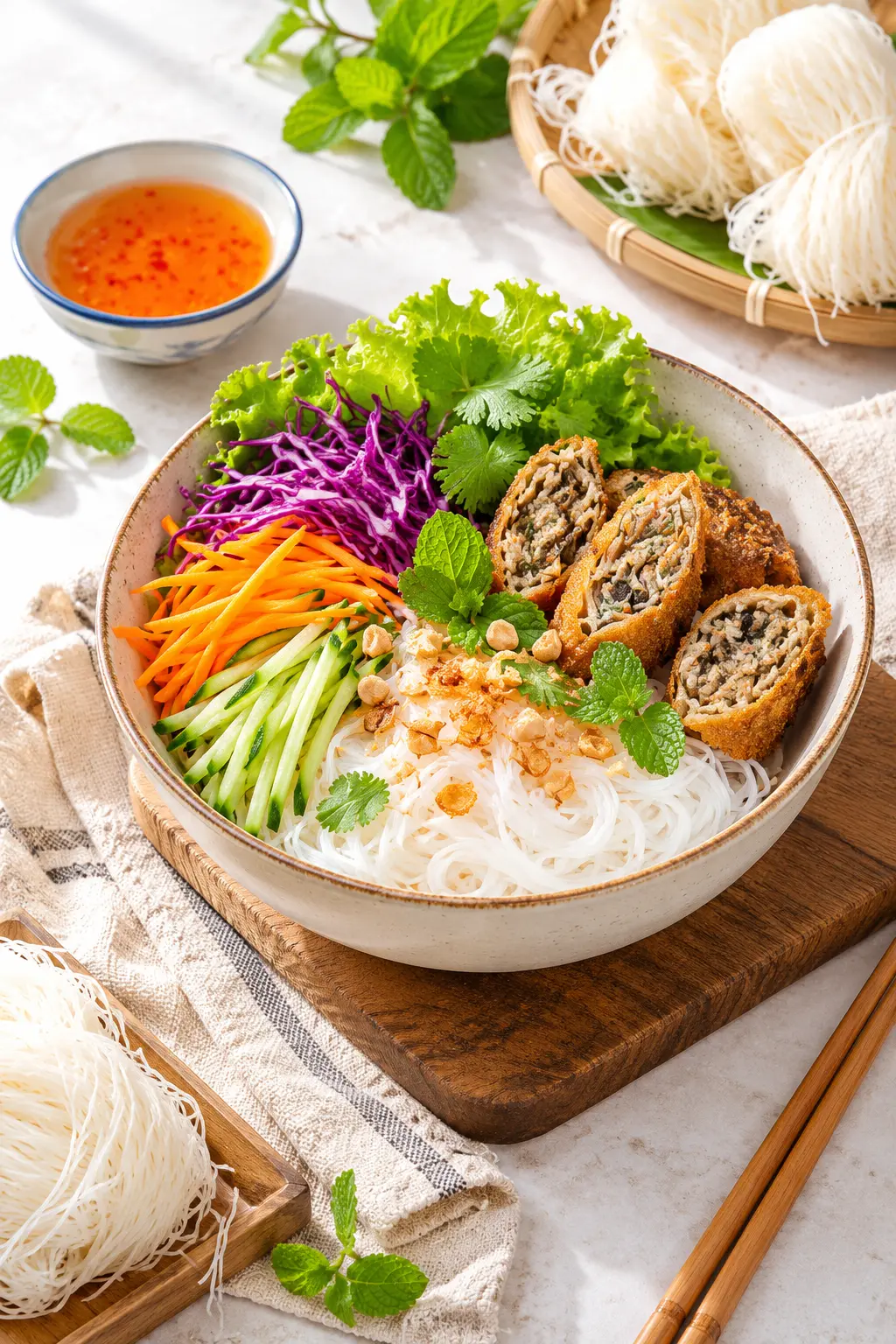
Vegetable Rice Noodle Serving Inspiration
Explore a finished noodle dish with vegetables as a serving reference. Color and appearance alone do not establish the rice variety or grain composition.
These are independent Tianjiang application-development formulations. International commercial products and published rice-noodle processing research were used to identify relevant ingredient and processing strategies; third-party proprietary formulas were not reproduced.
03 / TIANJIANG COMMERCIAL PRODUCTION FORMULA
Tianjiang Instant Rice Noodles Production Formulas
Select a rice-noodle platform, enter the required wet-mix batch and compare Tianjiang modified-starch dosage.
Instant Rice Noodles Formulation Batch Calculator
Formula values are expressed relative to 100 parts rice flour. Water should be fine-tuned according to rice particle size, amylose level, extruder or sheeting process and target strand dimensions.
| Ingredient | Parts | Batch Mass, kg | Primary Function |
|---|---|---|---|
| Total Wet Mix | — | 100.000 | Production mix |
TJ-IRN-01 · 100 kg wet mix · 12.00 parts Tianjiang modified starch.
When comparing starches, keep rice flour lot, final moisture, strand dimensions, gelatinization degree and drying profile constant.

04 / MODIFIED STARCH PERFORMANCE
How Modified Starch Improves Instant Rice Noodles
Rice noodles rely primarily on a starch gel network. Tianjiang modified starch can therefore influence the structure more directly than it does in a gluten-based noodle.
Elasticity
Support a resilient gel network and flexible strand.Breakage Reduction
Improve structural integrity during handling, drying and rehydration.Water Absorption Control
Balance rapid hydration with resistance to excessive swelling.Reduced Mushiness
Help maintain bite and structure during hot soup holding.Strand Separation
Support a smoother surface with reduced post-cook adhesion.Process Tolerance
Select stabilized grades for steaming, extrusion, thermal treatment and drying.
05 / COMMERCIAL MANUFACTURING
Commercial Rice Noodle Processing Routes
Instant rice noodles may be produced through extrusion, sheeting or slurry-based systems. The exact sequence should match plant equipment.
-
Standardize rice flour
Control particle size, amylose level and initial moisture.
-
Dry-blend starch
Uniformly disperse Tianjiang modified starch and other dry ingredients.
-
Hydrate
Add water gradually to reach the required dough, paste or slurry consistency.
-
Pre-gelatinize
Apply steam, hot water or extrusion heat to build initial starch structure.
-
Form the noodle
Extrude, sheet or cut to the required strand geometry.
-
Set the gel network
Steam or cook to reach the required gelatinization degree.
-
Condition & dry
Control cooling, retrogradation and hot-air drying according to product format.
-
Rehydration validation
Test the finished noodle under the consumer's actual preparation conditions.
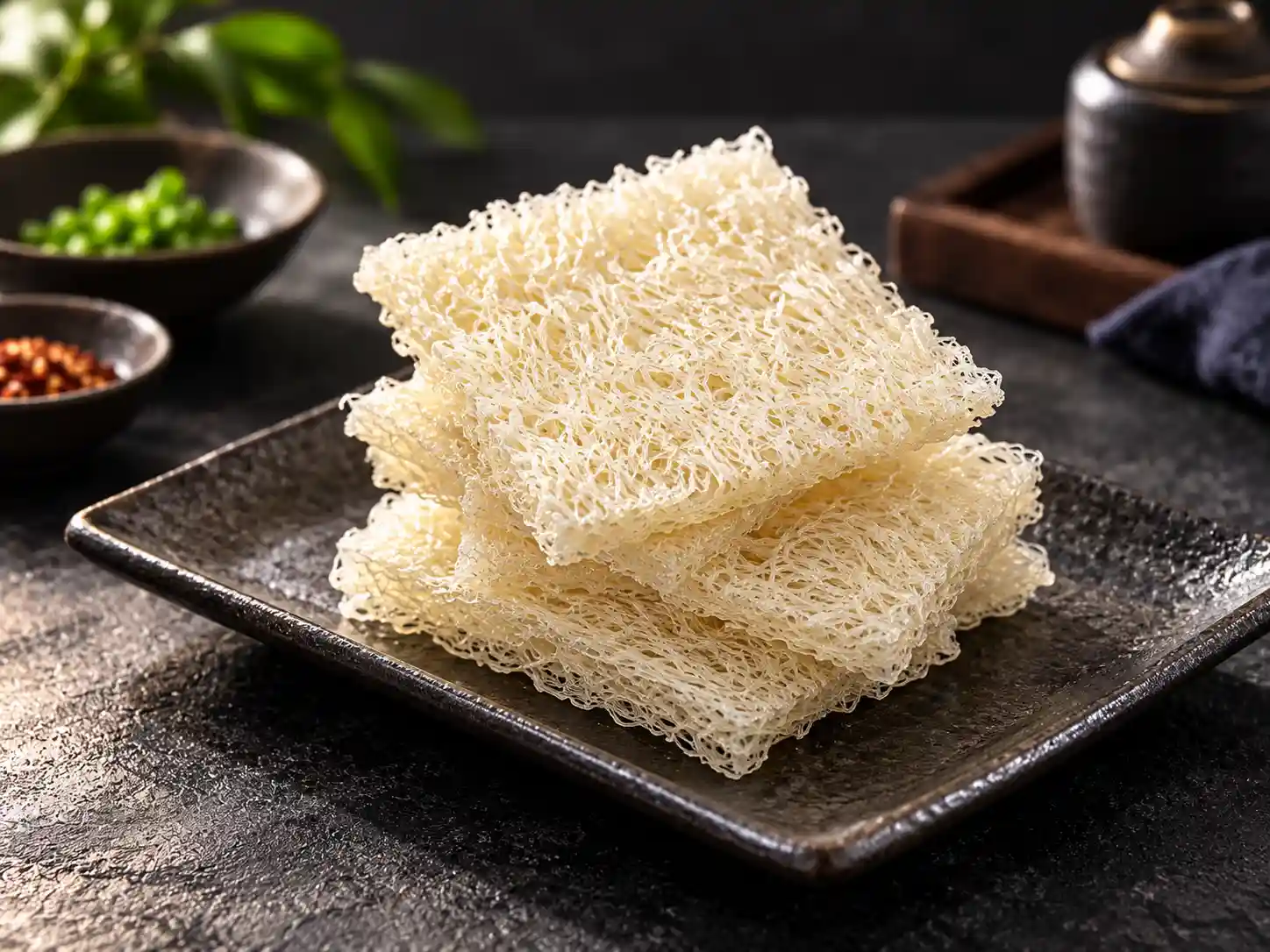
Dry Rice Noodle Formats & Strand Detail
Compare tray presentations, vermicelli nests and dry strands. These product photographs provide visual references alongside the processing guide.


06 / MEASURE THE FINAL NOODLE
Rehydration, Breakage and Texture Performance
A successful trial should evaluate both processing stability and the final noodle after the intended rehydration cycle.
Rehydration Time
Measure the time required to eliminate a hard or ungelatinized core.
Breakage Rate
Measure intact-strand retention after preparation.
Tensile Strength
Compare strand strength and extensibility after standardized hydration.
Hot-Hold Stability
Retest the noodle after extended broth contact.
07 / DIAGNOSE THE FAILURE
Instant Rice Noodles Formulation Troubleshooting
Do not adjust starch before standardizing rice flour, gelatinization, strand dimensions, drying and final moisture.
| Problem | Possible Factors | Recommended Trial |
|---|---|---|
| Rehydration is too slow | Insufficient gelatinization, dense structure, thick strands or unsuitable drying. | Standardize thickness and thermal treatment before increasing starch. |
| Noodles break easily | Weak gel network, poor starch compatibility, over-drying or excessive mechanical stress. | Screen a more elastic modified tapioca starch. |
| Noodles become mushy | Excessive swelling, weak thermal stability or excessive rehydration. | Evaluate a stabilized or cross-linked starch. |
| Noodles stick together | Surface starch release, insufficient gel setting or excessive moisture. | Compare starch blend and cooling conditions. |
| Flat noodles tear | Low flexibility, uneven sheet thickness or weak gel network. | Increase elasticity before increasing hardness. |
| Whole-grain noodles are brittle | High fiber, low binding or insufficient hydration. | Compare TJ-IRN-03 with optimized water. |
| Fresh rice noodles break after sterilization | Thermal damage, weak gel network or uncontrolled retrogradation. | Screen TJ-IRN-04 and standardize conditioning time. |
| Texture collapses in soup | Excess water uptake or insufficient processing tolerance. | Use a more stable modified-starch system. |
08 / SELECT STARCH BY PRODUCT FORMAT
How to Select Modified Starch for Instant Rice Noodles
Share rice variety, amylose level, processing route, strand dimensions, drying conditions and target preparation time so Tianjiang can screen the appropriate starch.
Fast-Rehydration Grade
For thin instant noodles and short hot-water preparation.
Elasticity Grade
For brittle strands requiring greater flexibility and tensile strength.
Hot-Hold Grade
For noodles that must remain resilient during extended soup contact.
Modified Tapioca Starch
A strong candidate for elasticity, smooth texture and flexible strands.
Modified Potato Starch
Can be evaluated for water absorption, springiness and resilient bite.
Thermal-Stable Grade
For instant fresh noodles, sterilized products and severe thermal processing.
09 / STANDARDIZE EVERY TRIAL
Instant Rice Noodles Formulation and Quality Testing
Compare starch candidates using identical rice flour, gelatinization, strand dimensions, final moisture and preparation conditions.

Prepared vermicelli serving reference. Cooking loss, breakage and tensile strength require product-specific measurements.
Final Moisture
Measure before packaging.Rehydration Time
Use fixed water temperature and volume.Breakage Rate
Count intact strands after preparation.Tensile Strength
Measure strength and extensibility.Cooking Loss
Measure solids released into water.Hot-Hold Texture
Retest after extended soup contact.
10 / R&D TO PURCHASING
Modified Starch Specifications for Instant Rice Noodles Purchasing
Once the candidate starch passes plant trials, convert the result into a repeatable ingredient specification.
Exact Grade
Confirm Tianjiang product code and dosage.Botanical Source
Confirm tapioca, potato, corn or other source.Modification Type
Confirm functional and regulatory identity.Application Target
Specify rehydration, elasticity, breakage and hot-hold requirements.Representative COA
Confirm relevant incoming quality parameters.Commercial Planning
Confirm sample size, MOQ, packing, lead time and expected consumption.

11 / TECHNICAL QUESTIONS
Instant Rice Noodles Formulation FAQs
Technical guidance for rice noodle manufacturers, R&D teams and ingredient buyers.
Why Is Modified Starch Used in Instant Rice Noodles?
Suitable modified starch can support elasticity, strand integrity, controlled water absorption, rapid rehydration and resistance to mushiness.
How Much Modified Starch Is Used in Instant Rice Noodles?
The Tianjiang development platforms on this page use approximately 8–15 parts modified starch per 100 parts rice flour. The optimum dosage depends on rice variety, starch grade, processing route and product format.
Why Do Instant Rice Noodles Break Easily?
Rice noodles contain no wheat gluten network, so breakage can result from weak starch-gel structure, excessive drying, poor gelatinization or unsuitable starch composition.
Can Modified Tapioca Starch Improve Rice Noodle Elasticity?
Suitable modified tapioca starch can be evaluated to improve flexibility, elasticity and strand strength in rice-noodle systems.
How Can Instant Rice Noodles Rehydrate Faster?
Rehydration is affected by starch composition, pre-gelatinization, strand thickness, porosity, drying conditions and water temperature. Starch selection should therefore be optimized together with processing.
How Can Rice Noodles Stay Firm in Hot Soup?
A more processing-stable modified starch can be evaluated, while controlling gelatinization degree, water absorption and final noodle structure.
Can Tianjiang Support Gluten-Free Rice Noodles?
Yes. Rice, tapioca, potato and corn-starch systems can be developed without relying on wheat gluten, subject to the required ingredient and facility controls.
What Information Should I Send Tianjiang?
Share rice type, amylose level, current formulation, starch grade, strand dimensions, forming method, gelatinization process, drying conditions, final moisture and target rehydration time.
12 / TALK TO TIANJIANG
Request Modified Starch Samples for Instant Rice Noodles
Share your current instant rice noodles formulation and process challenge so Tianjiang can recommend a candidate modified starch for your next plant trial.

Prepare Your Instant Rice Noodle Project Brief
13 / RELATED NOODLE APPLICATIONS
Related Noodle Applications
Instant Noodles
Modified starch solutions for wheat-based instant noodles, rapid rehydration and chewy texture.
Dried Noodles
Modified starch solutions for strand strength, cooking stability and reduced cooking loss.
Fresh Wet Noodles
Modified starch solutions for elasticity, surface quality and storage stability.