
Tianjiang / Salad dressing formulation
Modified Starch
for Salad Dressing
Explore a Tianjiang-developed salad dressing formulation framework and practical batch calculator. Define the creaminess, pour, coating and emulsion behavior your manufacturing process needs.
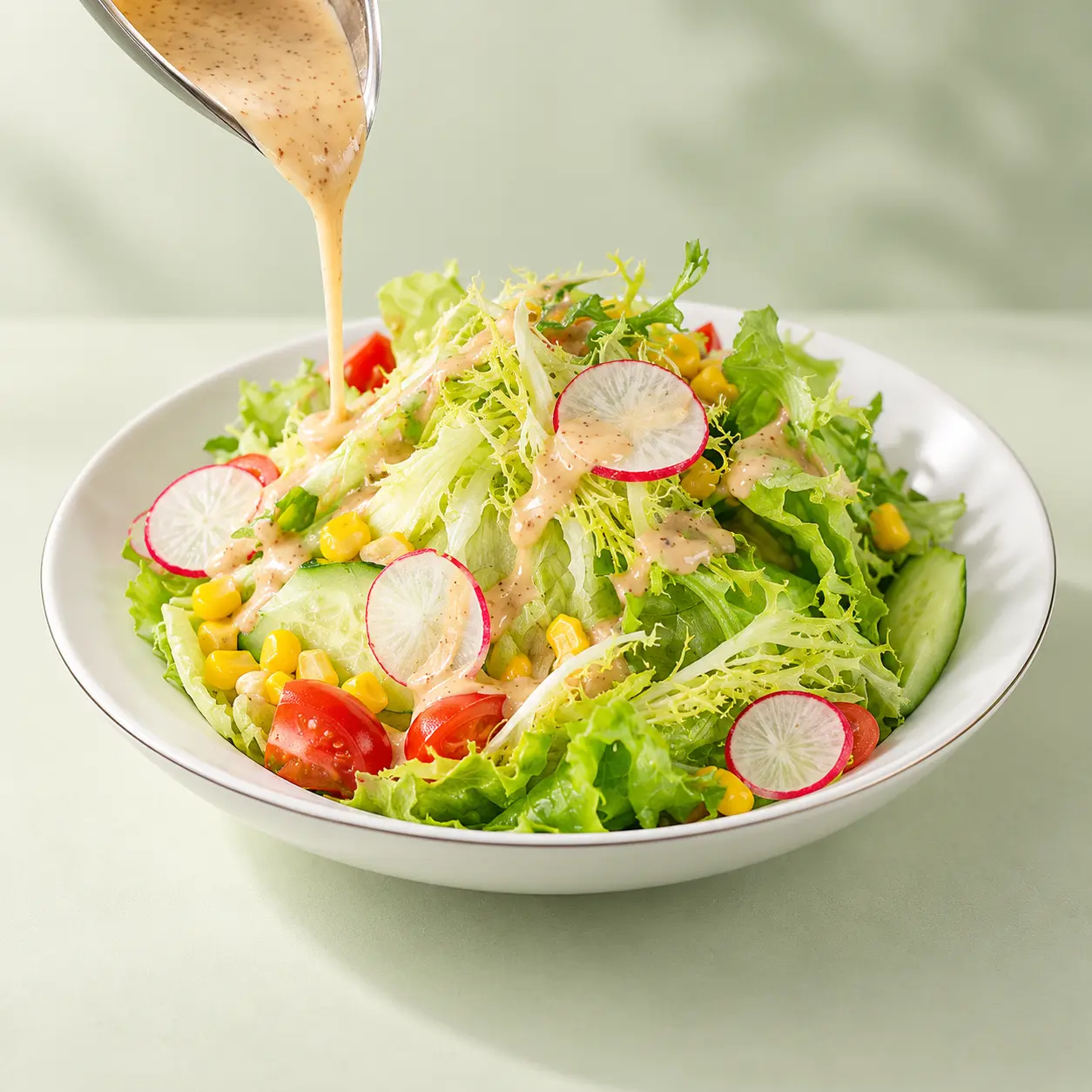
01 / Start with the product target
Salad Dressing Solutions for Manufacturers, R&D and Buyers
Define whether the dressing should pour, squeeze or hold on a spoon. Set the benchmark, oil level, storage conditions and package before selecting a starch grade.
Manufacturing and Filling Requirements
Track mixing, pump passes, deaeration, fill consistency and yield. Use the complete process history when comparing finished texture.
Formulation and Texture Development
Separate oil level, starch dose, emulsifier system and gum level into controlled trials. Compare viscosity alongside droplet behavior, coating and sensory quality.
Ingredient Sourcing and Specifications
Request an exact grade, preparation guidance, specification and representative COA. Confirm sample availability and commercial terms for the intended market.
This page focuses on starch-containing creamy dressings. The illustrative formula below is not presented as a standardized mayonnaise formula or a validated commercial product.
02 / Tianjiang formulation logic
How Tianjiang Builds a Salad Dressing Formula
Tianjiang starts from the customer’s target oil level, texture, process route, filling behavior and storage conditions, then tunes the starch system around those requirements.
Set the Oil-to-Water Structure
Choose the target oil level first, then balance the continuous water phase so the dressing can achieve the required pour, cling and mouthfeel without becoming heavy or pasty.
Build the Thickening System
Use Tianjiang modified starch as the main body-building ingredient, then fine-tune gum level only as needed. The goal is controlled viscosity with clean flow and minimal serum separation.
Match Formula to Processing
Cold-process and cook-up routes require different starch behavior. Tianjiang selects the candidate grade according to hydration temperature, shear exposure, acidity, pumping and filling conditions.
The formulation below is a Tianjiang application-development starting point for pilot trials. Final commercial use should be confirmed against the customer’s actual raw materials, equipment, pH target, preservation system and shelf-life requirements.
03 / Tianjiang application-lab formula
Tianjiang Creamy Salad Dressing Base Formula
This is a Tianjiang-developed pilot formulation designed as a practical starting point for creamy, pourable salad dressing trials. It can be adjusted according to target oil level, viscosity, acidity, package and process conditions.
Tianjiang Formula TJ-SD-01 · Creamy Pourable Dressing
| Ingredient | Tianjiang reference % | Primary function |
|---|---|---|
| Water | 51.45 | Continuous phase and formula balance |
| Refined vegetable oil | 30.00 | Body, flavor delivery and emulsion phase |
| Pasteurized liquid egg yolk | 4.00 | Primary emulsifier and richness |
| Sugar | 5.50 | Sweetness and flavor balance |
| Vinegar, 5% acidity | 4.50 | Acidity and flavor profile |
| Tianjiang modified starch | 2.50 | Viscosity, coating and water management |
| Salt | 1.20 | Seasoning balance |
| Mustard powder | 0.40 | Flavor and emulsion support |
| Xanthan gum | 0.15 | Low-level suspension and flow control |
| Seasoning blend | 0.30 | Product-specific flavor adjustment |
| Total | 100.00 | Tianjiang pilot-development basis |
TJ-SD-01 is intended as a Tianjiang formulation-development reference, not a finished commercial specification. The exact Tianjiang starch grade, dosage and hydration route should be selected after reviewing the customer’s process, pH, shear, filling temperature and target texture.
04 / Scale the Tianjiang formula
Tianjiang Salad Dressing Formulation Calculator
Use the calculator to scale Tianjiang formula TJ-SD-01 and compare controlled oil and starch levels during pilot development. Water automatically rebalances to 100%.
Tianjiang TJ-SD-01 Batch Calculator
All percentages are weight/weight. Changes to oil or starch adjust water only. Use the calculator for Tianjiang pilot formulation planning; final viscosity, stability, preservation and shelf life must be confirmed in the customer’s actual process.
| Ingredient | Trial % | Trial mass, kg | What to control |
|---|---|---|---|
| Water | 51.45 | 51.450 | Balance to 100%; include all dispersion and dilution water. |
| Refined vegetable oil | 30.00 | 30.000 | Specify oil type and lot; oil percentage is not the total fat percentage. |
| Pasteurized liquid egg yolk | 4.00 | 4.000 | Confirm solids, salt content and supplier handling instructions. |
| Sugar | 5.50 | 5.500 | Hold constant during the first starch comparison. |
| Vinegar, specified at 5% acidity | 4.50 | 4.500 | Defined input strength; measure final equilibrium pH. |
| Tianjiang modified starch | 2.50 | 2.500 | Cold-swelling grade required for the cold-process route; confirm with Tianjiang. |
| Salt | 1.20 | 1.200 | Account for salt in yolk and seasoning ingredients. |
| Mustard powder | 0.40 | 0.400 | Document grade and include in ingredient/allergen review. |
| Xanthan gum | 0.15 | 0.150 | Use accurate weighing and a reproducible dispersion method. |
| Defined seasoning blend | 0.30 | 0.300 | Use one documented blend across trials. |
| Total | 100.00% | 100.000 | Tianjiang pilot-development basis |
100 kg trial batch · 30% oil · 2.50% starch · 51.45% water.
Confirm the exact Tianjiang grade before pilot production. Pasteurized yolk remains part of the emulsifier system; the starch is used mainly for body, coating and water management unless a dedicated emulsifying grade is selected. This reference formula contains egg and mustard and still requires product-specific preservation and shelf-life validation.
Use TJ-SD-01 as a Development Baseline
The Tianjiang formula is designed to give R&D teams a consistent starting point for controlled trials. When oil or starch level changes, keep the remaining ingredient specifications and test conditions constant so the effect of each variable can be interpreted clearly.
Choose a Cold-Process or Cook-Up Starch Route
Use the cold route only with a confirmed cold-swelling modified starch and its preparation instructions. If Tianjiang recommends a cook-up grade, prepare and cook its water-phase paste separately, then cool it to an appropriate verified blending temperature before incorporating the egg-containing phase. A cook-up starch should not simply be substituted into the cold route.
Treat Acid and Preservation as Product-Specific Variables
The example specifies vinegar acidity to make the input reproducible. That dose does not establish a safe equilibrium pH. Any acid adjustment, preservative or additional ingredient requires a controlled formula revision with water rebalanced, followed by appropriate product and process validation.
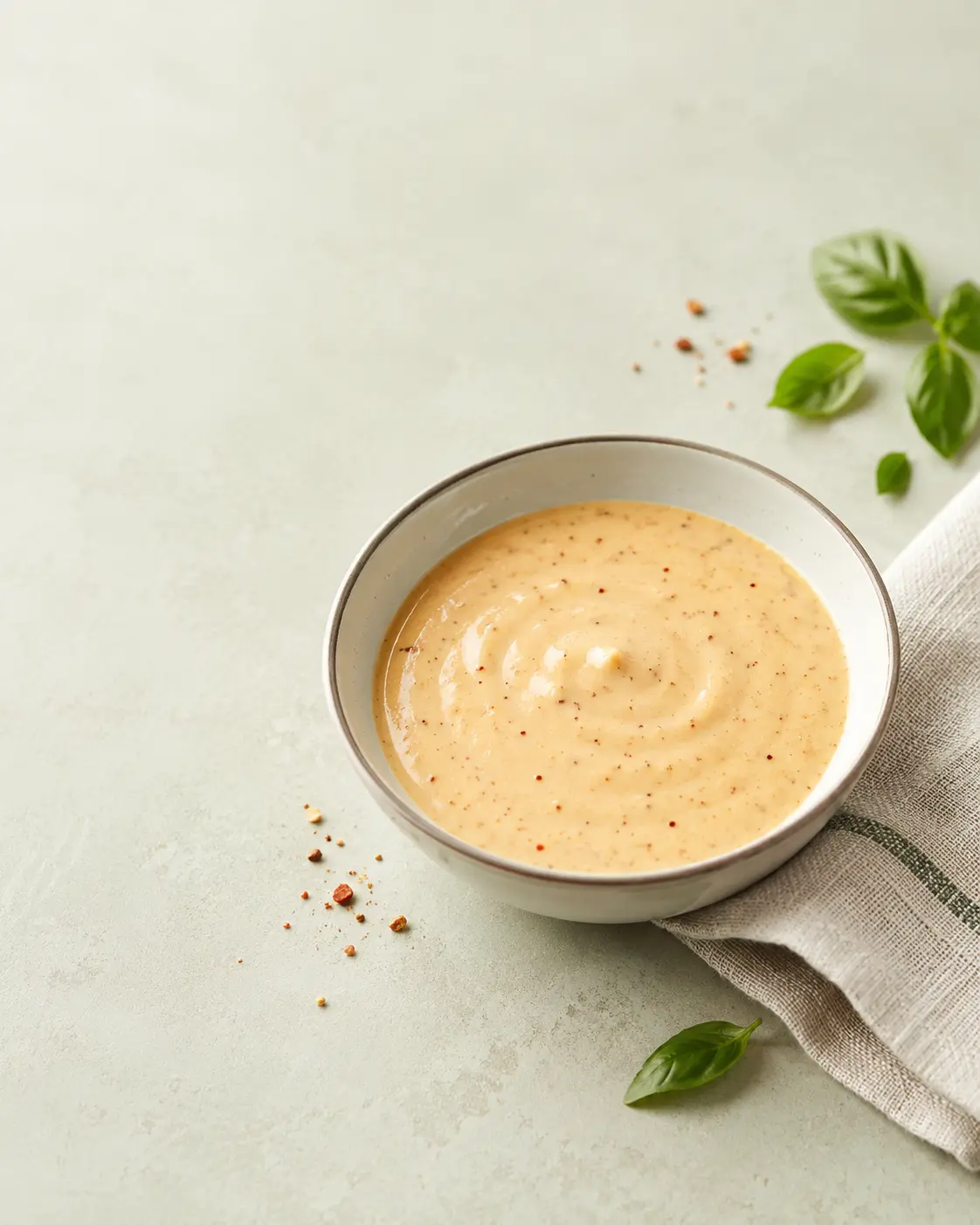
05 / Understand the ingredient roles
How Modified Starch Supports Salad Dressing Texture
The aqueous phase, oil droplets and emulsifier system each contribute to the final dressing. Choose the starch for its documented function rather than assuming every modified starch has the same behavior.
Body, Creaminess and Coating
Evaluate the contribution to continuous-phase texture, mouthfeel and cling at the intended serving temperature.Water Management
Monitor serum separation and changes in consistency under defined storage conditions.Processing Compatibility
Check how the candidate grade responds to acidity, mixing, pumping and any heat exposure in your process.Thickening Versus Emulsification
Ordinary thickening starch is not automatically an interfacial emulsifier. Evaluate a specifically documented emulsifying grade if that function is needed.
06 / Match the process to the grade
Salad Dressing Manufacturing Process
The proposed calculator base uses a cold-process development route when the selected starch permits it. Confirm the complete procedure before running equipment trials.
Cold-Process Dressing: Hydration and Emulsification
- Lock the ingredient specifications
Record oil type, yolk solids, vinegar strength, starch grade, gum grade, batch weights and target test methods.
- Disperse and hydrate the water phase
Use a validated premixing and addition method for the selected cold-swelling starch and xanthan. Draw all carrier water from the formula total; confirm order and hydration conditions with the supplier.
- Build the emulsifier-containing base
Incorporate pasteurized liquid yolk and the designated soluble ingredients at suitable verified conditions. Keep the ingredient sequence consistent and document acid timing.
- Add oil under controlled mixing
Meter oil into the prepared phase while maintaining suitable mixing. Record rate, equipment, time and product temperature; avoid assuming one rpm applies to every mixer.
- Finish and evaluate the dressing
Complete the agreed acid and seasoning sequence. Measure equilibrium pH, cooled viscosity and droplet behavior. Check air entrainment, yield and filling consistency.
- Validate filling and storage
Define hygienic handling, packaging, any preservation steps and the storage route for the complete product. Cold mixing and pasteurized yolk alone do not establish shelf stability.
Cook-Up Alternative: Prepare the Starch Phase Separately
If Tianjiang proposes a cook-up grade, follow its specified dispersion and cooking conditions, control evaporation, and cool the starch phase before blending with heat-sensitive ingredients. Confirm any change in acid-addition order, shear exposure and final mass balance. Do not heat the whole egg-containing dressing by default.
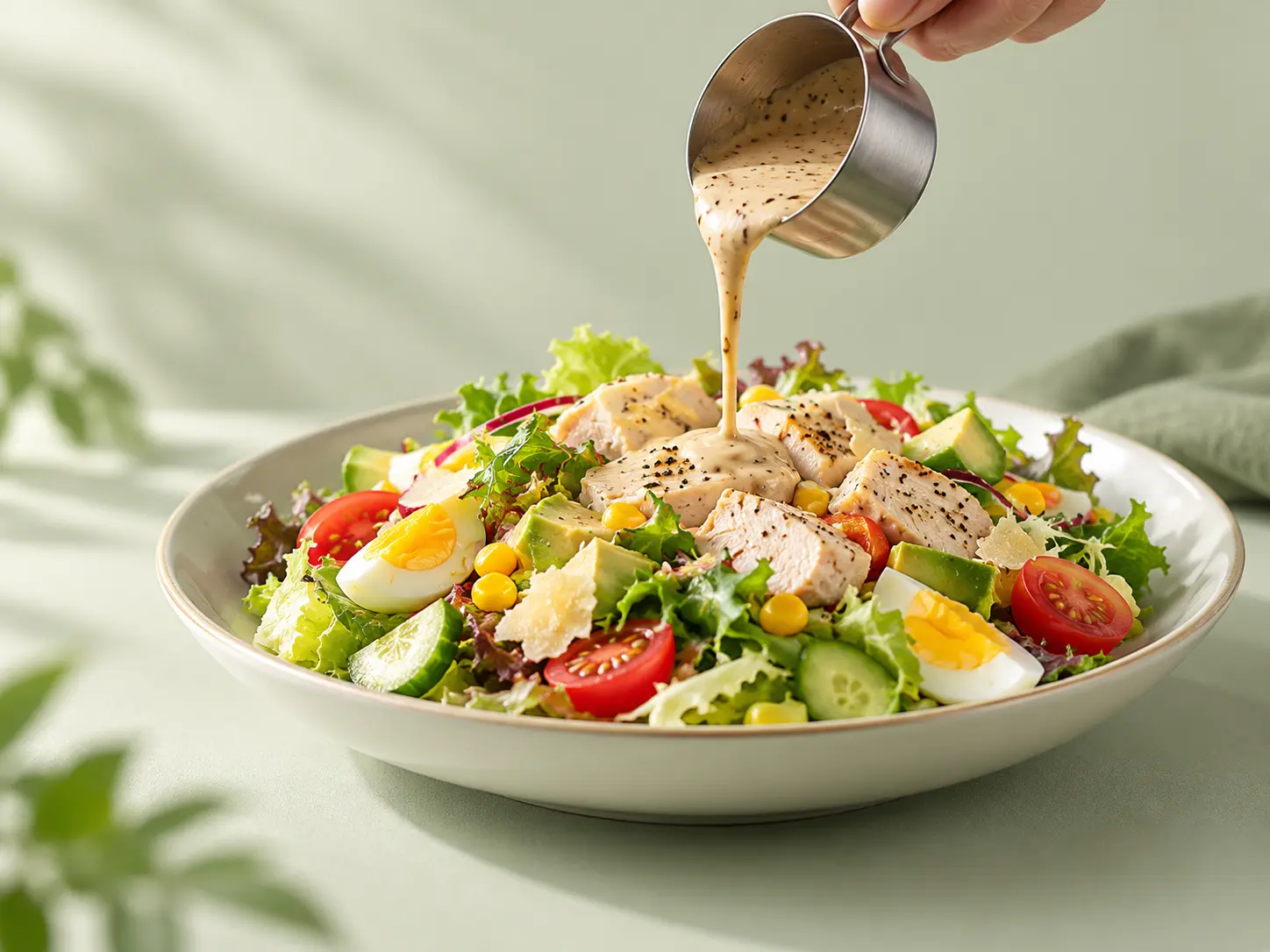
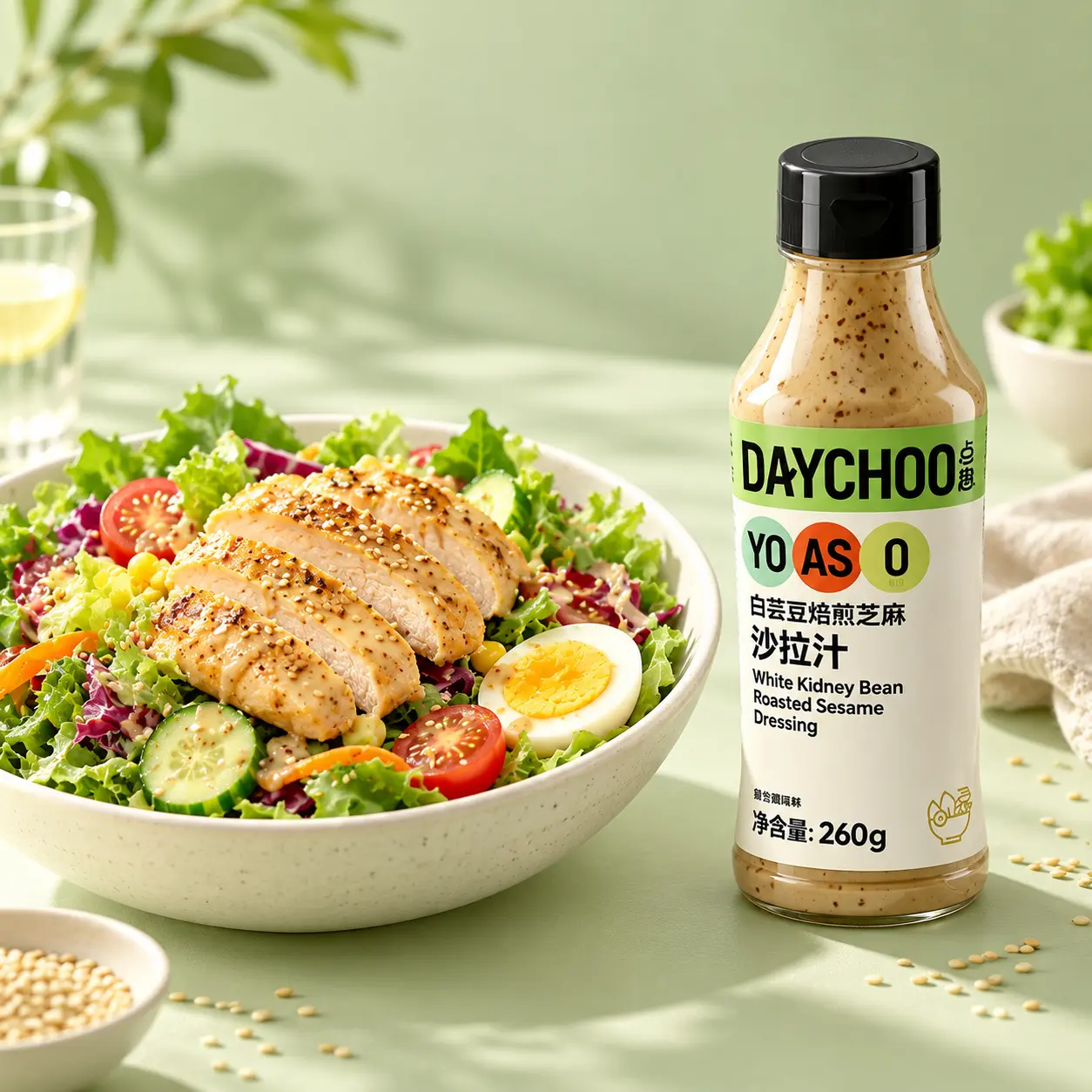
Finished Dressing and Serving Applications
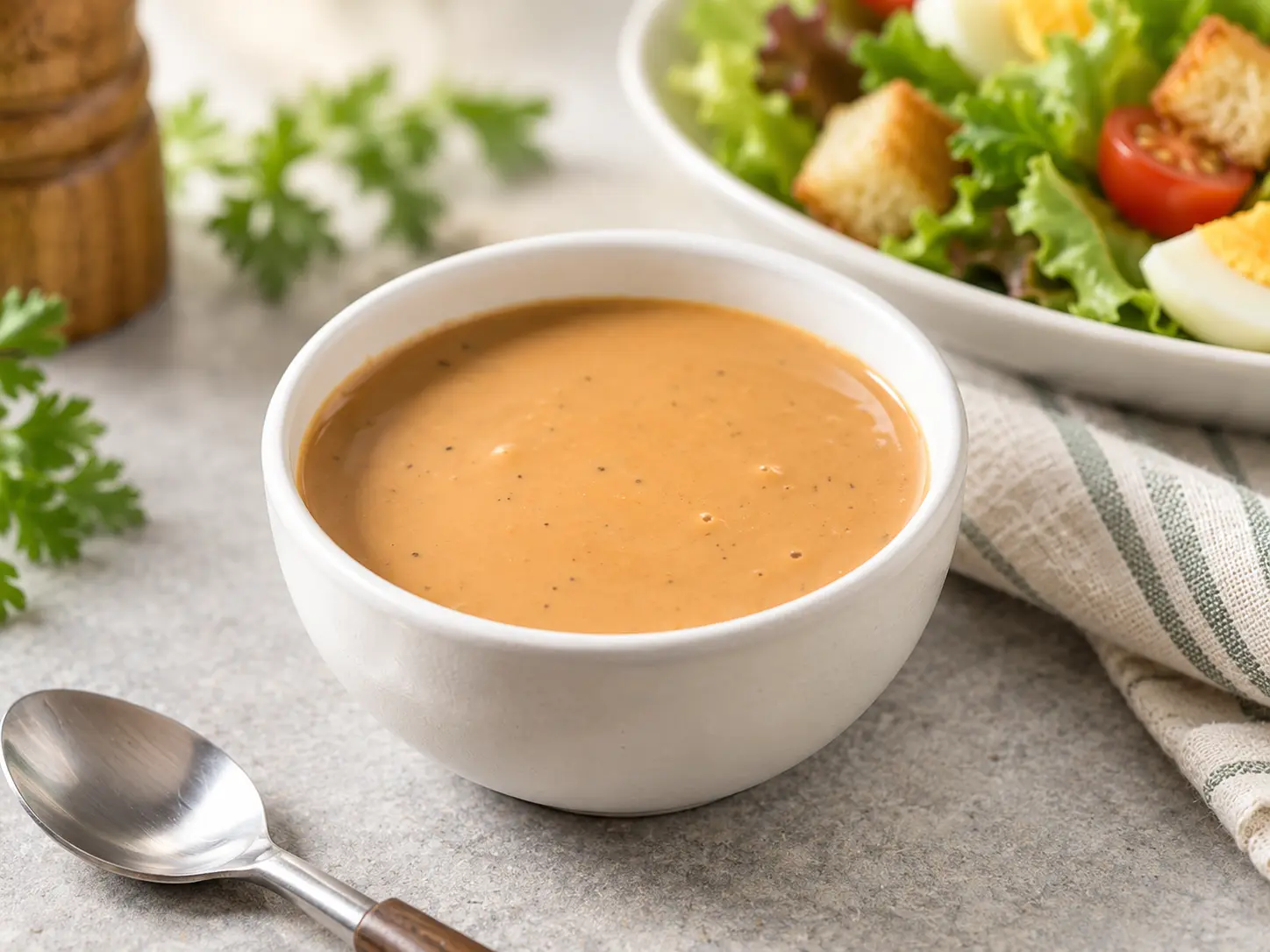
These serving images illustrate product formats and appearance; evaluate processing performance through the trials described above.

07 / Diagnose the failure mode
Salad Dressing Emulsion and Texture Troubleshooting
Distinguish oil separation from water separation. A higher viscosity reading alone does not establish that the emulsion is stable.
| Observation | Factors to investigate | Next controlled comparison |
|---|---|---|
| Oil layer or emulsion break | Oil addition rate, emulsifier system, droplet size, mixing energy and temperature. | Inspect droplets and compare controlled oil addition before simply increasing starch. |
| Clear water separates | Hydration, starch development, continuous-phase composition and storage history. | Compare fixed-formula samples after equal conditioning and at defined intervals. |
| Dressing is too thin | Starch grade, hydration, oil level, shear exposure and measuring temperature. | Compare 2.0%, 2.5% and 3.0% starch at one fixed oil level. |
| Texture is gummy or pasty | Starch and gum combination, dose, solids and cooling history. | Hold starch fixed while screening gum separately; compare coating and sensory quality. |
| Viscosity changes after pumping | Shear history, air incorporation and incomplete hydration. | Sample before and after the pump using the same test conditions. |
| Flavor or texture changes when oil is reduced | Oil fraction, water-phase balance, flavor delivery and emulsion structure. | Evaluate the 20% oil trial as a new formulation; include sensory and droplet comparisons. |
| Air bubbles or uneven filling | Powder wetting, mixer vortex, deaeration and viscosity at the filler. | Review addition method and air control with the actual equipment. |
08 / Select by function and process
How to Select Modified Starch for Salad Dressing
Give Tianjiang the complete formula, equipment profile and target texture. Request a candidate grade for testing rather than inferring suitability from a generic starch name.
Cold-Swelling or Cook-Up Grade
Match the hydration route to your line. Confirm preparation method, acid compatibility and tolerance to the intended mixing and pumping conditions.
Thickening or Emulsifying Function
Define whether the target is body, water management or interfacial stabilization. A dedicated emulsifying starch may require a separate formulation and dosage study.
Botanical Source and Label Requirements
Discuss modified corn starch, modified tapioca starch and other suitable sources. Confirm grade-specific documentation, allergen information and destination-market fit.
09 / Make the trial interpretable
Salad Dressing Formulation Trials and Quality Testing
First compare starch at 2.0%, 2.5% and 3.0% with oil fixed at 30%. Then evaluate 25% and 20% oil versions as separate comparisons. Keep the other ingredient specifications and test conditions constant.
Compare Flow, Droplets, Separation and Sensory Quality
- Flow and viscosityDocument instrument, spindle or geometry, speed, temperature, sample age and preparation.
- Emulsion structureUse a suitable microscopy or droplet-size method and record visible creaming or oil release.
- Storage behaviorRecord water separation and texture change at relevant conditions and intervals. Accelerated screening alone does not establish shelf life.
- Finished-product qualityRecord equilibrium pH, relevant composition, yield, coating, flavor and sensory texture.
Set acceptance limits against your benchmark. No demonstrated viscosity, oil-reduction performance, cost saving or shelf-life result is claimed for the proposed base.
10 / Prepare the purchasing decision
Modified Starch Specifications and Purchasing Requirements
Align the approved trial ingredient with production and procurement requirements before scale-up.
Technical Specification and COA
Request the exact grade specification, hydration instructions, representative COA and proposed acceptance criteria.Source and Market Documentation
Confirm botanical source, ingredient declaration, allergens and relevant market documents for the proposed grade.Sample Quantity and Commercial Terms
Confirm sample availability, MOQ, pack size, lead time, quotation basis and delivery destination.Supply and Change Control
Share expected monthly demand, traceability needs and supplier change-notification requirements.
Availability, certifications and commercial terms require confirmation.

11 / Formulation questions
Salad Dressing Formulation FAQs
Practical answers for manufacturers, formulation teams and ingredient buyers.
How Much Modified Starch Should I Use in Salad Dressing?
Tianjiang TJ-SD-01 uses 2.5% modified starch as a development baseline, with 2.0–3.0% suggested for controlled screening. The correct dosage depends on the exact grade, oil level, acid system, shear history and target texture.
Is TJ-SD-01 a Tianjiang Commercial Specification?
TJ-SD-01 is a Tianjiang application-development reference formula for pilot work. It should be adjusted and validated with the customer’s actual raw materials, equipment, pH target, preservation system, package and shelf-life requirements before commercial production.
Can Modified Starch Replace Egg Yolk?
Do not assume a thickening starch replaces egg yolk’s emulsifying function. Egg reduction or removal requires a separately designed emulsifier system and validation of texture, stability, flavor and ingredient claims.
Can I Use a Cook-Up Starch in a Cold-Mixed Dressing?
Not without first developing it according to its cooking requirements. Select a documented cold-swelling grade for direct cold processing, or prepare a separate cooked and cooled starch phase.
Why Does Dressing Separate Even When It Is Thick?
Bulk viscosity and droplet stability are different aspects of the system. Investigate emulsifier coverage, oil addition, droplet distribution and process conditions as well as the thickening system.
Is the 20% Oil Trial a Low-Fat Dressing?
That setting describes added oil percentage only. Egg yolk and other ingredients also contribute to composition. Nutritional labeling and any comparative claim need product-specific calculation, testing and market review.
Does This Formula Establish a Safe pH or Shelf Life?
No. Vinegar strength is specified for reproducibility, but final equilibrium pH must be measured. Preservation, processing, filling, packaging and storage require separate validation.
What Should I Send to Request a Starch Sample?
Send your oil level, emulsifier system, starch and gum levels, acid specification, process route, equipment, target texture, package, market and estimated starch demand.
12 / Talk to Tianjiang
Request Modified Starch Samples for Salad Dressing
Prepare a technical brief, copy it and share it through our contact page. Describe the desired texture and the current failure mode so the sample trial can answer a useful question.

Include a benchmark sample or a defined test method when available.
Contact TianjiangPrepare Your Salad Dressing Trial Brief
14 / Tianjiang formulation notes
Tianjiang Salad Dressing Development Notes
The formulation data on this page is organized as Tianjiang application-development guidance for customer trials. It is intended to support sample selection, pilot testing and technical discussion.
- TJ-SD-01 baseline: 30% vegetable oil with 2.5% Tianjiang modified starch and water balanced to 100%.
- Starch screening: compare 2.0%, 2.5% and 3.0% at the same oil level and under the same processing conditions.
- Oil comparison: compare 30%, 25% and 20% oil as separate formulations because flow, flavor release and emulsion structure can all change.
- Process selection: use a confirmed cold-swelling grade for direct cold processing, or a Tianjiang cook-up grade with its specified heating and hydration route.
- Commercialization: verify equilibrium pH, microbiological controls, filling conditions, packaging compatibility and shelf life before launch.
For a grade recommendation, share your full formula, process route, mixer type, pH target, desired viscosity, packaging format and expected monthly demand with Tianjiang.