
Modified Starch Solutions for Thickening
Build the consistency your product needs. Explore modified starch selection for sauces, soups, fillings and desserts, matched to your formulation, preparation and processing conditions.
Is Your Product Reaching the Right Consistency?
Describe how the product needs to flow, coat or hold its shape. Then define the preparation and measurement conditions.
Insufficient Body or Coating
A sauce may pour too quickly, coat unevenly or lack the body you need. Confirm target consistency at the intended serving temperature.
Excessive Thickness or Poor Flow
Too much body can affect pouring, pumping and filling. Establish a useful operating range for your product.
Lumps or Uneven Thickening
Check dispersion, ingredient order, mixing and starch preparation when viscosity develops unevenly.
Unexpected Viscosity After Processing
Record readings after heating, cooling, mechanical processing and defined rest to locate where the change occurs.
Build Viscosity Around Your Formulation and Process
Choose the preparation and test conditions that reflect how your food is made and used.
Disperse and Prepare the Starch Correctly
Distinguish cook-up grades from suitable cold-water-swelling pregelatinized grades. Follow the selected product’s dispersion, hydration and cooking requirements.
Match Starch Type and Dosage to the Recipe
Consider the starch grade and concentration alongside water, sugar, salt, acid, fat and protein. Compare candidates in the complete formulation.
Measure at Relevant Temperature and Flow Conditions
Define temperature, instrument settings and rest time. Check the resulting viscosity against pouring, coating, spreading or filling performance.
- 01Disperse
- 02Hydrate or cook
- 03Process
- 04Condition
- 05Measure
Adapt the sequence to the specific grade and food process.
Thickening Where Consistency Matters
Explore four applications where sauce body, coating, pouring or filling consistency is central to the product. Match viscosity to the way each food is prepared and used.
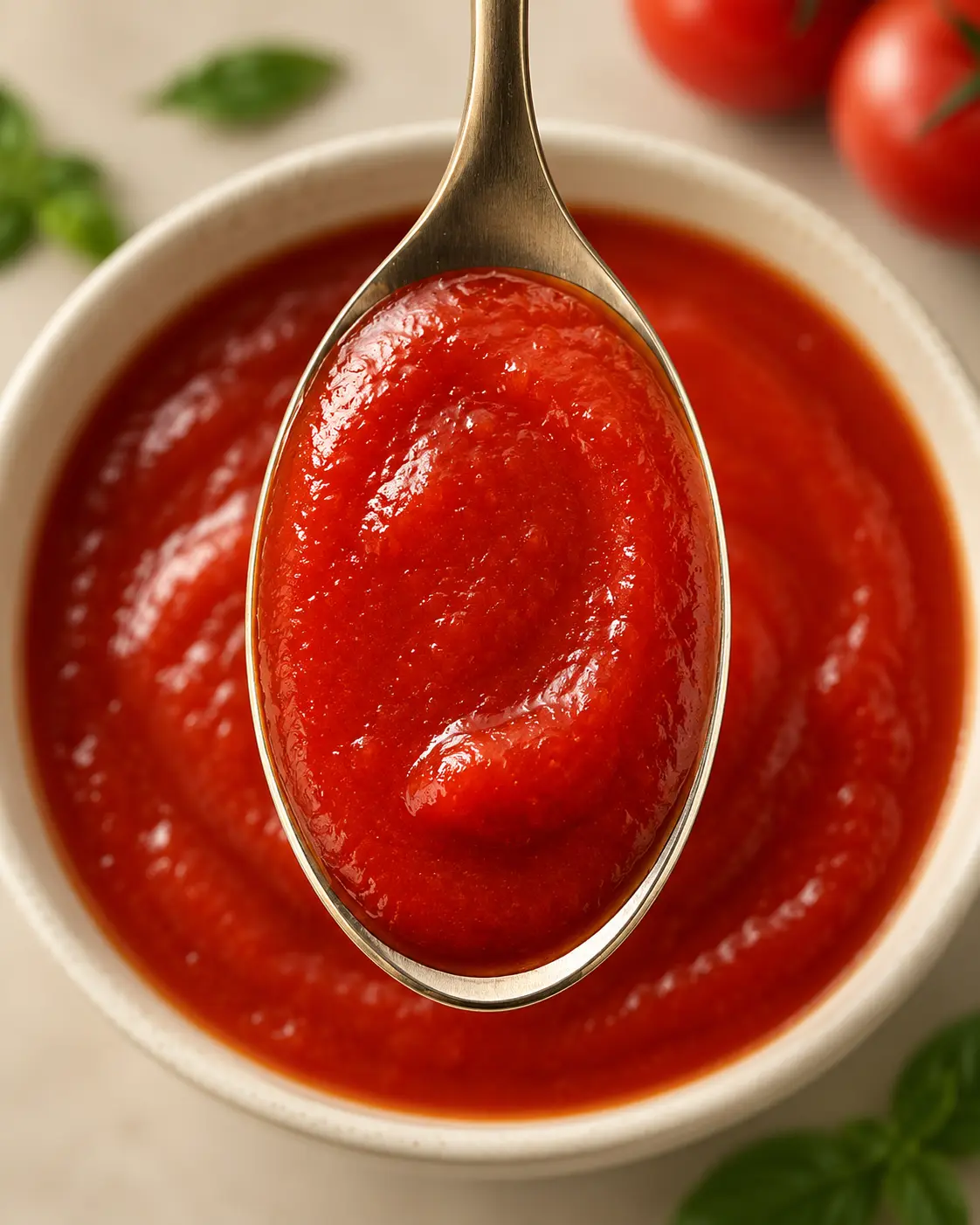
Tomato Sauces & Ketchup
Build sauce body around the required squeeze flow and spoon coating. Compare viscosity with the complete tomato, acid, sugar and salt system at serving temperature.
Explore tomato sauce formulations →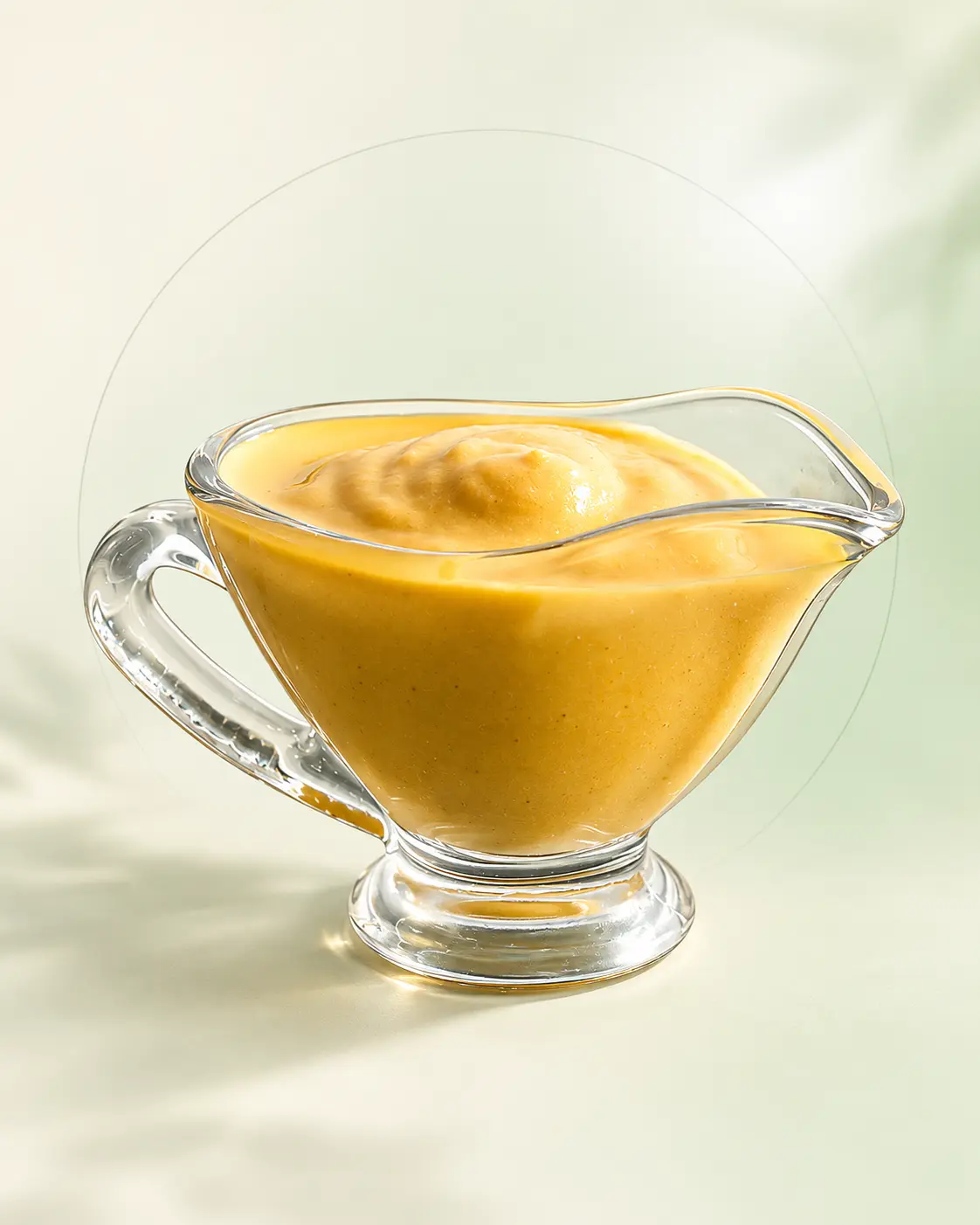
Cheese & Cream Sauces
Target a pourable sauce that coats pasta or vegetables. Evaluate viscosity after heating and cooling in the complete cheese, dairy-fat and protein formulation.
Explore cheese sauce formulations →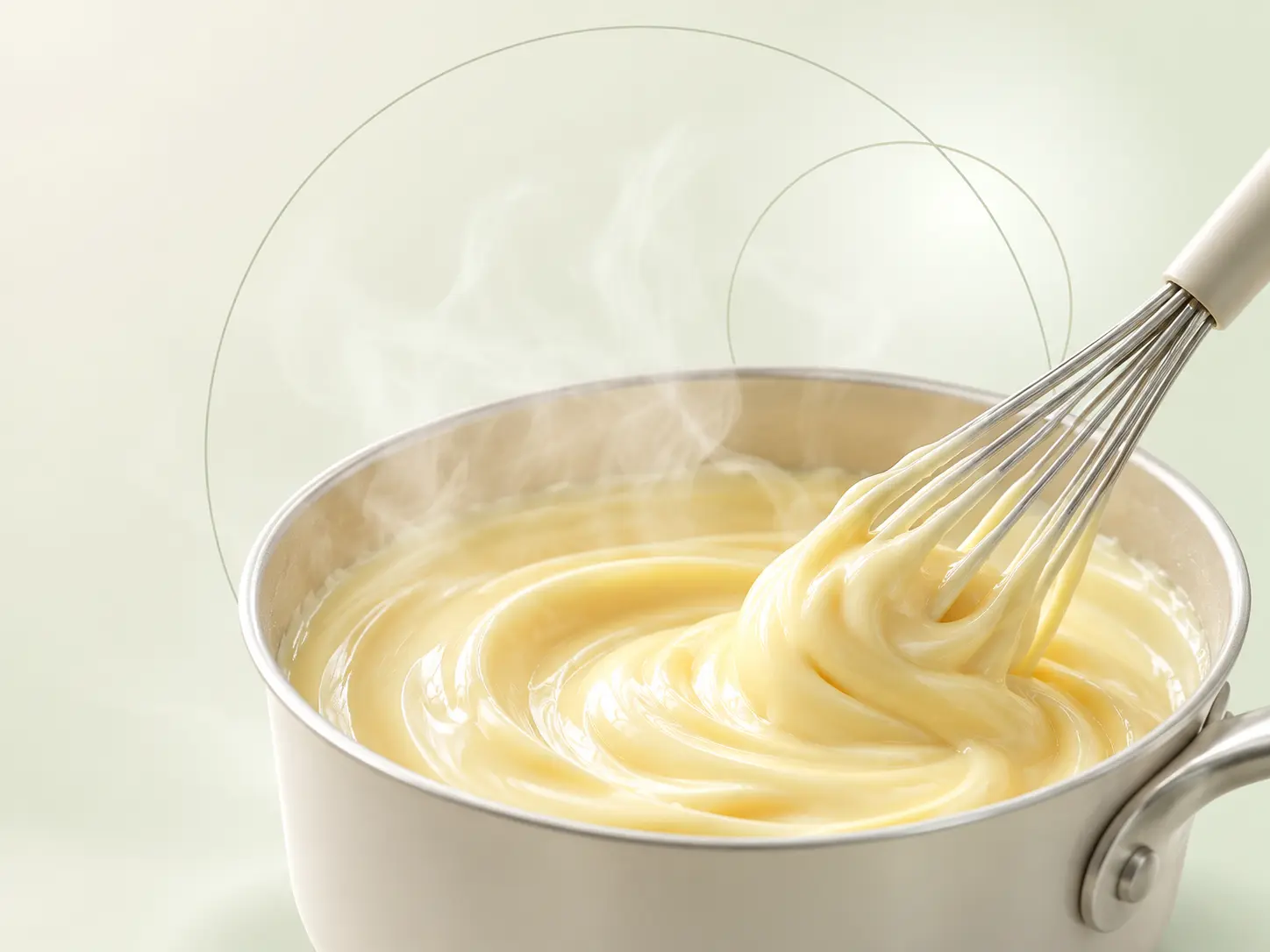
Custard Sauces & Pastry Creams
Track viscosity development during preparation. Set the desired pouring or piping consistency and confirm performance after cooling and filling.
Explore custard sauce formulations →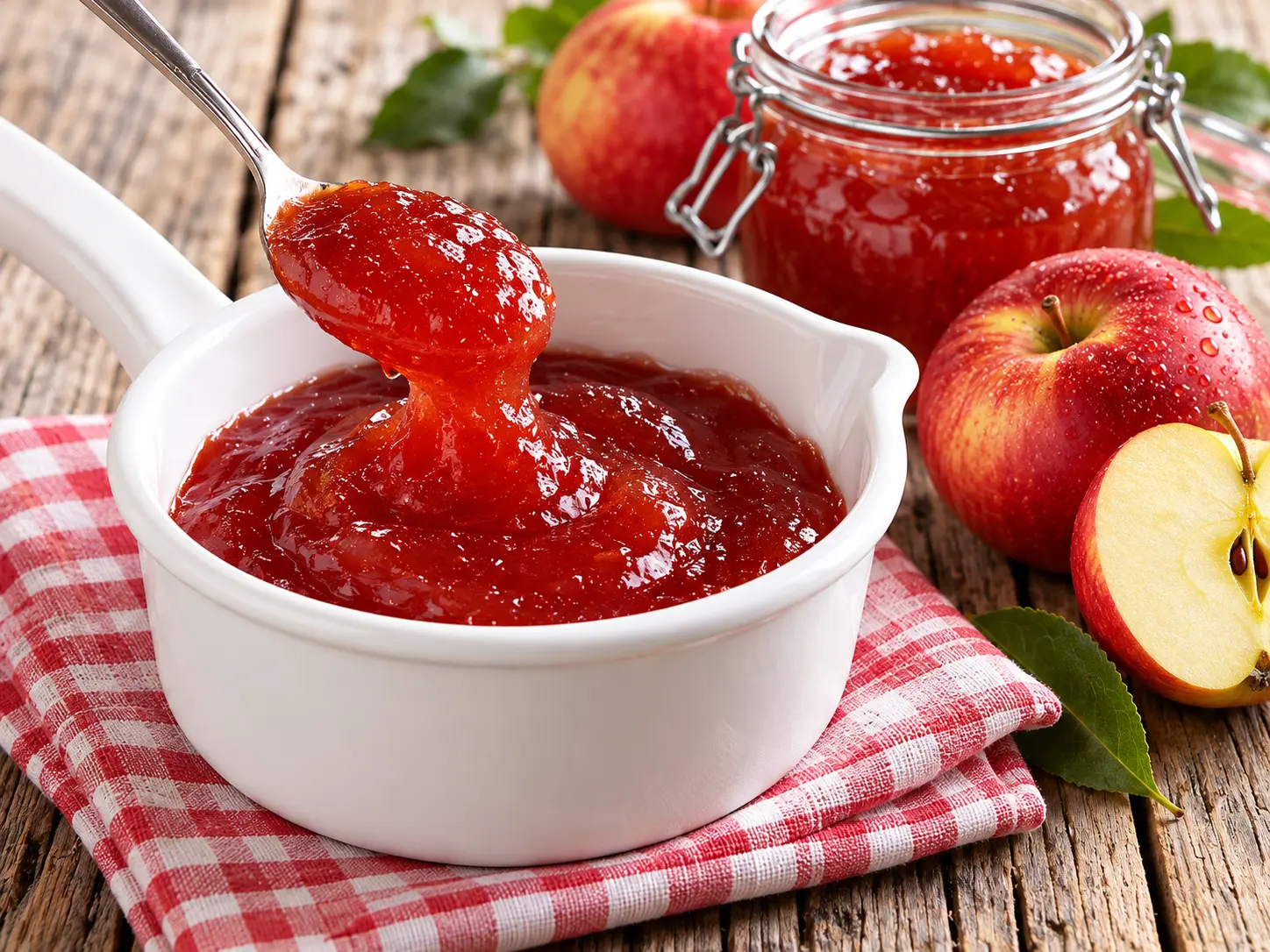
Fruit Sauces & Fruit Fillings
Adjust the fruit phase for spreading, portioning or filling. Check body and flow in the actual fruit, sugar and acid system, including its intended processing and use.
Explore fruit jam formulations →Choose Starch Around Your Thickening Target
Share your target and process to define a useful shortlist of specific grades.
Define the Consistency You Need
| Selection factor | Information to share | Evaluation focus |
|---|---|---|
| Target consistency | Target sample, viscosity range or flow description | Required performance in use |
| Preparation method | Cook-up or cold preparation | Dispersion and viscosity development |
| Dosage | Current level and practical adjustment range | Dose–consistency relationship |
| Complete formulation | Water, sugar, salt, acid, fat and protein | Thickening in the actual food system |
| Processing | Temperature, duration, mixing, pumping and homogenization | Consistency after processing |
| Measurement method | Temperature, spindle, speed or shear rate | Comparable readings |
| Storage and serving | Time, temperature, freezing and reheating | Final application performance |
Acetylated Distarch Adipate — E1422
Discuss candidate grades around your formulation, process and target consistency. Confirm dosage and final performance through trials.
Explore E1422 →Hydroxypropyl Distarch Phosphate — E1442
Review specific grades against your thickening needs and relevant chilling, freezing or storage conditions.
Explore E1442 →Pregelatinized Starch for Cold Preparation
Discuss grades for cold or instant preparation. Define dispersion, water temperature, mixing and hydration time.
Explore pregelatinized starch →Grade identity, preparation and the complete formulation matter. An E number alone does not define thickening efficiency or a universal dosage.
Tianjiang’s Guide to Thickening Evaluation
Use defined sample conditions to compare viscosity, then confirm the result in your application.
Define the Measurement Conditions
Alfredo sauce containing dairy fat, cheese and 0.18% xanthan gum. Starch percentages refer to total sauce mass.
- Brookfield viscosity measurement at 21 ± 2.2°C, spindle #4, 2.5 rpm, after 5 minutes of stabilization.
- Sauce was prepared at 180°F for 10 minutes before pouch retort processing. Retort runs targeted F₀ = 6 minutes, with treatment time varying by formulation.
- Viscosity is reported in cP; 1 cP = 1 mPa·s. Figures below show reported mean values.
Compare Viscosity Before and After Processing
| Modified starch | Before retort (cP) | After retort (cP) |
|---|---|---|
| Modified corn | 3,328 | 13,296 |
| Modified tapioca | 3,440 | 8,176 |
| Modified potato | 1,200 | 4,656 |
Check the final readingThese samples developed different viscosities under their respective processing conditions. This comparison is not a universal ranking of starch sources.
Evaluate Dosage Together with Processing
| Modified starch | Starch dosage | Viscosity (cP) |
|---|---|---|
| Tapioca | 1.90% | 8,176 |
| Tapioca | 3.00% | 14,400 |
| Potato | 1.90% | 4,656 |
| Potato | 2.38% | 16,336 |
Consider the complete trialDosage and thermal treatment time changed together. The viscosity differences cannot be attributed to dosage alone.
These formulation-specific examples guide trial design; they are not Tianjiang grade specifications or universal dosage recommendations. The retort parameters describe the tested system and are not a production schedule.
Confirm Thickening Performance in Your Product
| Evaluation item | What to record |
|---|---|
| Viscosity development | Changes after dispersion, hydration or cooking |
| After processing | Readings after heating, mechanical processing, cooling and defined rest |
| Application flow | Pouring, coating, spreading, piping or filling |
| Sensory characteristics | Smoothness, pastiness and stickiness |
| During storage | Viscosity change, water separation and reheating response |
Build a Practical Thickening Trial
Define the goal, screen candidates and confirm the outcome in the actual food.
Set the Target Consistency
Use a target sample, a viscosity range under defined conditions and a description of pouring or coating behavior.
Screen Grades and Dosages
Include a control. Compare candidate grades and dosages under consistent formulation, preparation and measurement conditions.
Validate After Processing and Storage
Confirm the final performance through actual processing, packaging, storage and serving conditions.
Thickening FAQs
How Does Modified Starch Thicken Food?
Depending on the grade, starch develops viscosity through hydration and swelling during preparation. Many cook-up grades require a defined heating step; suitable pregelatinized grades can develop viscosity in cold preparation. Follow the technical guidance for the selected grade.
How Much Modified Starch Should I Use?
Set dosage through trials in your actual recipe. The starch grade, available water, other ingredients, preparation and processing all affect the final consistency. Include a control and a practical dosage series.
Can Modified Starch Thicken Without Heating?
Suitable pregelatinized grades can hydrate and develop viscosity in cold or low-temperature preparation. Confirm dispersion, water temperature, mixing and hydration time for the specific grade and formulation.
Why Does Viscosity Change After Heating or Cooling?
Starch preparation, further heating, cooling, shear and rest can change the measured consistency. Record the complete sample history and compare readings at the same temperature and instrument settings.
How Can I Reduce Lumps During Preparation?
Use the dispersion and preparation method recommended for the grade. Review ingredient order, water temperature, mixing and the rate of addition. Confirm that the method works with the actual batch size and recipe.
How Should Thickening Performance Be Compared?
Use consistent formulations and preparation, then define measurement temperature, spindle and speed or shear rate, rest time and sampling point. Compare the readings with pouring, coating, spreading or filling performance.
Let’s Build Your Target Consistency
Tell us what you make and how it needs to flow. Share your formulation, preparation and target consistency to discuss suitable starch candidates and a practical trial plan.
Prefer email? sales@tianjiangmodifiedstarch.com
Helpful Details for Your Enquiry
- Food type and complete formulation
- Current starch grade and dosage
- Target consistency or reference sample
- Preparation and processing conditions
- Viscosity test method, storage and serving requirements
Start with the information you have.