
TIANJIANG / FRUIT JAM FORMULATION
Fruit Jam Formulation with Modified Starch
This fruit jam formulation platform uses Tianjiang modified starch to help manufacturers control viscosity, fruit suspension, glossy texture, pumpability, water separation and processing stability across classic jam, high-fruit preserves, lower-sugar fruit spreads and squeezable fruit products.

01 / DEFINE THE FINISHED FRUIT PRODUCT
Fruit Jam Solutions for Manufacturers and R&D Teams
Define fruit loading, sweetness, soluble solids, fruit-piece size, spreadability, pumpability, storage route and package format before selecting the modified starch grade.
Manufacturing Consistency
Control fruit preparation, sugar dissolution, starch dispersion, cooking, concentration, acid addition and filling to improve batch-to-batch consistency.
Texture and Fruit Suspension
Balance continuous-phase viscosity with authentic fruit texture so particles remain distributed without creating a rubbery gel.
Ingredient and Purchasing Strategy
Connect the approved formula with the exact Tianjiang starch grade, technical specification, COA, packaging, MOQ and supply plan.
02 / FOUR COMMERCIAL FRUIT SYSTEMS
Fruit Jam Formulation Platforms for Different Market Positions
High-fruit preserves, conventional jam, lower-sugar spreads and squeezable products need different balances of fruit, sweeteners, water and texturizers.

Classic Strawberry Jam
A balanced fruit-and-sugar system designed for smooth spreading, bright gloss and stable jar texture.

High-Fruit Berry Preserve
A 60% fruit platform focused on fruit identity, particle suspension and a less sugar-dominant sensory profile.

Lower-Sugar Fruit Spread
Uses higher fruit and starch contribution with pectin support to rebuild body when sucrose is reduced.
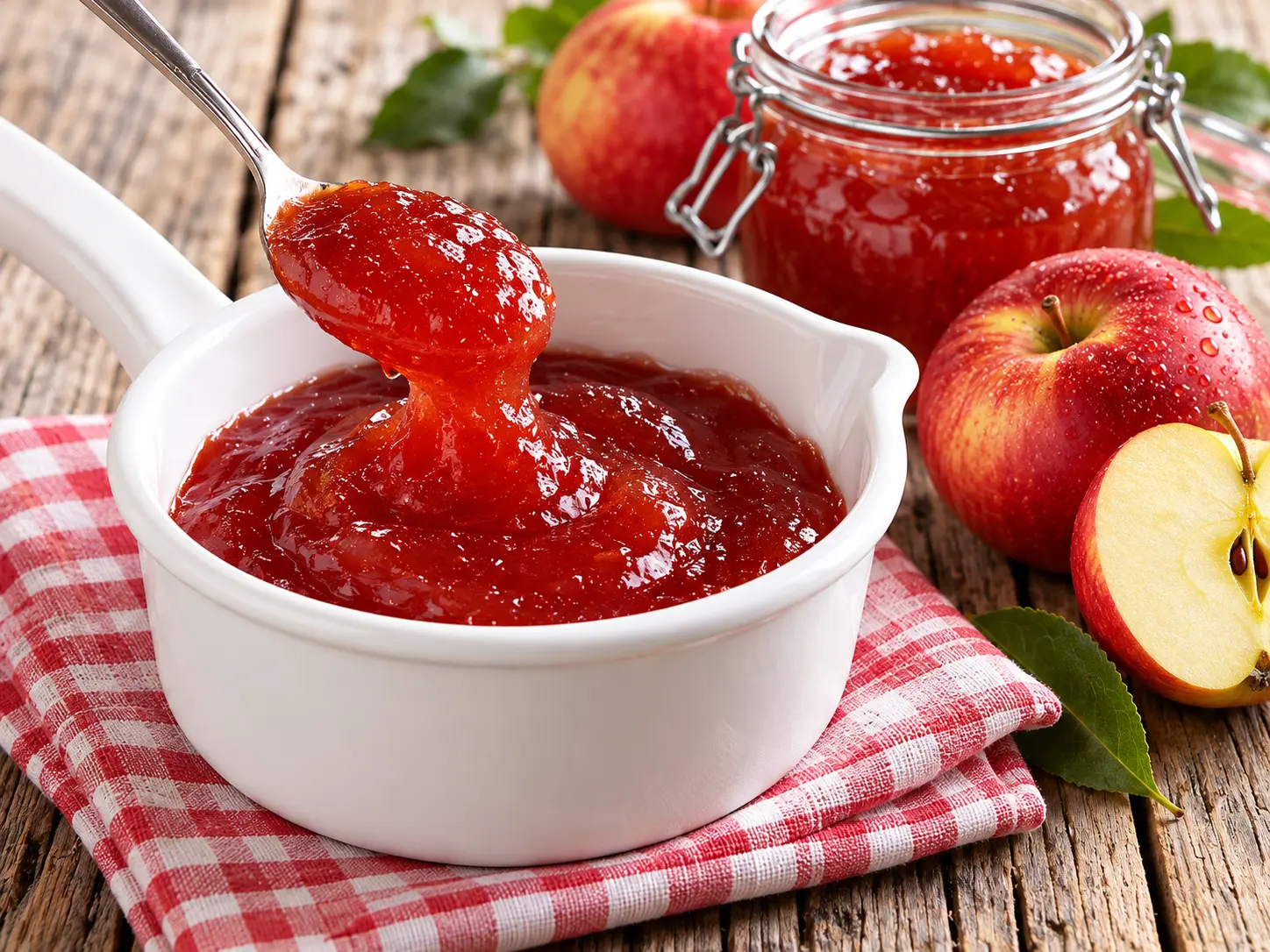
Smooth Squeezable Fruit Spread
Designed for controlled flow, clean dispensing, smooth texture and bottle or food-service applications.
Terms such as “jam,” “preserve,” “reduced sugar” and “fruit spread” may have specific legal definitions in individual markets. Confirm final product naming, soluble solids, fruit content and sweetener requirements for the destination market.
03 / TIANJIANG PRODUCTION-SCALE FORMULA SYSTEM
Tianjiang Fruit Jam Production Formulas
Select a fruit-jam platform, enter your production batch size and compare a controlled Tianjiang modified-starch adjustment while automatically maintaining a 100% formula balance.
Fruit Jam Formulation Batch Calculator
The comparison tool adjusts Tianjiang modified starch and balances the difference through process water. Run starch comparisons with the same fruit lot, Brix, pH, heating profile and filling conditions.
| Ingredient | Formula % | Batch Mass, kg | Primary Function |
|---|---|---|---|
| Total | 100.00% | 100.000 | Starting formulation basis |
TJ-FJ-01 · 100 kg formulation · 2.40% Tianjiang modified starch · development target 62–65°Brix.
The formula percentages are manufacturing starting weights. Cooking and evaporation change the final batch mass and soluble-solids concentration. Final Brix, pH, preservation system, thermal process and shelf life must be verified on the actual production line.

04 / MODIFIED STARCH PERFORMANCE
How Modified Starch Supports Fruit Jam Texture and Stability
The selected starch should provide enough continuous-phase structure without hiding the natural fruit identity.
Viscosity Control
Develop a consistent body for spreading, pumping, depositing or squeezing.Acid Stability
Maintain useful viscosity after the fruit system is adjusted to its final acidic pH.Heat and Shear Tolerance
Support texture through hot processing, agitation, pumping and filling.Fruit Suspension
Help the continuous phase carry fruit particles and reduce separation.Gloss and Smoothness
Create a clean, bright continuous phase without an excessively opaque or pasty appearance.Water Management
Support control of free water and syneresis during finished-product storage.
05 / COMMERCIAL MANUFACTURING
Fruit Jam Manufacturing Process
Tianjiang's fruit-jam process uses a separate starch slurry, controlled concentration, hot starch development and final acid adjustment.
TJ-FJ Recommended Production Sequence
-
Weigh all ingredients
Prepare fruit, sugar, glucose syrup, process water, Tianjiang modified starch and supporting ingredients according to the approved batch sheet.
-
Prepare the starch slurry
Use a controlled portion of the formulation water to disperse Tianjiang modified starch until a uniform slurry is obtained.
-
Build the fruit phase
Combine fruit, sugar, remaining water, glucose syrup and the approved preservation system under controlled agitation.
-
Heat and concentrate
Raise the fruit mixture temperature while continuously mixing and begin concentrating toward the required soluble-solids target.
-
Add the starch slurry
Introduce the starch slurry gradually under continuous agitation to minimize lumping and create uniform viscosity.
-
Develop the starch at high temperature
Continue controlled heating at approximately 90°C until the selected Tianjiang starch has fully developed.
-
Finish Brix and adjust acidity
Once the required soluble-solids level has been reached, add the approved acid system and verify final pH.
-
Fill and cool
Hot fill or package under the manufacturer's validated process, then cool according to the finished-product specification.
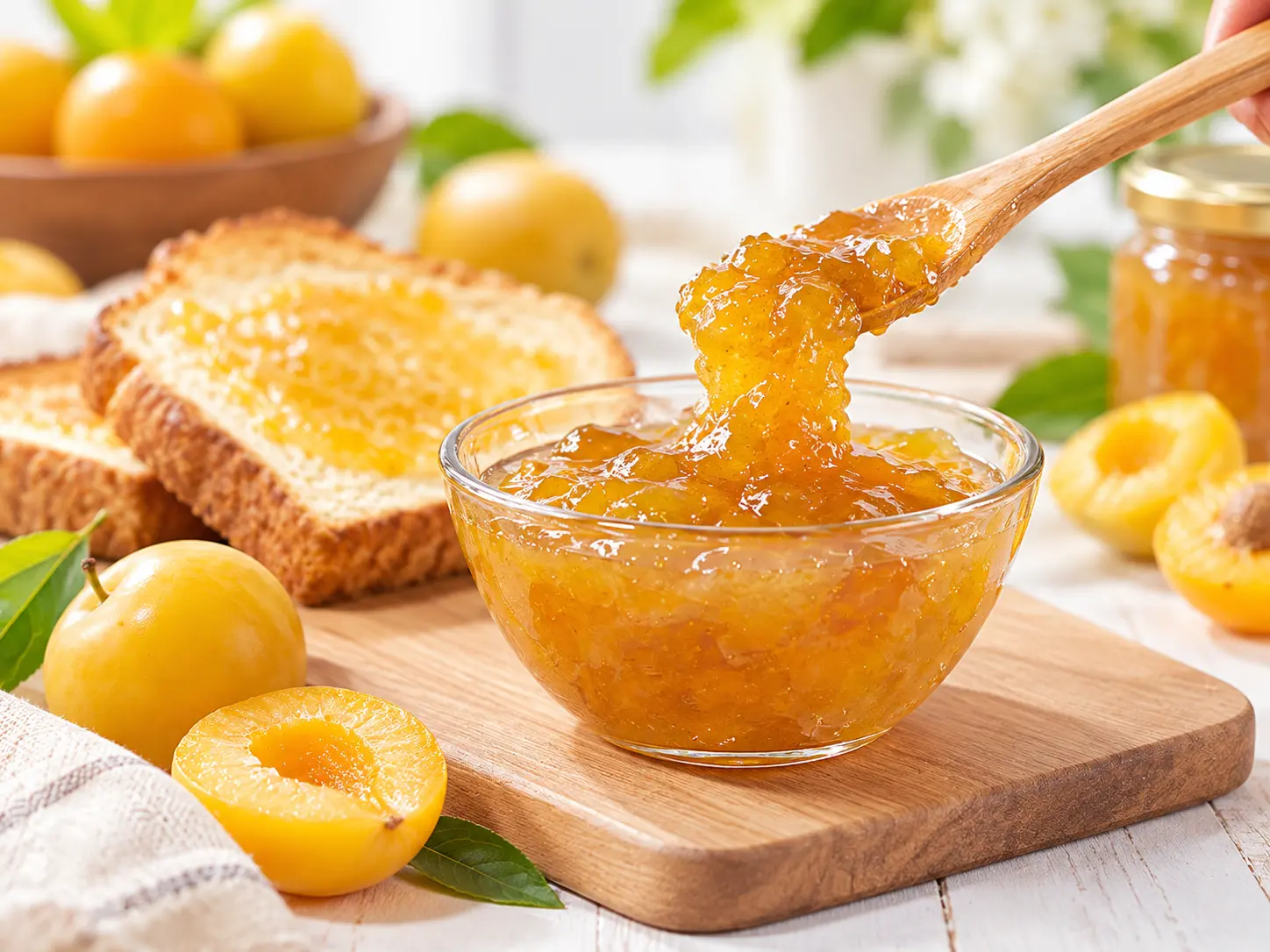


Approximately 90°C is the Tianjiang starch-development process reference shown here. The complete thermal process, microbiological control, hot-fill conditions and cooling schedule must be established for the specific package, pH, Brix and destination market.
06 / CONTROL MORE THAN VISCOSITY
Brix, pH, Fruit Pieces and Pumpability
A finished jam can show the same apparent viscosity while behaving very differently during filling, storage or spreading. Measure the complete fruit system.
Soluble Solids / Brix
Track concentration throughout cooking. Higher Brix changes sweetness, water availability, flow and final texture.
Final pH
Acidity affects flavor, preservation strategy, pectin functionality and starch stability.
Fruit-Piece Suspension
Evaluate whether particles remain evenly distributed without settling, floating or creating a rigid gel.
Pumpability
Measure flow after cooking and through the actual pump, pipe, depositor or squeeze-package system.
07 / DIAGNOSE THE TEXTURE FAILURE
Fruit Jam Formulation Troubleshooting
Do not correct every problem by simply increasing starch. Fruit solids, Brix, pH, pectin, cooking time and mechanical shear can change the result dramatically.
| Observation | Factors to Investigate | Controlled Next Trial |
|---|---|---|
| Jam is too thin | Starch dosage, final Brix, incomplete cooking, fruit water or excessive shear. | Confirm final Brix first, then compare baseline and +0.20% starch. |
| Jam is too thick or pasty | Excess starch, over-concentration, pectin interaction or long cooking. | Reduce starch while maintaining the same finished Brix. |
| Water separates during storage | Starch selection, fruit solids, pH, insufficient hydration or storage conditions. | Compare samples after standardized conditioning. |
| Fruit pieces settle | Continuous-phase viscosity, particle size, fruit density, pectin and filling conditions. | Measure particle distribution after filling and cooling. |
| Fruit pieces float | Density difference, entrained air, weak continuous phase or filling temperature. | Review mixing and filling conditions before increasing starch. |
| Viscosity drops after acid addition | Acid sensitivity, starch grade, temperature and time at low pH. | Compare acid addition at the same temperature and final pH. |
| Jam loses gloss | Overcooking, starch opacity, fruit oxidation or high solids. | Compare starch grades at identical Brix and cook time. |
| Product is difficult to pump | High yield stress, excess starch, fruit-piece loading or low process temperature. | Measure viscosity before and after the actual pump pass. |
08 / SELECT BY FRUIT AND PROCESS
How to Select Modified Starch for Fruit Jam
Share fruit type, fruit percentage, target Brix, pH, process temperature, particle size and filling conditions so Tianjiang can recommend a candidate modified starch grade.
Acid-Resistant Grades
Prioritize viscosity retention in acidic fruit systems, especially after final acid adjustment.
Heat and Shear Stability
Consider kettle mixing, pumps, homogenization and hot filling when selecting the grade.
Glossy Texture
Select a grade that supports smooth viscosity without unnecessarily masking fruit color and appearance.
Modified Tapioca Starch
Suitable grades can be evaluated for smooth texture, translucency and neutral flavor.
Modified Corn Starch
Suitable grades can provide strong body, cost-effective viscosity and robust processing tolerance.
Commercial Documentation
Confirm exact grade, botanical source, technical specification, COA, certifications and destination-market requirements.
09 / MAKE EACH TRIAL COMPARABLE
Fruit Jam Formulation and Quality Testing
Compare candidate starches using the same fruit lot, particle size, sugar system, finished Brix, pH, cook history and sample age.

Recommended Evaluation Points
- Brix Record soluble solids at a defined sample temperature using a calibrated refractometer.
- pH Measure after the final acid system has been fully dispersed.
- Viscosity Record instrument, speed, temperature and sample age.
- Syneresis Evaluate free liquid after defined storage intervals.
- Fruit distribution Observe settling, floating and particle integrity throughout the package.
- Sensory quality Compare fruit identity, sweetness, starchiness, spreadability and flavor release.
10 / MOVE FROM R&D TO PURCHASING
Modified Starch Specifications for Fruit Jam Purchasing
Once the preferred formulation performs correctly, connect the application result with quality, procurement and production requirements.
Exact Grade Specification
Request the selected Tianjiang starch grade and preparation instructions.Representative COA
Review relevant quality and acceptance parameters before commercial approval.Botanical Source
Confirm corn, tapioca or another declared starch source.Regulatory Documentation
Review ingredient designation, certifications, allergens and market requirements.Commercial Terms
Confirm sample quantity, MOQ, packaging, quotation basis and lead time.Supply Planning
Share expected monthly demand, delivery destination and change-control requirements.

11 / TECHNICAL QUESTIONS
Fruit Jam Formulation FAQs
Practical formulation guidance for jam manufacturers, R&D teams and ingredient buyers evaluating modified starch.
How Much Modified Starch Is Used in Fruit Jam?
The Tianjiang reference formulas on this page use approximately 2.3% to 2.8% modified starch. Tianjiang's broader fruit-jam application range is approximately 1% to 3%, depending on fruit level, Brix, pH, particle loading and target texture.
What Does Modified Starch Do in Fruit Jam?
An appropriate modified starch can provide viscosity, smoothness, fruit suspension, pumpability, water management and processing tolerance under acidic hot-process conditions.
Why Use Modified Starch Together With Pectin?
The two ingredients can perform different structural functions. Modified starch primarily builds continuous-phase viscosity and smoothness, while pectin can support gel structure and fruit-particle stabilization. The ratio should be optimized for the complete formula.
Why Does Jam Become Thin After Acid Is Added?
Potential causes include acid-sensitive starch, high product temperature, extended exposure at low pH or an unsuitable starch grade. Run controlled trials at the same final Brix and pH.
Can Modified Tapioca Starch Be Used in Fruit Jam?
Yes. A suitable modified tapioca starch can be evaluated for smoothness, translucency, acid resistance and neutral sensory characteristics. Modified corn starch can also be screened.
Can Modified Starch Be Used in Lower-Sugar Fruit Spreads?
Yes. As sugar is reduced, the formulation may lose part of its soluble-solids body. Modified starch can help rebuild viscosity, while pectin, water activity, preservation and legal product naming must be evaluated separately.
Why Do Fruit Pieces Sink or Float?
Particle distribution depends on fruit density, particle size, continuous-phase viscosity, entrained air, filling temperature and the supporting gelling system.
What Information Should I Send Tianjiang for a Jam Starch Recommendation?
Share fruit type, fruit percentage, target Brix, finished pH, sugar and syrup levels, fruit-particle size, cooking temperature, shear conditions, package format and target viscosity.
12 / TALK TO TIANJIANG
Request Modified Starch Samples for Fruit Jam
Share your fruit system, Brix, pH, process conditions and texture target so Tianjiang can recommend a candidate modified starch grade.

Include current Brix, pH, starch dosage, viscosity, separation and fruit-particle information when available.
Contact TianjiangPrepare Your Fruit Jam Project Brief
13 / CONTINUE EXPLORING