
TIANJIANG / INSTANT NOODLES FORMULATION
Instant Noodles Formulation with Modified Starch
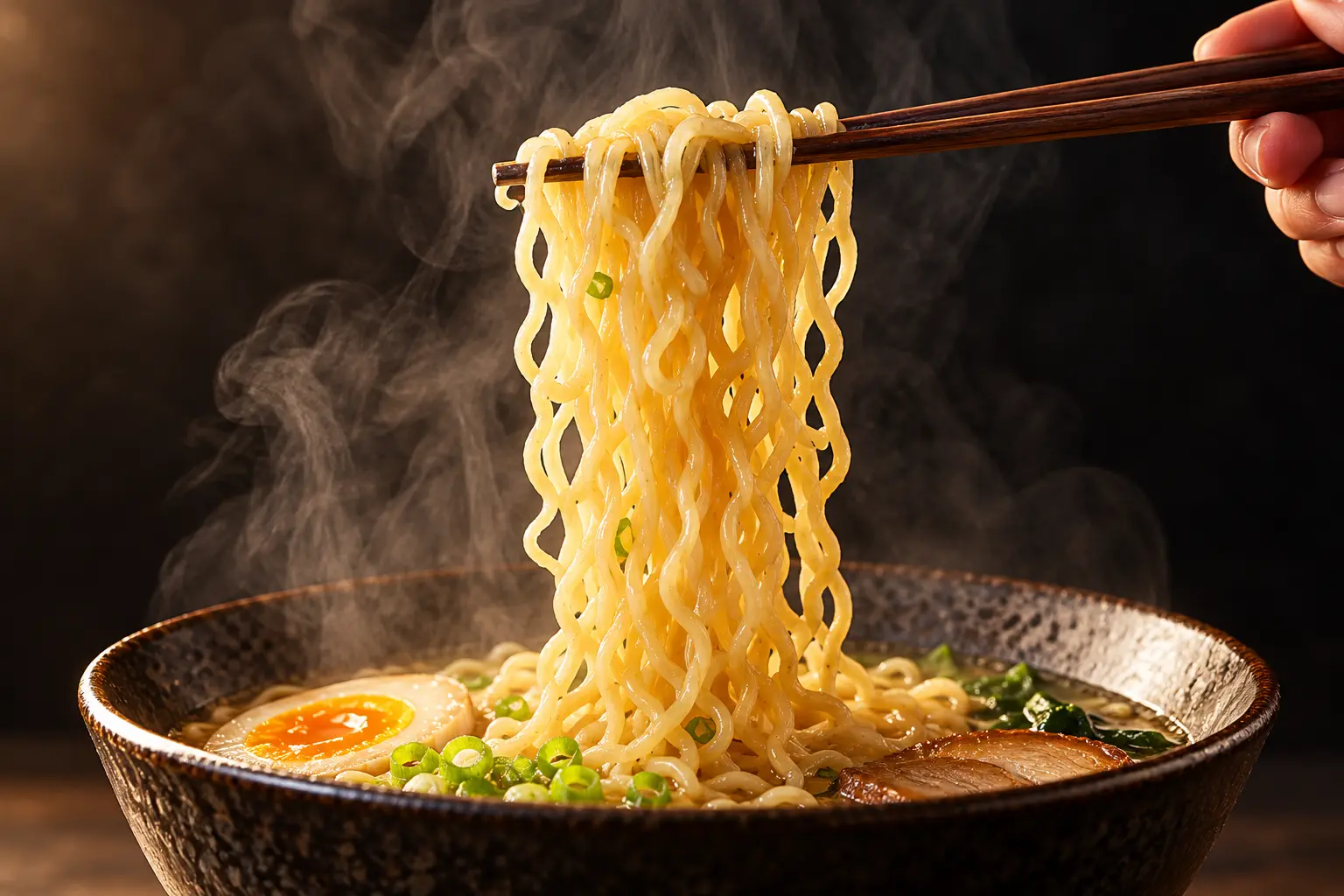
This instant noodles formulation platform uses Tianjiang modified starch to help manufacturers control rehydration speed, chewiness, strand elasticity, cooking loss, surface stickiness, noodle-block strength and processing stability across fried and non-fried instant noodle systems.
01 / DEFINE THE REHYDRATED NOODLE
Instant Noodles Solutions for Manufacturers and R&D Teams
A successful instant noodle must be designed around both factory processing and consumer preparation. Starch, protein, strand geometry, steaming and drying conditions all influence the final bowl.
Fast Rehydration
Promote efficient water penetration while preserving a structured noodle core.
Chewiness & Elasticity
Build resilient bite without creating an excessively hard or rubbery noodle.
Strand Strength
Reduce breakage through sheeting, slitting, steaming, drying and packaging.
Low Cooking Loss
Control solids release during rehydration for a cleaner broth and surface.
Non-Sticky Surface
Improve strand separation after rehydration and during hot holding.
Process Tolerance
Maintain texture through steam, frying or high-temperature hot-air drying.
02 / FOUR COMMERCIAL INSTANT NOODLE SYSTEMS
Four Instant Noodles Formulation Platforms
The Tianjiang platform covers fried cup noodles, chewy Korean-style ramyun, non-fried hot-air dried noodles and quick-rehydration cup products.
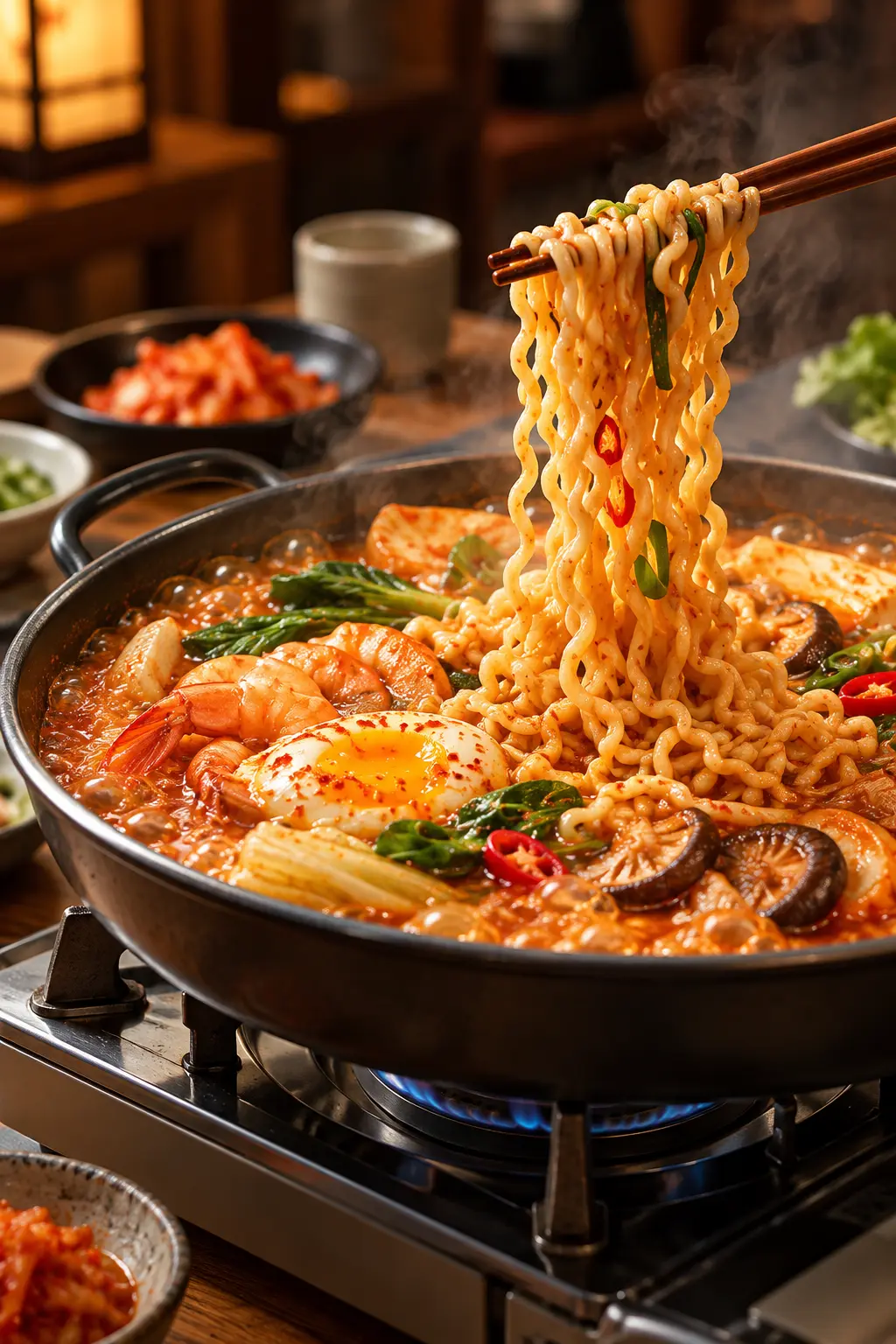
Product images illustrate noodle cake and serving formats. Drying method, rehydration speed and texture targets are defined by each formulation and require production trials.

Fried Cup Noodles
A mainstream fried instant noodle platform designed for rapid hydration, fine porous structure and balanced bite after hot-water preparation.
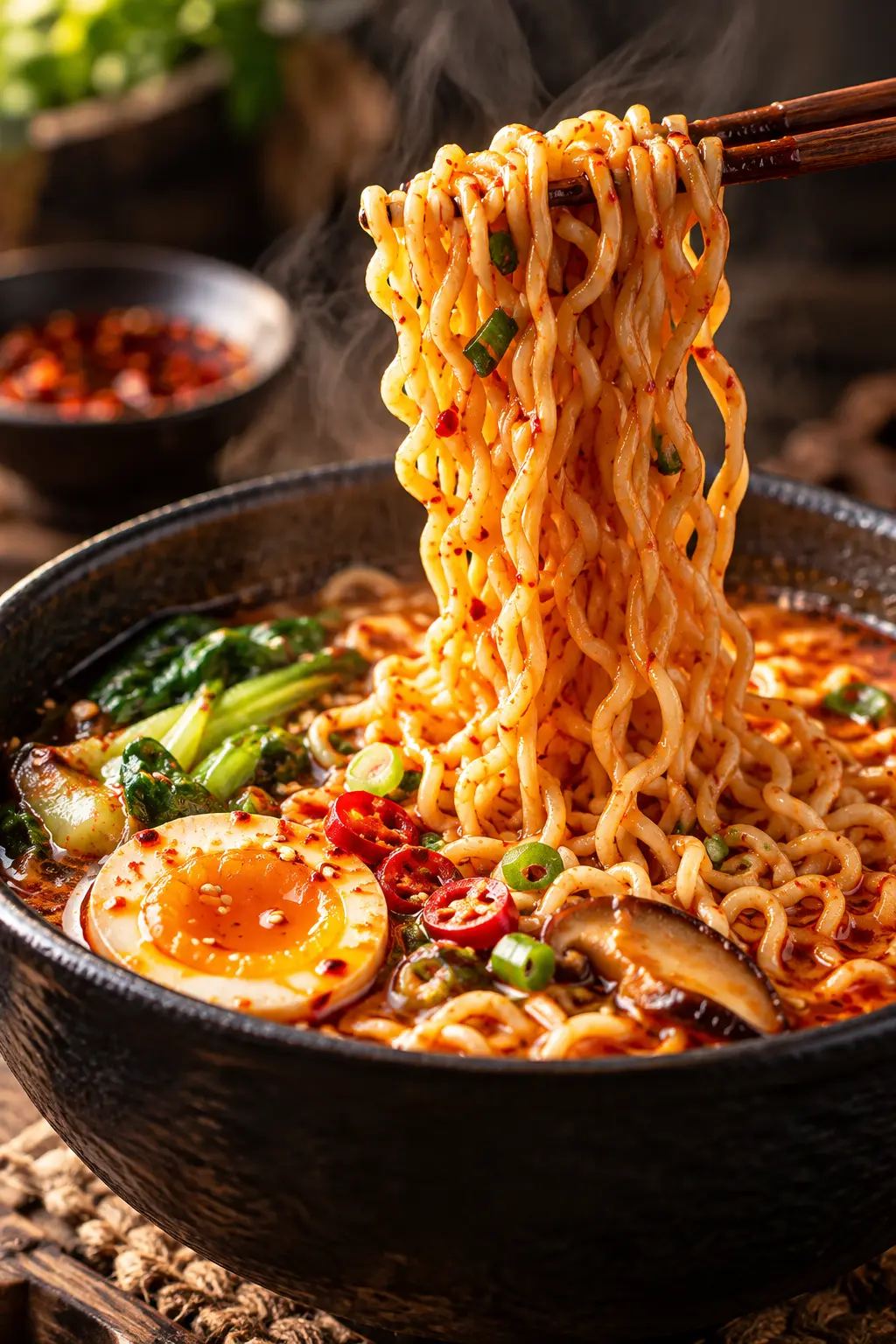
Chewy Korean-Style Ramyun
A thicker noodle platform designed for higher chewiness, elasticity and stronger texture during longer soup holding.
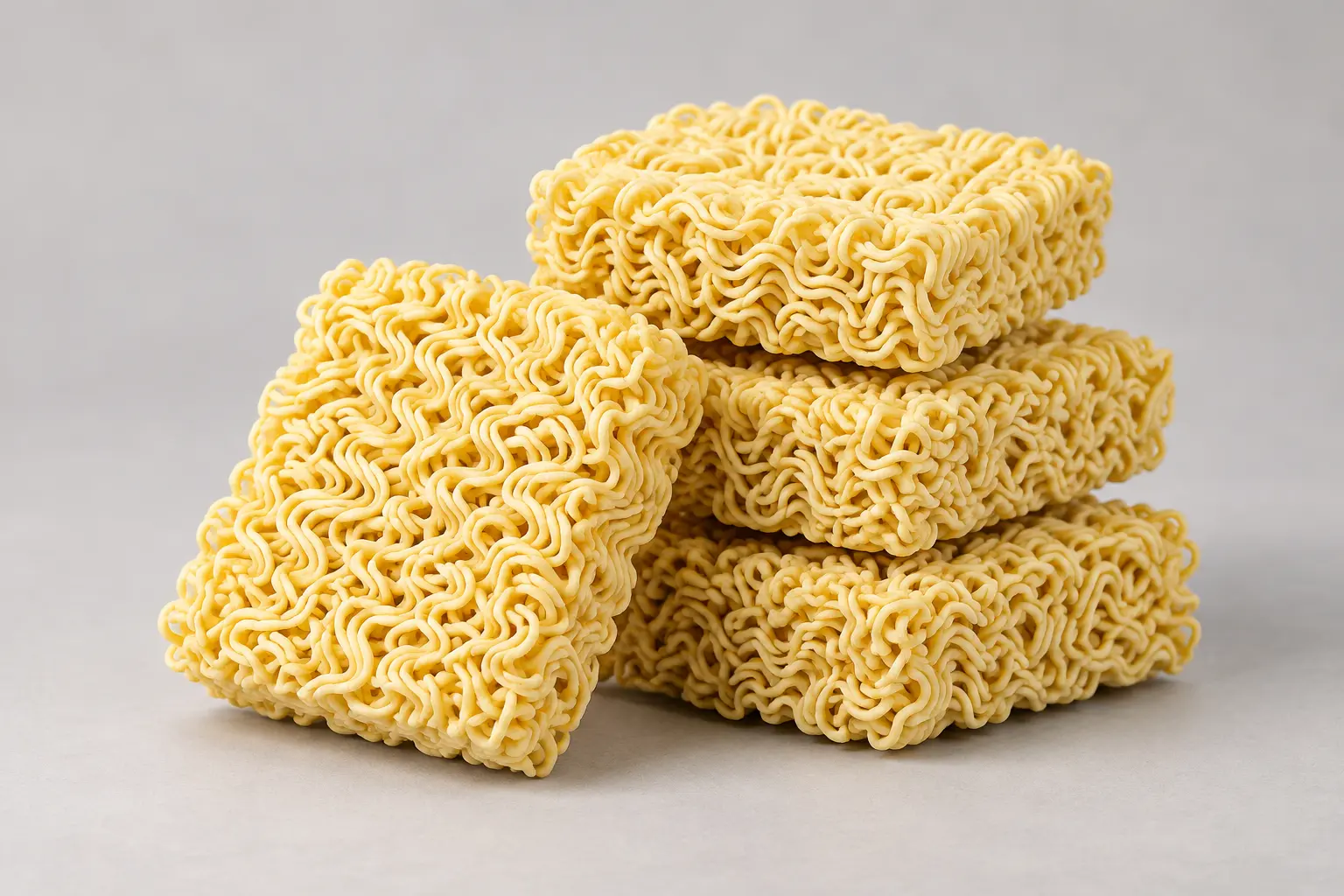
Non-Fried Hot-Air Dried Noodles
A lower-oil platform designed to compensate for the different porous structure created by hot-air drying instead of deep frying.
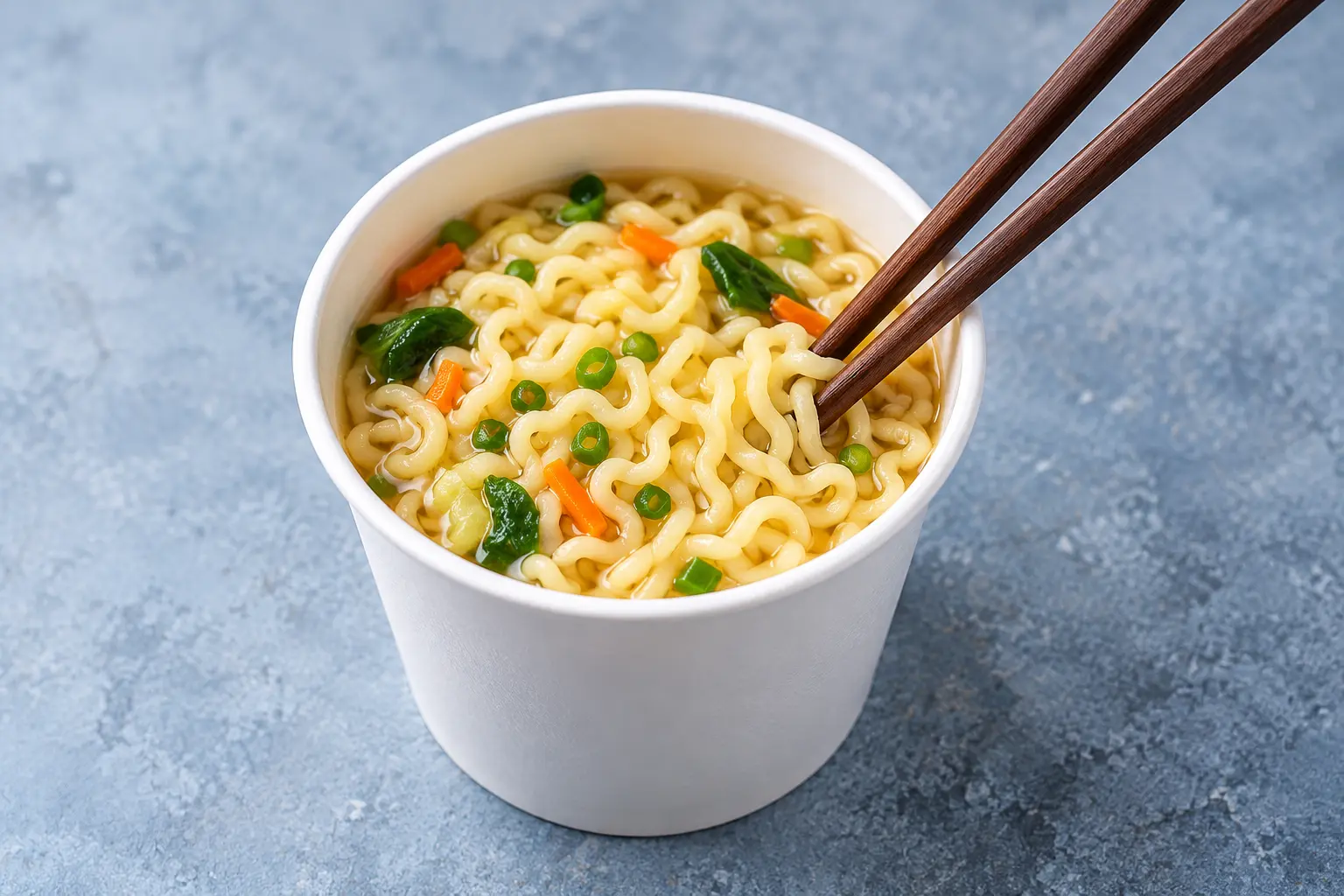
Quick-Rehydration Cup Noodles
A higher-starch system for thin noodle strands where rapid hydration and smooth, elastic texture are primary targets.
These formulas are independent Tianjiang application-development platforms. Public international product labels and instant-noodle processing literature were used to identify common ingredient and processing strategies; third-party commercial formulations were not copied.
03 / TIANJIANG COMMERCIAL PRODUCTION FORMULA
Tianjiang Instant Noodles Production Formulas
Select a noodle platform, enter the required dough batch and compare Tianjiang modified-starch dosage using wheat flour as the 100-part basis.
Instant Noodles Formulation Batch Calculator
Formula values are expressed as parts per 100 parts wheat flour. Frying oil uptake is treated as a process KPI rather than as dough-batch oil in the calculator.
| Ingredient | Parts | Batch Mass, kg | Primary Function |
|---|---|---|---|
| Total Dough | — | 100.000 | Pre-processing noodle dough |
TJ-IN-01 · 100 kg dough · 8.00 parts Tianjiang modified starch.
For meaningful trials, hold flour lot, dough moisture, sheet thickness, steaming degree, drying profile and final moisture constant when comparing starch grades.
04 / MODIFIED STARCH PERFORMANCE
How Modified Starch Improves Instant Noodles
The starch system changes how the noodle absorbs water, gelatinizes and recovers after drying, making starch selection especially important for instant noodles.
Rehydration
Support efficient hydration during consumer preparation without excessive surface breakdown.Chewiness
Build resilient bite and reduce a soft, mushy eating texture.Elasticity
Improve strand recovery after compression and bending.Cooking Loss
Help control solids release during rehydration and boiling.Surface Quality
Support smoother strands with reduced post-cook stickiness.Thermal Stability
Suitable grades can tolerate steaming, frying or high-temperature drying processes.
05 / COMMERCIAL MANUFACTURING
Instant Noodles Manufacturing Process
The finished noodle texture is created across dough mixing, sheeting, steaming, drying and final consumer rehydration.
-
Prepare alkaline water
Dissolve salt, carbonate system and soluble processing aids into the required water.
-
Blend dry ingredients
Uniformly combine wheat flour, native starch and Tianjiang modified starch.
-
Mix the dough
Add alkaline water under controlled mixing to produce uniform hydrated granules.
-
Rest & sheet
Allow moisture distribution, then progressively sheet the dough to the required thickness.
-
Slit & wave
Cut the sheet into strands and form the characteristic noodle wave.
-
Steam
Control starch gelatinization before final drying or frying.
-
Fry or hot-air dry
Create the porous structure required for rapid consumer rehydration.
-
Cool & package
Cool the noodle block, verify moisture and protect it against mechanical breakage.
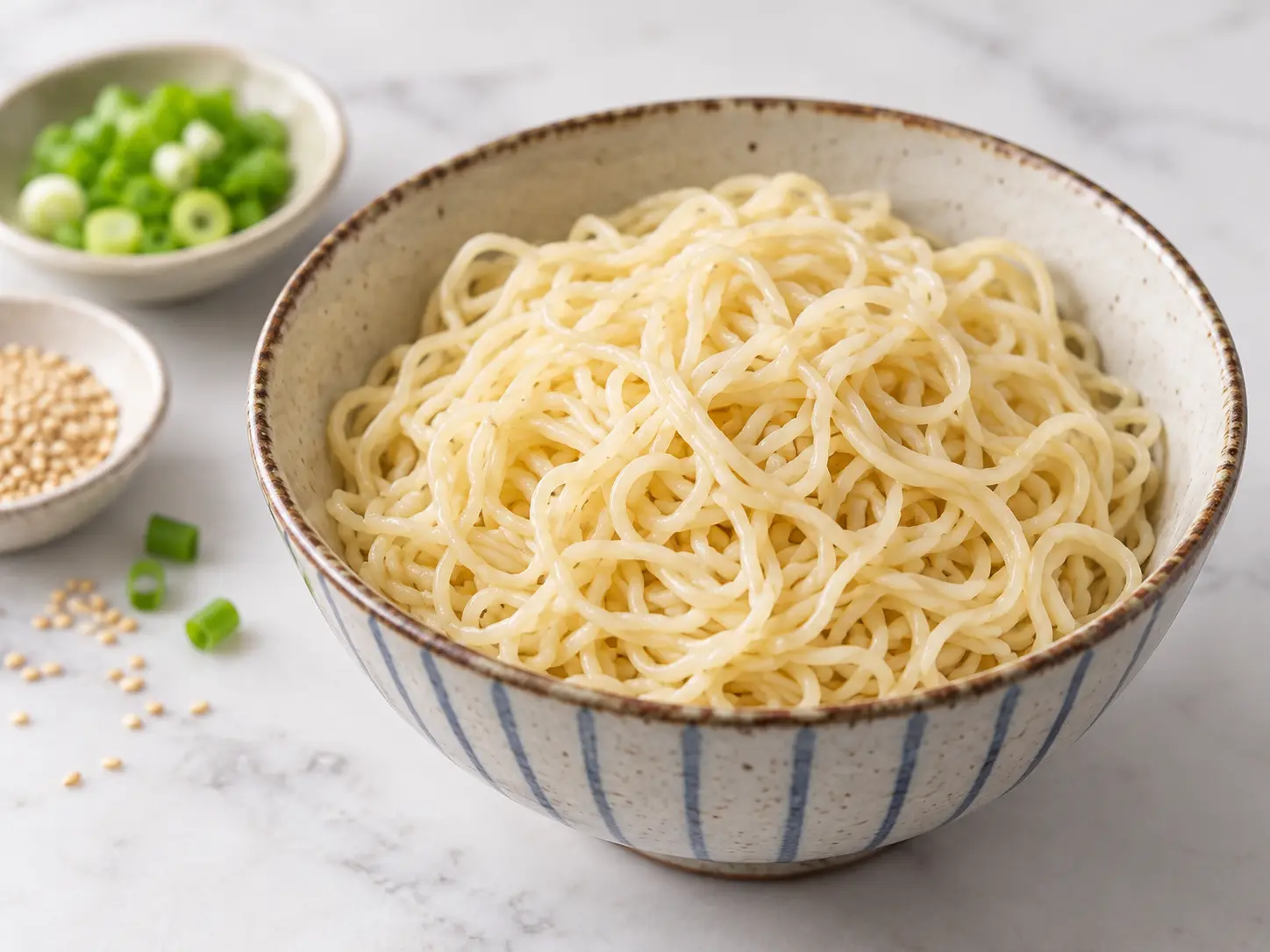
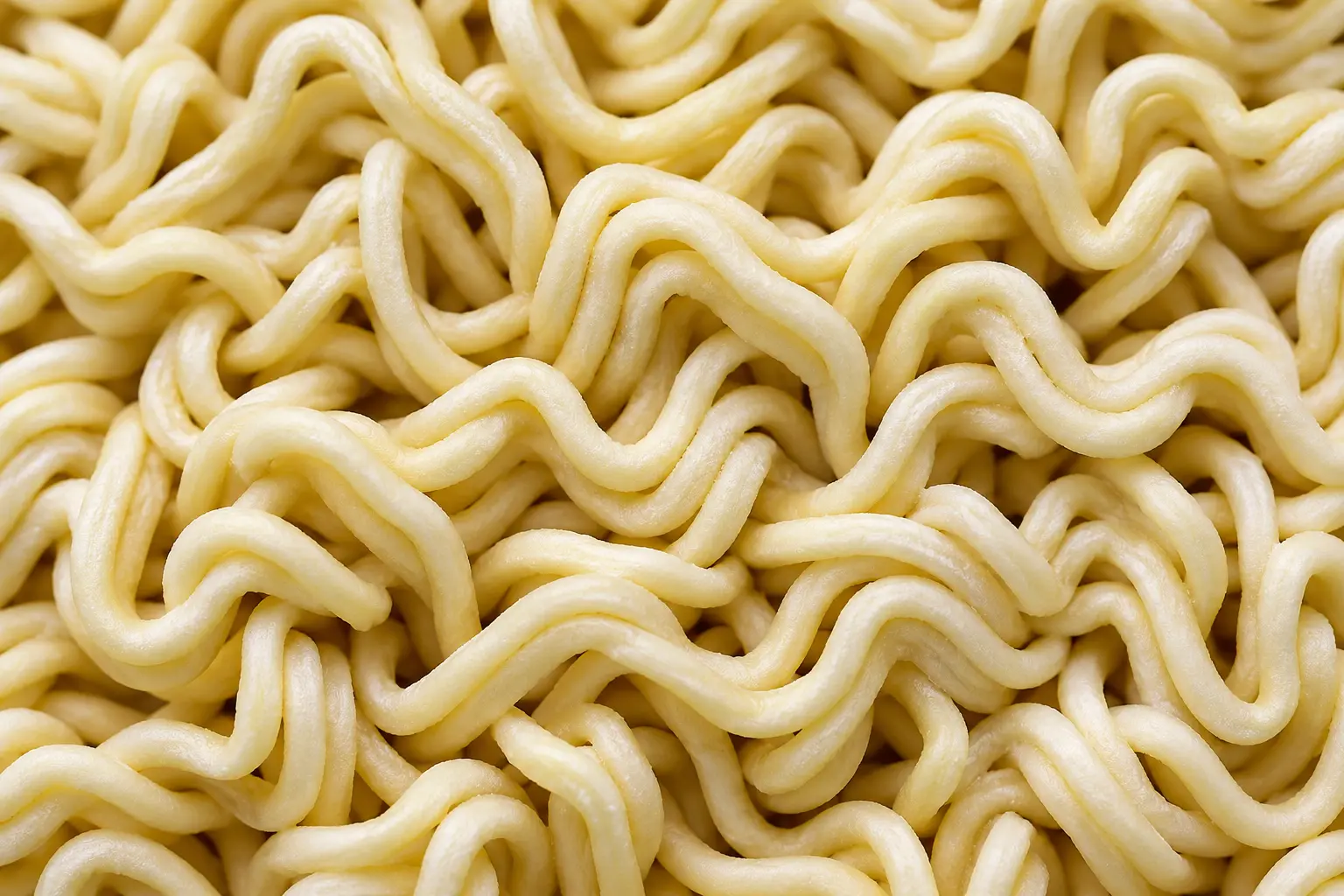
Noodle Formats Before and After Cooking
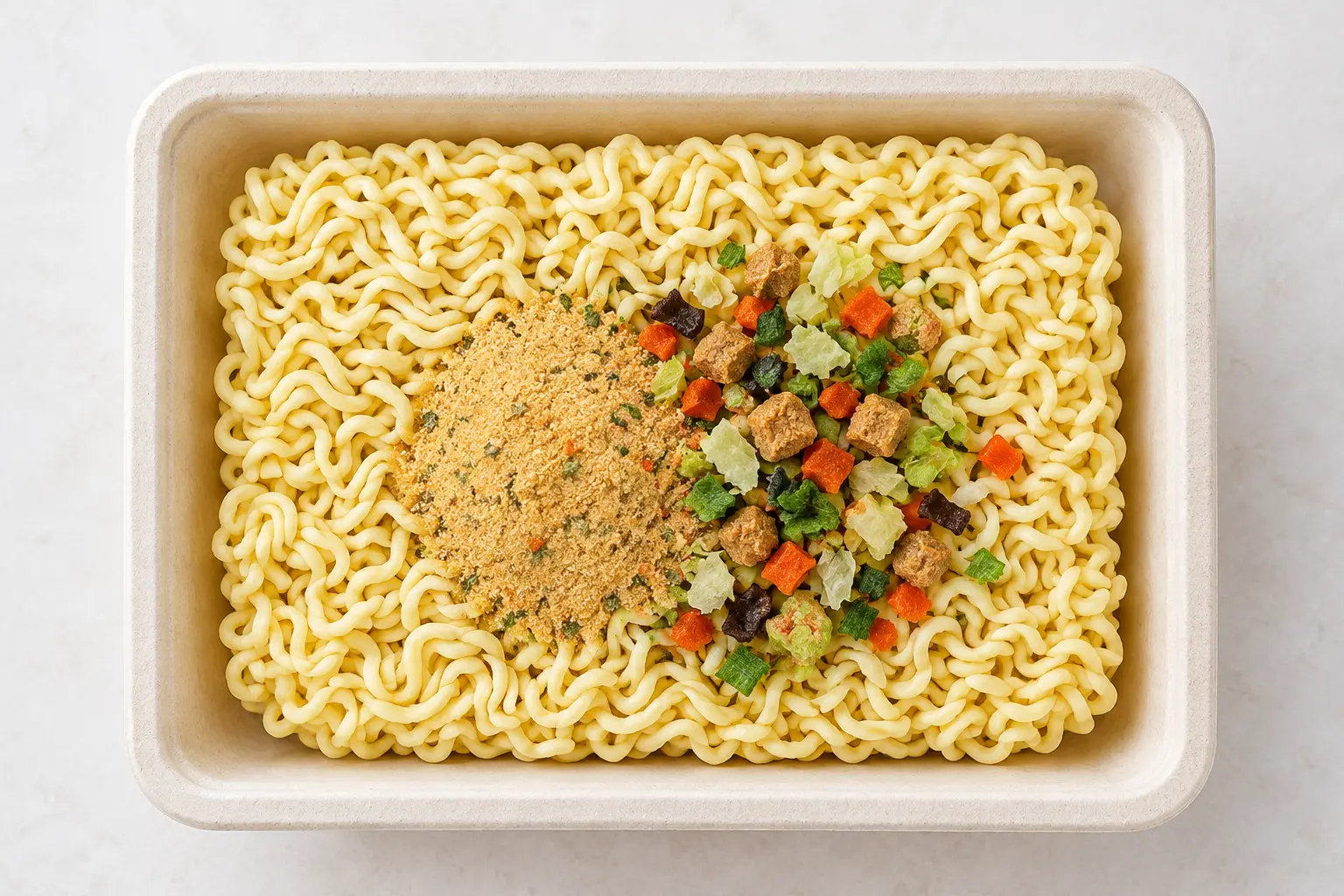
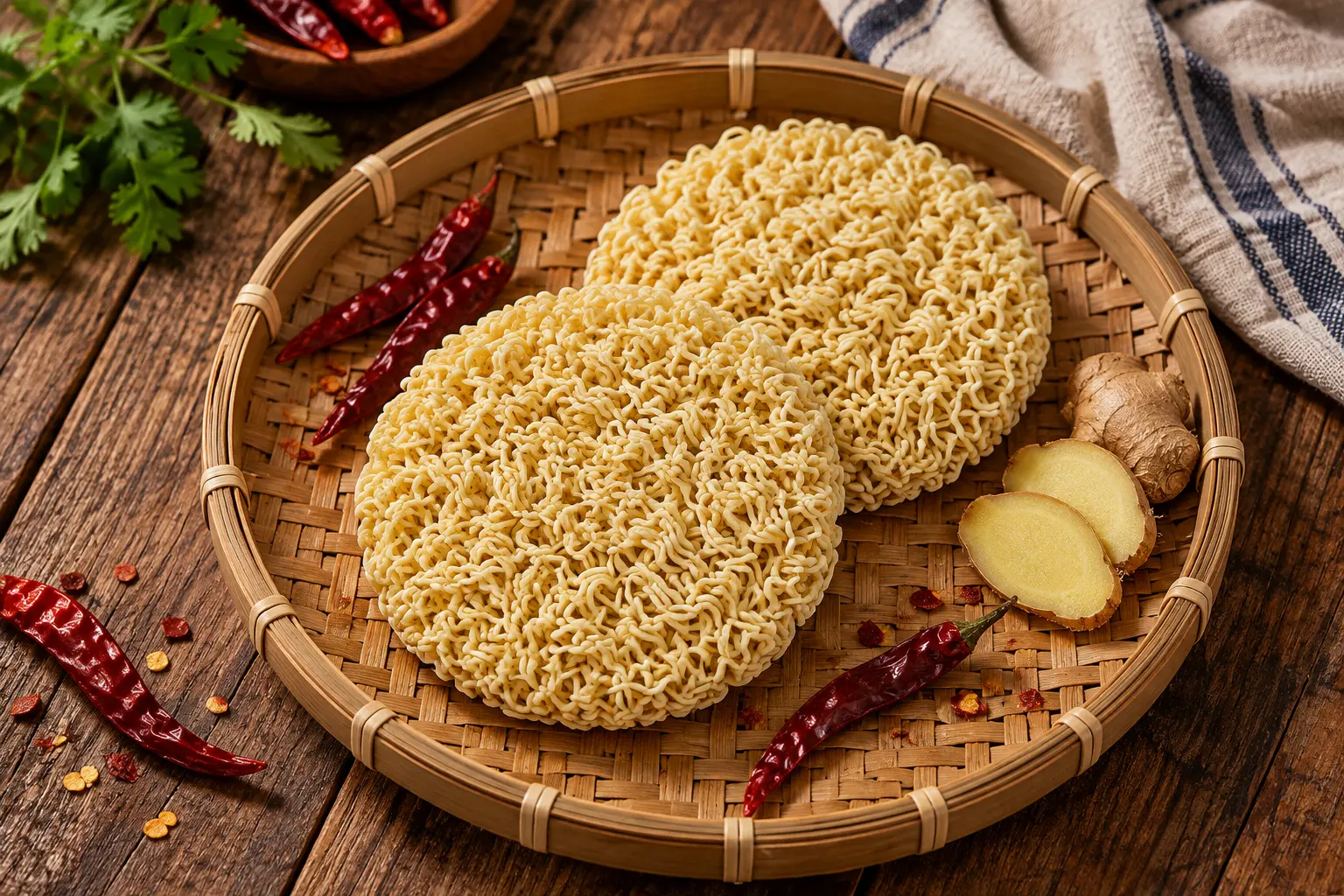
Fresh strands, cooked noodles and dried noodle cakes provide visual references for product development. The images show product formats rather than sheeting, steaming or drying equipment.

06 / TEST THE FINAL BOWL
Rehydration, Chewiness and Strand Strength
Evaluate the noodle after the actual consumer preparation cycle, not only immediately after production.
Rehydration Time
Measure the time required to eliminate an under-hydrated noodle core.
Tensile Strength
Measure strand resistance after standardized rehydration.
Cooking Loss
Measure solids released into cooking or rehydration water.
Hot-Hold Texture
Retest firmness and elasticity after prolonged soup contact.
07 / DIAGNOSE THE NOODLE FAILURE
Instant Noodles Formulation Troubleshooting
Starch should be adjusted after strand dimensions, steaming degree, final moisture and rehydration conditions have been standardized.
| Observation | Factors to Investigate | Controlled Next Trial |
|---|---|---|
| Noodles rehydrate too slowly | Low porosity, insufficient gelatinization, thick strands or unsuitable starch system. | Standardize strand thickness and steaming before increasing functional starch. |
| Noodles become mushy | Weak starch structure, excess steaming or excessive hydration. | Evaluate a more processing-stable starch at equal noodle thickness. |
| Noodles lack chewiness | Low protein, weak gluten network, low starch functionality or overcooking. | Compare a more resilient modified tapioca or potato starch. |
| Strands break during processing | Low dough cohesion, poor hydration, sheeting stress or excessive drying. | Check dough moisture and sheet reduction ratios. |
| High cooking loss | Weak gelatinized network or excessive surface damage. | Measure solids loss while holding processing conditions constant. |
| Noodles stick after rehydration | Surface starch release, over-hydration or inadequate structural stability. | Compare starch type and steaming degree. |
| Non-fried noodles stay hard | Insufficient pore structure, drying profile or starch gelatinization. | Optimize steaming and hot-air drying before changing water level. |
| Texture collapses during soup holding | Weak starch network or excessive hydration over time. | Screen a heat- and shear-stable modified starch. |
08 / SELECT STARCH BY NOODLE FORMAT
How to Select Modified Starch for Instant Noodles
Share flour protein, strand dimensions, steaming degree, drying method, rehydration time and target bite so Tianjiang can recommend the appropriate starch grade.
Fast-Rehydration Grade
Designed for cup noodles where rapid hot-water hydration is critical.
Chewy Texture Grade
Use for Korean-style ramyun and thicker, more resilient strands.
Non-Fried Noodle Grade
Support texture and rehydration in hot-air dried systems.
Modified Tapioca Starch
Suitable grades can provide elasticity, smooth texture and hydration performance.
Modified Potato Starch
Can be evaluated for resilient bite, water absorption and strand texture.
Cross-Linked Grade
Useful where stronger thermal and processing tolerance is required.
09 / STANDARDIZE EVERY NOODLE TRIAL
Instant Noodles Formulation and Quality Testing
Compare starch candidates using identical flour, strand thickness, steam conditions, final moisture and rehydration protocol.
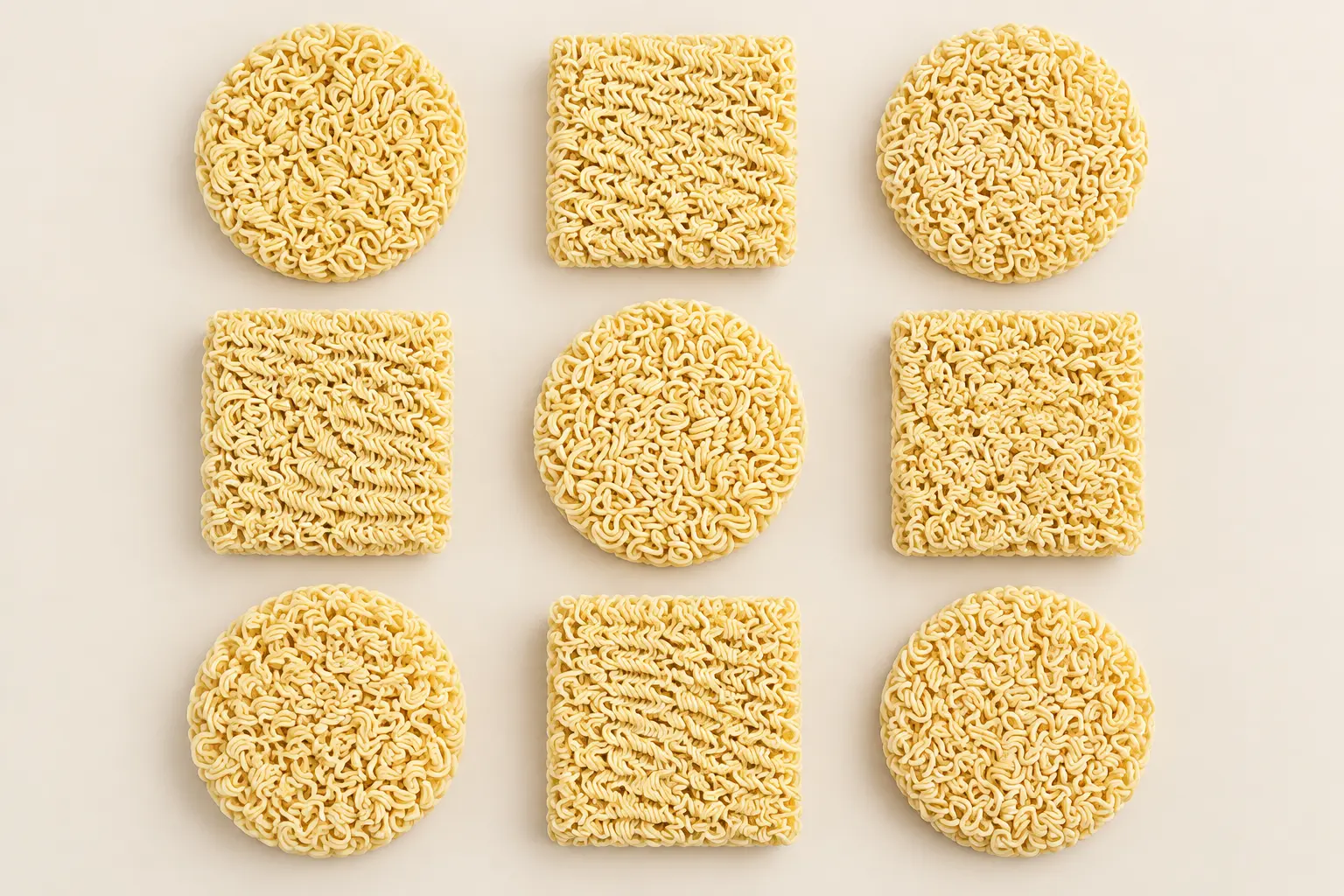
Noodle format reference. Rehydration, strand strength and soup-holding performance should be measured in product trials.
Dough Moisture
Measure before sheeting.Sheet Thickness
Standardize before strand cutting.Final Moisture
Verify after frying or drying.Rehydration Time
Use a fixed water temperature and volume.Texture Profile
Measure hardness, springiness and chewiness.Cooking Loss
Quantify solids released from the noodle strands.
10 / R&D TO PURCHASING
Modified Starch Specifications for Instant Noodles Purchasing
After a starch passes pilot and production testing, convert the R&D result into a repeatable purchasing specification.
Exact Tianjiang Grade
Confirm product code and recommended dosage.Botanical Source
Confirm tapioca, potato, waxy corn or other starch base.Modification Type
Confirm the functional and regulatory identity required by the market.Application Target
Specify rehydration, chewiness, cooking loss and processing requirements.Representative COA
Confirm incoming quality-control parameters.Commercial Planning
Confirm sample quantity, MOQ, packaging, lead time and monthly volume.
11 / TECHNICAL QUESTIONS
Instant Noodles Formulation FAQs
Technical guidance for instant noodle manufacturers, R&D teams and starch buyers.
Why Is Modified Starch Used in Instant Noodles?
Suitable modified starch can help control rehydration, chewiness, elasticity, strand integrity, cooking loss and processing tolerance.
How Much Modified Starch Can Be Used in Instant Noodles?
The Tianjiang development platforms on this page use approximately 8–15 parts modified starch per 100 parts wheat flour. The optimal dosage depends on starch grade, noodle thickness, steaming and drying method.
Which Starch Is Better for Chewy Instant Noodles?
Modified tapioca and modified potato starch are both useful candidates. The best choice depends on the desired elasticity, hardness, rehydration rate and processing conditions.
Can Modified Starch Reduce Instant Noodle Rehydration Time?
A suitable starch system can support rapid hydration, but strand thickness, steam gelatinization and pore structure created during frying or drying also have major effects.
Can Modified Starch Be Used in Non-Fried Instant Noodles?
Yes. Suitable starch systems can be evaluated to improve texture and rehydration in hot-air dried instant noodles.
Why Do Instant Noodles Become Mushy in Soup?
Possible causes include excessive hydration, weak starch structure, over-steaming or insufficient thermal stability.
Can Tianjiang Develop a Korean-Style Chewy Ramyun?
Yes. A higher-starch and stronger-texture system can be evaluated for thicker, more resilient Korean-style noodle strands.
What Information Should I Send Tianjiang?
Share flour protein, current formula, modified starch grade, sheet thickness, strand dimensions, steaming conditions, frying or drying process, rehydration time and target texture.
12 / TALK TO TIANJIANG
Request Modified Starch Samples for Instant Noodles
Share your current instant noodles formulation and production challenge so Tianjiang can recommend a candidate starch for your next factory trial.
Prepare Your Instant Noodle Project Brief
13 / RELATED NOODLE APPLICATIONS