
TIANJIANG / CUSTARD SAUCE FORMULATION
Custard Sauce Formulation with Modified Starch
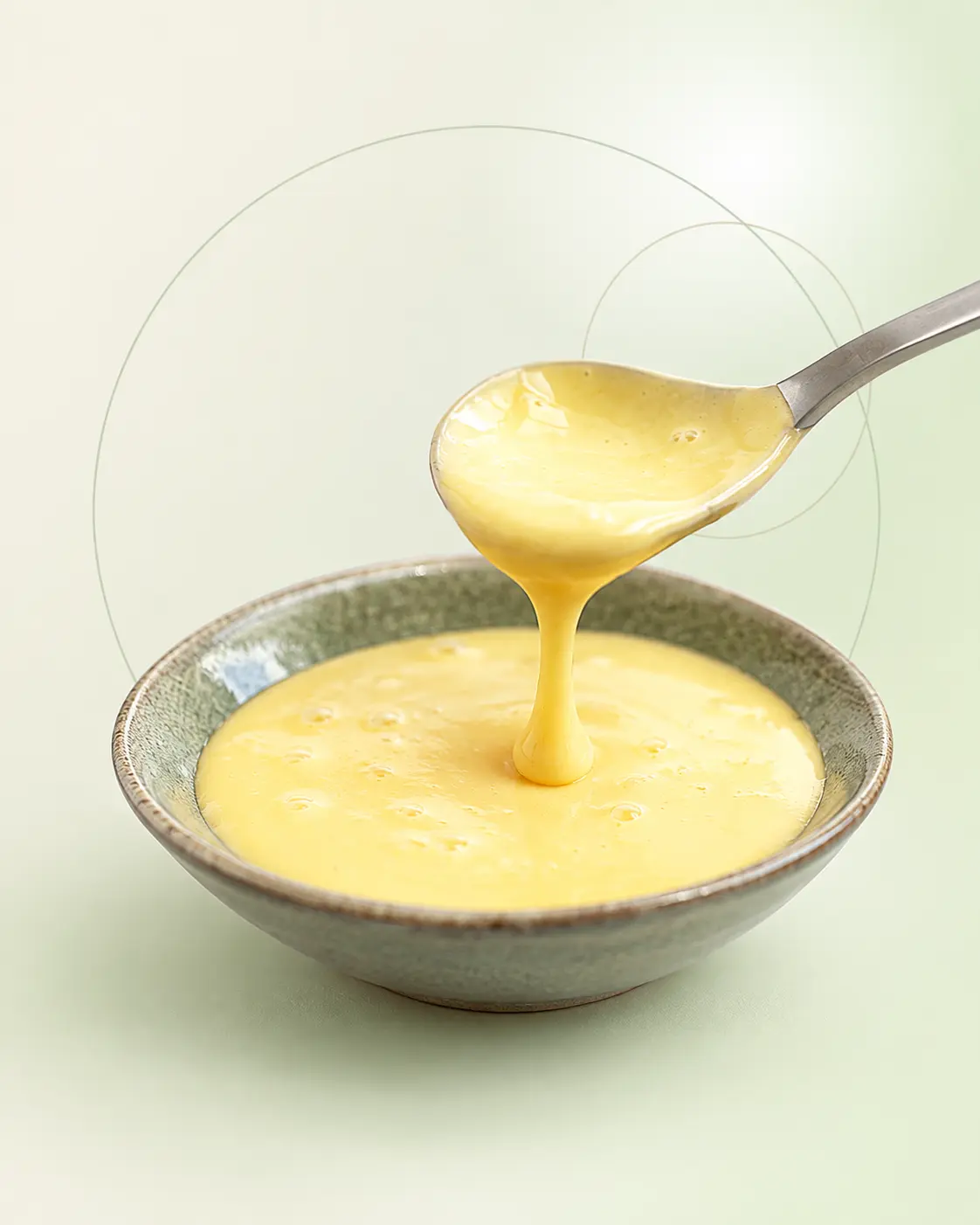
This custard sauce formulation uses Tianjiang modified starch to help manufacturers build smooth viscosity, creamy mouthfeel, processing tolerance and consistent finished texture for dairy dessert production.
01 / DEFINE THE PRODUCT TARGET
Custard Sauce Solutions for Manufacturers and R&D Teams
Define the intended flow, spoonability, creaminess, serving temperature, storage route and packaging before selecting the modified starch grade.
Manufacturing Consistency
Control powder dispersion, emulsification, heating, shear and filling so the finished sauce reaches a consistent texture from batch to batch.
Texture Development
Balance starch, dairy solids, oil and sugar to achieve a creamy sauce without excessive gumminess, gelation or starch flavor.
Purchasing and Scale-Up
Move from formulation approval to production with the exact starch grade, specification, sample, COA, packaging and supply requirements.
02 / TIANJIANG PRODUCTION REFERENCE
Tianjiang Custard Sauce Production Formula
TJ-CUST-01 converts Tianjiang's custard sauce application ranges into a defined manufacturing-oriented reference formula for controlled production trials and scale-up evaluation.
TJ-CUST-01 / 100 kg Production Reference
| Ingredient | Weight % | Primary Function |
|---|---|---|
| Water | 56.10 | Continuous phase and formula balance. |
| Soybean oil | 16.50 | Creaminess, lubrication and fat-phase body. |
| Sugar | 15.50 | Sweetness, solids and overall flavor balance. |
| Tianjiang modified starch | 4.00 | Primary viscosity, body and processing stability. |
| Whole milk powder | 4.00 | Dairy flavor, protein, fat and milk solids. |
| Whey protein | 3.50 | Protein contribution, dairy solids and texture. |
| Vanilla flavor | 0.20 | Finished flavor profile. |
| Salt | 0.10 | Flavor balance. |
| Preservative, where permitted | 0.10 | Market-specific preservation system component. |
| Total | 100.00 | Finished formula basis |
The preservative system, legal use level, final thermal process, packaging, microbiological controls and shelf life must be established for the manufacturer's specific product, processing line and destination market.
03 / SCALE THE FORMULA
Custard Sauce Formulation Batch Calculator
Scale TJ-CUST-01 by finished batch size and compare soybean oil and Tianjiang modified starch levels while automatically maintaining a 100% formula balance.
TJ-CUST-01 Production Calculator
All values are weight/weight. Changes to oil or starch rebalance water only. The calculator performs mass balance; finished viscosity must be confirmed under actual processing conditions.
| Ingredient | Formula % | Batch Mass, kg | Control Point |
|---|---|---|---|
| Water | 56.10 | 56.100 | Automatically balances the formula. |
| Soybean oil | 16.50 | 16.500 | Control oil specification and addition rate. |
| Sugar | 15.50 | 15.500 | Keep constant during first starch comparison. |
| Tianjiang modified starch | 4.00 | 4.000 | Confirm exact grade and cook-up conditions. |
| Whole milk powder | 4.00 | 4.000 | Hold supplier and solids specification constant. |
| Whey protein | 3.50 | 3.500 | Record protein concentration and supplier. |
| Vanilla flavor | 0.20 | 0.200 | Add according to the selected flavor system. |
| Salt | 0.10 | 0.100 | Flavor balance. |
| Preservative, where permitted | 0.10 | 0.100 | Confirm legality and complete preservation system. |
| Total | 100.00% | 100.000 | Finished batch basis |
100 kg batch · 16.5% soybean oil · 4.0% Tianjiang modified starch · 56.1% water.
04 / MODIFIED STARCH PERFORMANCE
How Modified Starch Supports Custard Sauce Texture
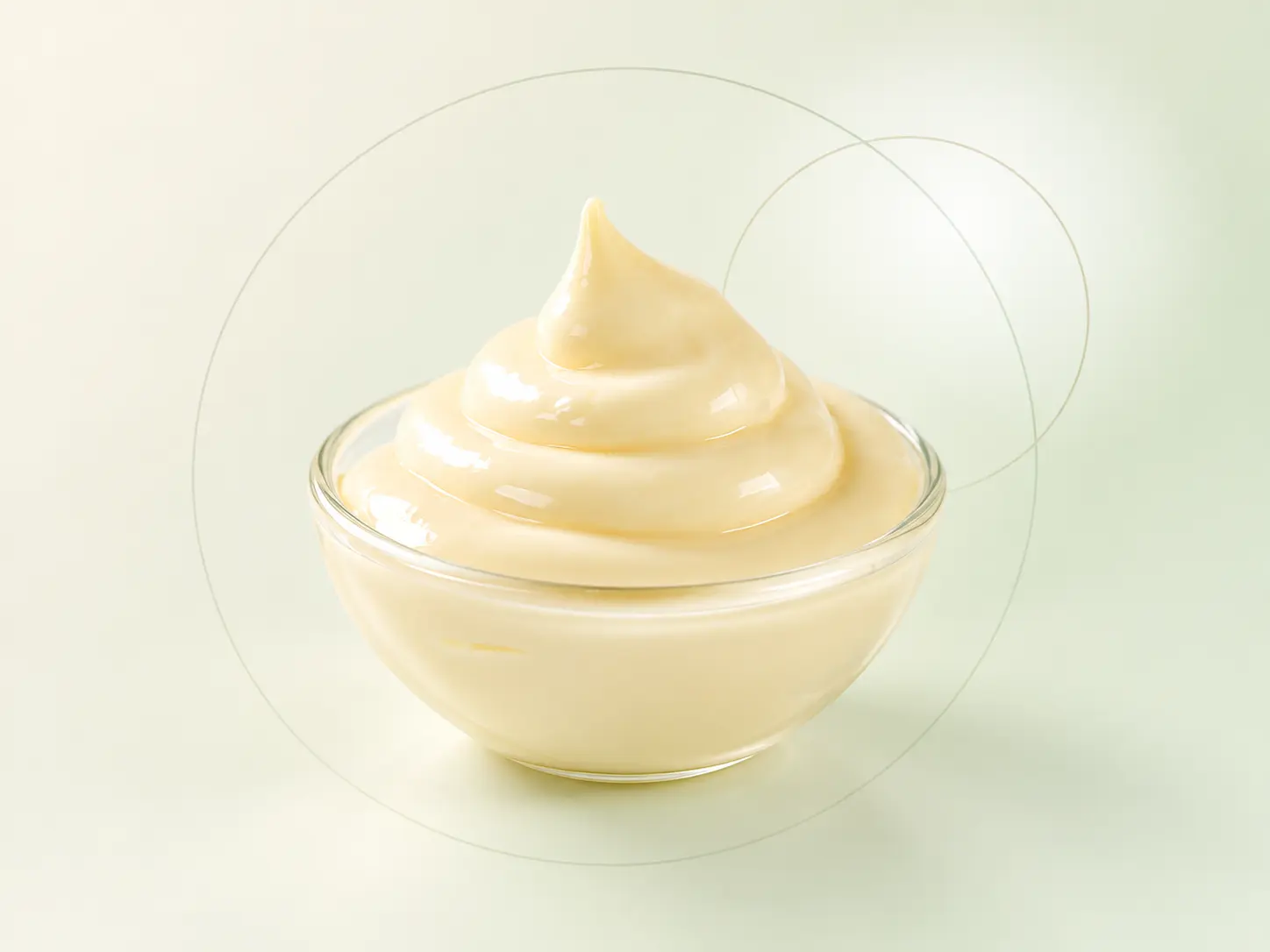
The selected starch must create the required body while remaining compatible with dairy proteins, fat, sugar, heat and production shear.
Viscosity and Body
Build a smooth continuous phase for pouring, coating or spoonable custard products.Creamy Mouthfeel
Support a rich sensory profile without excessive gumminess or brittle gel texture.Heat Tolerance
Maintain useful viscosity through the specified hot-processing route.Shear Resistance
Help control viscosity loss during emulsification, pumping and filling.Freeze-Thaw Stability
For frozen or temperature-cycled products, screen the appropriate grade for syneresis control.Water Management
Evaluate free-water separation throughout the intended storage life.
05 / COMMERCIAL MANUFACTURING
Custard Sauce Manufacturing Process
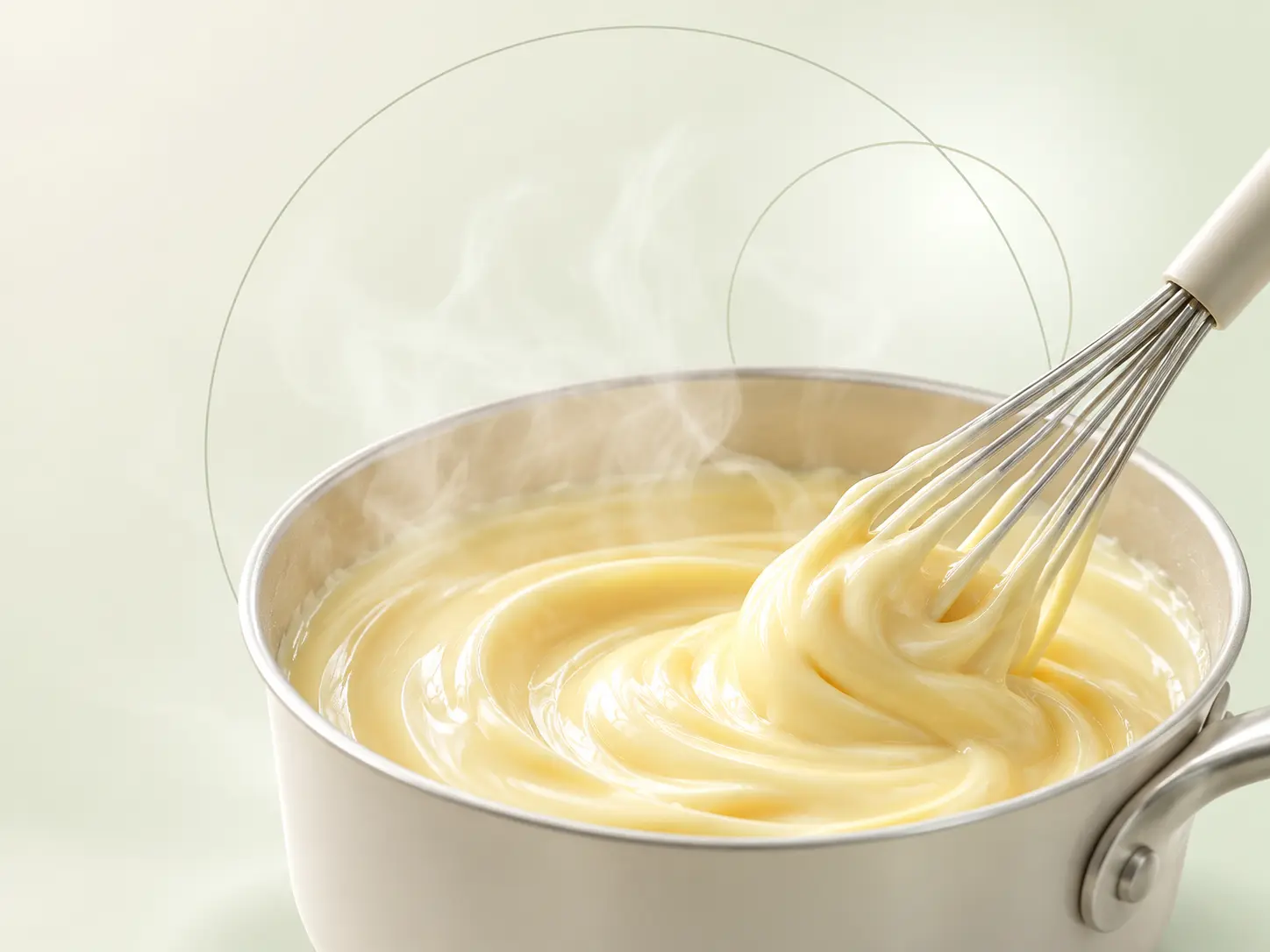
The Tianjiang process uses controlled powder dispersion, emulsification, continuous agitation and hot starch development to produce a smooth, uniform sauce.
Recommended Hot-Process Sequence
-
Weigh all ingredients
Prepare each ingredient according to the approved batch sheet and supplier specifications.
-
Prepare the water phase
Charge the process water and begin controlled agitation before introducing the dry ingredients.
-
Disperse the dry blend
Add sugar, Tianjiang modified starch, whole milk powder and whey protein using a repeatable dispersion method to minimize lumping.
-
Add oil and emulsify
Introduce soybean oil gradually and apply sufficient emulsification and shear until the mixture is homogeneous with no visible phase separation.
-
Heat while continuously mixing
Continue agitation while raising the product temperature to above 90°C. Maintain appropriate mixing until the selected starch has fully developed.
-
Finish, fill and cool
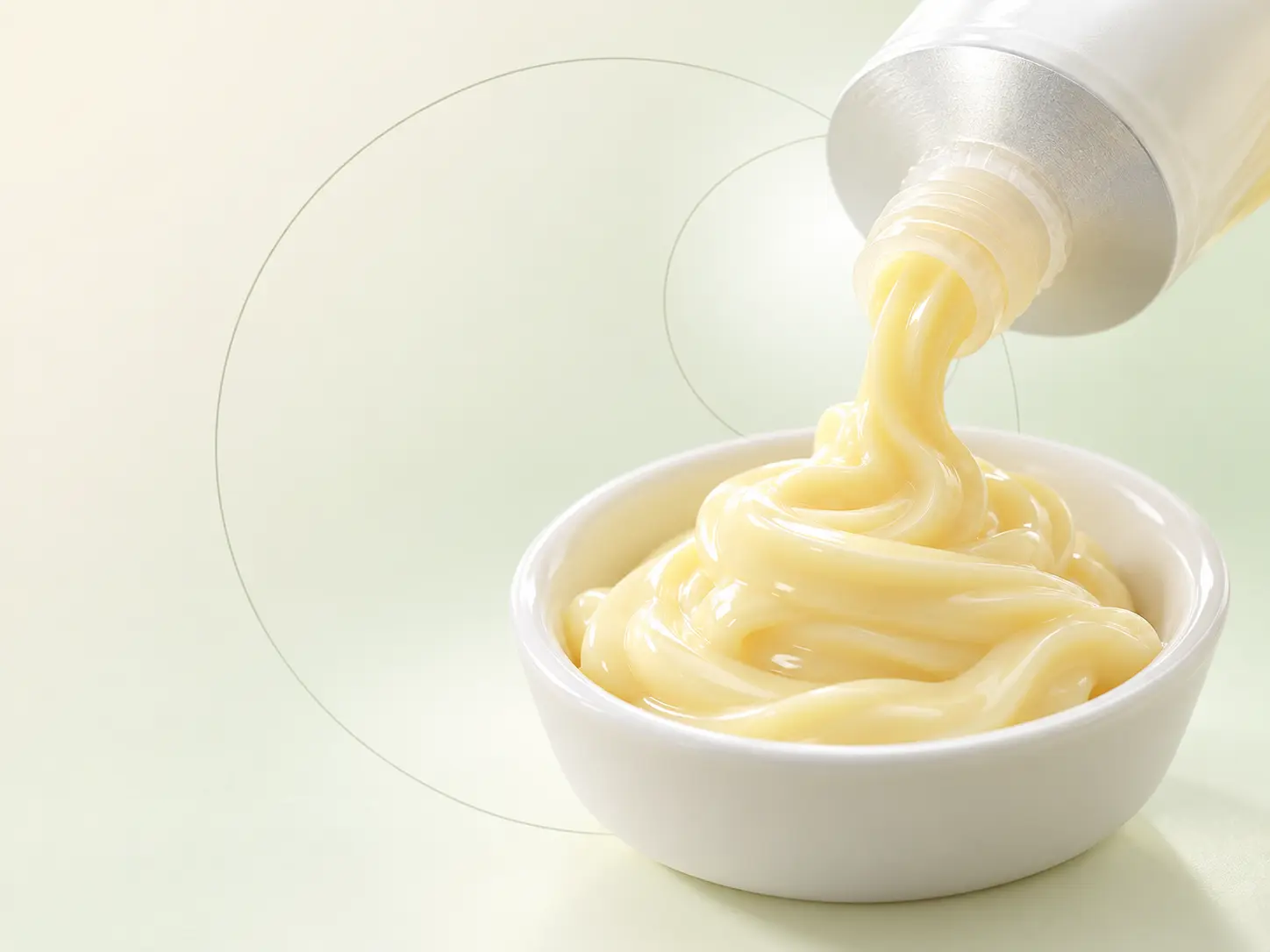
Complete the approved flavor and preservation steps, fill under the established manufacturing conditions, then cool according to the product process specification.

The temperature above 90°C describes Tianjiang's custard sauce starch-development route. The manufacturer's validated food-safety process, holding time, filling method and cooling schedule must be established for the final product and equipment.
06 / DIAGNOSE THE FAILURE MODE
Custard Sauce Processing and Texture Troubleshooting
Do not correct every texture defect by simply increasing starch dosage. First determine whether the problem originates from starch development, emulsion structure, solids, shear or storage.
| Production Issue | Factors to Investigate | Recommended Controlled Trial |
|---|---|---|
| Sauce is too thin | Starch grade, starch dosage, heating profile, hydration and shear history. | Compare 3%, 4% and 5% starch with oil and total solids held constant. |
| Sauce is too thick or pasty | Excess starch, solids concentration, evaporation and over-processing. | Reduce starch one step while maintaining the same process and finished mass. |
| Oil separation | Oil addition rate, emulsification intensity, milk protein system and product temperature. | Review emulsification before increasing starch. |
| Water separation / syneresis | Starch selection, incomplete cooking, storage conditions and freeze-thaw history. | Compare equal samples after standardized storage or temperature cycling. |
| Viscosity drops after pumping | Shear sensitivity, incomplete starch development, pump design and product temperature. | Measure the same batch before and after a defined pump pass. |
| Texture becomes grainy | Powder dispersion, protein behavior, heating conditions or incomplete mixing. | Review powder addition and temperature history before changing starch level. |
| Weak creamy mouthfeel | Oil level, milk solids, whey protein, starch type and total solids balance. | Compare sensory results with viscosity results instead of optimizing viscosity alone. |
07 / SELECT BY PROCESS AND TEXTURE
How to Select Modified Starch for Custard Sauce
Share your formulation, heating profile, shear exposure, storage conditions and texture target so Tianjiang can recommend an appropriate candidate grade for plant testing.
Hot-Process Stability
Match the starch to the actual cooking temperature, hold time and equipment profile.
Shear Resistance
Consider high-shear emulsification, pumping and filling when selecting the grade.
Freeze-Thaw Stability
For frozen products or temperature cycling, evaluate the grade for syneresis and texture recovery.
Modified Corn Starch
Suitable grades can provide robust viscosity, processing tolerance and creamy body.
Modified Tapioca Starch
Suitable grades can be evaluated for smooth mouthfeel and specific sensory targets.
Commercial Documentation
Confirm exact grade, botanical source, technical specification, COA and market documentation.
08 / DEVELOP AROUND THE END USE
Custard Sauce Applications and Texture Targets
The preferred starch grade and dosage change with the final serving method, temperature, package and required flow profile.
Pourable Vanilla Custard
Target a smooth flowing texture that coats dessert without becoming excessively thick after cooling.
Thick Dessert Custard
Develop higher body and spoonability while maintaining a creamy, non-pasty mouthfeel.
Bakery Custard Filling
Evaluate the starch for filling body, water control and the thermal history required by the bakery application.
Chocolate Custard Sauce
Rebalance starch around cocoa solids, fat and flavor ingredients rather than using the vanilla formula unchanged.
Reduced-Fat Custard
Use starch trials to rebuild body when oil or dairy fat is reduced, while separately evaluating flavor and nutritional targets.
Frozen Dessert Applications
Select a grade with appropriate freeze-thaw performance and measure water separation after defined temperature cycling.
09 / MAKE EVERY TRIAL COMPARABLE
Custard Sauce Formulation and Quality Testing
Compare candidate starches using the same formula, batch size, heating profile, conditioning time and measurement temperature.

Recommended Evaluation Points
- Viscosity Document instrument, spindle or geometry, speed, temperature and sample age.
- Flow and coating Compare pour behavior, spoon coating and finished serving texture.
- Syneresis Record visible water separation after defined chilled or ambient storage.
- Freeze-thaw performance When relevant, use a documented cycling method and compare separation and texture recovery.
- Heat and shear response Compare viscosity before and after the actual heating and pump history.
- Sensory quality Evaluate creaminess, smoothness, starchiness and dairy flavor together.
10 / MOVE FROM R&D TO PURCHASING
Modified Starch Specifications for Custard Sauce Purchasing
Once a formula performs as required, connect the R&D result with quality, procurement and production requirements.
Exact Grade Specification
Request the specific Tianjiang grade, preparation instructions and technical specification.Representative COA
Review relevant quality parameters before production approval.Botanical Source
Confirm corn, tapioca or another declared starch source for the selected product.Regulatory Documentation
Confirm ingredient designation, allergens, certifications and destination-market fit.Commercial Terms
Confirm sample quantity, MOQ, pack size, quotation basis and lead time.Supply Planning
Share expected monthly volume, delivery destination and change-control requirements.

11 / TECHNICAL QUESTIONS
Custard Sauce Formulation FAQs
Practical formulation guidance for custard sauce manufacturers, R&D teams and ingredient buyers.
How Much Modified Starch Is Used in Custard Sauce?
TJ-CUST-01 uses 4.0% Tianjiang modified starch as its standard formulation reference. Tianjiang's application range is 3% to 5%, and the exact level should be optimized around the starch grade, oil level, dairy solids and finished viscosity target.
What Does Modified Starch Do in Custard Sauce?
Depending on the selected grade, modified starch can contribute viscosity, creamy body, water management, heat tolerance, shear resistance and freeze-thaw stability.
Why Is the Custard Sauce Heated Above 90°C?
The Tianjiang hot-process route heats the sauce above 90°C under continuous agitation so the selected cook-up starch can fully develop. Exact process time should be matched to the grade and production equipment.
Why Does Custard Sauce Become Thin After Pumping?
Possible causes include excessive shear, incomplete starch development, product temperature or an unsuitable starch grade. Compare viscosity before and after a controlled pump pass.
Why Does Water Separate During Storage?
Review starch selection, cooking conditions, total solids, storage temperature and any freeze-thaw exposure. Water separation should be measured after standardized conditioning.
Can Modified Tapioca Starch Be Used in Custard Sauce?
Yes, an appropriate modified tapioca starch can be evaluated where its texture, processing stability and sensory characteristics fit the product target. Modified corn starch can also be screened.
Can Modified Starch Help With Reduced-Fat Custard?
Modified starch can help rebuild body when fat is reduced, but it does not directly replace dairy flavor or nutritional composition. A reduced-fat version should be evaluated as a separate formula.
12 / TALK TO TIANJIANG
Request Modified Starch Samples for Custard Sauce
Share your formula, process conditions, storage requirements and target texture so Tianjiang can recommend a candidate modified starch grade.
Prepare Your Custard Sauce Project Brief
Tell us about your formula and manufacturing needs to prepare a clear technical inquiry.
13 / CONTINUE EXPLORING