
TIANJIANG / CRYSTAL JAM FORMULATION
Crystal Jam Formulation with Modified Starch
This crystal jam formulation platform uses high-clarity Tianjiang modified starch to help manufacturers develop transparent, glossy and stable neutral glazes, clear fruit glazes and pastry nappage with controlled flow, clean application and smooth mouthfeel.
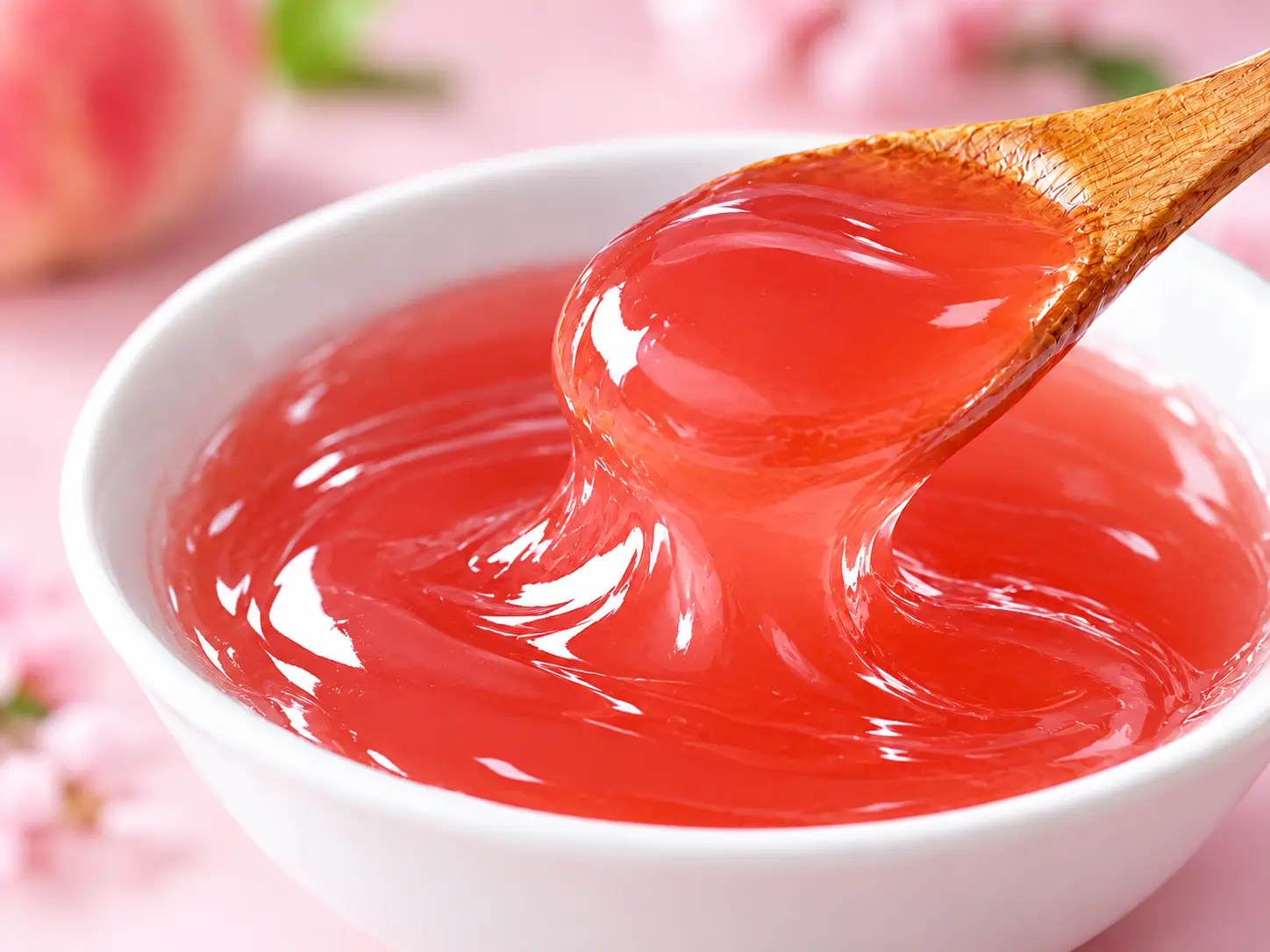
01 / DEFINE THE GLAZE APPLICATION
Crystal Jam Solutions for Manufacturers and R&D Teams
Define whether the product will be brushed, sprayed, pumped, deposited or applied cold, then set targets for transparency, gloss, viscosity, tack, fruit protection and storage stability.
Transparent Appearance
Build enough body to coat the surface without creating excessive haze, opacity or a starchy appearance.
Application Control
Match viscosity to brush, spray, pump, depositor or cold-application equipment without stringing or dripping.
Commercial Scale-Up
Connect the selected formulation to the exact Tianjiang starch grade, specification, COA, pack size, MOQ and production supply plan.
02 / INTERNATIONAL GLAZE FORMATS
Crystal Jam, Neutral Glaze and Clear Fruit Glaze Platforms
Professional bakery and patisserie manufacturers typically require different systems for concentrated glaze, hot ready-to-use glaze, cold application and fruit-flavored crystal glaze.

Neutral Crystal Glaze Concentrate
A high-solids concentrate designed for dilution before hot brush or spray application.

Ready-to-Use Hot Crystal Glaze
Designed for controlled hot brushing or spraying without an additional large dilution step.
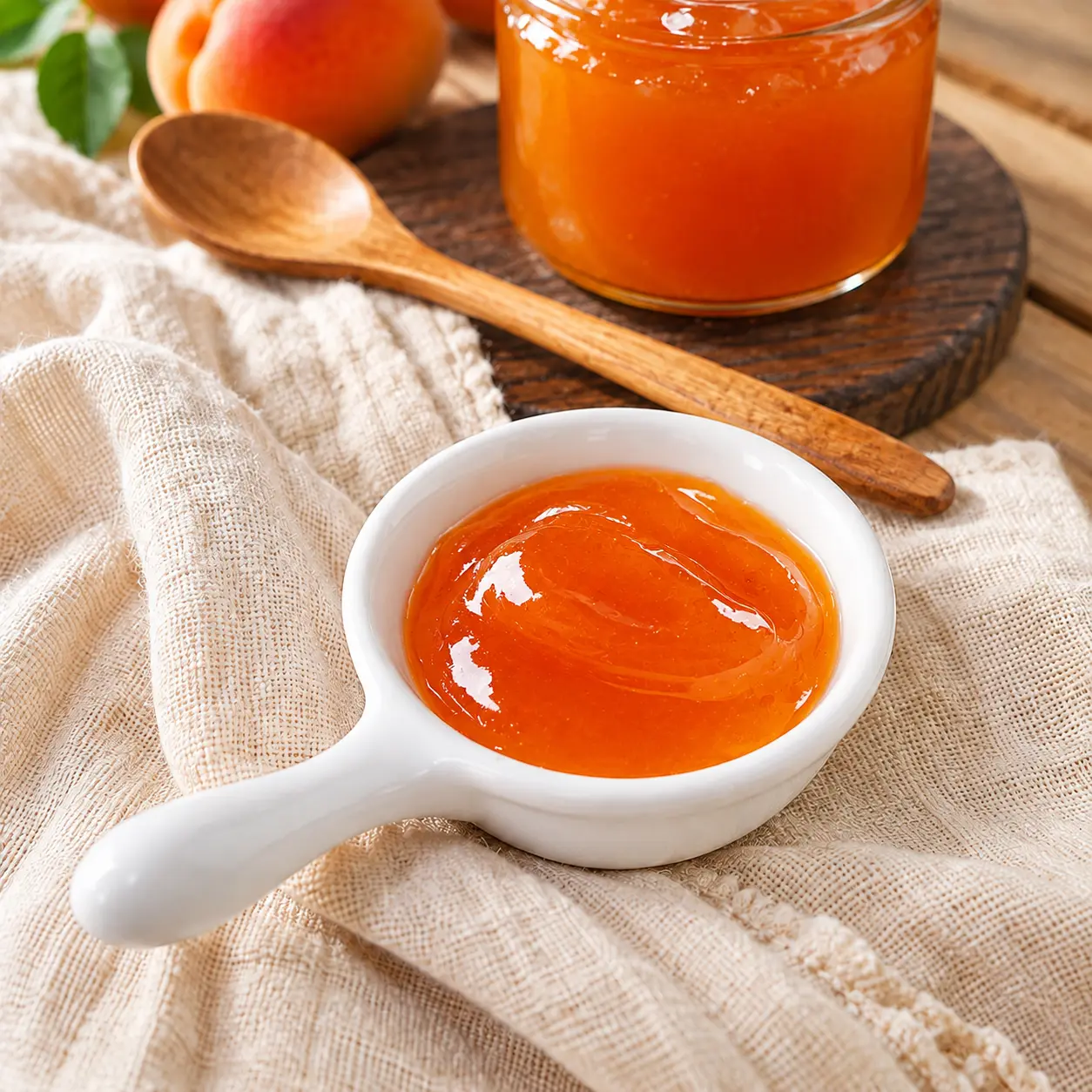
Cold-Application Crystal Glaze
Manufactured through a hot process, then designed to provide smooth cold-use consistency.
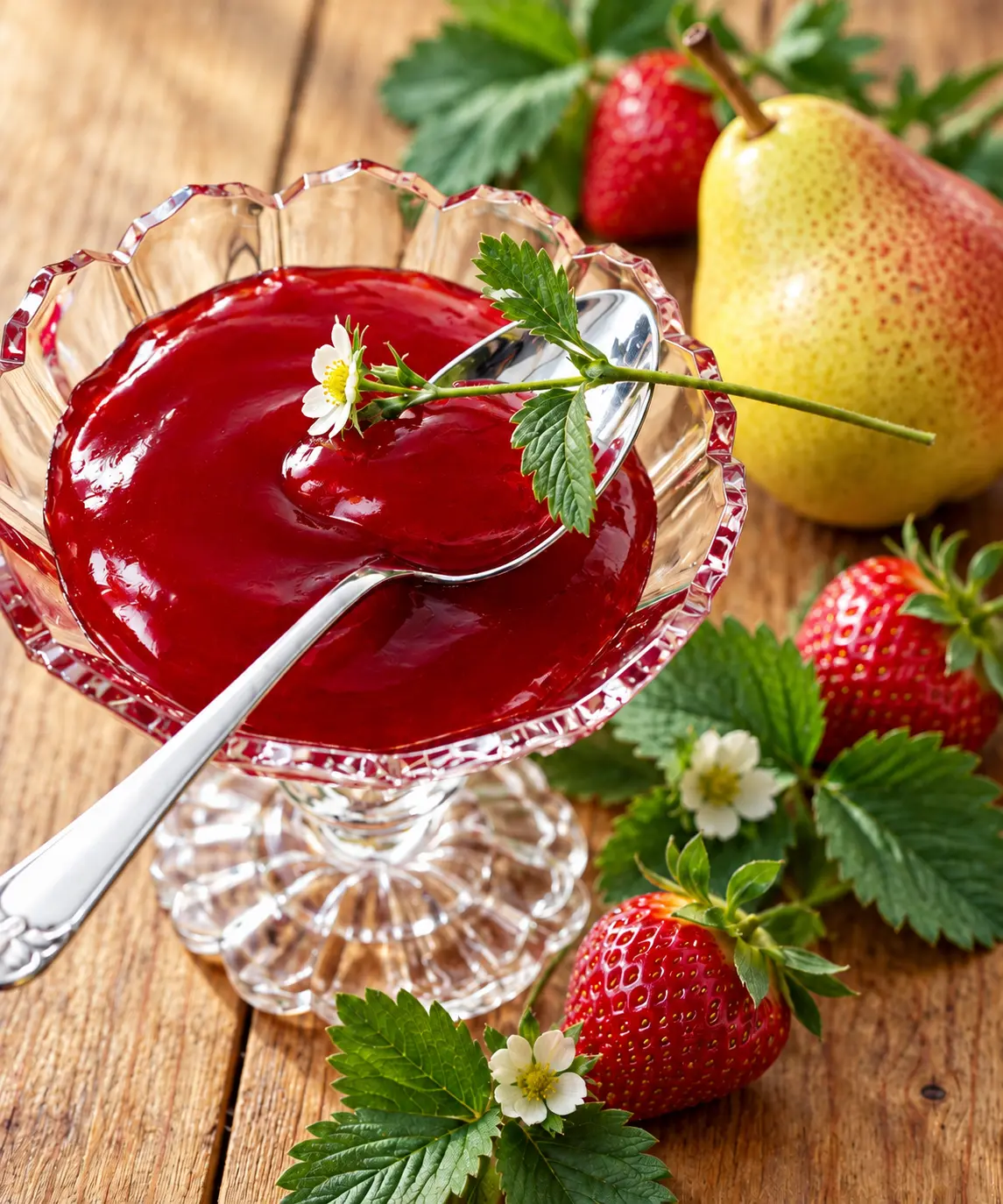
Fruit-Flavored Crystal Glaze
Combines transparent glaze performance with a light apple, apricot, strawberry or berry flavor profile.
“Crystal Jam” is retained as Tianjiang's application-category name. International customers may also refer to these systems as neutral glaze, clear fruit glaze, pastry glaze, nappage or crystal glaze.
03 / TIANJIANG PRODUCTION-SCALE FORMULA SYSTEM
Tianjiang Crystal Jam Production Formulas
Choose the glaze platform, enter the production batch size and run a controlled high-clarity starch comparison while maintaining a 100% formula balance.
Crystal Jam Formulation Batch Calculator
The comparison changes Tianjiang modified starch and balances the difference through water. For crystal-clear systems, evaluate haze and gloss before increasing starch further.
| Ingredient | Formula % | Batch Mass, kg | Primary Function |
|---|---|---|---|
| Total | 100.00% | 100.000 | Finished glaze base |
TJ-CJ-01 · 100 kg base · 1.50% Tianjiang modified starch · target 62–66°Brix.
These are Tianjiang application-development reference formulas. The final starch grade, pectin system, Brix, pH, preservation system, thermal process and regulatory declaration must be verified using the actual production materials.

04 / HIGH-CLARITY STARCH PERFORMANCE
How Modified Starch Supports Transparency and Gloss
Crystal glaze requires a different starch-selection strategy from opaque sauces or high-body bakery fillings.
Transparent Body
Build controlled viscosity while minimizing visible haze and maintaining a clean glaze appearance.Gloss
Support a bright, smooth reflective surface on fruit, pastries and decorated desserts.Heat Stability
Maintain useful texture through the glaze manufacturing and reheating process.Acid Tolerance
Maintain viscosity after final pH adjustment in flavored or fruit-based versions.Shear Stability
Support consistency through pumps, mixers and spray systems.Freeze-Thaw Stability
Reduce separation in applications exposed to frozen distribution and thawing cycles.
05 / COMMERCIAL MANUFACTURING
Crystal Jam Manufacturing Process
The process is designed to reduce lumping, develop starch completely, protect glaze clarity and postpone final acid adjustment until after the main heating stage.
TJ-CJ Recommended Production Sequence
-
Prepare the dry blend
Premix sugar, Tianjiang modified starch and pectin thoroughly to improve dispersion.
-
Start the liquid phase
Add water, glucose syrup and other liquid sweeteners to the kettle under gentle agitation.
-
Disperse the dry blend
Add the dry ingredients gradually while mixing to minimize starch or pectin agglomeration.
-
Heat and hydrate
Raise the batch temperature under controlled agitation until the selected starch and pectin system is fully developed.
-
Control dissolved solids
Verify the target Brix for the selected concentrate or ready-to-use glaze format.
-
Adjust acidity
Add the citric-acid system after the primary starch-hydration stage and verify final pH.
-
Deaerate or strain
Reduce visible air bubbles and remove undispersed particles where high optical clarity is required.
-
Fill and condition
Package under the validated process, cool as required and evaluate clarity after complete setting.


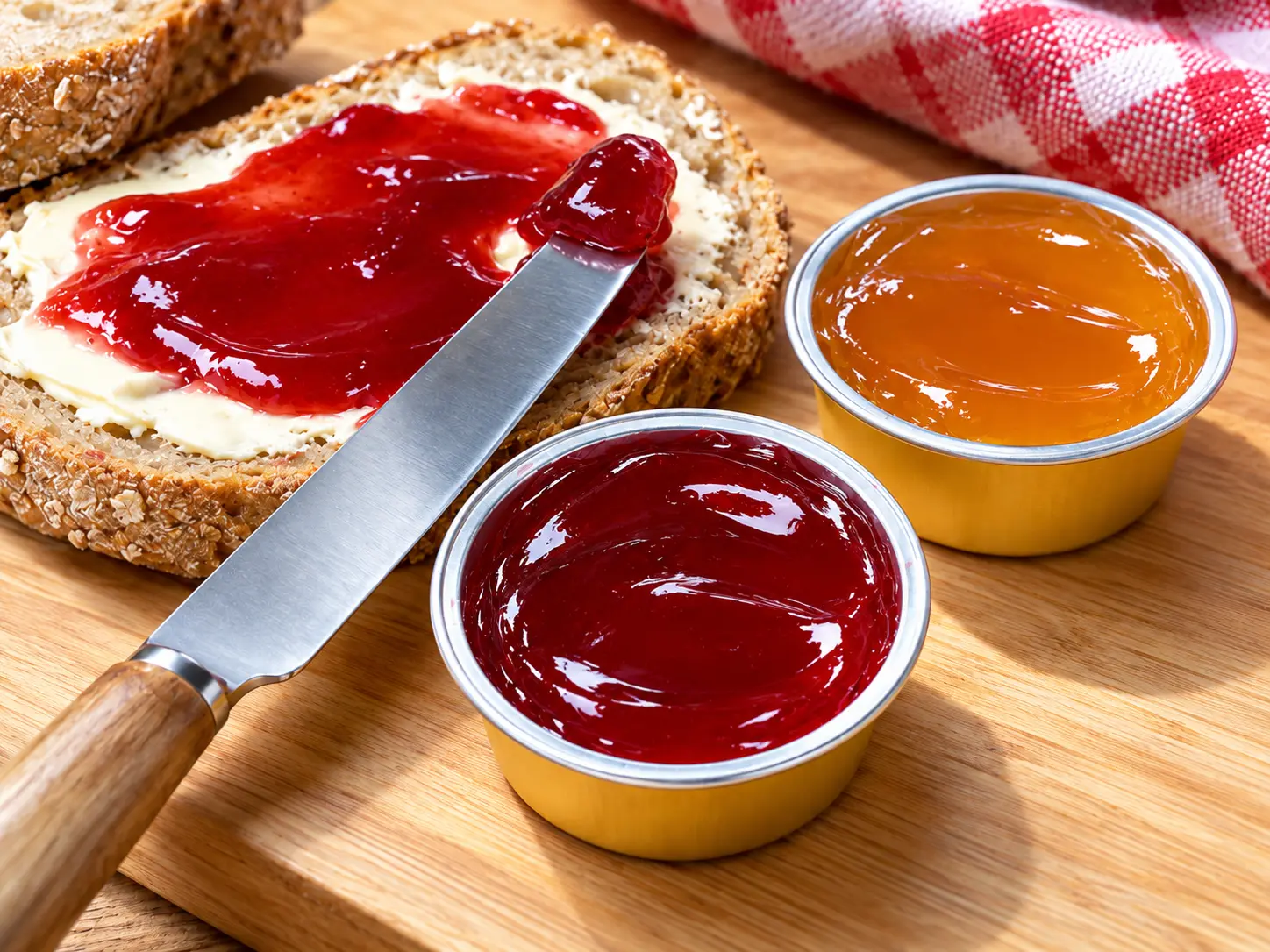
Application temperature depends on the specific system. A hot glaze may require reheating for spray or brush use, while a cold-application glaze must remain smooth and workable near room temperature.
06 / CONTROL OPTICAL AND FLOW PERFORMANCE
Clarity, Gloss, Flow and Application Temperature
Crystal Jam performance should not be judged by viscosity alone. Optical clarity and application behavior are equally important.
Clarity
Measure visible haze against a consistent light or background after complete cooling.
Gloss
Evaluate surface reflectivity after brushing, spraying or depositing onto the final product.
Flow
Confirm enough viscosity for cling without excessive stringing, drag or uneven coating.
Working Temperature
Record viscosity at the actual application temperature rather than testing only at room temperature.
07 / DIAGNOSE THE GLAZE FAILURE
Crystal Jam Formulation Troubleshooting
The most common failures come from starch overuse, poor pectin dispersion, air incorporation, incorrect Brix, acid exposure or the wrong application temperature.
| Observation | Factors to Investigate | Controlled Next Trial |
|---|---|---|
| Glaze looks cloudy | Starch grade, excess starch, undissolved solids, air bubbles or overheating. | Screen a higher-clarity starch before reducing the total glaze structure. |
| Gloss is weak | Surface dryness, high opacity, incorrect solids or application temperature. | Compare equal-thickness coatings at controlled temperature. |
| Glaze runs off fruit | Low viscosity, high application temperature or low solids. | Verify temperature and Brix before increasing starch. |
| Glaze is stringy | Excess viscosity, hydrocolloid interaction or low application temperature. | Reduce one texture component at a time. |
| Viscosity drops after acid addition | Starch acid sensitivity, high temperature or long low-pH exposure. | Add acid later and compare at identical pH. |
| Glaze forms lumps | Poor dry blending, rapid powder addition or insufficient agitation. | Premix starch and pectin with sugar before hydration. |
| Bubbles remain visible | High-speed mixing, air entrainment or insufficient deaeration. | Reduce late-stage shear and evaluate vacuum or controlled resting. |
| Water separates in storage | Weak gel network, freeze-thaw cycling, low solids or starch selection. | Run standardized storage and freeze-thaw comparisons. |
08 / SELECT FOR TRANSPARENCY FIRST
How to Select Modified Starch for Crystal Jam
Share the required transparency, Brix, pH, application temperature, process shear, freeze-thaw exposure and application equipment so Tianjiang can select a suitable grade.
High Clarity
Prioritize starch grades with low visible opacity and a translucent or transparent cooked paste.
Acid Resistance
For fruit-flavored glaze, evaluate viscosity retention at the actual final pH.
Heat & Shear Stability
Select for the actual kettle, pump, reheating and spray conditions.
Modified Tapioca Starch
Suitable grades are strong candidates where translucency, smooth mouthfeel and neutral flavor are priorities.
Modified Waxy Corn Starch
Suitable grades can provide process stability and smooth glossy texture where the required clarity is achieved.
Freeze-Thaw Stability
Evaluate this carefully for frozen cakes, cheesecakes and refrigerated pastry products.
09 / STANDARDIZE EVERY TRIAL
Crystal Jam Formulation and Quality Testing
Compare candidate starches using identical sweeteners, Brix, pH, heating history, sample thickness and application temperature.
Recommended Evaluation Points
- Optical clarity Use identical sample depth, background and lighting conditions.
- Gloss Compare coated surfaces after a defined setting period.
- Brix Record finished soluble solids for every experimental batch.
- pH Measure after the final acid system is completely dispersed.
- Application viscosity Test at the actual brush, spray or depositing temperature.
- Freeze-thaw stability Check separation, haze and texture after defined cycles.
10 / MOVE FROM R&D TO PURCHASING
Modified Starch Specifications for Crystal Jam Purchasing
Once the preferred glaze meets transparency and application targets, connect the R&D result with procurement, quality and production requirements.
Exact Starch Grade
Confirm Tianjiang grade, botanical source and preparation instructions.Clarity Requirement
Define the acceptable cooked-paste translucency and finished-glaze appearance.Representative COA
Review relevant quality and receiving parameters.Regulatory Documentation
Confirm ingredient designation, certifications, allergens and destination-market requirements.Commercial Terms
Confirm sample quantity, MOQ, packaging, quotation basis and lead time.Supply Planning
Share expected demand, delivery destination and change-control requirements.

11 / TECHNICAL QUESTIONS
Crystal Jam Formulation FAQs
Practical guidance for glaze manufacturers, bakery R&D teams and ingredient buyers.
What Is Crystal Jam in Bakery Applications?
Crystal Jam is a transparent or translucent glossy glaze used on fruit tarts, cakes, pastries and dessert surfaces. International customers may also call it neutral glaze, clear fruit glaze, crystal glaze or nappage.
How Much Modified Starch Is Used in Crystal Jam?
The Tianjiang development references on this page use approximately 1.05% to 1.50% high-clarity modified starch. The ideal level depends on starch grade, pectin system, soluble solids, pH and required transparency.
Why Not Use More Modified Starch?
Higher starch levels can increase body, but they may also increase haze or produce a pasty appearance. Crystal glaze formulation therefore requires a balance between transparency and viscosity.
Can Modified Tapioca Starch Be Used in Crystal Jam?
Yes. An appropriate modified tapioca starch can be a strong candidate when translucency, neutral flavor, acid tolerance and process stability are required.
What Is the Difference Between Crystal Jam and Fruit Jam?
Fruit jam normally emphasizes fruit solids, spreadability and fruit identity. Crystal Jam emphasizes optical clarity, surface gloss, thin-film adhesion and controlled glaze flow.
What Is the Difference Between Crystal Jam and Baking Jam?
Baking Jam is designed primarily to resist oven flow, water migration and leakage. Crystal Jam is designed primarily for transparent appearance, gloss and surface coating.
Why Is Pectin Used Together With Modified Starch?
Pectin can provide part of the gel and reset structure, allowing the modified starch level to remain relatively low. This can help maintain a cleaner transparent appearance.
Why Does Crystal Glaze Become Cloudy?
Cloudiness may come from the starch grade, excess starch, poor hydration, entrained air, undissolved particles or inappropriate processing conditions.
What Information Should I Send Tianjiang?
Send the required transparency, Brix, pH, application temperature, process temperature, spray or brush method, freeze-thaw requirement and current starch dosage.
12 / TALK TO TIANJIANG
Request Modified Starch Samples for Crystal Jam
Share your glaze system, clarity requirement and processing conditions so Tianjiang can recommend a candidate high-clarity modified starch grade.
Include photos of the current glaze against a dark background when clarity or haze is the primary issue.
Contact TianjiangPrepare Your Crystal Jam Project Brief
13 / CONTINUE EXPLORING