
TIANJIANG / POTATO CHIPS FORMULATION
Potato Chips Formulation with Modified Starch
This potato chips formulation platform uses Tianjiang modified starch to help manufacturers control crispness, dough cohesiveness, sheetability, expansion, breakage and finished bite in fabricated, stackable and baked potato crisps.
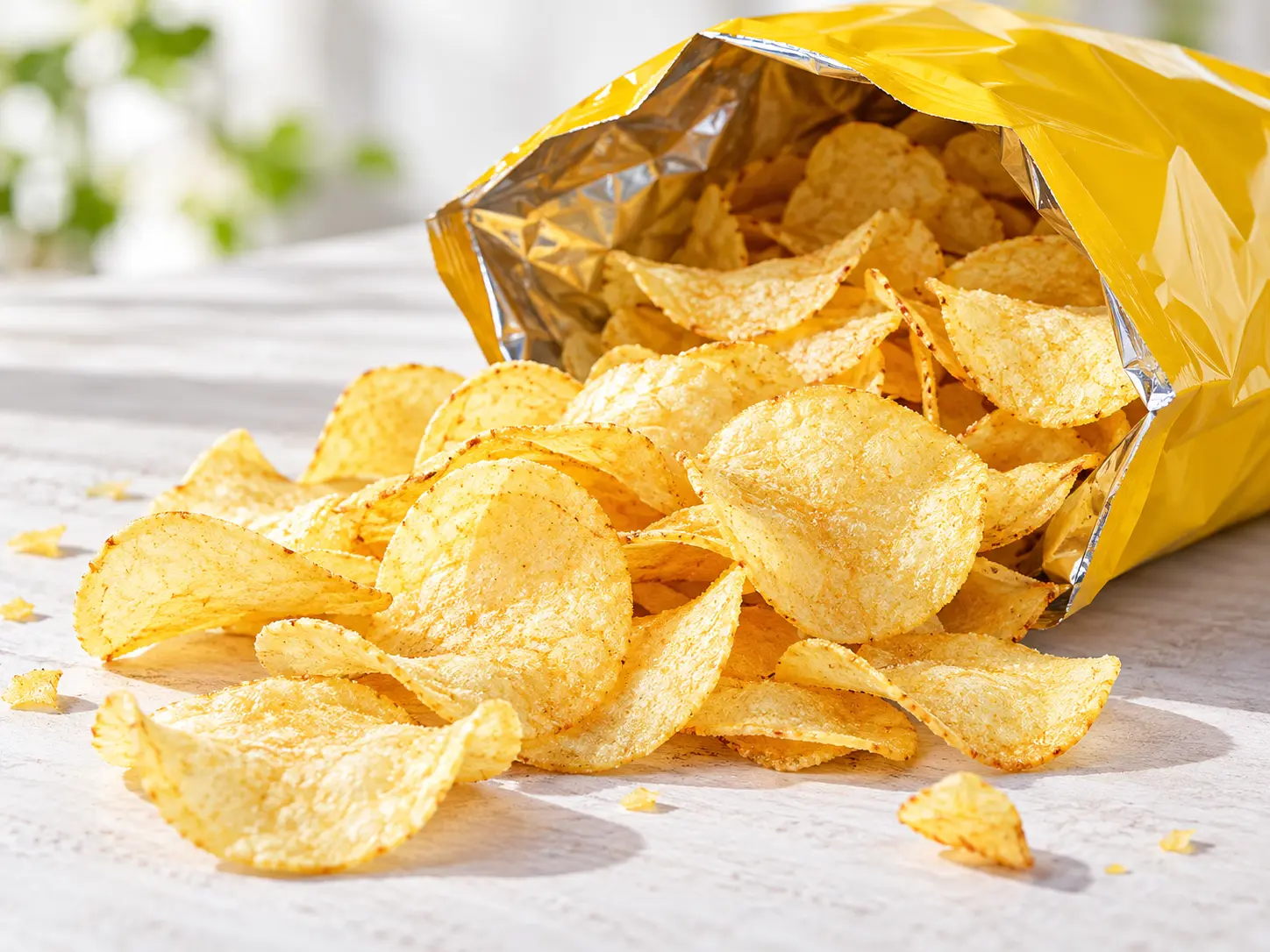
01 / IDENTIFY THE PRODUCT BEFORE SELECTING STARCH
Which Potato Chip Are You Manufacturing?
Modified starch can be a core structural ingredient in fabricated or baked potato crisps, while conventional sliced potato chips usually require a different approach.
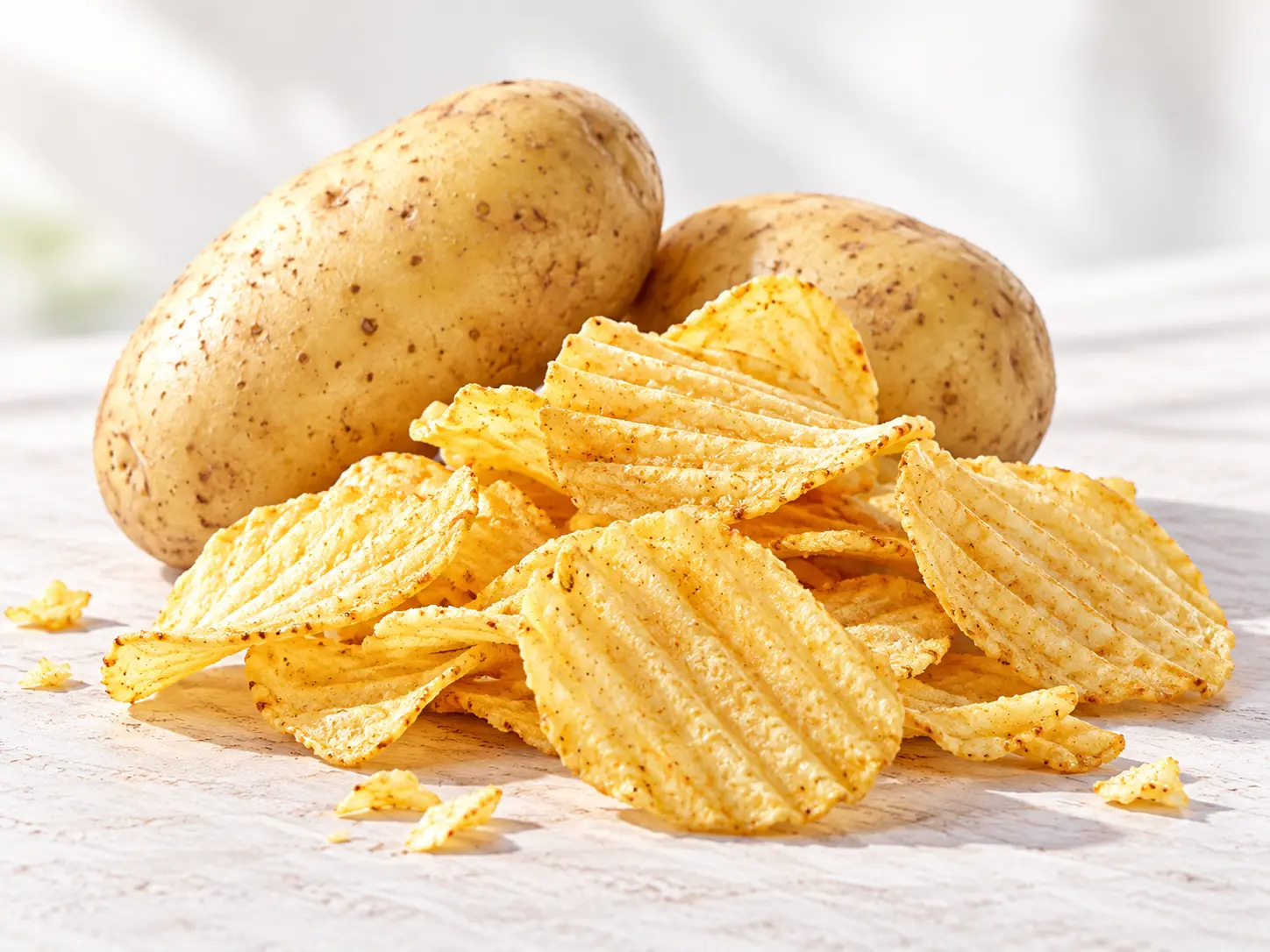
Traditional Sliced Potato Chips
Whole potatoes are sliced, fried and seasoned. The base product may need no added starch at all. Tianjiang starch is more relevant when a surface coating, crispness system or seasoning-adhesion layer is required.
APPLICATION FOCUS: COATING / ADHESION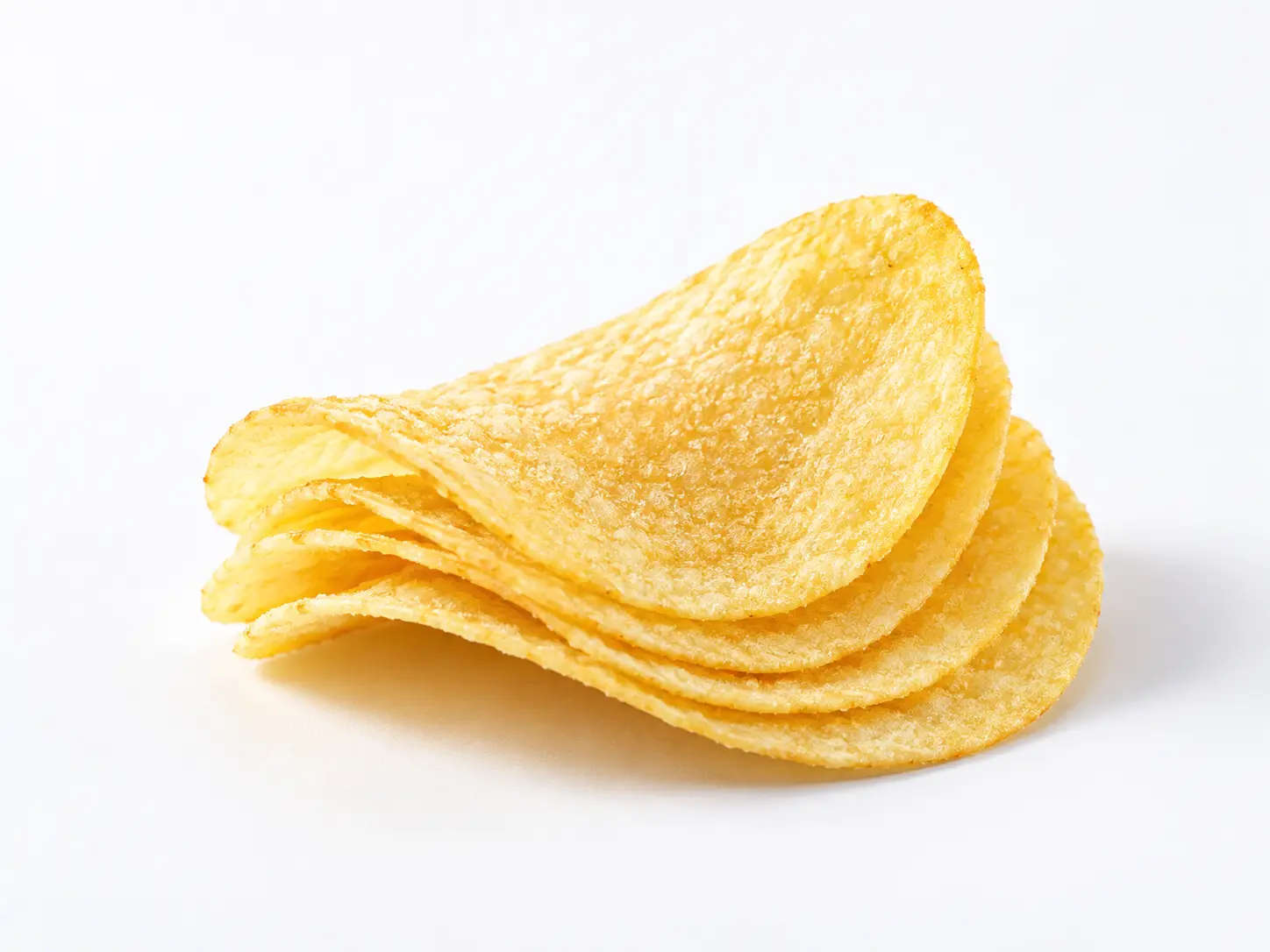
Fabricated / Stackable Potato Crisps
Potato flakes or granules are combined with starches, flours and water to form a sheetable dough before cutting, molding and frying.
APPLICATION FOCUS: SHEETING / CRISPNESS / EXPANSION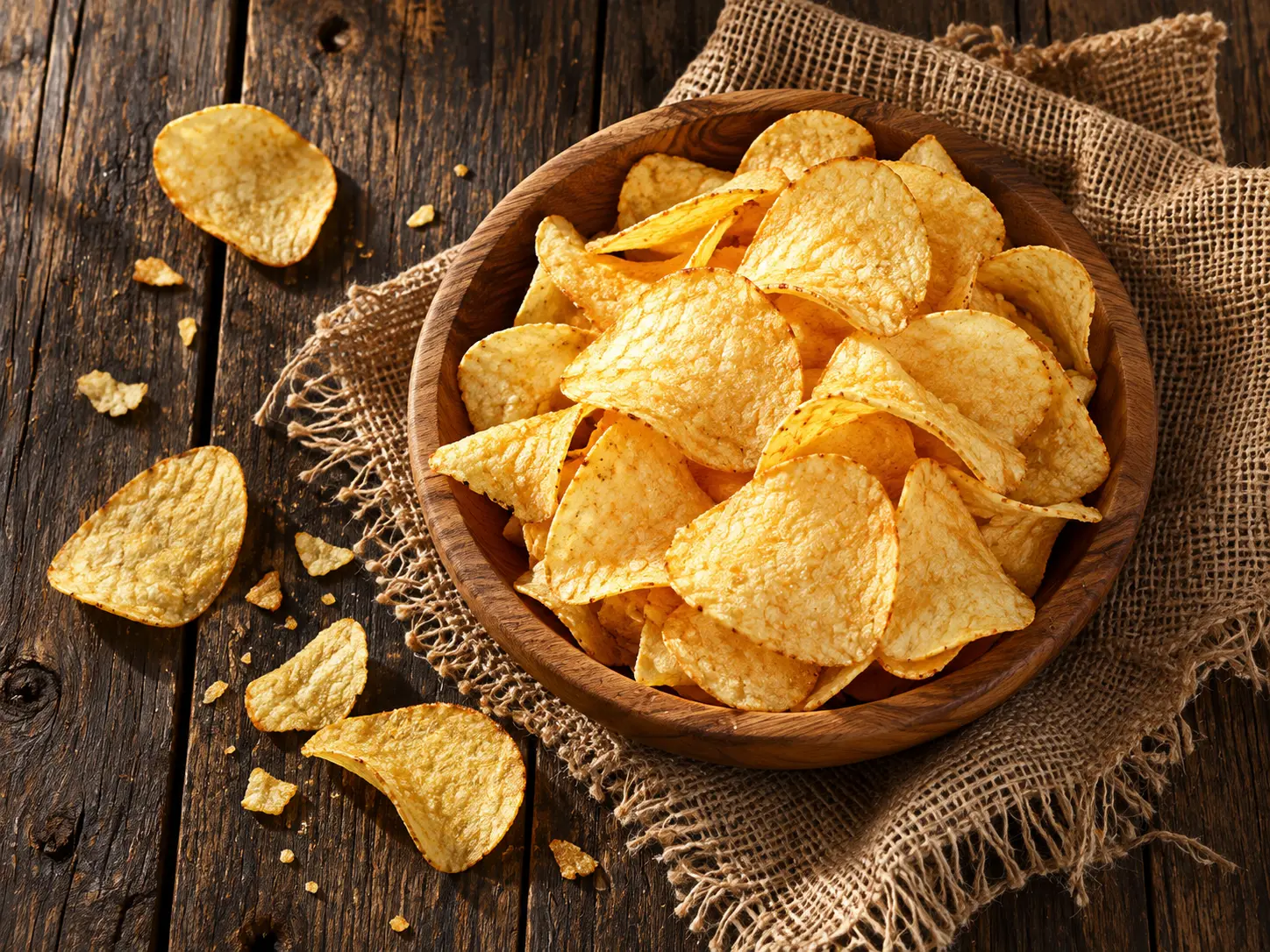
Baked Potato Crisps
A starch-rich potato dough is sheeted and baked at high temperature. Texture design becomes critical because reducing frying oil can produce a harder, less delicate bite.
APPLICATION FOCUS: CRISPINESS / BREAKAGE / DOUGH STRENGTH02 / SOLVE THE MANUFACTURING PROBLEM
Potato Chips Solutions for Manufacturers and R&D Teams
Define texture, sheet thickness, expansion, process moisture, frying or baking conditions and acceptable breakage before selecting the modified starch system.
Dough Processability
Improve dough cohesiveness and reduce tearing, pinholes and sticking during rolling, lamination and cutting.
Texture Engineering
Adjust the balance between light crispiness, hard crunch, expansion and clean bite.
Breakage Control
Build enough structural strength to reduce damage during seasoning, conveying, packing and distribution.
Moisture Management
Control dough hydration and final moisture to support efficient sheeting and a crisp finished structure.
Expansion Control
Tune blistering, surface bubbles, internal porosity and finished bulk density.
Commercial Consistency
Connect laboratory texture to line speed, sheeting pressure, oven or fryer conditions and packaging performance.
03 / FOUR INDUSTRIAL POTATO-CRISP SYSTEMS
Potato Chips Formulation Platforms
These Tianjiang development platforms cover stackable fried crisps, mainstream baked chips, thin crispy snacks and stronger dippable formats.
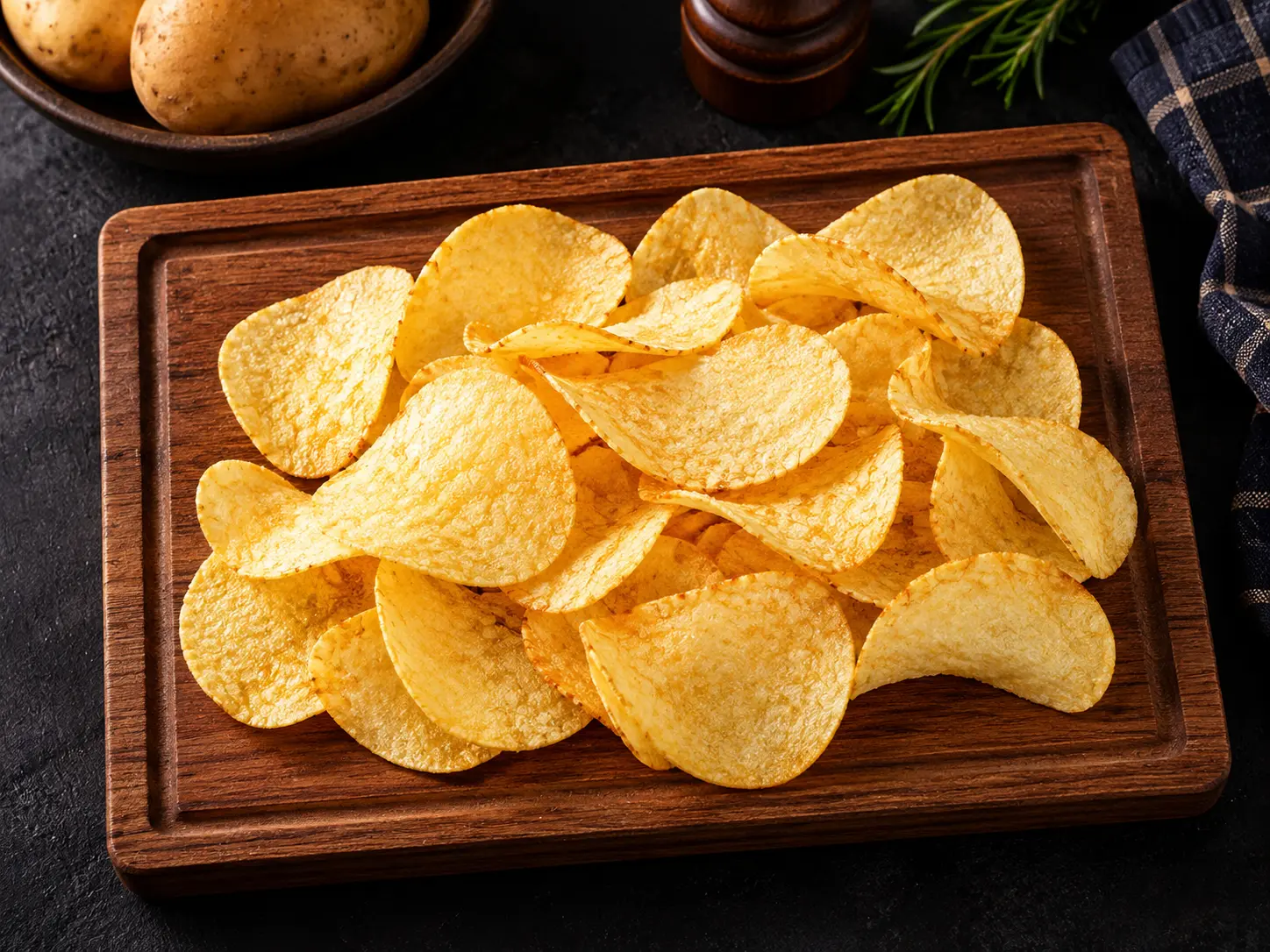
Stackable Fried Potato Crisps
A fabricated potato dough designed for continuous sheeting, clean cutting, controlled expansion and a crisp fried bite.
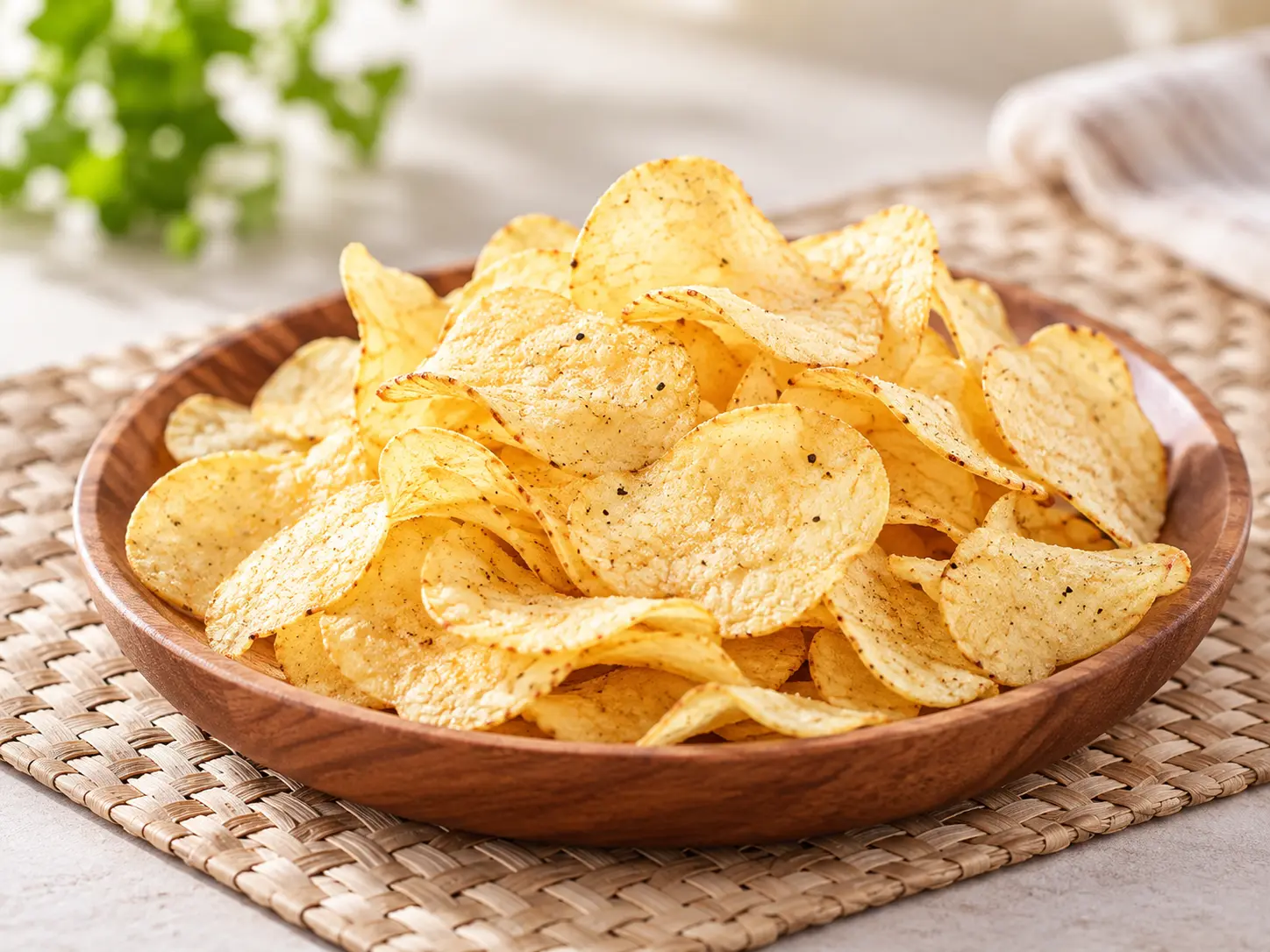
Crispy Baked Potato Chips
Designed for low-oil baked snack production with strong dough integrity, controlled expansion and a lighter crispy bite.
Thin & Crisp Baked Potato Snack
A thinner sheeted platform for delicate fracture, open structure and rapid crispness development.
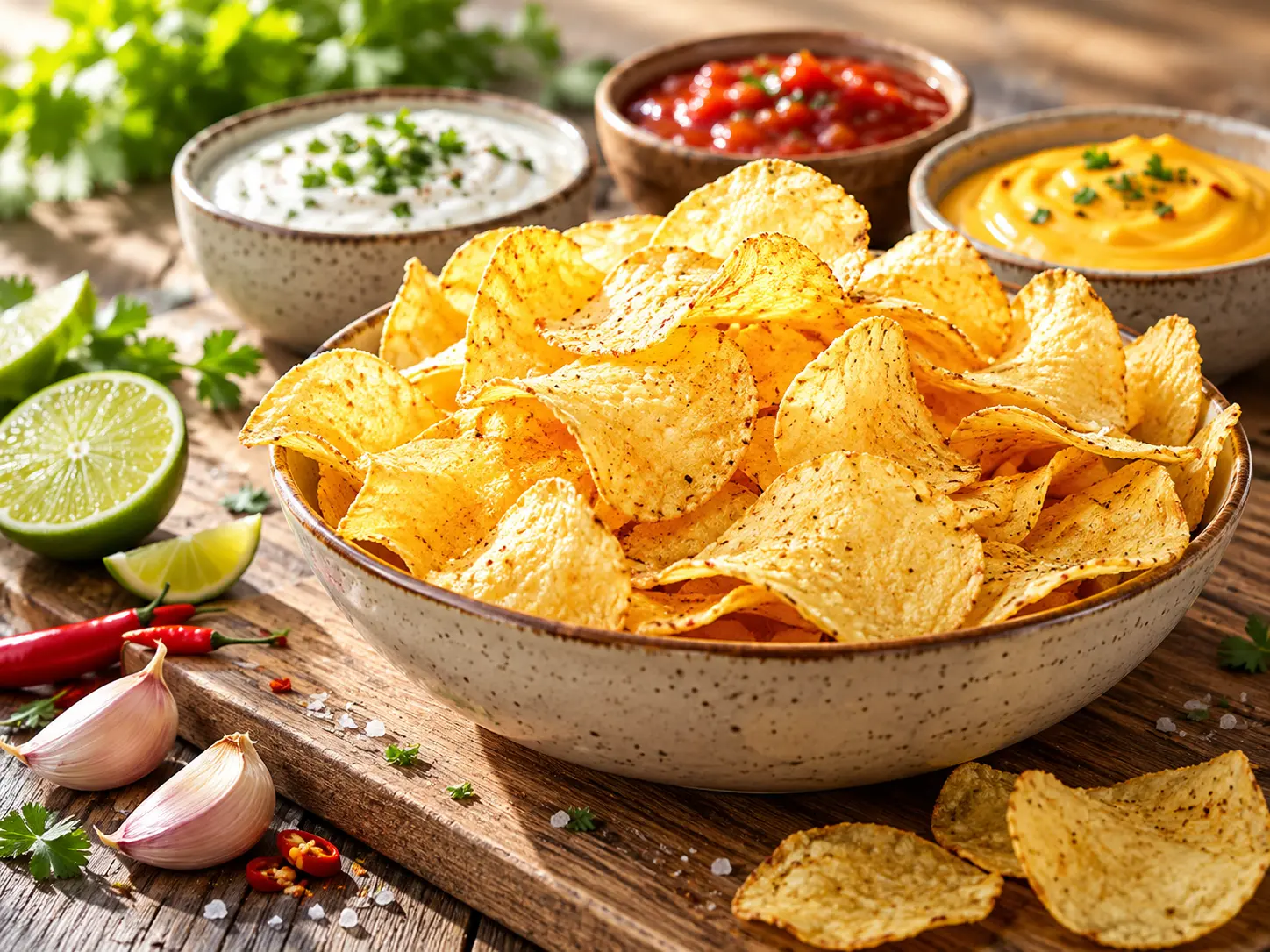
Thick-Cut Dippable Formed Crisps
A stronger fabricated structure designed for heavier crunch, dip resistance and lower breakage through distribution.
These Tianjiang formulations are application-development starting points. Final starch dosage must be optimized for the potato raw material, sheeting equipment, target moisture, frying or baking profile and desired finished texture.
04 / TIANJIANG PRODUCTION-SCALE COMMERCIAL FORMULA
Tianjiang Potato Chips Production Formulas
Choose a potato-crisp platform, enter your production dough batch, then compare a controlled Tianjiang modified-starch adjustment while automatically maintaining a 100% formulation balance.
Potato Chips Formulation Batch Calculator
The starch comparison adjusts Tianjiang modified starch and balances the difference through water. Keep potato solids, sheet thickness, process temperature and final moisture constant when comparing texture.
| Ingredient | Formula % | Batch Mass, kg | Primary Function |
|---|---|---|---|
| Total | 100.00% | 100.000 | Dough formulation |
TJ-PC-01 · 100 kg dough · 6.00% Tianjiang modified starch.
Frying oil, spray oil and topical seasoning are treated as separate process additions and are not included in the 100% dough calculation.

05 / MODIFIED STARCH PERFORMANCE
How Modified Starch Improves Potato Chip Texture
In fabricated potato crisps, modified starch can influence both manufacturing performance and the consumer's final bite.
Crispness
Build a brittle, clean fracture after frying or baking without excessive hardness.Sheetability
Improve dough cohesion so thin sheets can be formed with fewer pinholes, tears and edge cracks.Expansion Control
Tune blistering, internal cell structure and finished density.Breakage Resistance
Balance crispness with enough mechanical strength for seasoning, packing and shipping.Moisture Binding
Support uniform hydration during mixing and predictable drying during frying or baking.Flavor Release
A neutral starch system can support crisp texture without masking potato and seasoning flavor.
06 / COMMERCIAL MANUFACTURING
Potato Chips Manufacturing Process
For fabricated potato crisps, texture begins with dry-blend uniformity, controlled hydration and stable sheeting before the product ever reaches the fryer or oven.
TJ-PC Recommended Production Sequence
-
Blend potato and starch solids
Combine potato flakes, potato granules, native starch, Tianjiang modified starch, flour and other dry ingredients uniformly.
-
Prepare the liquid phase
Dissolve salt, sugar and soluble ingredients into the required process water.
-
Add lipid and emulsifier
Where used, melt shortening and distribute emulsifier uniformly before final dough development.
-
Hydrate under controlled mixing
Add liquid gradually to produce a cohesive, non-sticky and consistently hydrated dough.
-
Sheet the dough
Reduce the dough through controlled rolls to approximately 0.7–1.0 mm, depending on the target crisp.
-
Cut and form
Cut the sheet into the target geometry and use molds where a stackable shape is required.
-
Fry or bake
Apply the validated high-temperature process until target color, expansion and final moisture are achieved.
-
Season, cool and pack
Apply topical seasoning, cool completely and package quickly to protect finished crispness.
Actual frying temperature, baking temperature, residence time and sheet thickness must be optimized for the specific line, moisture target and product geometry.
FINISHED SNACK / VISUAL REFERENCE
Potato Chip Texture & Product Formats
Compare visible features of finished potato chips, including surface ridges, curvature, crisp edges and packaging presentation. These images illustrate product appearance, not a verified formula or production result.
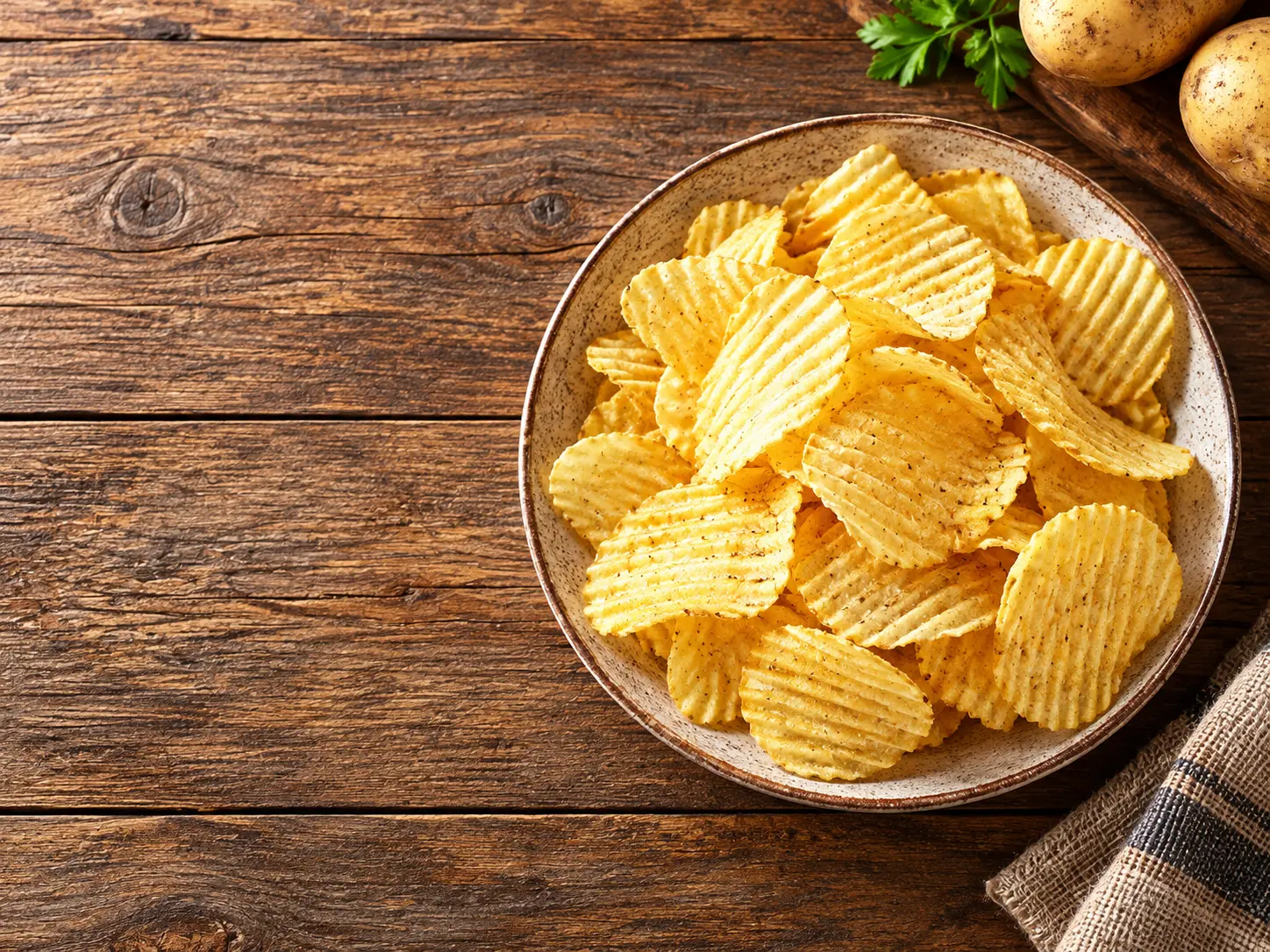
Ridged Potato Chips
Crinkle-cut appearance and visible surface texture
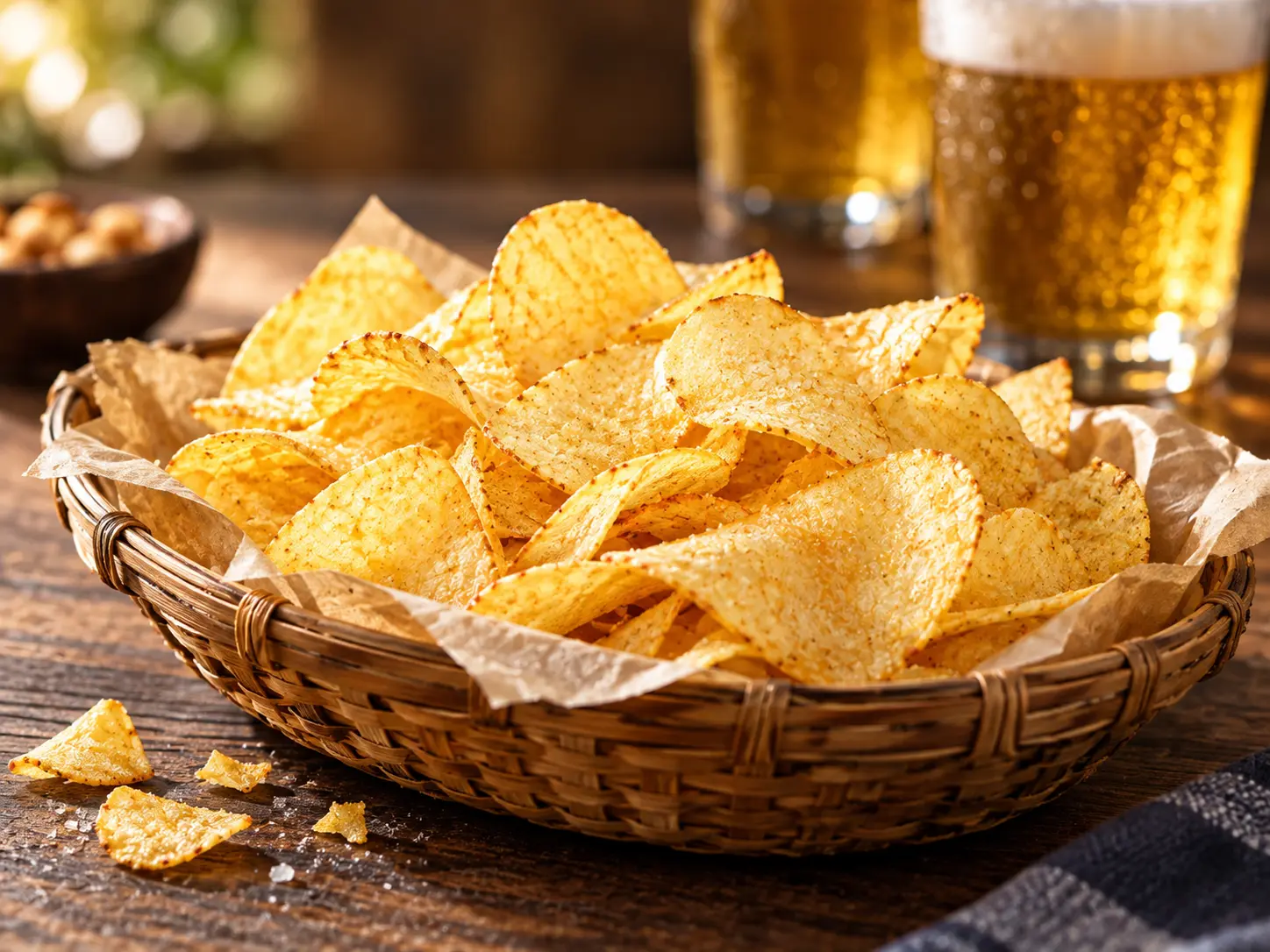
Snack Serving Format
Golden color and consumer-facing presentation

Packaged Potato Chips
Finished snack appearance in flexible packaging
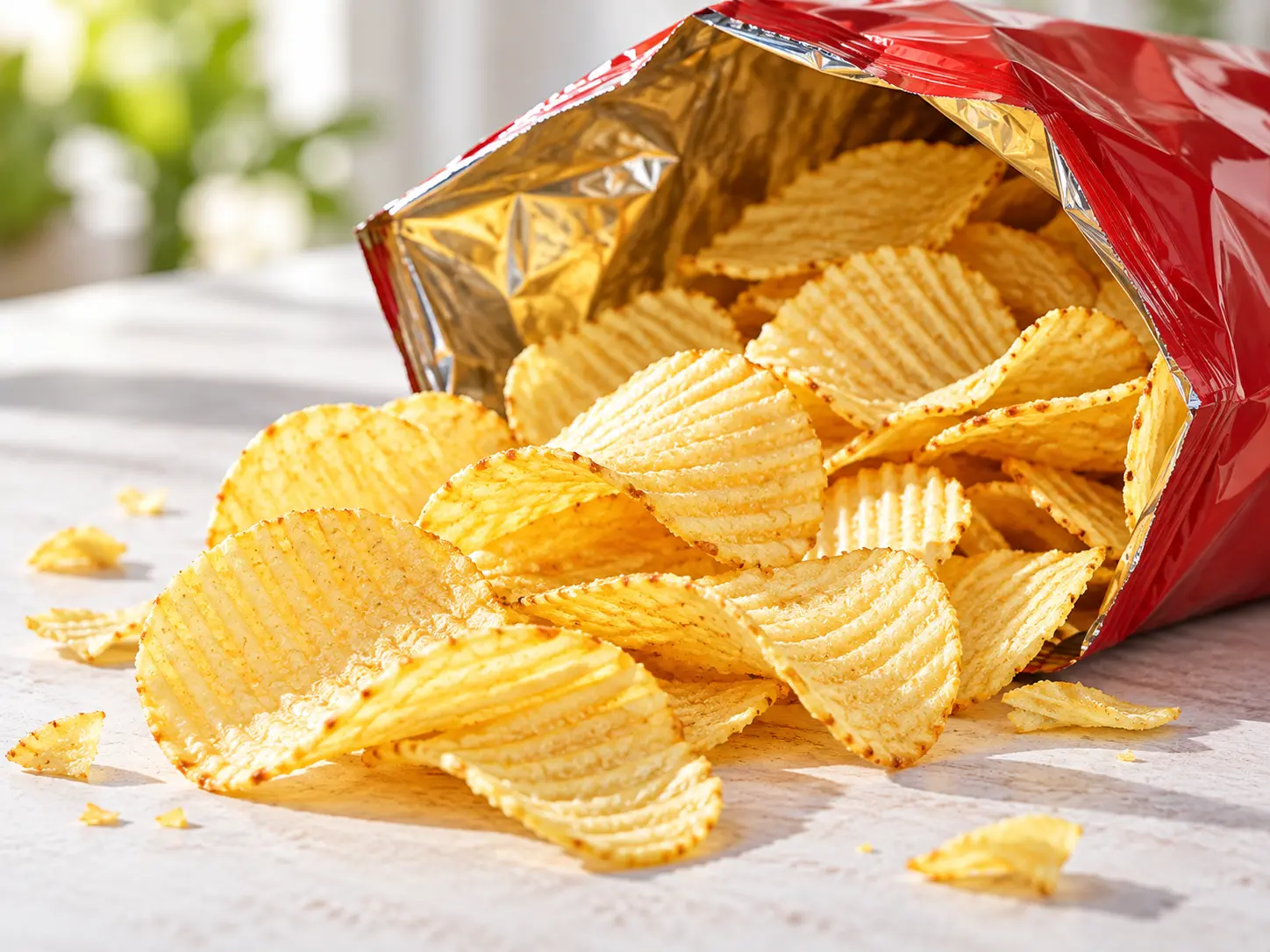
Ridged Chips in Packaging
Corrugated surface and seasoning presentation
07 / MEASURE MORE THAN CRISPNESS
Crispness, Expansion, Sheetability and Breakage
A formula can produce a crispy laboratory sample and still fail commercially because of poor sheeting, excess expansion or breakage during packaging.
Sheetability
Record pinholes, tearing, edge cracking and dough sticking at the production sheet thickness.
Expansion
Measure thickness, surface blistering, internal porosity and bulk density after processing.
Crispness
Evaluate fracture, hardness, crunch intensity and mouth clearance after full cooling.
Breakage
Evaluate damage after seasoning, conveying, packing and simulated distribution.
08 / DIAGNOSE THE PROCESS FAILURE
Potato Chips Formulation Troubleshooting
Do not solve every defect by increasing starch. Water, potato-flake quality, sheet thickness, mixing energy and thermal processing can be equally important.
| Observation | Factors to Investigate | Controlled Next Trial |
|---|---|---|
| Dough tears during sheeting | Low hydration, weak binding, insufficient starch functionality or damaged potato solids. | Confirm dough moisture before increasing functional starch. |
| Dough sticks to rollers | Excess moisture, excessively swollen starch, temperature or insufficient lipid. | Reduce water slightly or screen a starch with different hydration behavior. |
| Finished chips are too hard | High starch strength, low expansion, low dough moisture or excessive drying. | Compare lower functional-starch dosage at identical final moisture. |
| Chips are too fragile | Excess expansion, very thin sheet, weak dough cohesion or over-drying. | Increase structural binding without increasing finished hardness excessively. |
| Expansion is too low | Starch selection, water level, sheet density or processing temperature. | Standardize sheet thickness before changing the starch system. |
| Surface blisters are excessive | Rapid steam release, high moisture, sheet thickness or expansion starch. | Reduce moisture or adjust the expansion profile. |
| Chips soften quickly after packing | High final moisture, insufficient cooling, packaging barrier or oil/seasoning moisture. | Measure finished moisture and package water-vapor barrier. |
| Seasoning does not adhere | Surface oil, coating system, particle size or application timing. | Optimize topical oil or evaluate a thin adhesion-starch system. |
09 / SELECT STARCH BY TEXTURE TARGET
How to Select Modified Starch for Potato Chips
Share potato raw material, dough moisture, sheet thickness, processing method, target expansion, finished moisture and breakage requirement so Tianjiang can recommend a candidate grade.
Crispness-Enhancing Grades
Use when the goal is a cleaner, lighter fracture after frying or baking.
Sheeting & Binding Grades
Use where dough tearing, pinholes and production breakage limit line efficiency.
Expansion-Control Grades
Select according to the required porosity, bulk density, surface bubbles and bite.
Modified Potato Starch
Suitable grades can provide potato-compatible flavor, binding, film formation and crisp texture.
Modified Tapioca Starch
Suitable grades can help adjust bite, dough flexibility and breakage behavior.
High-Amylose / Film-Forming Systems
Useful where rapid film formation, firm crispness or coating performance is required.
10 / STANDARDIZE EVERY TRIAL
Potato Chips Formulation and Quality Testing
Compare starch candidates using the same potato solids, dough moisture, sheet thickness, processing profile and seasoning conditions.
Recommended Evaluation Points
- Dough moisture Measure every trial before sheeting.
- Sheet strength Compare tearing, pinholes and deformation at equal thickness.
- Final moisture Measure after complete cooling before packaging.
- Texture Evaluate crispness, hardness, fracture and crunch intensity.
- Expansion Measure thickness, porosity and finished density.
- Breakage rate Compare intact-chip retention after standardized handling.
11 / MOVE FROM R&D TO PURCHASING
Modified Starch Specifications for Potato Chip Purchasing
Once the preferred formula meets texture and production requirements, connect the trial to purchasing, quality and supply specifications.
Exact Grade Specification
Confirm Tianjiang grade and recommended use level.Botanical Source
Confirm potato, corn, tapioca or other starch source.Representative COA
Review moisture, appearance and relevant quality parameters.Regulatory Documentation
Confirm additive declaration, certifications and destination-market requirements.Commercial Terms
Confirm sample quantity, MOQ, packaging and lead time.Supply Planning
Share expected monthly volume and production location for commercial planning.
12 / TECHNICAL QUESTIONS
Potato Chips Formulation FAQs
Practical guidance for potato snack manufacturers, R&D engineers and ingredient buyers evaluating modified starch.
Do Traditional Potato Chips Need Modified Starch?
Not necessarily. Traditional sliced potato chips can be produced from potatoes, frying oil and seasoning alone. Modified starch becomes more relevant in fabricated crisps, baked chips or optional coating systems.
Why Is Modified Starch Used in Fabricated Potato Chips?
A suitable modified starch can support dough cohesion, sheetability, crispness, expansion control and resistance to breakage during manufacturing and distribution.
How Much Modified Starch Can Be Used in Potato Crisps?
The optimum level depends heavily on potato-flake quality, native starch, water, process type and target texture. The Tianjiang development platforms on this page use approximately 6% to 11% modified starch in the total dough formula.
Can Modified Starch Improve Baked Potato Chips?
Yes. Suitable snack texturizers can help compensate for the harder texture that may occur when fried products are converted to baked formats.
Why Do Fabricated Potato Chips Break Easily?
Breakage can result from poor dough cohesion, excessive expansion, very low finished moisture, insufficient sheet strength or handling conditions after processing.
Can Modified Tapioca Starch Be Used in Potato Chips?
Yes. Suitable modified tapioca starch can be evaluated to change dough strength, expansion and finished hardness. The exact grade should be selected against the desired texture.
What Controls Crispness in Potato Chips?
Crispness depends on starch composition, dough moisture, sheet thickness, oil or baking conditions, final moisture and the internal cellular structure of the finished chip.
What Information Should I Send Tianjiang?
Share whether the product is sliced, fabricated fried or baked, together with potato solids, current starch, water level, sheet thickness, process temperature, final moisture, texture target and breakage rate.
13 / TALK TO TIANJIANG
Request Modified Starch Samples for Potato Chips
Share the potato base, process, sheeting conditions and texture target so Tianjiang can recommend a candidate modified starch grade.
Include photos of the dough sheet and finished chip when tearing, expansion or breakage is the primary issue.
Contact TianjiangPrepare Your Potato Chip Project Brief
14 / CONTINUE EXPLORING