
TIANJIANG / FROZEN RICE BALLS FORMULATION
Frozen Rice Balls Formulation with Modified Starch
Frozen rice balls must retain the soft, moist and cohesive texture of freshly cooked rice after forming, freezing, frozen distribution and microwave reheating.Tianjiang modified starch helps manufacturers manage water migration, starch retrogradation, grain integrity and freeze-thaw texture through the complete frozen-rice process.

01 / PROTECT THE COOKED-RICE STRUCTURE
Frozen Rice Balls for Manufacturers and R&D Teams
Commercial frozen rice quality depends on rice variety, amylose profile, cooking yield, water distribution, forming pressure, seasoning, freezing rate, storage stability and the final reheating method.
Soft Reheated Texture
Reduce the increase in hardness that can develop during frozen storage.
Grain Integrity
Maintain visible individual rice grains without excessive mashing or fragmentation.
Controlled Cohesion
Provide enough adhesion for forming and handling without producing a gummy bite.
Water Retention
Control moisture migration during freezing and microwave reheating.
Retrogradation Control
Manage undesirable starch restructuring during cold storage.
Microwave Recovery
Restore a soft, moist texture without excessive surface wetness.
02 / FOUR COMMERCIAL RICE-BALL DIRECTIONS
Four Frozen Rice Balls Formulation Platforms
The Tianjiang platform covers classic Japanese onigiri, soy-sauce grilled onigiri, sticky-rice / okowa products and foodservice sushi rice balls.

Classic Japanese Frozen Onigiri
A clean rice-forward platform for soft, cohesive frozen onigiri requiring reliable microwave reheating without excessive hardness.

Soy-Sauce Grilled Onigiri
A grilled frozen rice ball with a soft rice center and controlled soy-sauce glaze for microwave or microwave-plus-toaster reheating.

Sticky Rice / Okowa Onigiri
A more elastic, chewy frozen rice ball using a japonica and glutinous-rice blend for premium sticky-rice applications.

Frozen Sushi Rice Balls
A small-format vinegared rice platform for foodservice, sushi toppings and rapid microwave or hot-water reheating.
These Tianjiang application formulas are independently constructed commercial-development references. Public frozen-rice products were used to identify market formats, ingredient-system patterns and reheating expectations; third-party proprietary percentages were not reproduced.
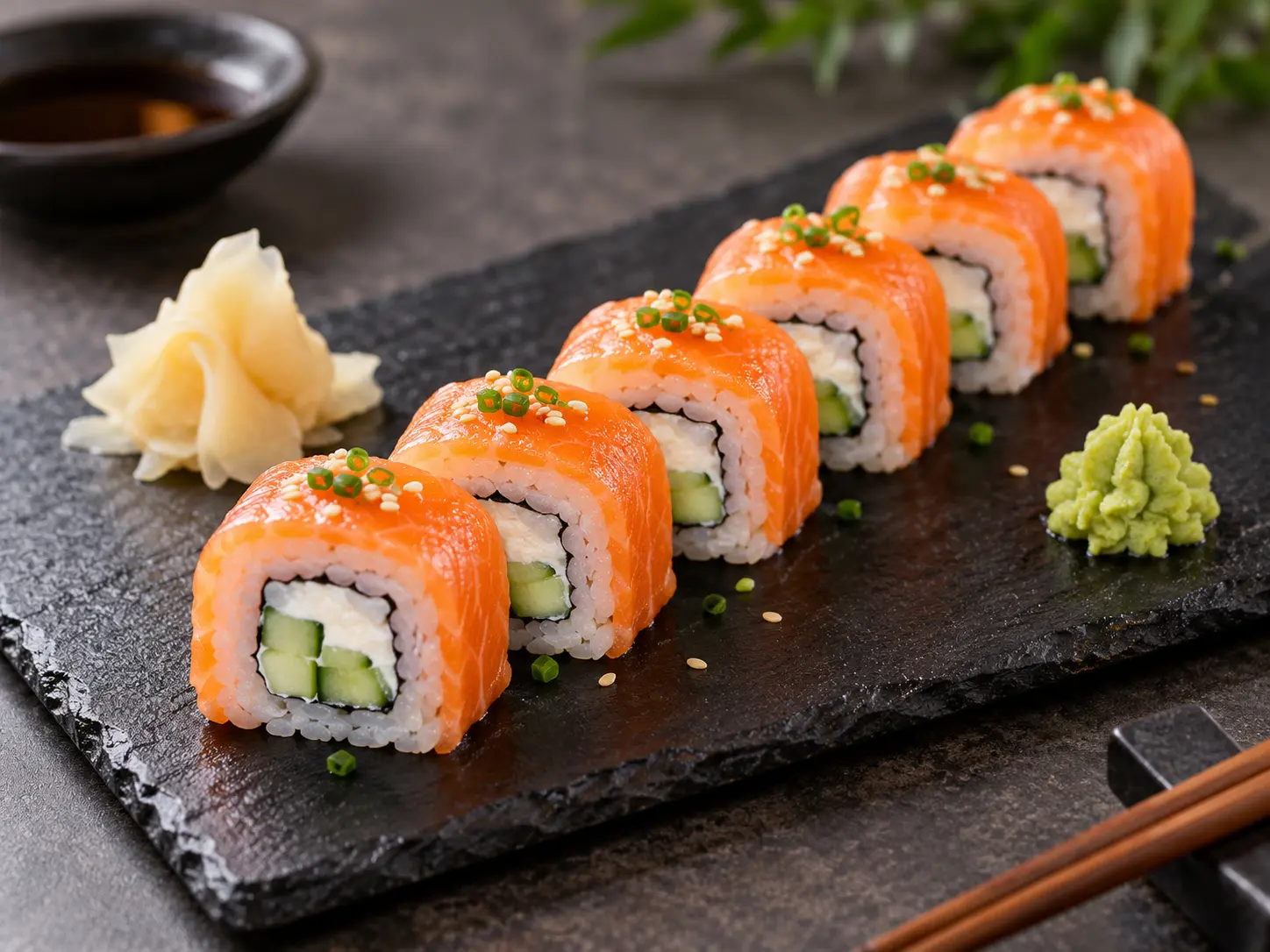
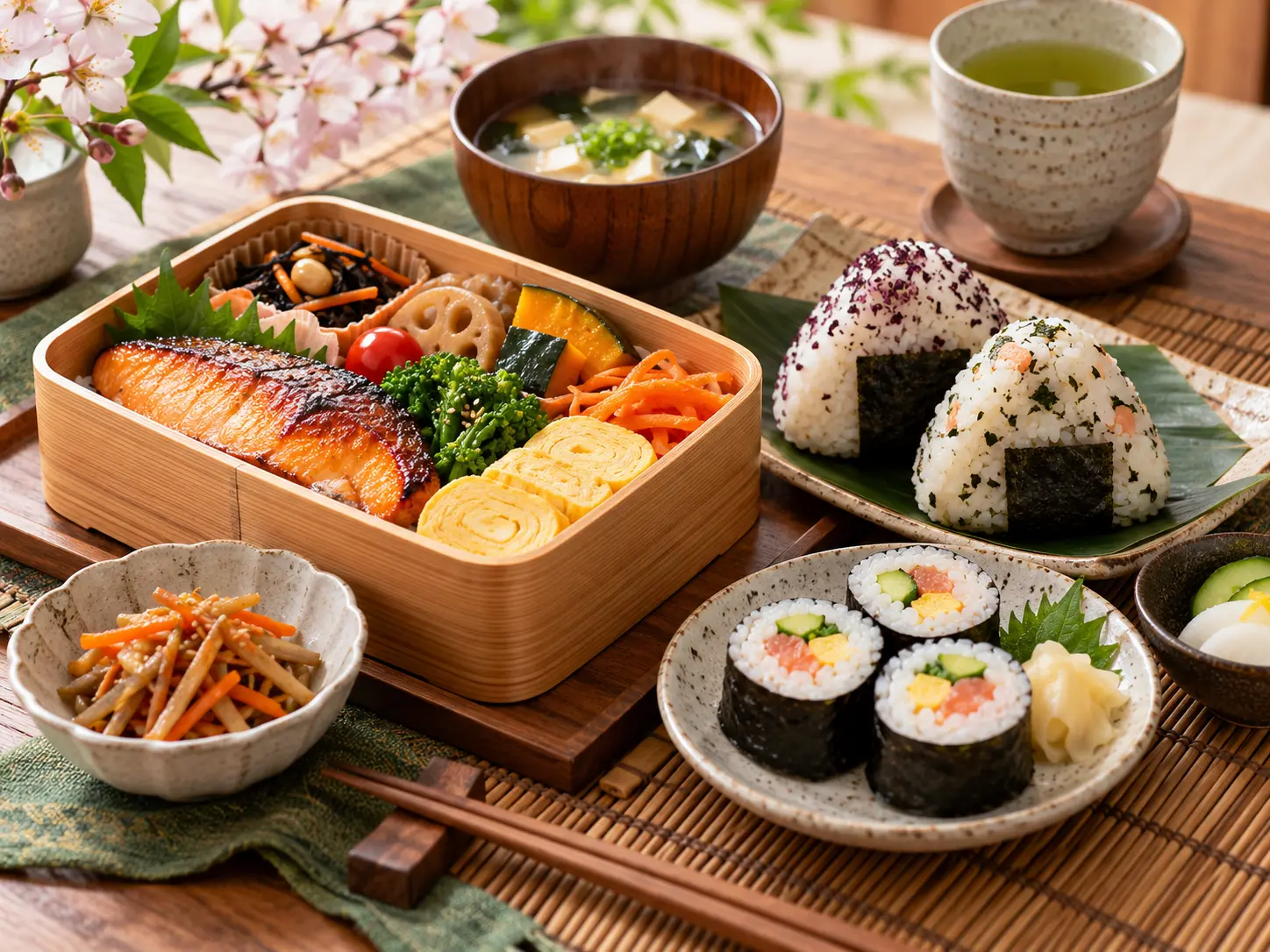
Rice-Based Meal & Serving Inspiration
Sushi rolls and bento dishes illustrate additional serving formats alongside the onigiri formulation platforms.

03 / ADVANCED FROZEN RICE CALCULATOR
Frozen Rice Balls Production Formula Calculator
Calculate packaged product mass, rice cooking requirements, modified-starch dosage, secondary glaze systems and estimated unit output from one integrated production model.
Advanced Frozen Rice Balls Batch Calculator
A. Frozen Rice Base Formula
| Ingredient | Rice Base % | Production Mass | Primary Function |
|---|---|---|---|
| Total Rice Base | 100.00 | — | Rice mixture before forming |
B. Sauce / Glaze System
| Ingredient | System % | Production Mass | Primary Function |
|---|---|---|---|
| Total Secondary System | 100.00 | — | Applied after or during forming |
C. Rice Cooking Input Estimate
| Calculation | Input / Ratio | Estimated Mass | Purpose |
|---|---|---|---|
| Dry rice equivalent | — | — | Approximate dry-rice requirement based on observed cooked-rice yield. |
| Rice-cooking water | — | — | Starting kettle / cooker water input. Adjust to rice variety and equipment. |
TJ-FRB-01 ready.
The cooked-rice yield and cooking-water ratio are intentionally adjustable. Different rice varieties, crop years, amylose levels, washing conditions, soaking, steam pressure and cooker geometry can produce significantly different water absorption. Use your plant's measured yield for the final scale-up calculation.
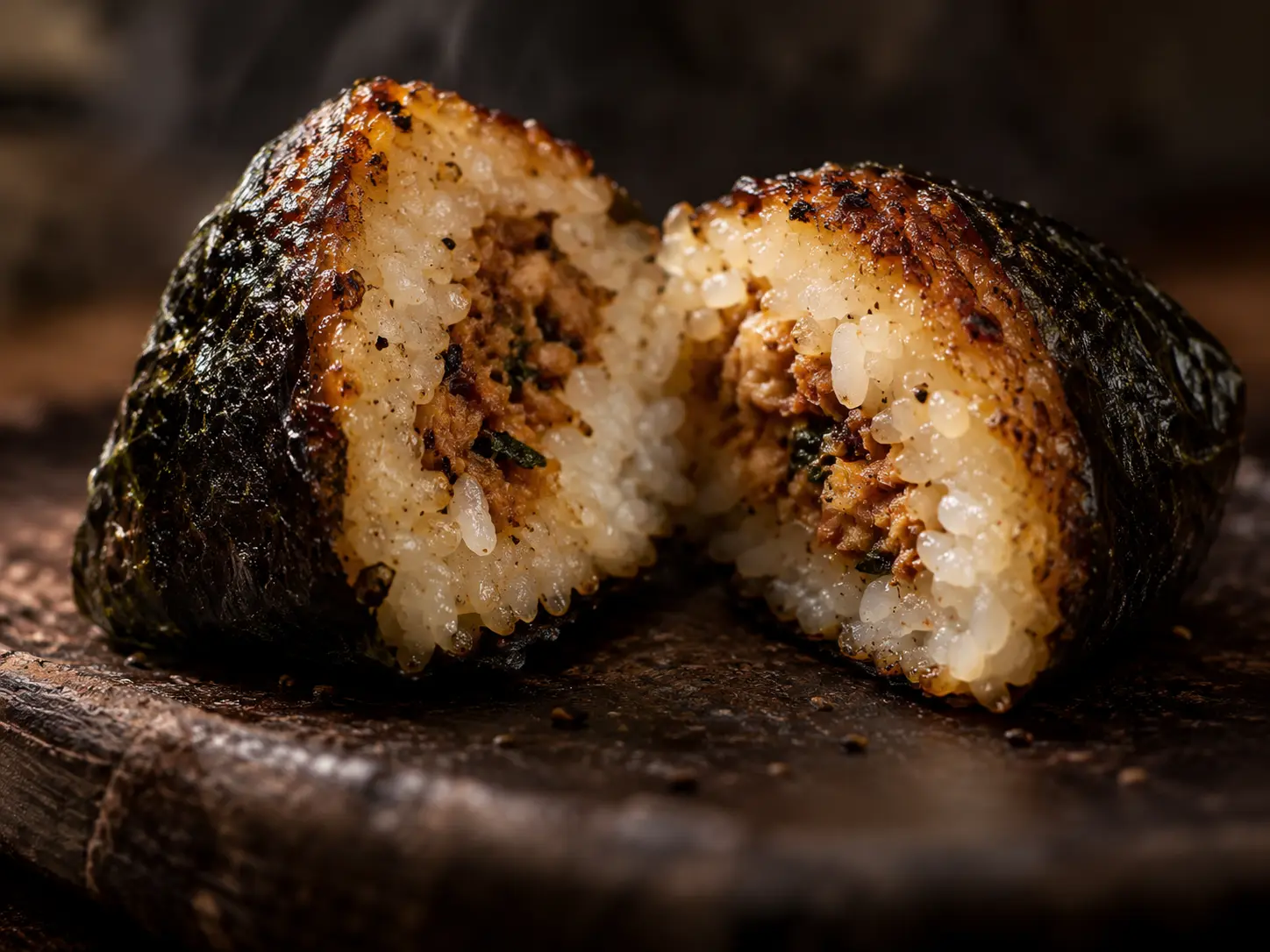
04 / MODIFIED STARCH PERFORMANCE
How Modified Starch Improves Frozen Rice Balls
Cooked rice is a gelatinized starch system. After cooling and freezing, starch molecules reorganize and water redistributes. The correct modified starch helps manufacturers manage these changes without turning the rice into an artificial gel.
Softness Retention
Help maintain a softer bite after frozen storage and reheating.Water Management
Control moisture migration between the rice surface and the internal grain structure.Controlled Cohesion
Support forming strength while maintaining recognizable rice grains.Reduced Retrogradation Impact
Suitable modified starch can help manage texture changes associated with cold storage.Microwave Stability
Support more consistent water distribution during rapid microwave heating.Sauce & Glaze Control
Modified starch can also be used in grilled-rice-ball glazes to control cling, viscosity and coating uniformity.
05 / COMMERCIAL FROZEN RICE PROCESS
Frozen Rice Balls Manufacturing Process
The quality of frozen rice balls is determined not only by formulation. Cooking, mixing, forming pressure, cooling, freezing and reheating must be treated as one connected process.
-
Select & Standardize Rice
Control rice variety, crop characteristics and incoming moisture.
-
Wash & Soak
Standardize washing and hydration before cooking.
-
Prepare Functional Phase
Disperse Tianjiang modified starch according to the selected grade and process route.
-
Cook
Control water addition and cooking energy to reach the target cooked-rice yield.
-
Post-Cook Mixing
Add seasoning, oil and functional ingredients without excessively damaging the rice grains.
-
Form Rice Balls
Use enough compression for handling strength without producing a dense, pasted structure.
-
Apply Filling or Glaze
For grilled or filled products, standardize sauce viscosity and addition rate.
-
Grill When Required
Develop surface aroma and color without excessively drying the rice core.
-
Rapid Cooling
Prepare the formed product for freezing with a controlled food-safety process.
-
Rapid Freezing
Reduce time through the major ice-crystal formation region as plant capability allows.
-
Frozen Storage
Maintain stable frozen distribution and minimize temperature cycling.
-
Reheat Validation
Evaluate the exact consumer or foodservice microwave, steam or microwave-toaster method.
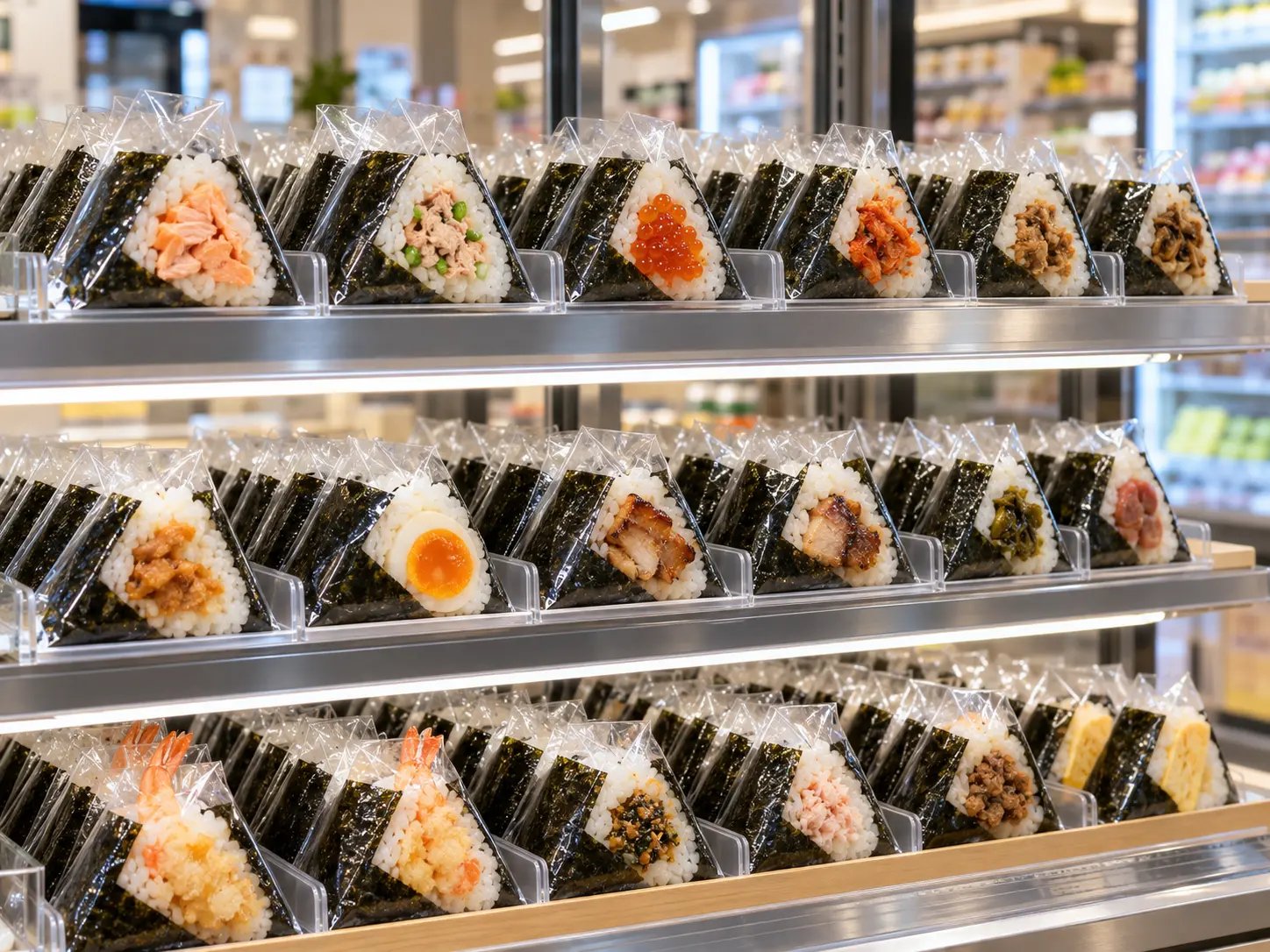
Prepared Rice Formats & Retail Presentation
Bento meals, sliced sushi and refrigerated onigiri illustrate prepared-food formats. These photographs are presentation references alongside the processing guide.


06 / MEASURE THE COMPLETE FROZEN CYCLE
Frozen Rice Balls Quality and Reheating Testing
Test the candidate starch after the actual frozen-storage period and target reheating route, not only immediately after cooking.
Hardness
Measure the increase in rice hardness during frozen storage.
Stickiness
Measure whether the reheated rice is cohesive without becoming gummy.
Grain Integrity
Score broken, crushed and structurally damaged rice grains.
Moisture Loss
Track mass loss and dry regions after microwave reheating.
Shape Stability
Measure breakage during freezing, packaging and handling.
Microwave Uniformity
Check center-to-edge temperature and texture consistency.
Freeze-Thaw Stability
Evaluate texture after controlled temperature cycling when relevant.
Sensory Recovery
Compare frozen-reheated rice with the freshly cooked production benchmark.
Modified starch is a texture tool—not a food-safety control.
Commercial frozen cooked-rice products require a validated food-safety plan covering cooking, handling, cooling, freezing, packaging, frozen distribution and reheating. Texture performance should be evaluated separately from microbiological control.
07 / DIAGNOSE THE RICE FAILURE
Frozen Rice Balls Formulation Troubleshooting
Standardize the rice variety, water ratio, cooked yield, forming pressure, freezing profile and microwave protocol before changing modified-starch dosage.
| Observation | Likely Factors | Controlled Next Trial |
|---|---|---|
| Rice becomes hard after freezing | Starch retrogradation, water migration, slow freezing or low moisture retention. | Evaluate a more freeze-thaw-stable Tianjiang grade at fixed cooked-rice yield. |
| Rice ball breaks during handling | Insufficient cohesion, low surface moisture or inadequate forming pressure. | Increase functional binding without overcompressing the grains. |
| Rice becomes gummy | Excess starch dosage, overcooked rice or excessive grain damage. | Reduce starch and check actual cooked-rice yield. |
| Microwave center remains hard | Uneven water distribution, large unit size or insufficient heating. | Standardize unit geometry and reheating protocol before reformulation. |
| Rice surface becomes dry | Moisture loss, packaging or excessive reheating energy. | Compare water-retaining starch and optimized reheating conditions. |
| Grilled glaze runs off | Low glaze viscosity, poor surface adhesion or excessive free water. | Evaluate Tianjiang sauce-grade modified starch. |
| Sticky-rice product becomes too dense | High glutinous-rice ratio, excess compression or insufficient water balance. | Optimize rice blend before increasing starch. |
| Texture deteriorates after temperature cycling | Ice-crystal growth and repeated water redistribution. | Improve cold-chain control and run standardized freeze-thaw comparison tests. |
08 / SELECT STARCH BY RICE PRODUCT TARGET
How to Select Modified Starch for Frozen Rice Balls
Share rice variety, amylose level, cooking yield, unit size, seasoning system, forming method, freezing conditions and reheating route so Tianjiang can screen the correct modified-starch grade.
Freeze-Thaw Grade
For frozen rice that develops excessive hardness during storage.
Water-Retention Grade
For microwave products showing dry edges or uneven moisture.
Cohesion Grade
For rice balls that crack, break or lose their shape.
Modified Tapioca Starch
Suitable grades can support softness, elasticity and water management.
Modified Corn Starch
Can be screened for process tolerance, rice binding or glaze applications.
Glaze-Stability Grade
For grilled rice balls requiring consistent sauce viscosity and surface cling.
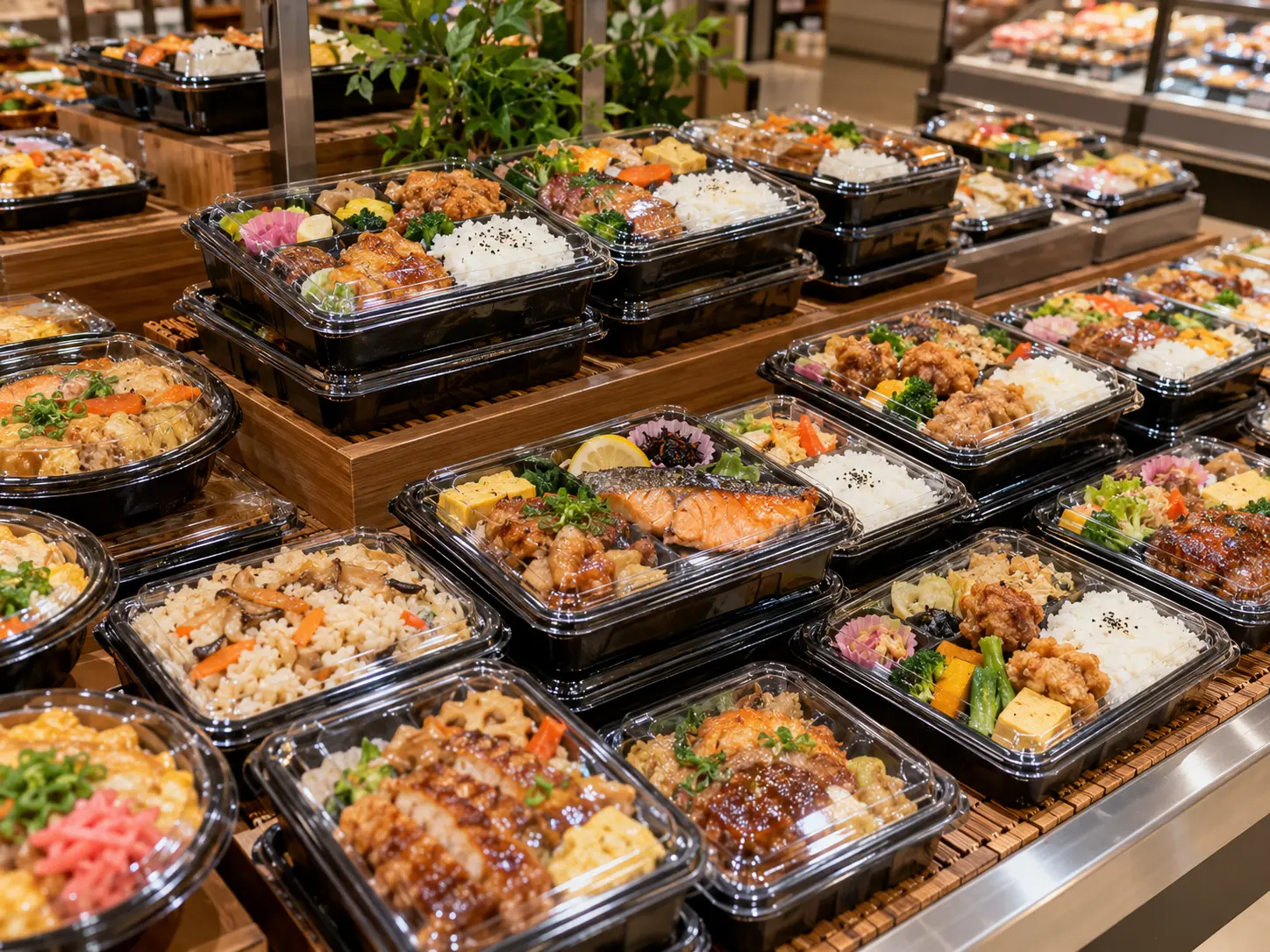
Packaged Sushi & Bento Formats
Consider portion size, packaging and intended storage conditions when developing prepared rice products.
09 / R&D TO PURCHASING
Modified Starch Specifications for Frozen Rice Manufacturers
Once the starch passes cooking, freezing, storage and reheating trials, convert the result into a controlled ingredient purchasing specification.
Exact Tianjiang Grade
Confirm product code and approved dosage.Botanical Source
Confirm tapioca, corn, potato or other starch source.Application Point
Specify rice base, seasoning slurry, filling or glaze use.Texture Target
Define hardness, cohesion, grain integrity and microwave-recovery targets.Representative COA
Review required incoming quality parameters.Commercial Planning
Confirm sample size, MOQ, packaging, lead time and monthly consumption.

10 / TECHNICAL QUESTIONS
Frozen Rice Balls FAQs
Technical guidance for frozen-rice manufacturers, product developers and ingredient buyers.
Why Is Modified Starch Used in Frozen Rice Balls?
Suitable modified starch can help manage water distribution, hardness, cohesion and freeze-thaw texture while preserving a recognizable rice-grain structure.
How Much Modified Starch Can Be Added to Frozen Rice?
The Tianjiang development platforms on this page use approximately 0.8–1.2% modified starch within the prepared rice base. The optimum level depends on rice variety, cooked yield, product shape, storage period and reheating method.
Why Does Frozen Rice Become Hard?
Cooked rice starch continues restructuring after cooking. Water migration and starch retrogradation during cooling and frozen storage can contribute to increased hardness.
Can Modified Starch Improve Microwave-Reheated Rice?
Suitable grades can support water distribution and softer reheated texture. The final performance should be tested using the exact unit weight, packaging and microwave protocol intended for consumers.
Can Modified Starch Be Used in Grilled Onigiri Sauce?
Yes. Sauce-grade modified starch can be evaluated to control glaze viscosity, cling, coating uniformity and freeze-thaw performance.
What Is Different About Sticky-Rice Frozen Onigiri?
Glutinous rice provides greater cohesion and chewiness, but excessive sticky-rice content or compression can produce an overly dense texture. The rice blend and starch dosage should be optimized together.
Does Faster Freezing Improve Frozen Rice Quality?
Freezing conditions affect ice-crystal development, water distribution and cooked-rice texture. The formulation and freezing process should therefore be evaluated together.
What Information Should I Send Tianjiang?
Share rice variety, cooked-rice yield, cooking-water ratio, current starch, unit weight, forming process, seasoning system, freezing conditions, storage target, packaging and reheating method.
11 / TALK TO TIANJIANG
Request Modified Starch Samples for Frozen Rice Balls
Share your current frozen rice formulation, production conditions and reheating problem so Tianjiang can recommend a candidate starch for your next factory trial.
Prepare Your Frozen Rice Project Brief
12 / RELATED FROZEN FOOD APPLICATIONS