
TIANJIANG / MOCHI FORMULATION
Mochi Formulation with Modified Starch
This mochi formulation uses Tianjiang modified starch to help manufacturers achieve softness, chewiness, stretchiness, moisture retention and consistent texture through steaming, stretching, forming, storage and frozen distribution.
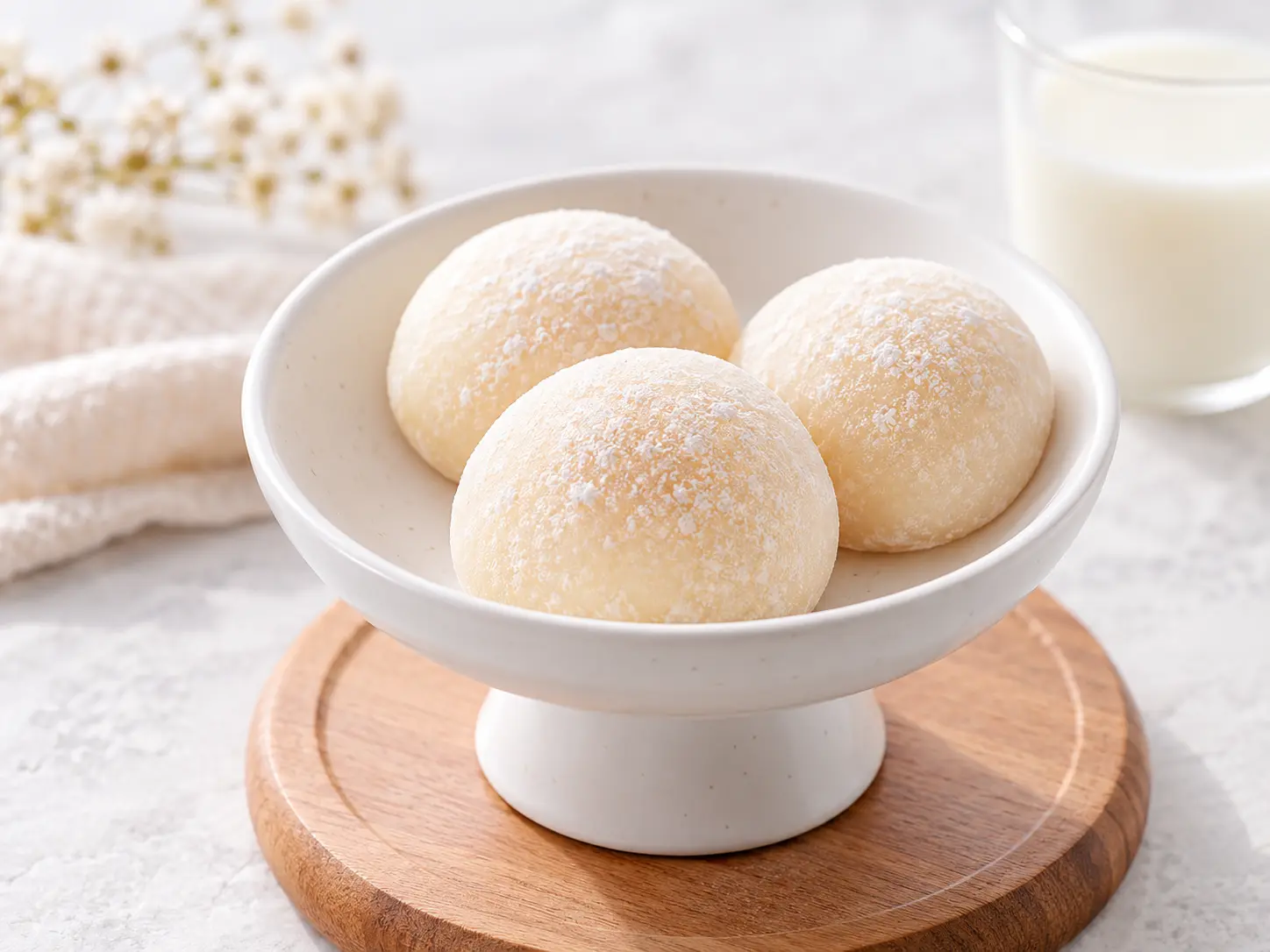
Soft white mochi with a lightly powdered surface.
01 / DEFINE THE TEXTURE TARGET
Mochi Solutions for Manufacturers and R&D Teams
Define the target balance of softness, chewiness, stretchiness, surface stickiness, storage temperature and shelf-life before selecting the starch system.
Softness
Maintain a tender bite without allowing the mochi to become weak, wet or difficult to form.
Chewiness & Elasticity
Control springiness and chewing resistance for the desired premium mochi texture.
Shelf-Life Texture
Reduce rapid hardening and moisture loss after cooling, packaging and storage.
02 / FOUR COMMERCIAL MOCHI PLATFORMS
Four Mochi Formulation Platforms
The Tianjiang core formula is expanded into four platforms for ambient soft mochi, flavored mochi, extended-softness products and frozen mochi wrappers.
Classic Soft Shelf-Stable Mochi
Built directly around Tianjiang's core maltose syrup, glutinous rice flour and modified-starch system.
Coconut-Flavored Soft Mochi
A soft flavored platform using coconut-style syrup, trehalose and Tianjiang modified starch.
Extended-Softness Mochi
A higher-starch platform designed for R&D programs focused on reducing storage hardening.
Frozen Mochi Wrapper
Designed for mochi ice cream and frozen desserts where softness after freeze-thaw is critical.
Mochi and Mochi-Style Product Examples
Soft filled mochi and baked mochi-style products illustrate different formats and textures. These images are visual references; they do not document the four formulas above or demonstrate shelf-life or frozen performance.
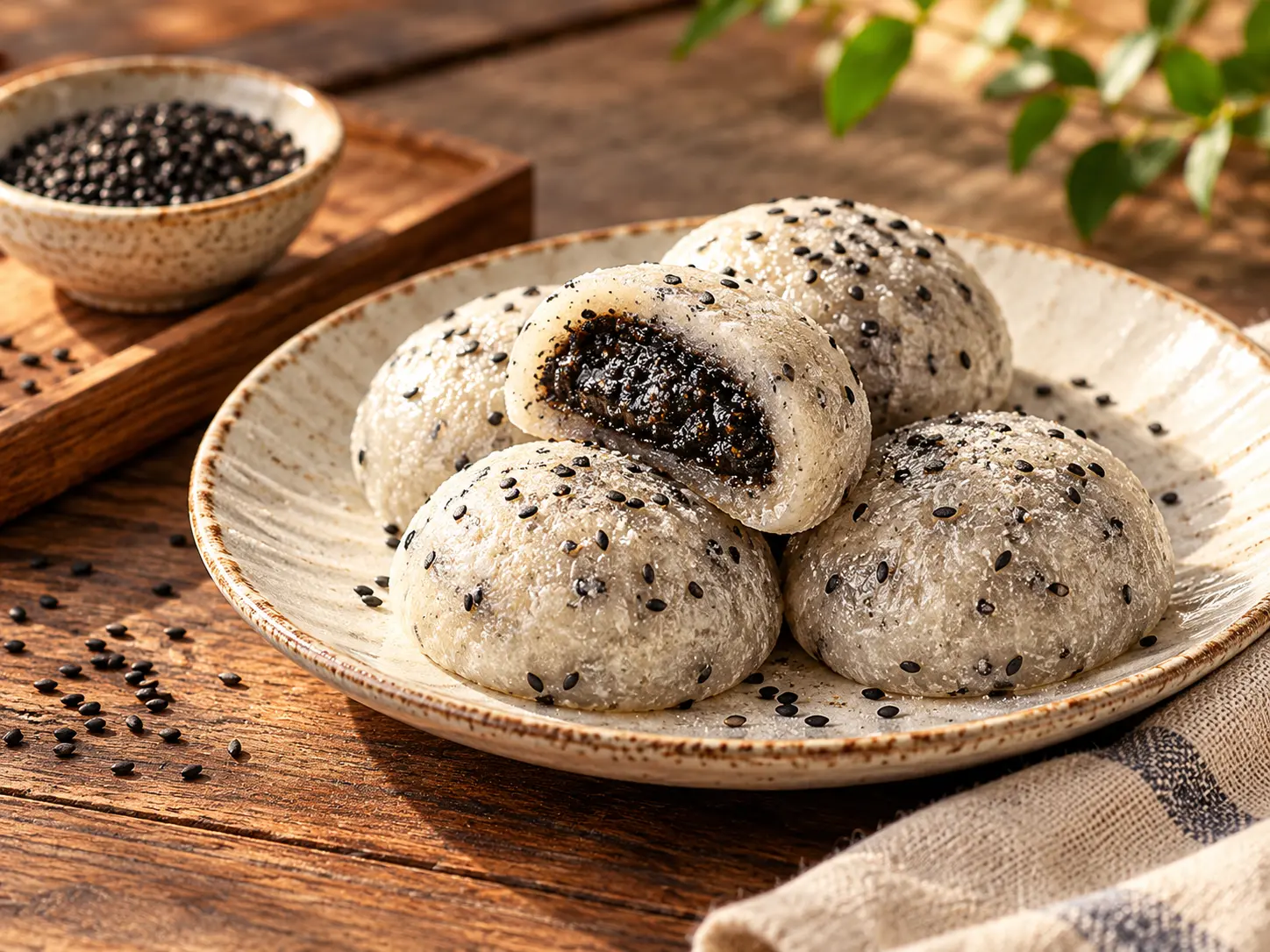
Filled soft mochi — black sesame filling and chewy rice dough.
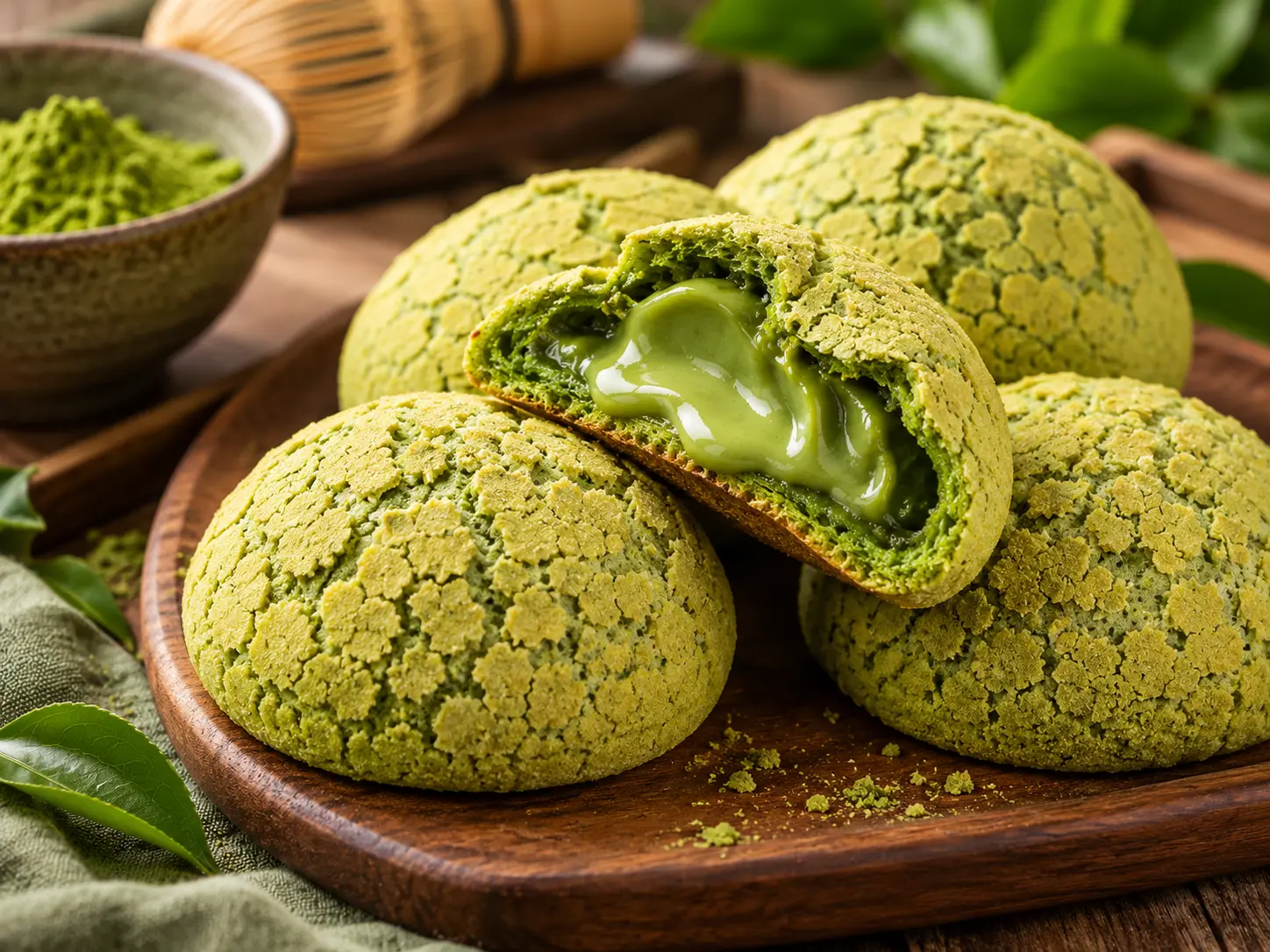
Matcha mochi-style buns — a filled baked product example.

Baked mochi bread — hollow interior and airy crumb.
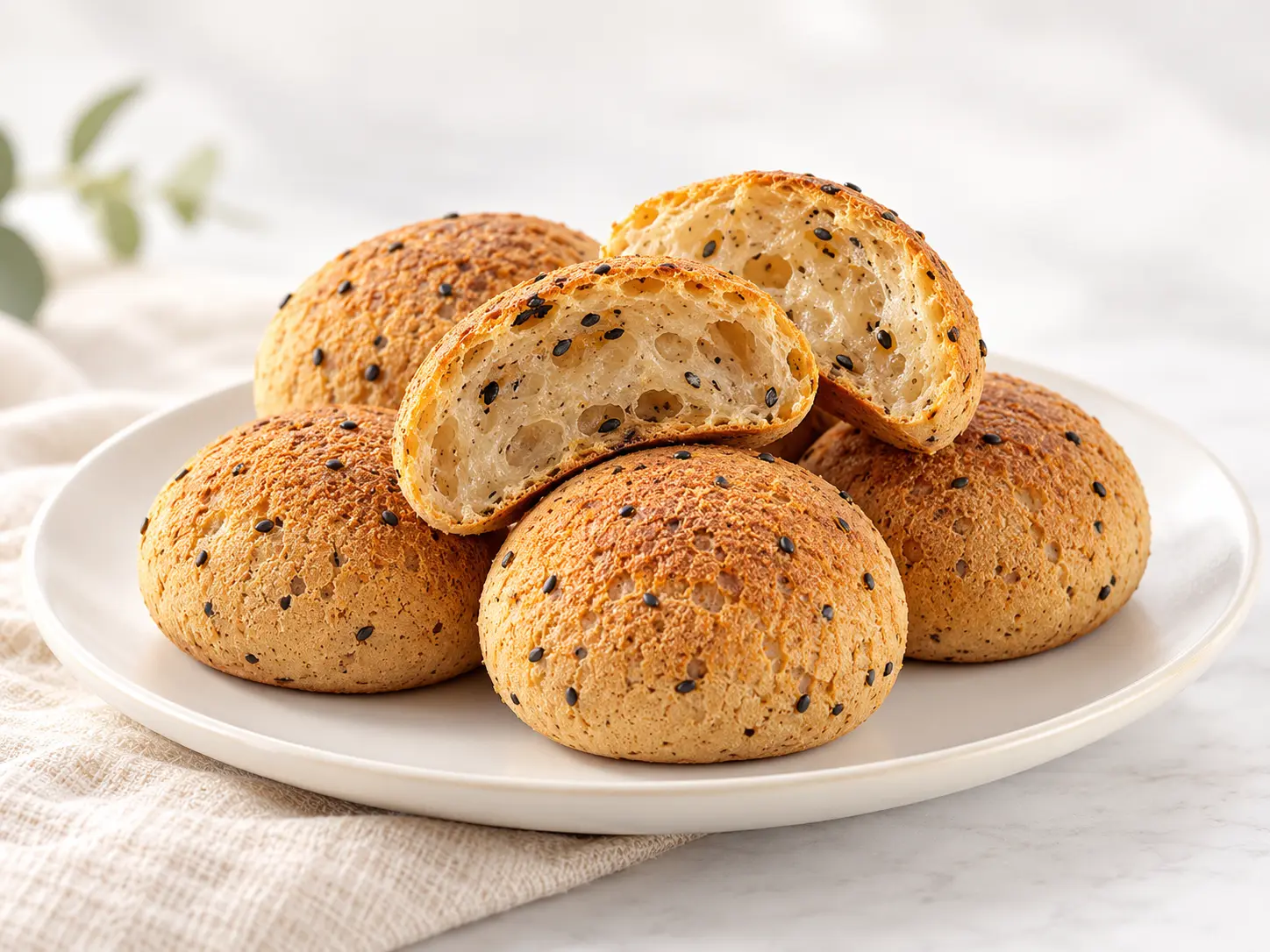
Black sesame mochi bread — cut-open crumb structure.
03 / TIANJIANG COMMERCIAL PRODUCTION FORMULA
Tianjiang Mochi Production Formulas
Choose the mochi platform, enter the manufacturing batch size and compare Tianjiang modified-starch dosage while maintaining a 100% formula balance.
Mochi Formulation Batch Calculator
The calculator adjusts Tianjiang modified starch and balances the difference through process water. For comparison trials, keep syrup, rice flour, steam conditions and stretching time constant.
| Ingredient | Formula % | Batch Mass, kg | Primary Function |
|---|---|---|---|
| Total | 100.00% | 100.000 | Starting formulation |
TJ-MO-01 · 100 kg batch · 12.00% Tianjiang modified starch.

Soft black sesame mochi dough stretched by hand.
04 / MODIFIED STARCH PERFORMANCE
How Modified Starch Improves Mochi Texture
Modified starch allows manufacturers to design the texture rather than relying only on glutinous rice flour.
Softness
Maintain a soft bite after cooling and storage.Stretchiness
Support cohesive elastic extension without easy tearing.Chewiness
Control springiness and chewing resistance.Moisture Retention
Reduce excessive drying and surface hardening.Anti-Staling
Slow texture deterioration during shelf life.Freeze-Thaw Stability
Support frozen mochi and mochi ice cream applications.
05 / COMMERCIAL MANUFACTURING
Mochi Manufacturing Process
The process follows the Tianjiang reference: dry blending, hydration, syrup addition, steam cooking, stretching, forming and packaging.
-
Weigh ingredients
Prepare all ingredients according to the selected batch formulation.
-
Premix dry materials
Blend glutinous rice flour, Tianjiang modified starch, thickener and salt uniformly.
-
Add process water
Hydrate under mixing until the dry materials are uniformly dispersed.
-
Add syrup system
Add maltose syrup, flavored syrup, glucose and other sweeteners.
-
Steam-cook
Close the steam cooker and cook under validated agitation and steam pressure for approximately 15–20 minutes.
-
Stretch the dough
Stop steam and continue stretching or kneading for approximately 5–10 minutes.
-
Sheet or form
Produce sheets, balls or filled mochi according to the product specification.
-
Cool and package
Control cooling, surface starch and packaging to protect softness and product quality.

Chocolate mochi bread — hand-pulled crumb texture.

Raisin mochi bread — visible dough extension.
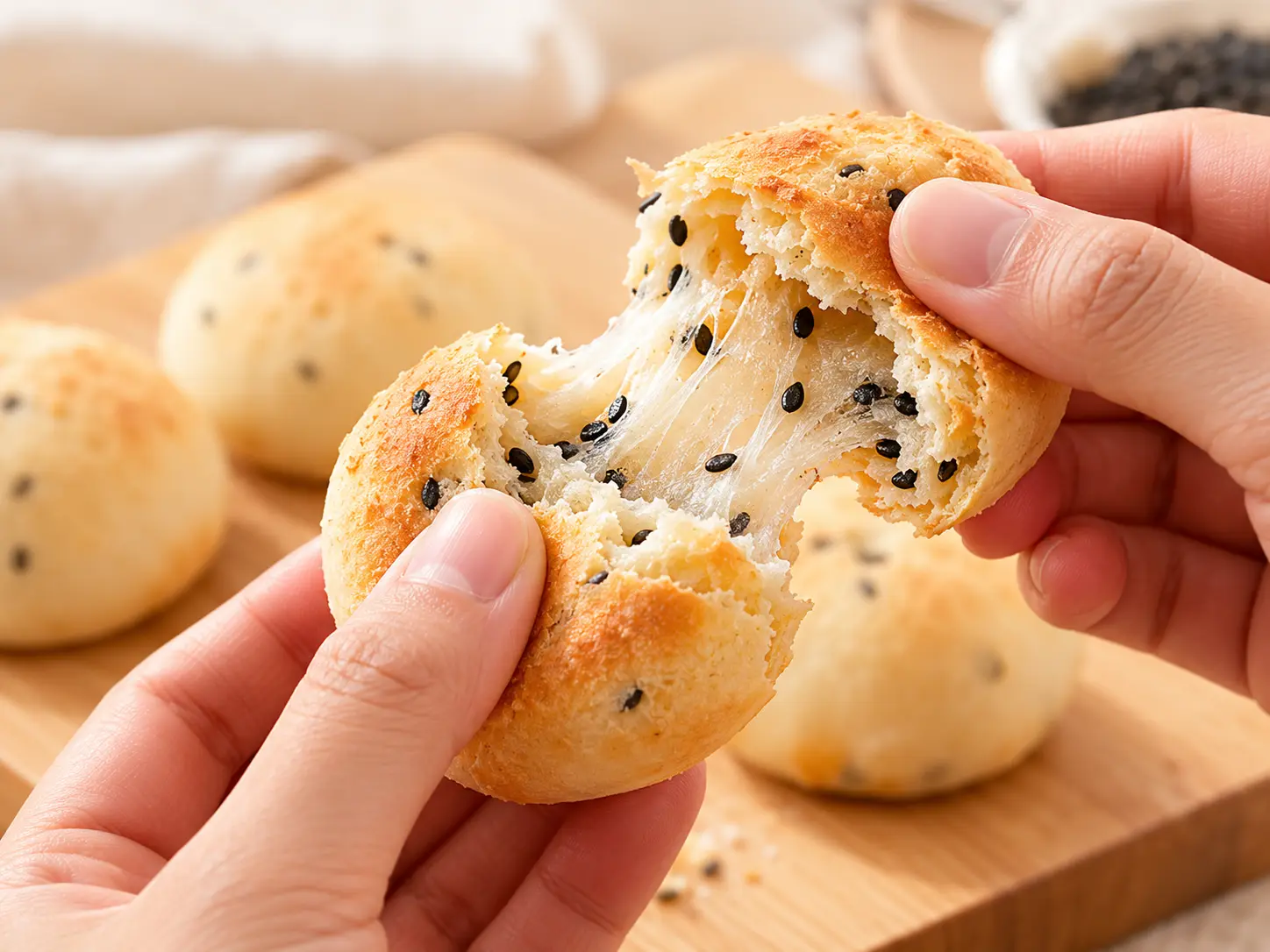
Black sesame mochi bread — hand-tearing texture demonstration.
06 / DEFINE THE EATING EXPERIENCE
Softness, Chewiness and Stretchiness
Mochi texture should be evaluated as a combination of several sensory and mechanical attributes, not as hardness alone.
Softness
Measure compression after cooling and throughout shelf life.
Springiness
Evaluate recovery after compression and first bite.
Stretchiness
Compare extension before tearing at equal temperature.
Stickiness
Control adhesion to equipment, packaging and teeth.
07 / DIAGNOSE THE TEXTURE FAILURE
Mochi Formulation Troubleshooting
Change one variable at a time. Water, syrup system, starch type, steam conditions and stretching all influence final texture.
| Problem | Possible Factors | Recommended Trial |
|---|---|---|
| Mochi becomes hard quickly | Starch retrogradation, low moisture, low syrup or excessive cooking. | Screen a more stabilized starch and compare at identical moisture. |
| Texture is too sticky | High water, excess syrup, insufficient starch structure or under-cooking. | Confirm cooking development before reducing water. |
| Mochi tears during stretching | Weak starch matrix, insufficient hydration or inadequate stretching. | Compare starch grades at equal water content. |
| Texture is too rubbery | Excess starch, low moisture or excessive structural strength. | Reduce modified starch in controlled increments. |
| Surface dries during storage | Packaging barrier, low moisture retention or poor syrup balance. | Measure weight loss and package barrier. |
| Frozen mochi cracks | Insufficient freeze-thaw stability or low flexibility. | Screen a freeze-thaw-stable modified starch. |
| Mochi sticks to equipment | Surface moisture, temperature, oil level or formulation rheology. | Standardize dough temperature before reformulating. |
| Texture varies between batches | Steam pressure, mixing, raw-material variation or cook time. | Standardize process conditions and batch temperature. |
08 / SELECT BY TEXTURE TARGET
How to Select Modified Starch for Mochi
Share the desired softness, chewiness, stretchiness, storage route, process conditions and target shelf life so Tianjiang can screen the right starch profile.
Soft & Stretchy
Prioritize cohesive, elastic starch systems with slow texture firming.
Chewy & Springy
Select greater elastic recovery for a stronger traditional chewing experience.
Anti-Staling
Select stabilized starch where extended softness is the primary requirement.
Modified Tapioca Starch
Suitable grades can provide clear, cohesive, soft and stretchy texture.
Heat & Shear Stability
Important for steam cooking, mixing and stretching equipment.
Freeze-Thaw Stability
Critical for mochi ice cream and frozen dessert applications.
09 / STANDARDIZE EVERY TRIAL
Mochi Formulation and Quality Testing
Compare candidate starches at identical water, syrup, cook conditions and sample temperature.

Cut-open baked mochi bread shown as a visual texture reference.
- Hardness Measure at fixed sample temperature.
- Springiness Compare recovery after compression.
- Stretch Length Record extension before break.
- Moisture Loss Track during storage.
- Storage Texture Evaluate day 1, 3, 7 and beyond.
- Freeze-Thaw Evaluate cracking and softness after thawing.
10 / R&D TO PURCHASING
Modified Starch Specifications for Mochi Purchasing
Once the preferred texture is approved, connect the application result to purchasing and production specifications.
Exact Grade
Confirm Tianjiang product grade and dosage.Botanical Source
Confirm tapioca, corn, potato or other source.COA
Review receiving quality parameters.Regulatory Documentation
Confirm additive designation and market requirements.Commercial Terms
Confirm sample size, MOQ and packaging.Supply Planning
Share monthly consumption and destination market.

Finished sesame mochi buns shown as a product presentation reference.
11 / TECHNICAL QUESTIONS
Mochi Formulation FAQs
Technical answers for mochi manufacturers, R&D teams and ingredient buyers.
Why Is Modified Starch Used in Mochi?
Modified starch can help control softness, chewiness, stretchiness, moisture retention, process stability and shelf-life texture.
How Much Modified Starch Is Used in Mochi?
Tianjiang's core application uses approximately 10–15% modified starch in the total mochi formulation, depending on texture and process requirements.
Why Does Mochi Become Hard During Storage?
Hardening may be caused by starch retrogradation, moisture loss, sweetener balance and storage conditions.
Can Modified Tapioca Starch Be Used in Mochi?
Yes. Suitable modified tapioca starch can provide soft, cohesive, elastic and stretchy characteristics.
Can Modified Starch Improve Frozen Mochi?
A suitable freeze-thaw-stable starch can help maintain flexibility and reduce texture damage after frozen storage.
What Information Should I Send Tianjiang?
Share your rice-flour level, current starch, water, syrup system, steam-cooking conditions, storage temperature, target shelf life and desired texture.
12 / TALK TO TIANJIANG
Request Modified Starch Samples for Mochi
Share the current formula and texture problem so Tianjiang can recommend a candidate modified starch system.
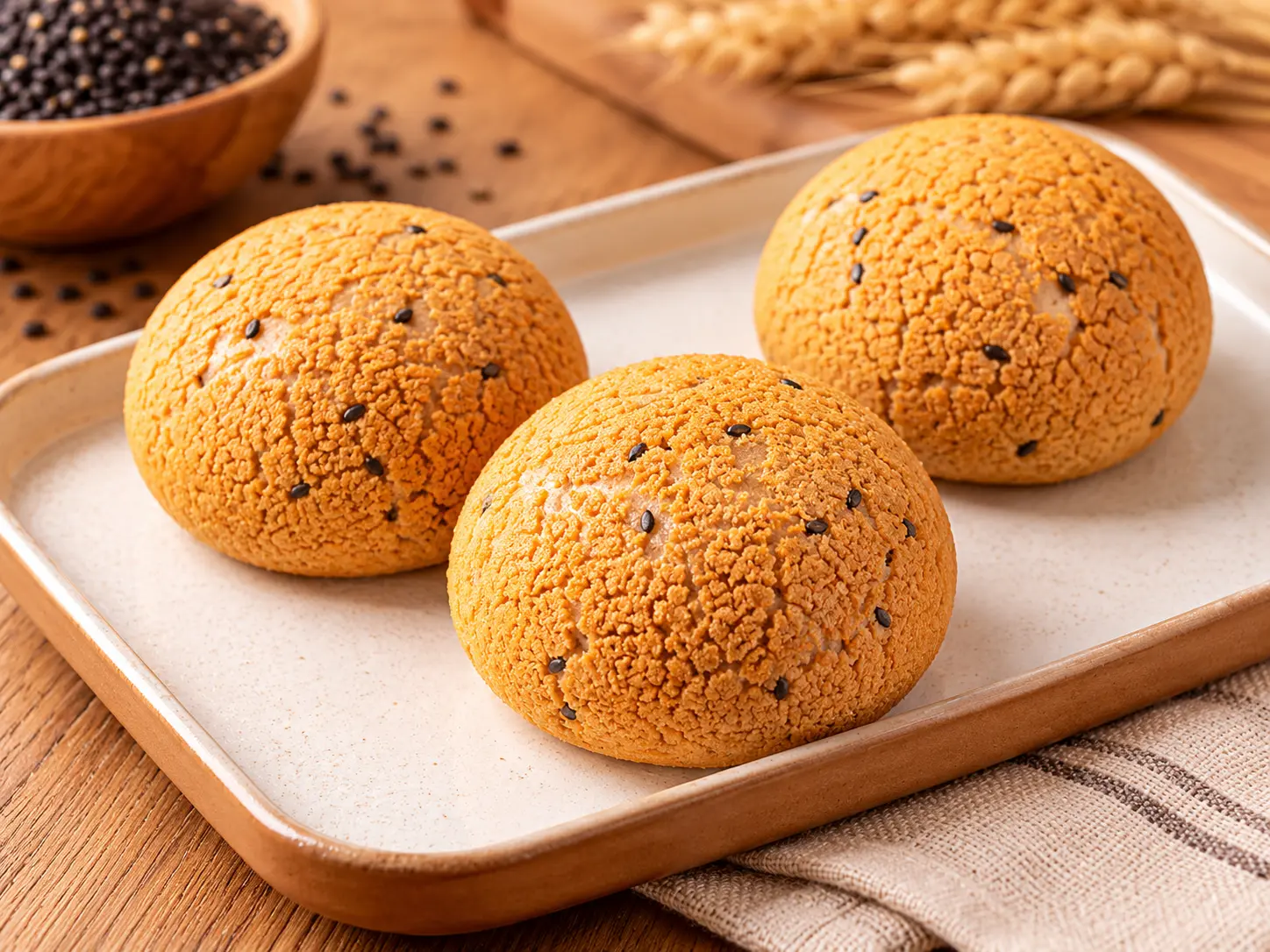
Baked sesame mochi buns shown as a project reference product.
Prepare Your Mochi Project Brief
13 / RELATED APPLICATIONS