
Tianjiang / Bakery applications
Modified Starch Solutions for Bakery Products
Explore modified starch solutions for chiffon cakes, Swiss rolls and bread. Match starch functionality to your targets for crumb softness, structure, moisture management and processing performance.

Structure.
01 / Find your bakery application
Modified Starch Applications in Cakes and Bread
Explore three bakery formats with distinct production needs. Follow each application for formulation guidance, processing priorities and product-specific evaluation.
 01
Chiffon Cake
Match the starch system to an aerated cake batter. Evaluate batter handling, fine crumb, soft spring-back and shape after baking and cooling. Consider egg-white aeration, mixing and the oven profile alongside starch selection.
Explore Chiffon Cake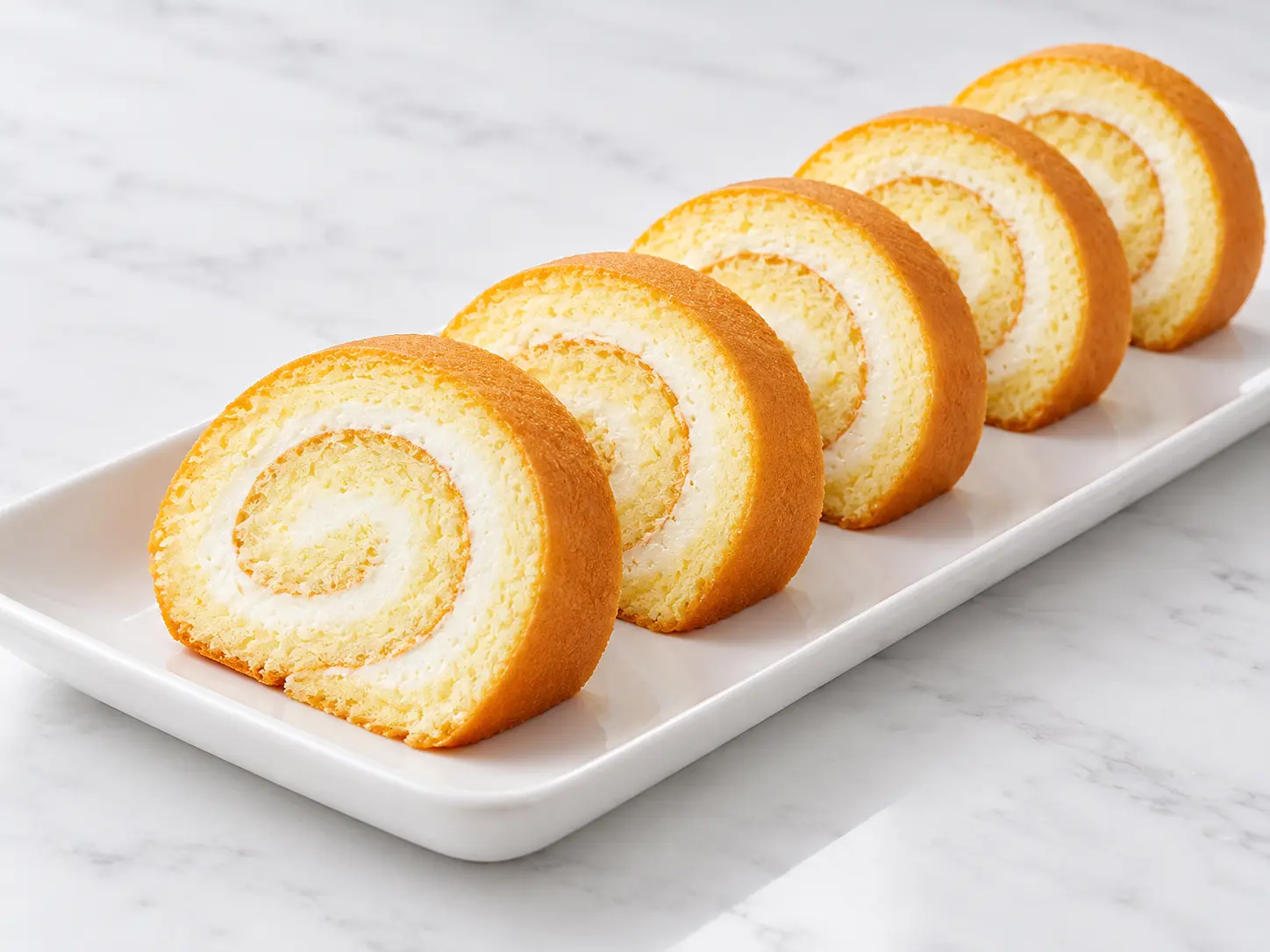 02
Swiss Roll
Build a sheet sponge that can bend around the filling while keeping enough structure for rolling and slicing. Compare flexibility, cracking and moisture movement under the actual cooling, rolling and storage conditions.
Explore Swiss Roll 03
Bread
Evaluate starch within the complete flour, water and dough system. Compare handling, loaf structure, slice integrity and crumb softness after cooling and packaged storage, with additional checks for relevant frozen or par-baked routes.
Explore Bread02 / Define the performance target
Key Technical Benefits for Bakery Manufacturers
Use these priorities to guide starch selection. Evaluate the selected grade alongside flour, eggs, sugar, fat, water and the processing system used in your product.
Crumb Softness and Moisture Management
Screen for the desired tender, moist bite while checking for gumminess or excessive density. Compare candidates in the complete cake or bread formulation at consistent evaluation conditions.
Explore water retentionCrumb Structure and Post-Bake Shape Retention
Assess cell distribution, internal structure and shape after cooling. Use product-specific targets for an aerated cake, a thin roll sponge or a fermented loaf.
Explore texture improvementProcessing, Rolling and Slicing Performance
Connect starch selection to the actual production step: depositing batter, dividing dough, rolling a sponge sheet or slicing a finished loaf. Evaluate handling and eating quality together.
Explore texture solutionsTexture Retention During Storage
Track softness and product integrity over the intended storage period. Include chilled or frozen evaluation where relevant, and distinguish frozen dough from baked products that are frozen and thawed.
Explore freeze-thaw stabilityFunctionality depends on the grade and application. Confirm the balance of processing performance, structure and eating quality through trials using your actual recipe and production conditions.
03 / Match the starch to the bakery system
How to Select Modified Starch for Your Bakery Application
Start with the product format and the stage where performance needs to improve. A cake batter and a bread dough require different trial conditions and quality targets.
Define Your Bakery Format and Texture Target
Describe the complete formulation and your finished-product benchmark.
- Chiffon cake, Swiss roll, bread or another bakery format
- Flour specification and egg, sugar, fat and liquid levels
- Target softness, lightness, elasticity or rollability
- Current issue: shrinkage, cracking, crumbling or storage hardening
Match Mixing, Baking and Storage Conditions
Record the actual production and distribution route.
- Cake aeration, folding, depositing and baking
- Bread mixing, dividing, proofing and baking
- Product dimensions, cooling, filling and packaging
- Ambient, chilled, frozen or par-baked conditions where applicable
| Application | Texture target | Processing priorities | Finished-product checks |
|---|---|---|---|
| Chiffon cake | Light, fine and softly elastic | Batter density, mixing, baking and cooling | Cell structure, volume, shrinkage and softness |
| Swiss roll | Soft, flexible and easy to roll | Sheet thickness, bake loss, cooling and rolling conditions | Cracking, roll shape, slicing and filling contact |
| Bread | Soft, uniform and cleanly sliced | Hydration, dough temperature, mixing, proofing and baking | Volume, crumb firmness, slicing and stored texture |
State the dosage basis. Baker’s percentages use flour weight as the reference; total-batch percentages use the complete batter or dough. Clarify whether starch is added or replaces flour before comparing trial results.

04 / Explore ingredient-label options
Clean Label Starch Options for Bakery Products
Bring your ingredient-label requirements into the trial brief. Compare alternatives against the texture and processing targets that matter for your cake or bread.
Functional Native Starch Options
Discuss functional native grades for suitable bakery applications. Confirm the exact product, botanical source and preparation requirements before starting a comparison.
Texture and Processing Trade-Offs
Compare hydration, batter or dough behavior, volume, crumb and stored texture together. An alternative may require changes to water, dosage or processing to achieve the intended result.
Ingredient Declaration Requirements
Review documentation for the selected grade and intended market. Pregelatinization alone does not establish clean label suitability; confirm the specific ingredient and declaration requirements.
05 / Connect formulation with production
Bakery Application Testing and Technical Support
Share your recipe, production conditions and target product. Build the trial around the stage that matters: cake cooling, sponge rolling, bread slicing or packaged storage.
- 01
Define the Trial Conditions
Confirm the base formula, flour specification, equipment settings and current challenge. Use a consistent reference sample and document the starch addition basis.
- 02
Evaluate Processing and Finished-Product Quality
Check production behavior, cooled products and stored samples. Compare structure, softness, rolling or slicing under conditions relevant to your bakery format.
- 03
Review Grade Specifications and Supply Requirements
Discuss technical specifications, sample needs, packaging, intended market and purchasing requirements before progressing toward production.

06 / Before your next formulation trial
FAQs About Modified Starch for Bakery Products
Practical starting points for commercial bakeries, formulation teams and ingredient buyers.
How do I select modified starch for cakes or bread?
Begin with the bakery format, flour specification, main ingredients and target texture. Share the current issue, mixing and baking conditions, packaging and storage route. Compare candidate grades in a controlled trial that covers processing and finished-product quality.
Can the same starch grade be used in chiffon cake, Swiss rolls and bread?
A grade can be considered for more than one application, but each use needs separate validation. Chiffon cake depends on its aerated batter and setting structure; Swiss rolls require a flexible sheet; bread adds dough development and fermentation to the evaluation.
What should be evaluated when a Swiss roll cracks during rolling?
Review sheet thickness, batter preparation, baking and moisture loss, then cooling time and rolling temperature. Compare the sponge with the actual filling and equipment. Adjusting starch alone may not resolve a problem caused by an unsuitable bake or rolling condition.
How should starch dosage be expressed in a bakery formulation?
Always state the calculation basis. In baker’s percentages, an ingredient is expressed relative to flour weight: 4 kg starch per 100 kg flour is 4% on flour. This is not 4% of the total batter or dough. Also clarify whether starch is added on top of the flour or replaces part of it.
How should bakery texture be evaluated during storage?
Compare samples at defined times, temperatures and packaging conditions. Assess softness, crumb integrity, rollability or sliceability as relevant. For frozen products, specify the freezing and thawing route. Texture retention alone does not establish the product’s overall shelf life.
Are clean label starch options available for bakery products?
Suitable functional native and other grades can be discussed for projects with ingredient-label requirements. Confirm the exact product and supporting documentation, then evaluate hydration, processing, volume, crumb and stored texture. Replacement may require changes to dosage or process.
07 / Tell us what you are baking
Discuss Your Bakery Application with Tianjiang
Tell us your bakery product, target texture, formulation and processing conditions. Discuss suitable starch options and application trials with Tianjiang.