
TIANJIANG / CHIFFON CAKE FORMULATION
Chiffon Cake Formulation with Modified Starch
This chiffon cake formulation uses Tianjiang modified starch to help commercial cake manufacturers improve batter stability, fine crumb structure, soft elastic texture, moisture retention, post-bake shape retention and production consistency.

01 / DEFINE THE CAKE STRUCTURE
Chiffon Cake Solutions for Manufacturers and R&D Teams
The starch system should be selected together with egg-white foam, batter viscosity, oil level, baking profile, cake dimensions and desired shelf life.
High Volume
Support a batter structure that can retain the gas generated by whipped egg whites and leavening.
Fine & Uniform Crumb
Control batter viscosity and cell distribution for a fine, uniform commercial crumb.
Shrinkage Control
Improve structural support after baking while optimizing bake endpoint and cooling conditions.
Soft Elastic Texture
Create a soft bite with enough elasticity to recover after compression.
Moisture Retention
Help maintain a tender crumb through packaging and storage.
Layer-Cake Strength
Develop sufficient structure for cream, fruit or mousse-filled cakes without creating a dense crumb.
02 / FOUR COMMERCIAL CHIFFON PLATFORMS
Four Chiffon Cake Formulation Platforms
The Tianjiang internal formula is retained as the core benchmark and expanded into pandan coconut, citrus and refrigerated layer-cake applications.
Classic Milk Chiffon Cake
The core Tianjiang benchmark based closely on the internal chiffon formula, optimized around a soft elastic crumb and reduced post-bake deformation.
Pandan Coconut Chiffon Cake
An Asia-Pacific and international bakery platform combining coconut milk, pandan flavor and a stable fine-cell chiffon structure.
Citrus Chiffon Cake
A lemon-orange style platform designed for bright flavor, fine crumb, softness and good structural recovery.
Refrigerated Layer Chiffon Cake
Designed for cream, fruit and mousse-filled cakes requiring chilled softness and improved layer strength.
Formula values on this page use baker's parts, with cake flour = 100. The TJ-CC-01 platform is based closely on the Tianjiang internal formula you supplied; the other platforms are Tianjiang application-development extensions rather than copies of third-party recipes.
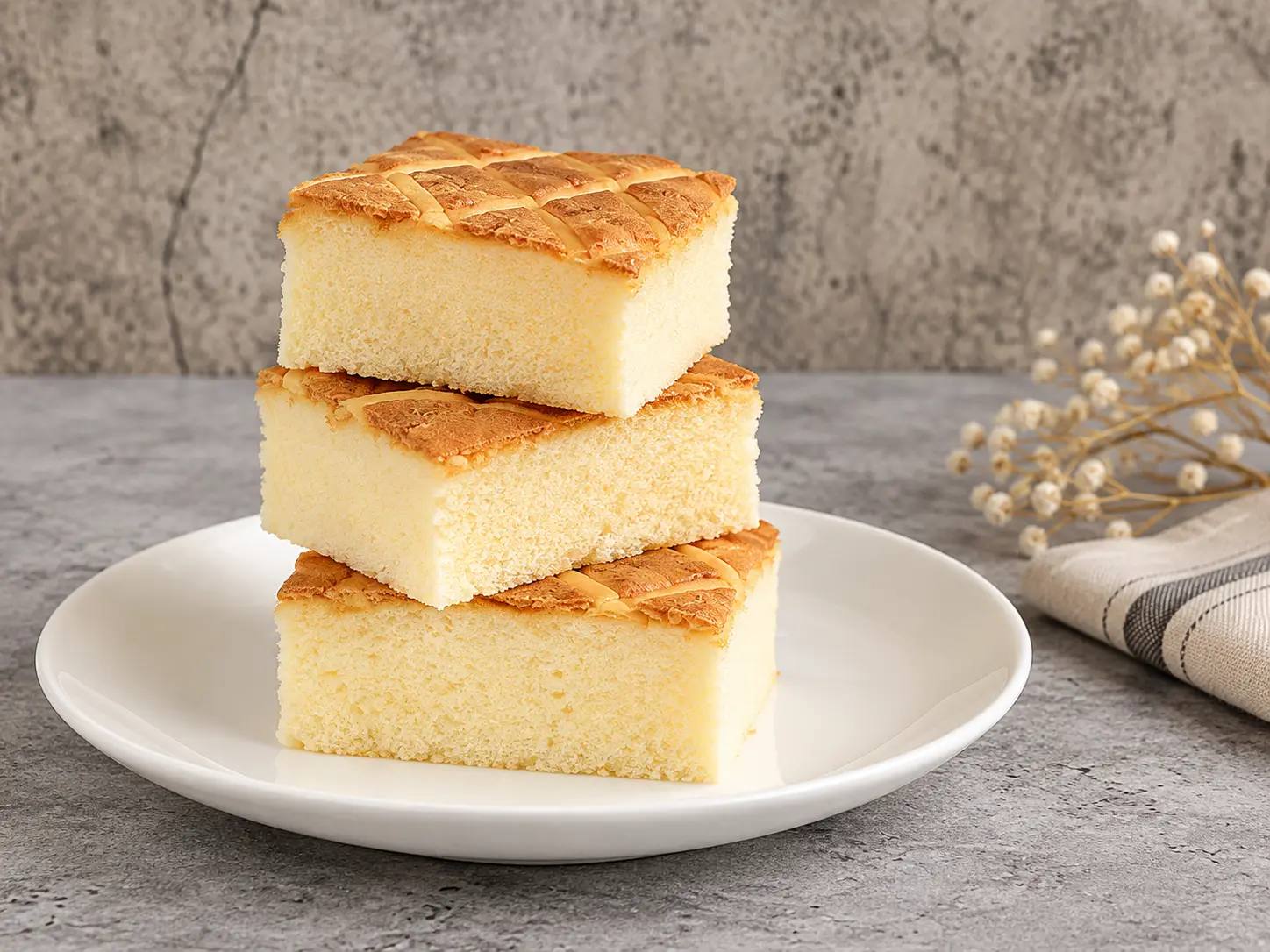
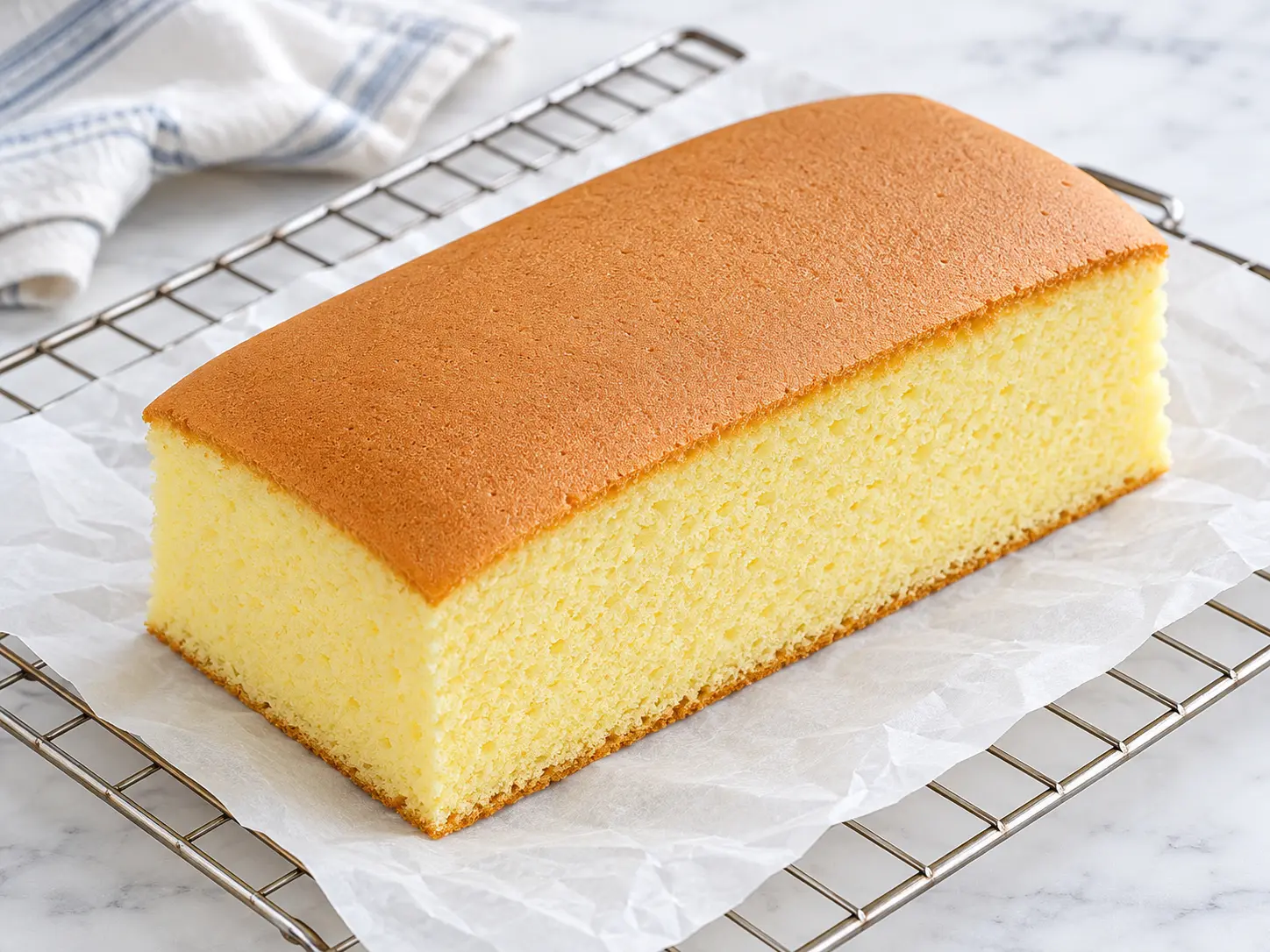
Cake Formats & Serving Inspiration
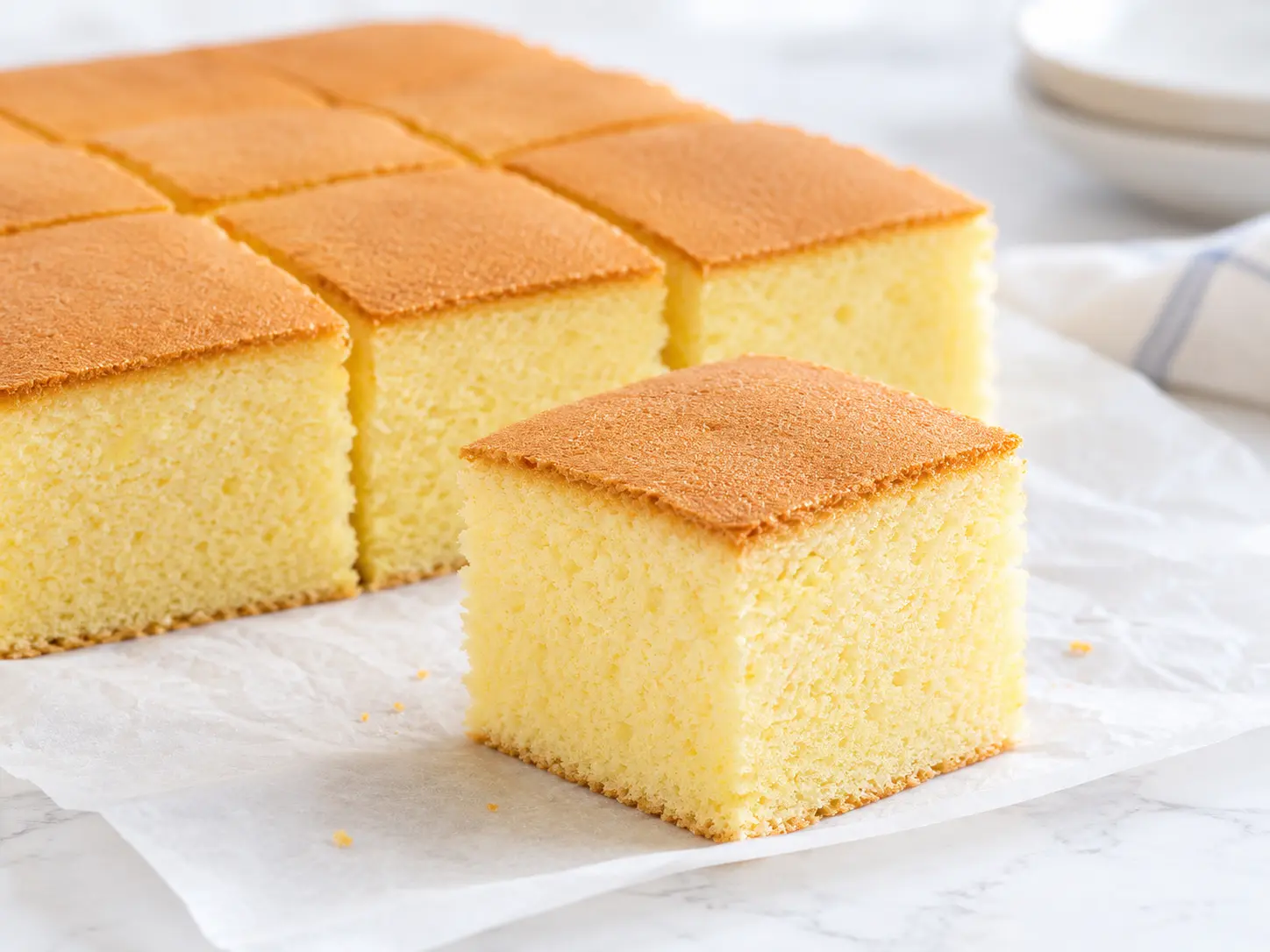
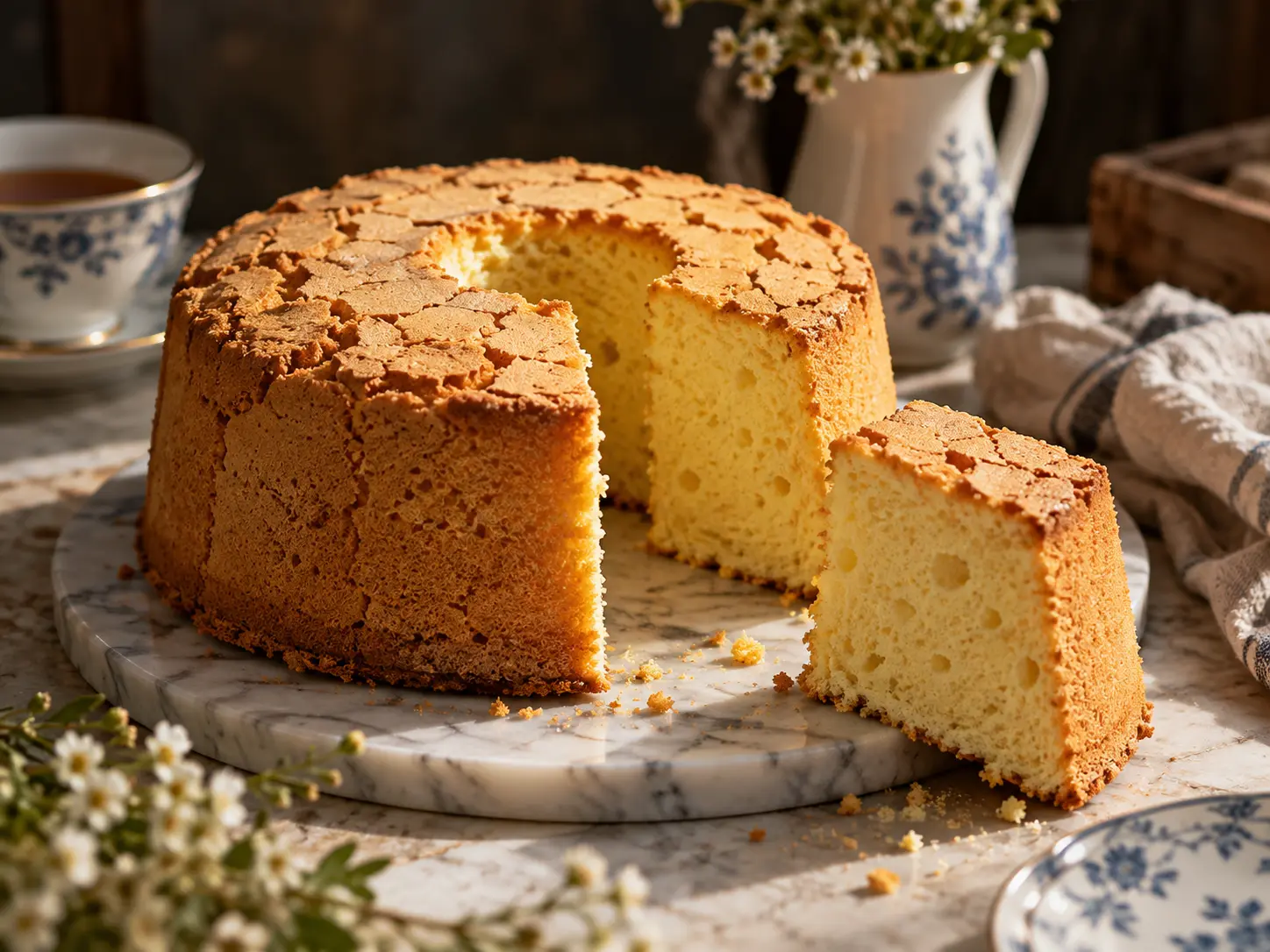
Ring cakes, sliced sponge and cream-layer presentations provide visual references; these photographs are not documented results of the formulations above.


03 / COMMERCIAL PRODUCTION FORMULA
Tianjiang Chiffon Cake Production Formulas
Choose the cake platform and calculate an actual production batter batch from the baker's-parts formula. You can also compare different Tianjiang modified-starch dosages.
Chiffon Cake Formulation Batch Calculator
Baker's parts are calculated with cake flour = 100. The batch calculator automatically converts the complete parts formula into actual production kilograms.
| Ingredient | Baker's Parts | Batch Mass, kg | Primary Function |
|---|---|---|---|
| Total Formula | 584.00 | 100.000 | Final batter |
TJ-CC-01 · 100 kg batter · 4.50 parts Tianjiang modified starch.
04 / MODIFIED STARCH PERFORMANCE
How Modified Starch Improves Chiffon Cake Structure
Modified starch is not a substitute for correct egg-white aeration or baking. Its role is to help the batter and crumb manage moisture and structural stress through processing.
Batter Viscosity
Improve batter body so air cells remain more uniformly distributed.Crumb Structure
Support a fine, even cell structure during thermal setting.Shape Retention
Provide additional structural support as the cake cools.Moisture Retention
Help maintain a soft crumb through shelf life.Elastic Texture
Support spring-back after compression.Chilled Stability
Suitable grades can help maintain softness in refrigerated layer cakes.
05 / COMMERCIAL MANUFACTURING
Chiffon Cake Manufacturing Process
This process follows the logic of the Tianjiang internal formulation: oil-phase emulsification, dry blending, meringue development, controlled folding, depositing and baking.
-
Prepare oil-yolk phase
Pre-emulsify milk and vegetable oil, then add egg yolks and mix until uniform.
-
Prepare dry ingredients
Sift cake flour, Tianjiang modified starch, salt and leavening to remove lumps.
-
Build the base batter
Add dry ingredients to the liquid phase and mix only until smooth and lump-free.
-
Start the meringue
Whip egg whites with the acid system until a fine foam begins to develop.
-
Add sugar gradually
Add sugar in several stages to create a glossy, stable meringue.
-
Fold the batter
Use part of the meringue to lighten the yolk batter, then gently fold the remaining foam.
-
Deposit immediately
Deposit into the selected pan or industrial mould without unnecessary batter holding time.
-
Bake and cool
Bake to a fully set center, then apply the cooling method required by cake size and production format.
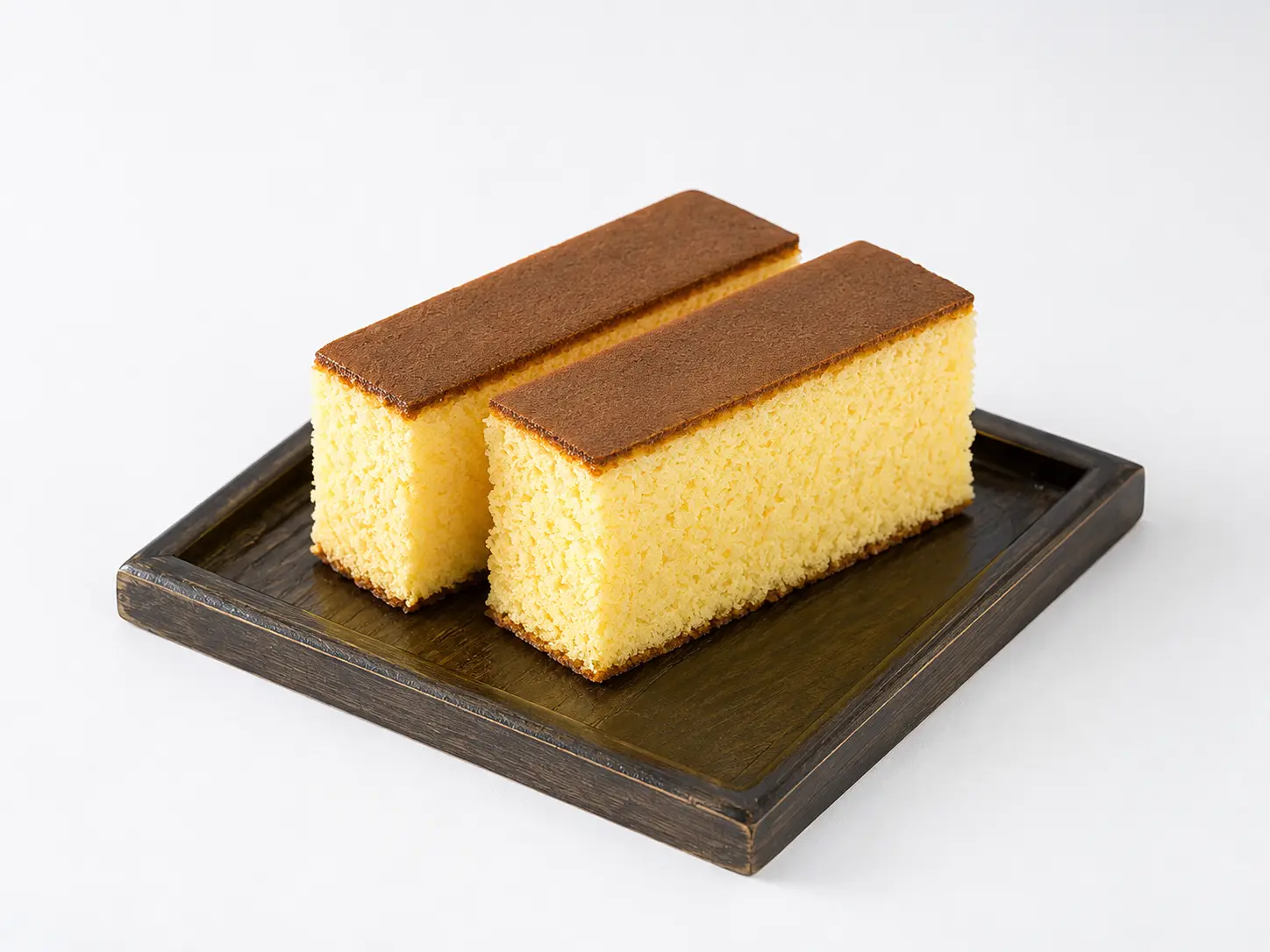
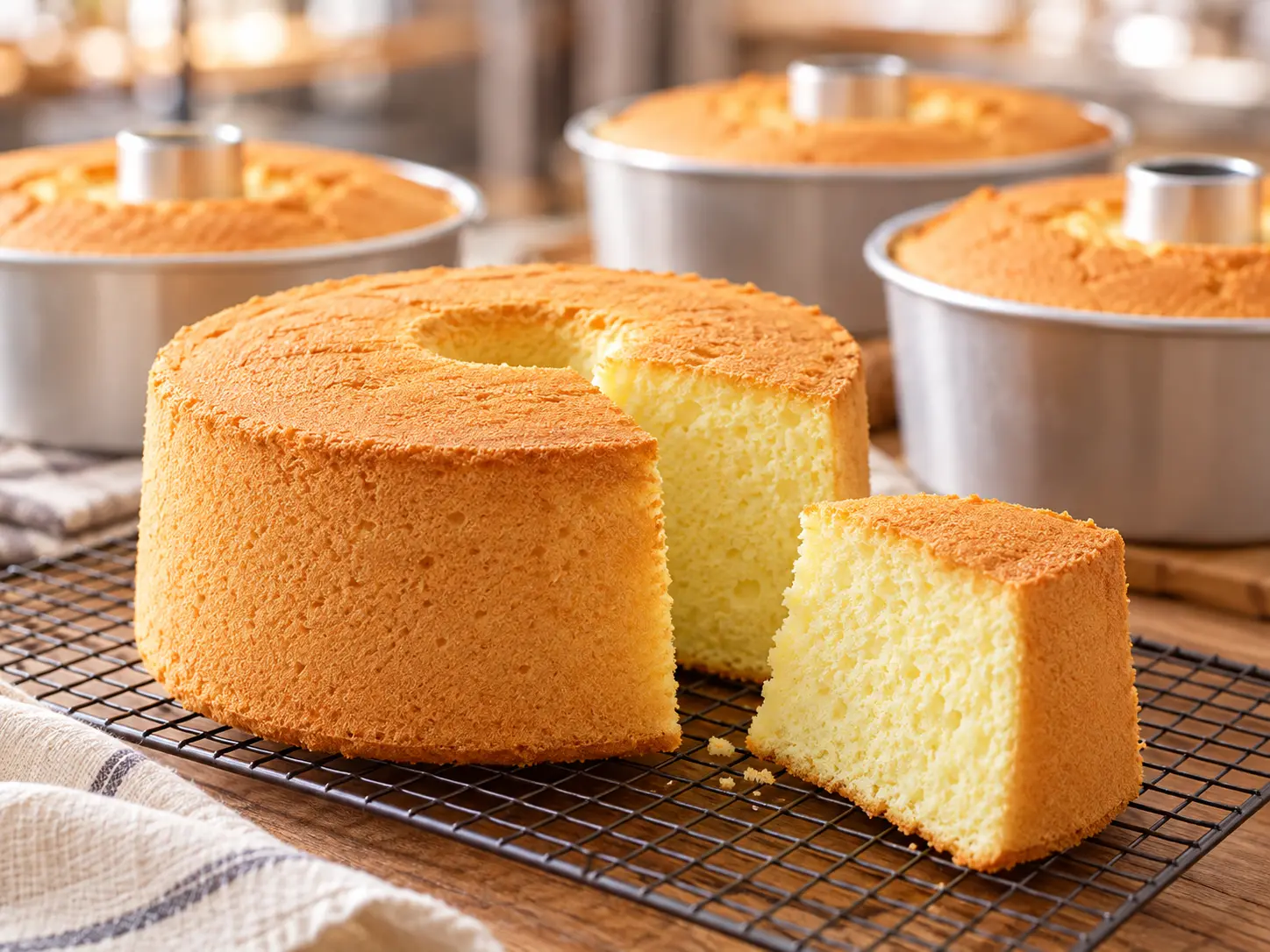
Baked Cake & Cooling References

06 / MEASURE THE COMPLETE CAKE
Volume, Fine Crumb and Shrinkage Control
Evaluate the starch in the finished cake, not only by batter viscosity. The best formula balances volume, cell structure, springiness, shrinkage and shelf softness.
Specific Volume
Measure final cooled cake volume relative to cake weight.
Crumb Uniformity
Compare cell size, distribution and undesirable large voids.
Post-Bake Shrinkage
Record height immediately after baking and after complete cooling.
Springiness
Measure crumb recovery after standardized compression.
07 / DIAGNOSE THE CAKE FAILURE
Chiffon Cake Formulation Troubleshooting
Do not assume that every collapse problem requires more starch. Foam quality, folding, oven profile and bake endpoint must be checked first.
| Problem | Possible Factors | Recommended Trial |
|---|---|---|
| Cake collapses after baking | Under-baking, weak foam, excess liquid or insufficient crumb setting. | Verify core setting and foam stability before increasing starch. |
| Cake shrinks from the sides | Excessive bake temperature, weak structure or incorrect cooling. | Record oven profile and cooled dimensions. |
| Large internal holes | Coarse meringue, poor folding, uneven batter or excessive leavening. | Improve foam fineness and folding consistency. |
| Crumb is too dense | Foam loss, overmixing, excess starch or insufficient aeration. | Compare batter density before changing formulation. |
| Cake is dry | Over-baking, low liquid, low oil or insufficient water binding. | Measure bake loss and compare a moisture-retaining starch. |
| Crumb is gummy | Under-baking, excess liquid or too much functional starch. | Validate internal bake before reducing flour. |
| Layer cake compresses under cream | Low cake strength, high filling weight or overly soft crumb. | Evaluate the TJ-CC-04 layer-cake platform. |
| Cake hardens during chilled storage | Moisture migration or unsuitable starch and sugar system. | Screen a stabilized starch at equal baked moisture. |
08 / SELECT STARCH BY CAKE TARGET
How to Select Modified Starch for Chiffon Cake
Share your flour system, egg ratio, batter density, cake dimensions, oven profile and shrinkage problem so Tianjiang can screen the appropriate starch grade.
Volume & Foam Support
Select for controlled batter viscosity and fine air-cell distribution.
Shape-Retention Grade
Use where post-bake deformation and shrinkage are the main issues.
Softness-Retention Grade
Prioritize moisture management for packaged and chilled cakes.
Modified Tapioca Starch
Suitable grades can contribute soft, elastic texture and neutral flavor.
Modified Waxy Corn Starch
Can be evaluated where moisture retention and processing stability are priorities.
Layer-Cake Grade
Use where the cake must support cream, fruit or mousse layers.
09 / STANDARDIZE EVERY TRIAL
Chiffon Cake Formulation and Quality Testing
Compare candidate starches under identical egg-white foam, batter density, deposit weight, oven profile and cooling conditions.
Batter Density
Measure immediately before deposit.Specific Volume
Compare volume after full cooling.Height Loss
Measure post-bake shrinkage.Crumb Cell Structure
Compare pore size and uniformity.Springiness
Measure compression recovery.Shelf Softness
Compare hardness during storage.
10 / R&D TO PURCHASING
Modified Starch Specifications for Chiffon Cake Purchasing
After the preferred starch passes production testing, connect the application result to the purchasing and quality specification.
Exact Grade
Confirm Tianjiang product grade and baker's-parts dosage.Botanical Source
Confirm tapioca, waxy corn or other starch source.Batter Function
Specify viscosity, crumb, shape-retention and softness targets.Representative COA
Review applicable receiving parameters.Regulatory Documentation
Confirm food-additive declaration and destination-market requirements.Commercial Planning
Confirm sample quantity, MOQ, packing and expected monthly consumption.
11 / TECHNICAL QUESTIONS
Chiffon Cake Formulation FAQs
Technical guidance for industrial cake manufacturers, bakery R&D teams and ingredient buyers.
Why Is Modified Starch Used in Chiffon Cake?
A suitable modified starch can support batter viscosity, fine crumb structure, shape retention, moisture management and soft texture.
How Much Modified Starch Is Used in Chiffon Cake?
The Tianjiang internal formula provided for this project uses approximately 4–5 parts modified starch per 100 parts cake flour. The optimal dosage depends on the specific starch grade and cake target.
Can Modified Starch Prevent Chiffon Cake Shrinkage?
Modified starch can provide additional structural support, but shrinkage is also affected by meringue quality, batter density, oven profile, bake endpoint and cooling method.
Why Does Chiffon Cake Collapse After Baking?
Common causes include under-baking, unstable egg-white foam, over-folding, excess liquid or insufficient structural setting.
Can Modified Tapioca Starch Be Used in Chiffon Cake?
Yes. Suitable modified tapioca starch can be evaluated for soft texture, elasticity, moisture retention and structural support.
Which Chiffon Formula Is Better for Cream-Filled Cakes?
The TJ-CC-04 platform is designed specifically for refrigerated layer cakes requiring greater structural support and chilled softness.
What Information Should I Send Tianjiang?
Share the current formula, batter density, cake size, oven temperature, baking time, cooling method, shrinkage rate, target shelf life and current starch grade.
12 / TALK TO TIANJIANG
Request Modified Starch Samples for Chiffon Cake
Share your current chiffon cake formulation and production challenge so Tianjiang can recommend a candidate modified starch for the next baking trial.

Prepare Your Chiffon Cake Project Brief
13 / RELATED BAKERY APPLICATIONS