
Modified Starch Solutions for Water Retention
Help manage water release and moisture loss in food formulations. Explore modified starch selection for dairy, meat products, bakery and fillings, matched to your processing and storage conditions.
Common Water Retention Challenges in Food Formulations
Find the stage where liquid separates or moisture is lost, then define the result the finished food needs.
Visible Water Separation
Look for free liquid on yogurt, fillings or gels. Define the sampling point and distinguish undisturbed storage separation from an accelerated centrifugation test.
Moisture Loss During Cooking
Record liquid released during heating and the final product mass. Check yield alongside texture and eating quality.
Dryness During Storage
Follow moisture change and migration in bakery products. Assess crumb firmness and perceived dryness under the intended packaging conditions.
Water Release After Thawing
Check thaw drip and the product after relevant reheating. Include the actual freezing, storage and thawing route.
How Modified Starch Supports Water Retention
Build a useful structure through preparation, then evaluate how it behaves in the complete food matrix.
Water Uptake During Gelatinization
For cook-up grades, suitable heating and available water support starch hydration and swelling. Confirm the preparation conditions for the particular grade.
Managing Water Mobility in the Food Matrix
Starch works within a system that also contains protein, sugar, salt and fat. Compare performance in the complete recipe rather than water alone.
Maintaining Structure Through Processing and Storage
Heating, shear, cooling and freeze–thaw exposure can change the food structure and liquid release. Select candidates around the conditions your product experiences.
Assess liquid release and moisture loss alongside texture. Higher viscosity alone does not establish better water retention.
Water Retention Solutions for Different Food Applications
Choose the evaluation that matches the food: whey separation, cooking loss, crumb moisture or filling migration.

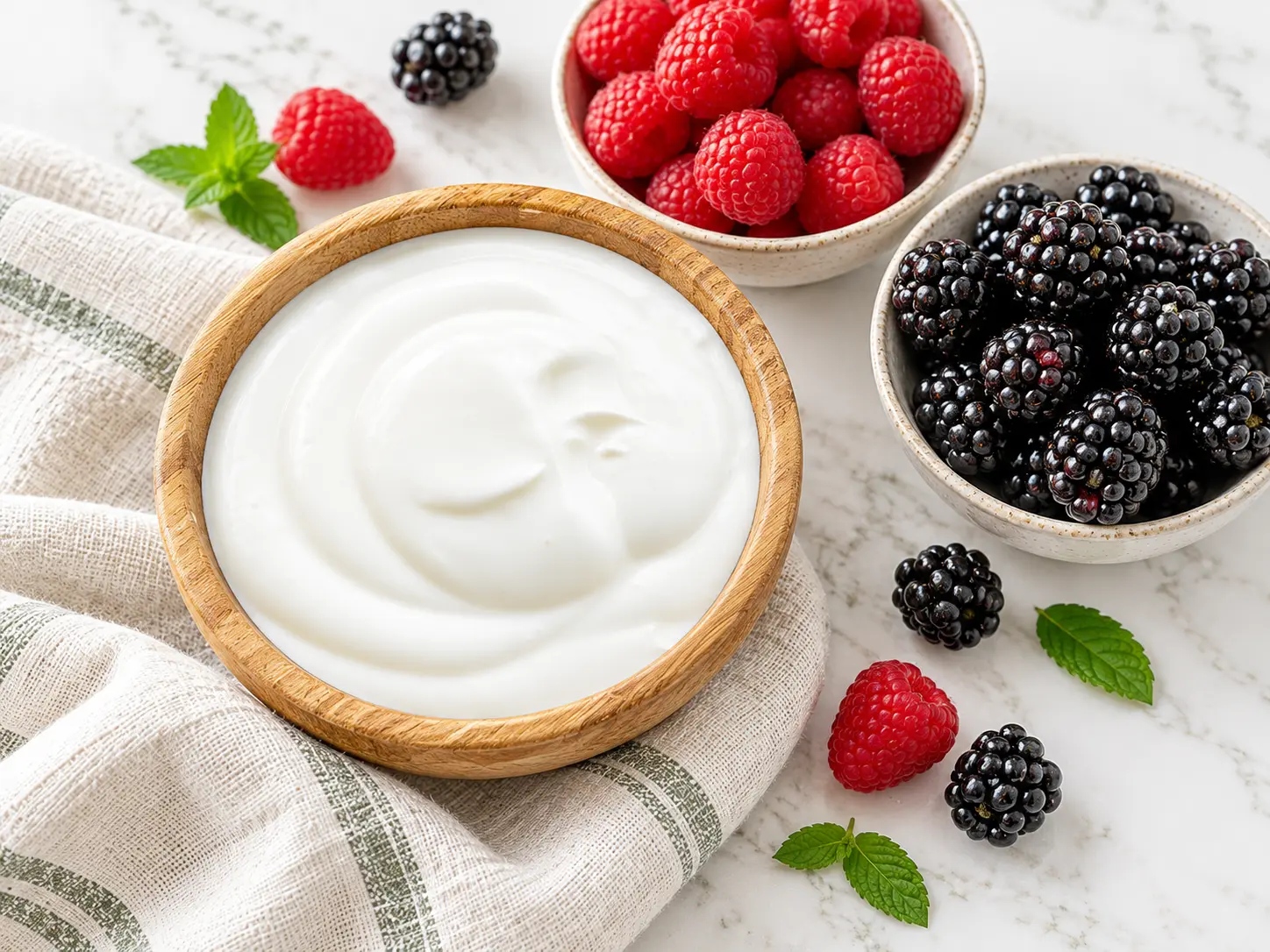
Set Yogurt and Cultured Dairy
Check whey separation, gel integrity and spooning quality during chilled storage. Evaluate the full milk, protein and sugar system.
Explore set yogurt →
Processed Meat and Seafood
Record cooking loss, package purge and slicing performance. Assess the desired juiciness alongside the processing yield.
Explore prepared food applications →
Bread and Bakery Products
Compare baking loss, moisture change and crumb firmness during storage. Read the measurements alongside the desired eating quality.
Explore bakery applications →
Custard and Bakery Fillings
Check standing syneresis and filling structure after processing. Evaluate moisture migration into the surrounding pastry or cake.
Explore custard applications →Choosing Modified Starch for Your Water Retention Target
Share the recipe, process and point of moisture loss to define a useful grade comparison.
Start with the Full Formulation and Process
| Selection factor | Information to confirm | What to evaluate |
|---|---|---|
| Water and total solids | Added water, protein, sugar, fat and other solids | The complete food matrix |
| Acidity and salt | pH, salt level and addition sequence | Hydration and behavior in the recipe |
| Thermal processing | Temperature, hold time and preparation method | Structure and cooking loss |
| Mechanical processing | Mixing, pumping and homogenization | Product behavior after processing |
| Storage and packaging | Temperature, duration, pack type and temperature changes | Purge, syneresis and moisture migration |
| Target performance | Liquid release, final mass, texture and appearance | Product-specific acceptance criteria |
Acetylated Distarch Adipate — E1422
Screen specific grades in your actual recipe. Compare hydration, processing behavior, liquid release and finished-product texture.
Explore E1422 →Hydroxypropyl Distarch Phosphate — E1442
Evaluate suitable grades against the relevant heating, cooling and storage route. Include freeze–thaw exposure when it occurs in your application.
Explore E1442 →An E number identifies a starch category, not a uniform performance specification. Confirm the specific grade and dosage in your complete formulation.
Tianjiang’s Guide to Water Retention Evaluation
Define the liquid-release problem and test method before comparing samples. Keep each model system and calculation basis separate.
Choose the Right Water Retention Metric
Liquid separated from a sample under a defined standing, draining or centrifugation protocol. Report the calculation basis.
The mass lost through a specified cooking protocol. Loss can include fat and other material as well as water.
Water retained under a defined test method. Values depend on sample preparation, force, duration and calculation.
Starch Modification and Whey Separation in Set Yogurt
Pigeon pea starch at 1.5% (w/v): native starch and acetylated samples with degrees of substitution (DS) of 0.05, 0.09 and 0.14. The table compares the sample groups; it is not the final 28-day storage result.
Approximately 5 g yogurt; centrifugation at 3000 × g for 10 minutes at 4°C. Whey syneresis = separated whey mass ÷ yogurt sample mass × 100.
| Starch sample | Whey syneresis (%) |
|---|---|
| Native | 36.80 ± 0.09 |
| Acetylated · DS 0.05 | 22.00 ± 0.11 |
| Acetylated · DS 0.09 | 20.18 ± 0.20 |
| Acetylated · DS 0.14 | 18.62 ± 1.63 |
Values: mean ± standard deviation, three determinations. DS identifies the experimental starch samples; it is not a commercial grade recommendation.
Compare within the same food modelThe acetylated samples released less whey than the native-starch sample under this test. Evaluate candidate commercial grades in your own formulation.
Starch Blend Composition and Water Release After Freeze–Thaw
Gels prepared from a 15% starch suspension. Hydroxypropyl distarch phosphate (HDP) replaced 0%, 25% or 50% of total starch; the remaining rice and tapioca starches were blended at 1:0.85.
Frozen storage at −18°C; each cycle included seven days of frozen storage. Results below are after two cycles. Warmed samples were centrifuged at 15000 × g for 15 minutes.
| HDP / total starch | Syneresis index (%) |
|---|---|
| 0% HDP | 34.07 ± 3.58 |
| 25% HDP | 29.92 ± 4.68 |
| 50% HDP | 22.91 ± 4.29 |
Index = separated liquid volume (mL) ÷ initial water mass in the gel (g) × 100. Values: mean ± standard deviation. HDP percentages refer to total starch, not finished-food dosage.
Keep the calculation basis visibleHigher HDP replacement corresponded to less liquid release at this endpoint. These percentages cannot be ranked against the yogurt results.
The two model comparisons support trial design. They do not establish Tianjiang grade specifications, finished-product guarantees or a universal dosage. Water-holding capacity is not automatically 100 minus syneresis when the methods or calculation bases differ.
Validate Water Retention in Your Own Product
| Food system | Record under defined conditions |
|---|---|
| Set yogurt | Whey separation, gel condition and change during chilled storage |
| Processed meat or seafood | Cooking loss, package purge, slice integrity and juiciness |
| Bread and bakery | Baking loss, moisture content, crumb firmness and sensory quality |
| Custard and fillings | Standing syneresis, post-process structure and moisture migration into the surrounding food |
Set sampling times, sample mass, preparation, temperature and acceptance criteria before the trial. Total moisture content, water activity and water-holding capacity describe different properties.
Build a Water Retention Trial Around Your Product
Compare the performance that matters at the stage where your product loses water.
Define the Main Moisture Problem
Identify whether the issue begins during cooking, cooling, chilled storage, thawing or final use. Specify the visible defect and target result.
Compare Candidate Starches Under Matched Conditions
Include a reference and keep the base recipe, equipment, packaging and test method consistent. Record grade, dose and preparation.
Track Performance Through Storage
Measure at planned intervals in the intended packaging. Assess liquid release, mass change, texture and eating quality together.
Frequently Asked Questions About Water Retention
What Is Water Retention in Food Formulations?
Water retention describes how a food holds water under defined processing, handling and storage conditions. Select a method that matches the problem, such as whey separation, package purge or cooking loss.
Is Water Retention the Same as Thickening?
No. Viscosity describes flow under specified conditions, while water retention concerns liquid release or moisture loss. A thicker product does not automatically have better water retention.
Can Modified Starch Help Reduce Syneresis?
Suitable starch grades can help manage liquid separation in specific food systems. The result depends on the grade, dosage, hydration, complete recipe and processing and storage conditions. Confirm performance in the actual product.
How Should Cooking Loss Be Measured?
For a defined cooking and weighing protocol, calculate (initial sample mass minus cooked sample mass) divided by initial sample mass, multiplied by 100. Standardize cooling and draining before weighing. Cooking loss may include fat and other material as well as water.
Which Starch Should I Evaluate for Chilled or Frozen Foods?
Select candidate grades around your full recipe, processing conditions, storage temperature and thawing route. Compare specific grades through the relevant storage period and check both liquid release and texture.
How Do I Determine the Right Starch Dosage?
Use a controlled dosage trial in the complete formulation, including a reference sample. Check liquid separation, processing yield and eating quality. The model formulations on this page are not universal dosage recommendations.
Find the Right Starch for Your Water Retention Target
Tell us where liquid release or moisture loss affects your product. Share your recipe, process and storage conditions to discuss suitable candidates and a practical trial.
What to Share with Our Team
- Food type and full formulation
- Current starch, dosage and added water
- pH, salt level and heating conditions
- Packaging, storage and thawing route
- Main moisture problem and evaluation results
Start with the information you have.