
Flavor, Pigment & Encapsulation Formulations
Explore flavor carriers, food-color delivery and encapsulation systems through ingredient ranges, process examples and practical selection criteria.

Separate the Core, the Carrier and the Release Target
A flavor ingredient, a pigment and a protective wall play different roles. Start with the physical form and intended application.
Flavor Core
Define volatile profile,solubility and delivered sensory strength. Compare retention as well as release.
Pigment Core
Specify active assay,color strength and hue at the finished-product pH. Dissolved color and suspended pigment need different handling.
Emulsifier and Wall
Compare appropriate OSA starch,gum arabic,protein and co-wall systems. Maltodextrin can build the matrix without replacing an emulsifier.
Release and Product Route
Choose immediate reconstitution,mechanical rupture,melting or delayed exposure. Encapsulation does not automatically mean controlled release.
Flavor, Color and Encapsulation Directory
Browse 142 named entries. The search below also covers formulation rows and processing notes.
Liquid flavours
Beverage emulsions
Powder flavours
Reaction, extracts & smoke
Modifiers, effects & savoury delivery
Reds & pinks
Oranges & yellows
Greens, blues, browns, blacks & whites
Certified synthetics & lakes
Colouring foodstuffs(ingredient-based color preparations)
Encapsulation & delivery technologies
Find a Delivery System for Your Application
Search by ingredient, pigment, carrier, loading, temperature or release mechanism.
No matches. Try a broader term or clear the search.
Liquid Flavor Carriers
Water-soluble liquid — beverages, dairy, water-ice
| Ingredient / parameter | Starting range / design example |
|---|---|
| Flavor ingredients | 5–25% |
| Propylene glycol (PG / E 1520) | 40–80% |
| Water / ethanol | balance |
| Example finished use | beverages 0.05–0.3%, dairy 0.1–0.5% |
Process & evaluation
Filter after dissolution. Confirm water compatibility and sensory impact of the carrier. Compare top-note retention after opening, heating and storage.
Oil-soluble liquid — chocolate, fat fillings, gum, baked goods
| Ingredient / parameter | Starting range / design example |
|---|---|
| Flavor phase | 10–40% |
| Carrier | MCT, vegetable oil or triacetin |
| Example finished use | 0.1–0.5% |
| Gum example | 0.5–2% of finished gum |
Process & evaluation
Choose the carrier for fat compatibility and the delivery target. Control terpene oxidation through ingredient quality, antioxidant design and packaging.
Alcohol-based liquid — extracts, liqueurs, top-note lift
| Ingredient / parameter | Starting range / design example |
|---|---|
| Ethanol | 20–95%, product-dependent |
| Example finished use | 0.05–0.3% |
Process & evaluation
Design around extraction, solubility and top-note delivery. Carrier choice affects processing, positioning and handling requirements; no single alcohol level defines all extracts.
Emulsion-ready liquid — cloudy drinks & nectars
| Ingredient / parameter | Starting range / design example |
|---|---|
| Oil phase | 5–20% of concentrate |
| Concentration example | 5–20 times the intended use strength |
Process & evaluation
Prepare a stable oil-in-water concentrate before dilution. Monitor droplet distribution, creaming, coalescence and neck-ring formation.
Beverage and Cloud Emulsions
Citrus flavour emulsion, concentrate
| Ingredient / parameter | Starting range / design example |
|---|---|
| Flavor/citrus oil | 5–15% |
| OSA starch candidate band | 5–12% |
| Optional whey protein | 0–2% |
| Water | balance to 100% |
| Droplet target | below 1µm |
| Homogenization example | 20 MPa, 2 passes |
| Finished beverage emulsion use | 0.1–0.5% |
Process & evaluation
Pre-emulsify before pressure homogenization. Gum-arabic process examples use 45–55 MPa first stage and a lower second stage. These are separate trial conditions. Oil concentration and concentrate dose must be combined to calculate finished oil ppm; the ranges do not imply a fixed oil ppm.
Neutral cloud emulsion, concentrate
| Ingredient / parameter | Starting range / design example |
|---|---|
| Neutral oil | 5–15% |
| Emulsifying wall | OSA starch or gum arabic |
| Aqueous phase | water and product-specific acid system |
| Finished use example | 0.05–0.3% |
Process & evaluation
Provide cloud without adding a strong flavor identity. Excessive size reduction can reduce light scattering. Evaluate cloud stability after dilution in the actual beverage.
Weighting Agents and Oil-Phase Density
| Ingredient / parameter | Starting range / design example |
|---|---|
| SAIB example density | about 1.15 g/mL |
| Ester-gum example density | about 1.08 g/mL |
| Pourable SAIB/MCT blend example | 80/20 |
Process & evaluation
Density adjustment and particle-size control solve different problems. Choose only materials suitable for the intended market and application. Historical weighting systems and numerical regulatory limits are not formulation instructions.
Emulsifier-to-Oil Ratios in an Orange-Oil Model
| Ingredient / parameter | Starting range / design example |
|---|---|
| Orange oil in comparative model | 5% |
| β-lactoglobulin emulsifier/oil | 0.5:5 with 171 nm |
| Modified starch system A | 1:5 with 254 nm |
| Modified starch system B | 3:5 with 222 nm |
| Gum arabic | 5:5 with 497 nm |
Process & evaluation
Read this as a comparison within one orange-oil model, not a ranking of all commercial grades. Different emulsifier requirements and droplet sizes do not establish shelf life or equal robustness to pH, salt and heat.
Powder Flavor Systems
Spray-Dried Flavor Powder — Base Framework
| Ingredient / parameter | Starting range / design example |
|---|---|
| Feed emulsion solids | 20–40% |
| Core in dry powder | 10–20% |
| Wall in dry powder | 75–88% |
| Residual moisture | 2–5% |
| Surface-oil screening target | below 1–2% |
| Example finished use | 0.2–1.0% |
Process & evaluation
Select one normalized dry composition; the independent ranges are not a recipe that sums automatically to 100%. Monitor surface oil, volatile retention, oxidation and caking. A water-soluble wall generally gives rapid release on reconstitution.
High-Load Flavor Matrix Design
| Ingredient / parameter | Starting range / design example |
|---|---|
| High-load design example | up to 40% flavor in a specialized matrix |
| Conventional comparison example | about 20% flavor |
Process & evaluation
Treat high load as a matrix-specific development target, not a guaranteed OSA-starch capacity. Confirm retention, surface oil and powder recovery at pilot scale. Recalculate finished dosage from delivered flavor rather than powder weight alone.
Plated & dry-blended powders — instant release, no real wall
| Ingredient / parameter | Starting range / design example |
|---|---|
| Carrier in plated powder | 70–95% |
| Liquid flavor | 5–30% |
| Anticaking-agent example | 0.5–2% in a dry blend |
Process & evaluation
Plating and dry blending do not necessarily create an encapsulating wall. Match particle size and density to reduce segregation. Check wetting, caking and moisture-barrier packaging.
Plated yeast — between plating and yeast encapsulation
| Ingredient / parameter | Starting range / design example |
|---|---|
| Plasmolyzed microorganism carrier | 25–75% |
| Flavor component | more than 20% up to 60% |
| Drying aid | 1–25% |
| Moisture | 4% to below 10% |
| Particle size | 100µm–1 mm |
Process & evaluation
These ranges describe a plated biological-carrier concept, not a normalized recipe. Distinguish surface adsorption from loading inside cells; compare retention and release experimentally.
Reaction, Dairy and Smoke Flavors
Maillard reaction flavour — beef / chicken / pork pastes & powders
| Ingredient / parameter | Starting range / design example |
|---|---|
| Reducing sugar | 5–20% |
| Amino source | 2–15% |
| Hydrolysate/yeast/meat base | 20–60% |
| Fat/oil | 0–20% |
| Water, salt and pH adjustment | balance |
| Aqueous process example | pH 4–8, 80–130°C, 30–180 min |
| Concentrated paste use example | 0.2–2% |
Process & evaluation
Choose precursor identity and reaction endpoint for the target aroma. Example reaction-flavor use bands can be 1–8% on a dry application basis; this differs from concentrated paste use. Normalize the formula and evaluate unwanted reaction products and sensory drift.
Enzyme-modified dairy — cheese, butter & cream concentrates
| Ingredient / parameter | Starting range / design example |
|---|---|
| Dairy substrate solids | 40–80% |
| Enzyme preparation | less than 1% |
| Illustrative flavor concentration | 10–20 times a conventional cheese reference |
| Finished use example | 0.1–1% |
Process & evaluation
Control lipolysis/proteolysis and stop the enzyme at the desired endpoint. Excess reaction can produce soapy or rancid notes. Determine the activity dose from the enzyme specification, not mass percentage alone.
Yeast extract & hydrolysate bases — the savoury building blocks
| Ingredient / parameter | Starting range / design example |
|---|---|
| Yeast autolysate protein example | 50–69% |
| Illustrative glutamate level | about 5% |
| Illustrative IMP+GMP level | about 3% |
| Autolysis temperature example | 40–55°C |
| Finished use example | 0.3–2% |
Process & evaluation
These composition values refer to different examples and are not a universal yeast-extract specification. Concentrate and dry as appropriate. Review salt, flavor balance and process contaminants for the selected hydrolysate.
Smoke Condensates — Analytical Specification Framework
| Ingredient / parameter | Starting range / design example |
|---|---|
| Smoke-condensate example water | 47–56% |
| Acidity as acetic acid | 8–12% |
| Carbonyl compounds | 17–25% |
| Phenols as syringol | 10.5–20.1 mg/g |
| pH | 2.1–2.9 |
| Liquid finished-use example | 0.05–0.5% |
| Dry seasoning example | 0.5–3% of seasoning |
Process & evaluation
Use this as an analytical specification example, not an authorization or recommended commercial formula. Specify wood source, acidity, phenols, carbonyls and batch consistency. Confirm market and application suitability before selection.
Extracts, Oleoresins and Fruit Flavors
Vanilla Extract — Strength and Carrier Framework
| Ingredient / parameter | Starting range / design example |
|---|---|
| Ethanol-containing vanilla extract example | 35%v/v or more |
| Strength notation | 1 fold, 2 fold through 10 fold |
| Illustrative bean unit | 13.35 oz at 25% moisture perUS gallon |
| Finished use example | 0.05–0.5% |
Process & evaluation
The numerical extract example is not a universal labeling definition. Confirm extraction strength, solvent basis and product identity for the destination market. Match the application on delivered aroma rather than fold name alone.
Citrus oils — cold-pressed, folded, terpeneless, washed
| Ingredient / parameter | Starting range / design example |
|---|---|
| Cold-pressed sweet orange oil | limonene can exceed 90% |
| Folded-oil formats | 5× and 10× |
| Other formats | terpeneless, sesquiterpeneless and washed oils |
Process & evaluation
Check GC profile, aldehydes, peroxide value and optical rotation as appropriate. Fold strength and terpene reduction change both aroma balance and compatibility. Reassess after dilution and processing.
Spice oleoresins — standardised concentrates
| Ingredient / parameter | Starting range / design example |
|---|---|
| Standardized actives | product-specific percentage |
| Examples | capsicum, black pepper, ginger and turmeric oleoresins |
| Finished-use screening band | 0.01–0.2% |
Process & evaluation
Buy paprika by color value and pungency, pepper by piperine and volatile oil. Recalculate from actual active strength; oleoresin mass cannot be substituted directly for whole-spice mass.
FTNF, WONF and Recovered Fruit Aroma
| Ingredient / parameter | Starting range / design example |
|---|---|
| FTNF | named-fruit aroma components |
| WONF | named source plus other natural flavor components |
| Application | addition point and dose depend on supplied strength |
Process & evaluation
Check aroma origin and composition before making naming claims. Compare late addition with encapsulation when heat or oxidation limits retention. Include seasonal variability and supply consistency in the design.
Flavor Modifiers and Sensory Effects
MSG and Nucleotide Sensory Design
| Ingredient / parameter | Starting range / design example |
|---|---|
| I+G / MSG example | 2–10% by mass |
| Alternative blend examples | MSG:I+G 10:1–20:1 |
| MSG finished-use example | 0.1–0.8% |
| I+G examples | soup 0.20–0.30%, stock 0.50–1.00%, snacks 0.02–0.03%, tomato sauce 0.02–0.04% |
| Threshold-model example | 0.0063% to 0.000031% with 0.8%MSG |
Process & evaluation
These are separate sensory/application examples, not additive targets or limits. Evaluate umami synergy, aftertaste and the actual ingredient concentration. Acid/heat exposure can change nucleotide performance.
Cooling agents — WS-3 / WS-23 / WS-5 / WS-12 / WS-10
| Ingredient / parameter | Starting range / design example |
|---|---|
| WS-3 beverage example | 10–100 ppm |
| WS-23 beverage example | 30–100 ppm |
| WS-5 beverage example | 10–50 ppm |
| WS-3 candy example | 150–1500 ppm |
| WS-23 candy example | 50–150 ppm |
| WS-3 gum example | 5000–20000 ppm |
| WS-23 gum example | 75–3000 ppm |
Process & evaluation
All ppm entries are supplied screening examples, not permitted-use limits. Establish a product-specific sensory curve and ingredient suitability. Cooling onset, persistence and aroma identity differ; cooling agents do not automatically supply mint flavor.
Warming & tingling — sanshool, spilanthol, capsaicinoids
| Ingredient / parameter | Starting range / design example |
|---|---|
| Effect ingredients | sanshool, spilanthol, capsaicinoids, gingerol, shogaol and piperine |
| Active-strength basis | ppm in finished product |
Process & evaluation
Start from a defined active assay and a controlled sensory dilution series. Oil compatibility, persistence and cumulative sensation matter. There is no transferable dose for all extracts or markets.
Bitterness Masking, Sweetness and Mouthfeel
| Ingredient / parameter | Starting range / design example |
|---|---|
| Mouthfeel-system screening example | 0.1–1% |
| Bitterness-masking framework | ppm through 0.1%, ingredient-dependent |
| Sweetness enhancement | product-specific sensory curve |
Process & evaluation
Masking does not remove the bitter compound. Evaluate after processing and storage. Select carriers and ingredient identity for the intended function; avoid treating every modifier as the same regulatory category.
Sour modulators — acid blends & fat-coated acids
| Ingredient / parameter | Starting range / design example |
|---|---|
| Beverage total-acid example | 0.1–0.5% |
| Acid in sour candy coating | 1–5% of coating |
| Coated acids | citric or malic acid with a selected fat barrier |
Process & evaluation
Citric, malic, lactic and fumaric acids differ in onset and persistence. Coating can alter exposure during manufacture and chewing. Check interactions with moisture-sensitive candy bases and pH-responsive colors.
Savory Seasoning Delivery
Snack dusting — the seasoning is a delivery system
| Ingredient / parameter | Starting range / design example |
|---|---|
| Salt | 20–45% of seasoning |
| Flavor base | 10–40% |
| Sugar/dextrose | 5–20% |
| Acid/MSG/I+G system | 2–10% |
| Color ingredient example | 0.5–5% |
| Anticaking example | 0.5–2% |
| Fine-powder reference | below 250µm |
| Seasoning on snack | 4–10% |
| Adhesion oil on snack | 0.5–2% |
Process & evaluation
Select a normalized seasoning formula and pair powder deposition with oil application. Color ingredient percentages refer to supplied preparation strength, not pure pigment. Match flow, adhesion, particle size and flavor delivery.
Marinades, rubs & brine systems
| Ingredient / parameter | Starting range / design example |
|---|---|
| Dry rub | 1–3% of meat mass |
| Paste marinade | 5–15% of meat mass |
| Injection/brine | filtered compatible soluble fractions |
Process & evaluation
A common aroma core can be delivered through different carriers. Adjust viscosity, particle size and solubility when changing format. Avoid suspended particles in injection systems unless equipment and process are designed for them.
Red and Pink Pigments

Carmine and Cochineal Preparations
| Ingredient / parameter | Starting range / design example |
|---|---|
| Identity | carmine/cochineal E 120 |
| Liquid carminic-acid example | 3–7% |
| Finished-use screening band | 0.01–0.1% |
| Illustrative hue response | orange belowpH 4, red around 5–6, purple under alkaline conditions |
Process & evaluation
Distinguish dissolved preparations and insoluble lakes. Assess precipitation with acid, salts and protein. Review source, dietary positioning and applicable declarations for the intended product.
Anthocyanins — pH is the product spec
| Ingredient / parameter | Starting range / design example |
|---|---|
| Identity | anthocyanins E 163 |
| Acidic red screening region | belowpH 3.8 |
| Concentrate finished-use example | 0.05–0.5% |
| Coloring-concentrate example | 0.1–1% |
Process & evaluation
Source and acylation affect performance. Increasing pH changes hue; sulfites, ascorbic acid and metals may affect stability. Test the complete matrix with light, heat and storage exposure rather than assuming all anthocyanins behave alike.
Beetroot red — brilliant pink, fragile molecule
| Ingredient / parameter | Starting range / design example |
|---|---|
| Identity | betanin / beetroot red E 162 |
| Betanin in powder example | 0.3–1% |
| Concentrate finished-use example | 0.1–0.5% |
Process & evaluation
Assess heat, light and oxygen sensitivity. Consider cooler or later addition where compatible with the process. Use a defined color-strength specification rather than powder mass alone.
Lycopene — oil-soluble red-orange, beadlet is the format
| Ingredient / parameter | Starting range / design example |
|---|---|
| Identity | lycopene E 160 d |
| Oil suspension example | 10–30% |
| Finished pigment target example | 5–30 ppm |
Process & evaluation
Oil-soluble color can be delivered as suspension, emulsion or beadlet. Evaluate oxidation and light exposure. Calculate dose from actual pigment strength and verify suitability for the target application.
Monascus Red — Ingredient Selection
| Ingredient / parameter | Starting range / design example |
|---|---|
| Identity | Monascus red / angkak |
| Formats | liquid and powder |
| Dose basis | color strength of supplied preparation |
Process & evaluation
Treat market suitability and impurity specifications as ingredient-selection gates. Do not infer authorization from traditional use or a commercial listing. Establish the relevant contaminant controls and release specification.
Lac Color — Ingredient Selection
| Ingredient / parameter | Starting range / design example |
|---|---|
| Identity | lac color |
| Color family | red-purple |
| Dose basis | preparation strength and target hue |
Process & evaluation
Confirm market suitability, source and labeling requirements. Evaluate acid response, heat exposure and stability in the actual food; there is no universal dose across preparations.
Orange and Yellow Pigments
Annatto — bixin is oil-soluble, norbixin is water-soluble
| Ingredient / parameter | Starting range / design example |
|---|---|
| Identity | annatto E 160 b |
| Bixin | oil-soluble route |
| Norbixin | water-compatible route |
| Finished-use screening band | 0.01–0.1% |
Process & evaluation
Specify which form is supplied. Norbixin can interact with acid, calcium and proteins. Check precipitation and hue after processing; bixin and norbixin cannot be exchanged without redesigning delivery.
Curcumin — lemon yellow that fears light
| Ingredient / parameter | Starting range / design example |
|---|---|
| Identity | curcumin E 100 |
| Purified-grade example | 95% or higher active |
| Finished-use screening band | 0.01–0.2% |
Process & evaluation
Curcumin has low water solubility and is light-sensitive. Compare dispersions, emulsions and encapsulated preparations. Include illuminated storage conditions; alkaline conditions can change hue.
β-Carotene — forms decide everything
| Ingredient / parameter | Starting range / design example |
|---|---|
| Identity | β-carotene E 160 a |
| Oil suspension example | 30% |
| Beadlet/CWS powder strengths | 1%, 10%, 20% |
| Beverage pigment target example | 5–25 ppm |
| Candy color example | 3–6 ppm |
Process & evaluation
Distinguish source, active assay and physical form. Protect against oxygen and light with a suitable matrix and package. Recalculate preparation dose from target pigment concentration.
Paprika — colour value and pungency in one spec
| Ingredient / parameter | Starting range / design example |
|---|---|
| Identity | paprika E 160 c |
| Specifications | color value / ASTA plus pungency / SHU |
| Oleoresin finished-use screening band | 0.01–0.2% |
Process & evaluation
Choose whether color, pungency or both are required. De-punged and hot grades are not interchangeable. Check oxidation, light response and oil-phase dispersion.
Lutein, riboflavin, saffron, gardenia & safflower yellows
| Ingredient / parameter | Starting range / design example |
|---|---|
| Lutein E 161 b | free or esterified oil-dispersible formats |
| Riboflavin E 101 | water-compatible yellow |
| Riboflavin preparation use example | 0.005–0.05% |
| Other examples | saffron/crocin, gardenia yellow and safflower |
Process & evaluation
Select each ingredient by its own assay, compatibility and market status. Riboflavin is light-sensitive and may affect other ingredients under illumination. Do not assume a shared yellow hue implies a shared delivery system.
Green and Blue Pigments
Chlorophylls vs copper chlorophylls — the acid problem
| Ingredient / parameter | Starting range / design example |
|---|---|
| Chlorophyll E 140 | oil-compatible green |
| Copper chlorophyll derivatives E 141 | form-dependent solubility |
| Finished-use screening band | 0.01–0.2% |
Process & evaluation
Specify the actual compound and salt form. Native chlorophyll can turn olive-brown under acid. Evaluate copper content specifications where relevant and measure hue after the complete process.
Phycocyanin — Color Strength and Processing
| Ingredient / parameter | Starting range / design example |
|---|---|
| Phycocyanin grades | examples E 18/E 25 color strength near 618–620 nm |
| Example screening pH | 4.5–8 |
| Preferred example region | pH 5.5–7 |
| Acid-precipitation example | aboutpH 4.2 |
Process & evaluation
Phycocyanin is a protein color system and can lose color through heat, light or acid stress. Grade codes are color-strength designations, not E numbers. Evaluate late addition and compatible stabilization in the real matrix.
Butterfly pea — blue that shifts with pH, by design
| Ingredient / parameter | Starting range / design example |
|---|---|
| Color source | butterfly pea ternatin anthocyanins |
| Hue examples | blue at higherpH, purple or pink with acidification |
Process & evaluation
Define the target hue at the product pH. Assess intended color change separately from unwanted drift. Check extract strength, processing stability and application suitability.
Gardenia Blue and Brilliant Blue Delivery
| Ingredient / parameter | Starting range / design example |
|---|---|
| Natural-color example | gardenia blue |
| Synthetic comparator | Brilliant Blue FCF E 133 |
| Comparator stability screening region | pH 3–8 |
| Dose basis | active pigment ppm or preparation color strength |
Process & evaluation
Treat these as distinct ingredients with different identities. Compare actual heat/light performance and suitability in the intended market; a general color family does not establish interchangeability.
Brown, Black, White and Decorative Colors
Caramel classes I–IV — reactants decide charge, charge decides application
| Ingredient / parameter | Starting range / design example |
|---|---|
| Class I | E 150 a, plain caramel |
| Class II | E 150 b, sulfite-process |
| Class III | E 150 c, ammonia-process |
| Class IV | E 150 d, sulfite-ammonia |
| Color-strength example | 0.1%solution, 1 cm, 610 nm |
| Cola-style liquid-caramel example | 0.1–0.3% |
| Sauce example | 0.5–3% |
Process & evaluation
Match charge, pH response and compatibility with protein/colloids. Process specifications and supplied color strength matter more than the class name alone. Evaluate sediment and haze after dilution.
Vegetable carbon & iron oxides — insoluble blacks and earth tones
| Ingredient / parameter | Starting range / design example |
|---|---|
| Vegetable carbon | E 153, insoluble particulate black |
| Iron oxides | E 172, insoluble earth-tone pigments |
| Vegetable-carbon screening example | 0.05–0.5% |
Process & evaluation
Design for dispersion, particle size and settling control rather than dye dissolution. Verify ingredient and application suitability separately; these example levels are not authorizations.
White Opacity and Alternative Systems
| Ingredient / parameter | Starting range / design example |
|---|---|
| White-opacity systems | calcium carbonate, rice/native starch or selected phosphate preparations |
| Titanium-dioxide identity | E 171 |
| Dose basis | opacity and finished texture trials |
Process & evaluation
Do not treat white pigments as one-to-one substitutes. Compare opacity, particle feel, pH effects and coating gain. Select ingredients only after checking current destination-market and application requirements.
Surface Decoration and Ingredient Browning
| Ingredient / parameter | Starting range / design example |
|---|---|
| Decorative metallic identities | aluminium E 173, silver E 174, gold E 175 |
| Ingredient browning options | malt, cocoa and caramelized syrup |
Process & evaluation
Separate surface decoration from bulk coloring. Check the actual material grade and allowed application before design. Ingredient-based browning also changes flavor and solids.
Dyes and Lake Dispersions
Dye Systems — Identity and Use Basis
| Ingredient / parameter | Starting range / design example |
|---|---|
| Dye formulation screening band | 0.005–0.05% |
| Equivalent concentration | 50–500 ppm |
| Ingredient identities requiring particular label review | E 102, E 104, E 110, E 122, E 124, E 129 |
Process & evaluation
Identify the exact dye and target market before making labeling decisions. The screening range is not a maximum permitted level. Confirm current ingredient approval, batch certification and any special declarations outside this formulation framework.
Al lakes — where dyes fail, lakes work
| Ingredient / parameter | Starting range / design example |
|---|---|
| Lake dye content example | 10–40% |
| Finished lake-preparation use example | 0.05–0.5% |
| Pre-dispersion carriers | oil, PG or syrup |
Process & evaluation
Lakes are insoluble pigments. High-shear dispersion and particle management affect specking and opacity. Avoid adding dry lakes directly to a thin aqueous drink without a designed dispersion system.
Color Delivery Formats
Coloring-Food Concentrates
| Ingredient / parameter | Starting range / design example |
|---|---|
| Coloring-food preparations | fruit, vegetable or other ingredient concentrates |
| Finished-use example | 0.1–2% |
Process & evaluation
Match concentration, hue and accompanying flavor. Extraction route and intended function affect ingredient identity; confirm the applicable declaration rather than assuming every concentrate has the same status.
Carotenoid Beadlets — Composition and Assay
| Ingredient / parameter | Starting range / design example |
|---|---|
| β-carotene example active band | 10–15% |
| Gum arabic component band | 25–30% |
| Corn starch component band | 35–40% |
| Maltodextrin component band | 25–35% |
| Vitamin E example | 1% or more |
| SiO₂ example | 1.5% or less |
| Other active formats | lycopene 10%, lutein 5%, canthaxanthin 10% |
Process & evaluation
These component bands are not a single 100% formula: their minima already exceed 100%. Preserve them only as separate design/specification examples; obtain a normalized composition before batching. Specify active assay and dispersibility. Evaluate particle damage during compression and oxidation after processing.
Oil suspensions, colour emulsions & dispersible powders
| Ingredient / parameter | Starting range / design example |
|---|---|
| β-carotene oil suspension example | 30% |
| Paprika/lycopene suspension examples | 10–30% |
| Crystal-size screening target | below 10µm |
| Color-emulsion droplet target | below 1µm |
| Dispersible-powder active range | 1–20% |
| Oil-phase antioxidant example | 0.1–1% |
Process & evaluation
Distinguish dissolved pigment from suspended crystals. Reassess heat needed for dissolution, wetting, emulsification and protection. Calculate active ppm from supplied assay; antioxidant levels refer to the stated phase, not automatically finished food.
Encapsulation Technologies
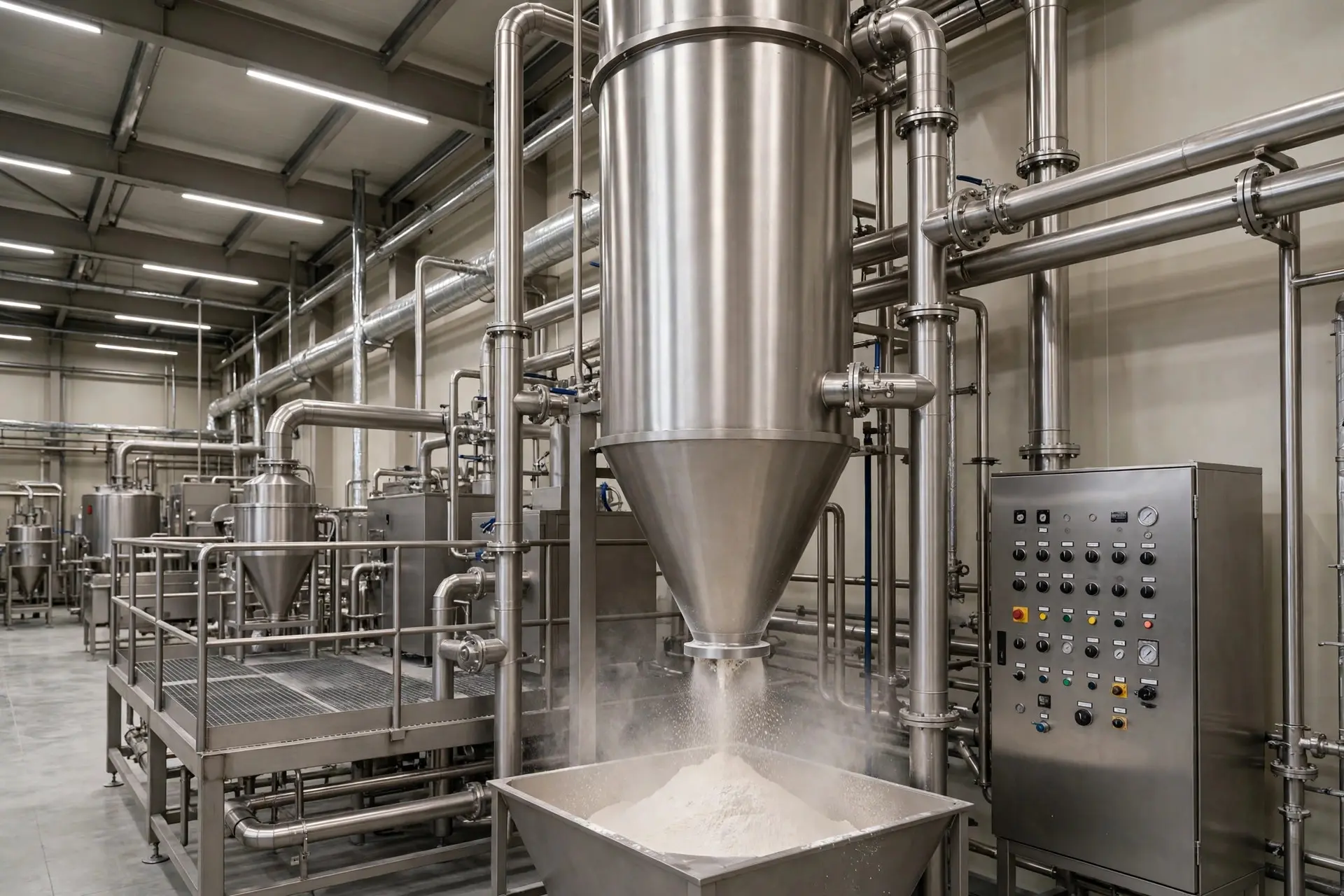
Spray drying — wall systems, loads & temperature bands
| Ingredient / parameter | Starting range / design example |
|---|---|
| Spray-dryer inlet examples | 130–220°C |
| Outlet examples | 65–100°C |
| Lemon-oil pair | 160/65°C |
| Lime-oil pair | 220/85°C |
| Orange-oil pair | 175/83°C |
| Ginger-oleoresin pair | 170/70°C |
| Gum-arabic oil-load example | 10–20% |
| Protein-wall example | 10–30% |
| Maltodextrin co-wall example | DE below 20 |
Process & evaluation
Select an emulsifying wall such as an appropriate OSA starch, gum arabic or protein, then a matrix-forming co-wall. Maltodextrin alone is not a substitute for the emulsifier. Inlet temperature is not particle temperature; characterize actual outlet, product temperature, residence time and volatile retention. A soluble spray-dried wall usually releases rapidly in water.
Spray chilling / prilling — release by melting
| Ingredient / parameter | Starting range / design example |
|---|---|
| Core-load screening range | 10–40% of particles |
| Wall | food-suitable lipid selected by melting profile |
| Atomization-temperature example | about 10°C above lipid melting point |
Process & evaluation
Atomize molten dispersion into a cooling environment below the wall melting point. Release can follow melting, erosion or digestion. Select food-suitable materials and test actual release rather than transferring an industrial wall list unchanged.
Complex coacervation — high payload, rupture release
| Ingredient / parameter | Starting range / design example |
|---|---|
| Classic wall pair | gelatin/gum arabic |
| Example wall-solution concentration | about 1% |
| Core/wall example | 2:1 |
| Coacervation pH example | 3.7–4.5 |
| Capsule size example | 5–100µm |
| Process example | 40°C preparation, 20°C for 15 h, 60°C for 30 min enzyme stop |
Process & evaluation
These are separate model settings requiring compatibility checks. Food-grade crosslinking and appropriate material selection are essential. Evaluate mechanical rupture, thermal exposure and moisture-driven release; payload alone does not establish protection.
Cyclodextrin inclusion — one molecule, one cavity
| Ingredient / parameter | Starting range / design example |
|---|---|
| α-cyclodextrin | 6 glucose units, cavity 0.47–0.53 nm, example solubility 145 mg/mL, MW 972 |
| β-cyclodextrin | 7 units, 0.60–0.65 nm, 18.5 mg/mL, MW 1135 |
| γ-cyclodextrin | 8 units, 0.75–0.83 nm, 232 mg/mL, MW 1297 |
| Guest-load example | 1–20%, often 2–10% |
Process & evaluation
Solubility figures are comparative values and depend on conditions. Match guest size and affinity to cavity. Evaluate displacement, dilution and precipitation. Do not confuse guest percentage with host/guest molar ratio.
Glassy Carbohydrate Extrusion
| Ingredient / parameter | Starting range / design example |
|---|---|
| Carbohydrate-melt example | sucrose 55% + maltodextrin 41% + remaining water/aids |
| Maltodextrin example | DE 10–13 |
| Practical flavor-load example | 8–12% |
| Broader design range | 7.5–40% |
| Particle-size example | 250–2500µm |
Process & evaluation
Glassy carbohydrate matrices can provide an oxygen barrier while dry and intact. Humidity can lower glass-transition temperature and accelerate release. Extrusion heat may change top notes. Demonstrate storage protection and release in the selected process.
Fluid-bed coating & agglomeration — adding the delay layer
| Ingredient / parameter | Starting range / design example |
|---|---|
| Coating fraction example | 5–30% of final particle |
| Coating options | selected lipid, shellac, zein, HPMC or gum |
| Agglomeration aids | water, steam or binder |
Process & evaluation
Define the core first, then the outer barrier. Coating and agglomeration serve different goals:delayed exposure versus improved wetting, flow and dust control. Measure coating gain and release profile.
Liposomes & multilayer emulsions — the research-to-industry bridge
| Ingredient / parameter | Starting range / design example |
|---|---|
| Liposome size framework | 50 nm to severalµm |
| Wall system | phospholipid bilayer |
| Multilayer system | primary emulsifier plus compatible charged polysaccharide |
Process & evaluation
Compare heat, shear, pH, ionic strength and payload compatibility. Multilayers require controlled deposition and may alter viscosity or dispersion. Treat these as engineered systems, not universally interchangeable off-the-shelf powders.
Yeast-cell encapsulation — the biological wall
| Ingredient / parameter | Starting range / design example |
|---|---|
| Yeast-carrier particle example | 3–5µm |
| Alginate-bead solution example | 1–3% |
| Calcium-chloride bath example | 0.5–5% |
| Bead format | millimeter-scale in selected systems |
Process & evaluation
Separate yeast-cell loading from gel-bead entrapment. Define whether loading is core/carrier mass or core/final-particle mass; values above 100% on a carrier basis are not final-particle percentages. Measure encapsulation location, retention and release experimentally.
Adjacent encapsulated actives — ω-3, vitamins, caffeine
| Ingredient / parameter | Starting range / design example |
|---|---|
| Fish/algal-oil powder example | 10–30% oil load |
| Vitamin-beadlet active examples | 1–20% |
| Caffeine routes | lipid coating, coacervation or matrix extrusion |
Process & evaluation
Related wall technologies can serve different actives, but quality tests change with the core. Evaluate oxidation indices for oils, active recovery for vitamins and release/masking for caffeine. Do not infer probiotic survival from flavor encapsulation results.
Match the Protection and Release Mechanism
| Target | Candidate direction | What to compare |
|---|---|---|
| Cloud or dispersed oil in beverages | OSA-starch / gum-arabic emulsion | Droplet distribution,ringing,cloud and aroma after dilution |
| Instant dry-mix reconstitution | Spray-dried soluble wall | Surface oil,volatile retention,wetting and oxidation |
| Melting-triggered release | Lipid coating or spray chilling | Melting range,handling and sensory release |
| Chewing-triggered release | Coacervate or designed coated particle | Rupture behavior,payload and persistence |
| Dry oxidation protection | Glassy carbohydrate extrusion | Glass transition,moisture uptake and aroma profile |
| Guest-specific inclusion | Cyclodextrin complex | Molecular fit,loading and precipitation |
| Color in aqueous food | Compatible emulsion,beadlet or soluble preparation | Active assay,hue,pH,light and heat response |
| Delayed exposure of an existing core | Fluid-bed coating | Coating gain,integrity and release profile |
Validate the Core and the Finished Food
Use the actual ingredient grade, process and packaging to establish useful acceptance criteria.
- Emulsion: droplet size,distribution and stability after dilution.
- Powder: active recovery,encapsulation efficiency,surface oil and moisture.
- Storage: volatile profile,oxidation,color difference and caking.
- Release: the intended trigger and time profile in the real application.
- Batching: normalize the formula and confirm every percentage basis.
- Ingredient selection: confirm current market fit,identity,allergens and impurity specifications.

Discuss Your Encapsulation Formulation with Tianjiang
Share the flavor or pigment core,active assay,target load,food application,processing conditions and desired release behavior.