
Modified Starch Products
Understand the ingredient.
Choose for the food.
Explore food grade modified starch products, their common ingredient names, and the information that helps you select a suitable grade for your formulation.
- IDENTITY
- QUALITY
- PERFORMANCE
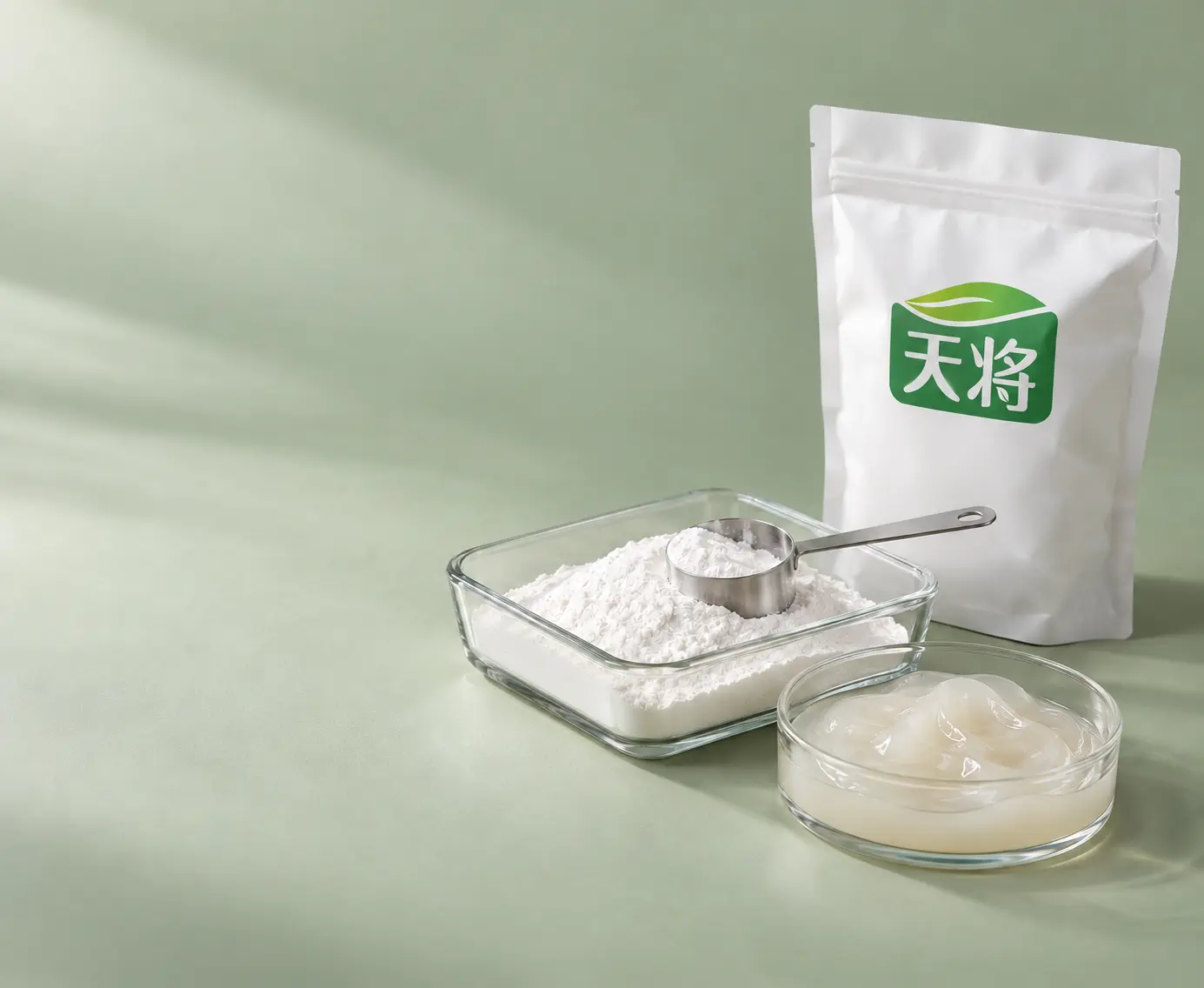
A practical guide to identity, quality, and selection.
Function starts with a suitable food ingredient
Food grade modified starch is made from starch sources such as corn, tapioca, potato, or wheat. Physical, chemical, or enzymatic treatment adjusts its structure or properties for a defined food function.
For use in food, the ingredient must meet the applicable identity and purity requirements, and its intended use must comply with the rules of the destination market.
The seven chemically modified starch families below are commonly identified as food additives. Physically and enzymatically treated starches may be classified differently depending on the treatment and jurisdiction.

Same family name.
Different starting materials.
An ingredient name identifies the modification; it does not always identify the botanical source. Confirm both when comparing modified starch products.
Corn
Confirm the source and grade designation alongside the functional specification.
Tapioca
Evaluate the finished grade in your recipe rather than choosing by source alone.
Potato
Check hydration, paste characteristics, and storage performance for the selected grade.
Wheat
Include source and allergen documentation in the ingredient review.
Seven common modified starch products
Start with the correct ingredient identity. Then compare the specific grades available for your application.
Hydroxypropyl starch
Hydroxypropyl substitution. Hydroxypropyl groups change how starch chains interact. Suitable grades may support smooth texture and stability during cooling and storage.
- Evaluation priority
- Compare texture, water separation, and storage behavior in your finished recipe.
Hydroxypropyl distarch phosphate
Substitution + crosslinking. Combines hydroxypropyl substitution with phosphate crosslinking. Candidate grades can be evaluated where both process tolerance and storage texture matter.
- Evaluation priority
- Test heating, mixing, pH, and chilled or frozen storage together.
Acetylated distarch phosphate
Acetylation + crosslinking. Combines acetyl groups with phosphate crosslinks. Select the grade around the desired texture and processing conditions.
- Evaluation priority
- Assess viscosity after cooking and mixing, then check quality through storage.
Acetylated distarch adipate
Acetylation + crosslinking. Combines acetylation with adipate crosslinking. Suitable grades are evaluated for thickening and stability in processed food systems.
- Evaluation priority
- Define your sauce, filling, or dessert requirements before choosing a grade.
Acetylated starch
Also called starch acetate. Acetyl groups alter interactions between starch chains. Performance depends on the starch source, treatment, and formulation.
- Evaluation priority
- Compare paste texture and changes during cooling and storage.
Distarch phosphate
Phosphate crosslinking. Crosslinks help control granule swelling. Suitable grades can be considered when the process challenges starch viscosity.
- Evaluation priority
- Measure viscosity after the actual heat, shear, and pH conditions.
Starch sodium octenyl succinate
Often called OSA-modified starch, this ingredient has groups that provide affinity for oil alongside the water affinity of starch. Suitable grades can support emulsification and encapsulation.
Evaluate emulsion stability and the intended drying or storage process for flavor, oil, or related ingredient systems.
Explore emulsified starch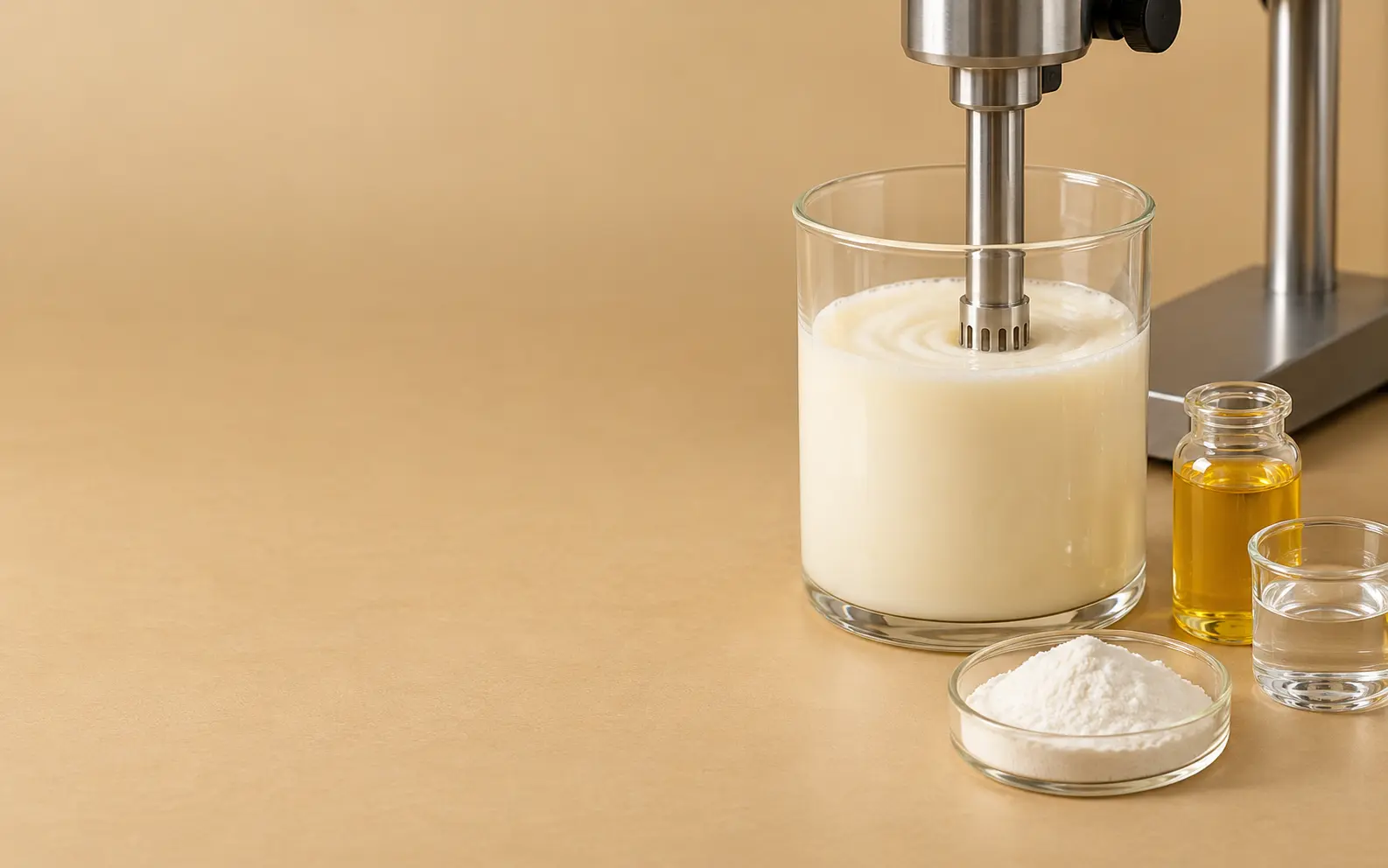
Read the full name.
Check the identifier.
Similar names can describe different structures. Use the full name and supporting product documents when making a purchasing or formulation decision.
| Ingredient name | INS | Distinguishing feature |
|---|---|---|
| Hydroxypropyl starch | 1440 | Hydroxypropyl substitution |
| Hydroxypropyl distarch phosphate | 1442 | Hydroxypropyl substitution and phosphate crosslinking |
| Acetylated distarch phosphate | 1414 | Acetylation and phosphate crosslinking |
| Acetylated distarch adipate | 1422 | Acetylation and adipate crosslinking |
| Acetylated starch / Starch acetate | 1420 | Acetyl substitution |
| Distarch phosphate | 1412 | Phosphate crosslinking |
| Starch sodium octenyl succinate | 1450 | Octenyl succinate substitution; also called OSA-modified starch |
Identity reference: FAO/JECFA modified starch specifications. Final ingredient labeling and permitted uses depend on the destination market and the finished food.
Food grade is supported by specifications
A starch powder's appearance cannot establish its suitability for food use. Review the identity, composition, quality requirements, and intended application through product documentation.
Agree on the relevant acceptance criteria for the chosen grade and keep the specification connected to the supplied batch.

Product specification
Review the ingredient name, grade code, botanical source, appearance, and relevant chemical, physical, and microbiological criteria.
Certificate of analysis
Check the batch number, reported test results, test methods where provided, and agreement with the approved specification.
Market and application
Confirm the intended food category, destination market, applicable conditions of use, and appropriate labeling information.
Allergen and source statements
Request documentation appropriate to your source, allergen, and identity requirements. Do not infer a claim from “modified starch” alone.
Storage and shelf life
Check the recommended storage conditions, packaging integrity, shelf life, and handling guidance for the supplied ingredient.
Relevant certification
Where required, review current food safety, halal, kosher, or other certificates and confirm their product and site scope.
Choose modified starch products by the job they need to do
Start with the desired eating quality and the actual process. Then evaluate candidate grades against clear performance targets.

Sauces, gravies & fillings
Evaluate viscosity, heat and shear tolerance, pH compatibility, and consistency after holding or storage. Crosslinked and combined-modification grades may be candidates.

Dairy desserts & chilled foods
Compare smoothness, body, and water separation at the intended storage temperature. Define the texture target before selecting a grade or use level.
Frozen foods
Measure texture and water separation after relevant freezing and thawing cycles.
Bakery fillings
Check filling consistency before baking and after cooling or storage.
Instant mixes
Specify a suitable hydration format; not every modified starch thickens in cold water.
Flavor systems
Evaluate suitable OSA grades for emulsion or encapsulation performance.
From ingredient family
to a tested grade
Build the selection around four questions: what food, which process, what requirements, and what results?
Define the food
Share the application, recipe, target texture, serving conditions, and destination market.
Map the process
Record hydration temperature, heating time, pH, mixing conditions, and storage requirements.
Review the grade
Confirm ingredient identity, source, specification, hydration format, and relevant supporting documents.
Run a trial
Compare suitable use levels. Check the finished food immediately after processing and through planned storage.
Before you select
a food grade starch
What makes modified starch suitable for food use?
The ingredient must have the appropriate identity and meet relevant quality and purity requirements. Its use must also be suitable for the intended food category and destination market. Functional performance should be confirmed in the recipe.
Are all modified starch products interchangeable?
No. Even products with the same ingredient name can differ in botanical source, viscosity, hydration behavior, and process tolerance. Compare the individual grades and test them in the finished food.
Does an INS number confirm approval in every country?
No. It identifies the additive in the international numbering system. Check the applicable requirements for your destination market, food category, and intended use.
Is starch acetate the same as acetylated starch?
Starch acetate is a commonly used name for acetylated starch, INS 1420. Check the full product specification to distinguish it from acetylated and crosslinked starches such as INS 1414 or INS 1422.
What does OSA starch mean?
In this guide, OSA-modified starch refers to starch sodium octenyl succinate, INS 1450. Suitable grades can be evaluated for emulsification and encapsulation applications.
Can every grade be mixed directly into cold water?
No. Some grades require cooking, while suitable instant or pregelatinized grades develop viscosity in cold water. Follow the preparation guidance for the selected product.
What should I provide when requesting a recommendation?
Share your application, formulation, target texture, process conditions, storage requirements, preferred source, and destination market. Include a current grade or reference sample when available.
Technical references: FAO/JECFA modified starch specifications · Codex GSFA · Research on OSA starch emulsion stabilization.