
TIANJIANG / FRESH WET NOODLES FORMULATION
Fresh Wet Noodles Formulation with Modified Starch
This fresh wet noodles formulation platform uses Tianjiang modified starch to help manufacturers improve fresh elasticity, strand strength, water distribution, cooking stability, surface smoothness and reduced stickiness while maintaining the texture consumers expect from refrigerated fresh noodles.
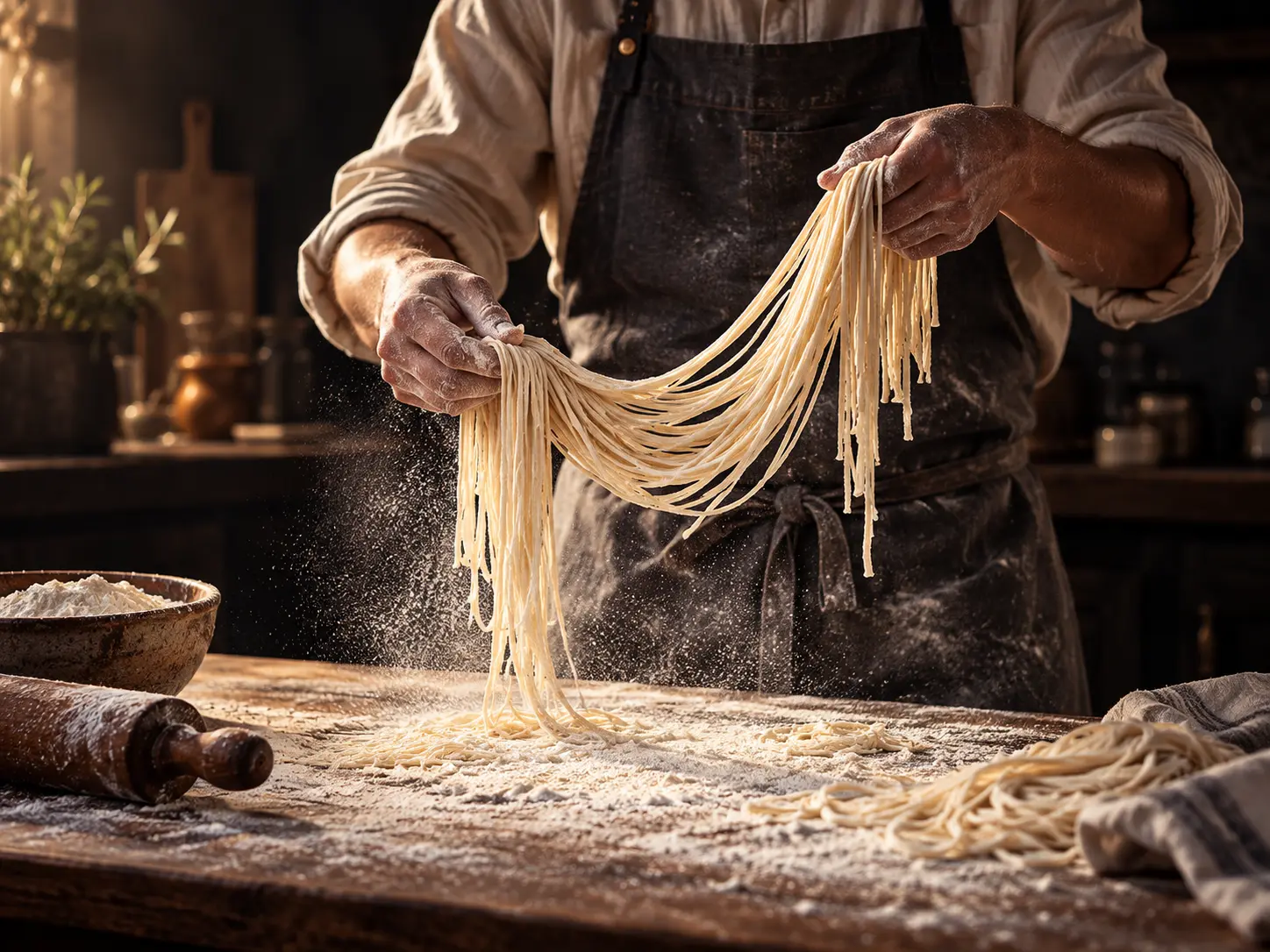
01 / CONTROL THE FRESH NOODLE SYSTEM
Fresh Wet Noodles Formulation for Manufacturers and R&D Teams
Fresh wet noodle quality depends on flour protein, water addition, starch functionality, alkaline system, sheeting, aging, packaging and refrigerated handling.
Fresh Elasticity
Maintain springiness and extensibility without producing a rubbery bite.
Reduced Stickiness
Control surface moisture and starch release to support clean strand separation.
Cooking Stability
Reduce excessive solids loss and maintain structure during boiling.
Strand Strength
Improve resistance to breakage during cutting, packing and cooking.
Water Management
Control moisture distribution through the fresh strand during aging and cooking.
Refrigerated Texture
Slow undesirable texture changes during cold storage without compromising fresh-noodle character.
02 / FOUR COMMERCIAL FRESH NOODLE DIRECTIONS
Four Fresh Wet Noodles Formulation Platforms
These Tianjiang platforms cover white salted noodles, fresh alkaline ramen, low-moisture tonkotsu ramen and refrigerated fresh yakisoba.
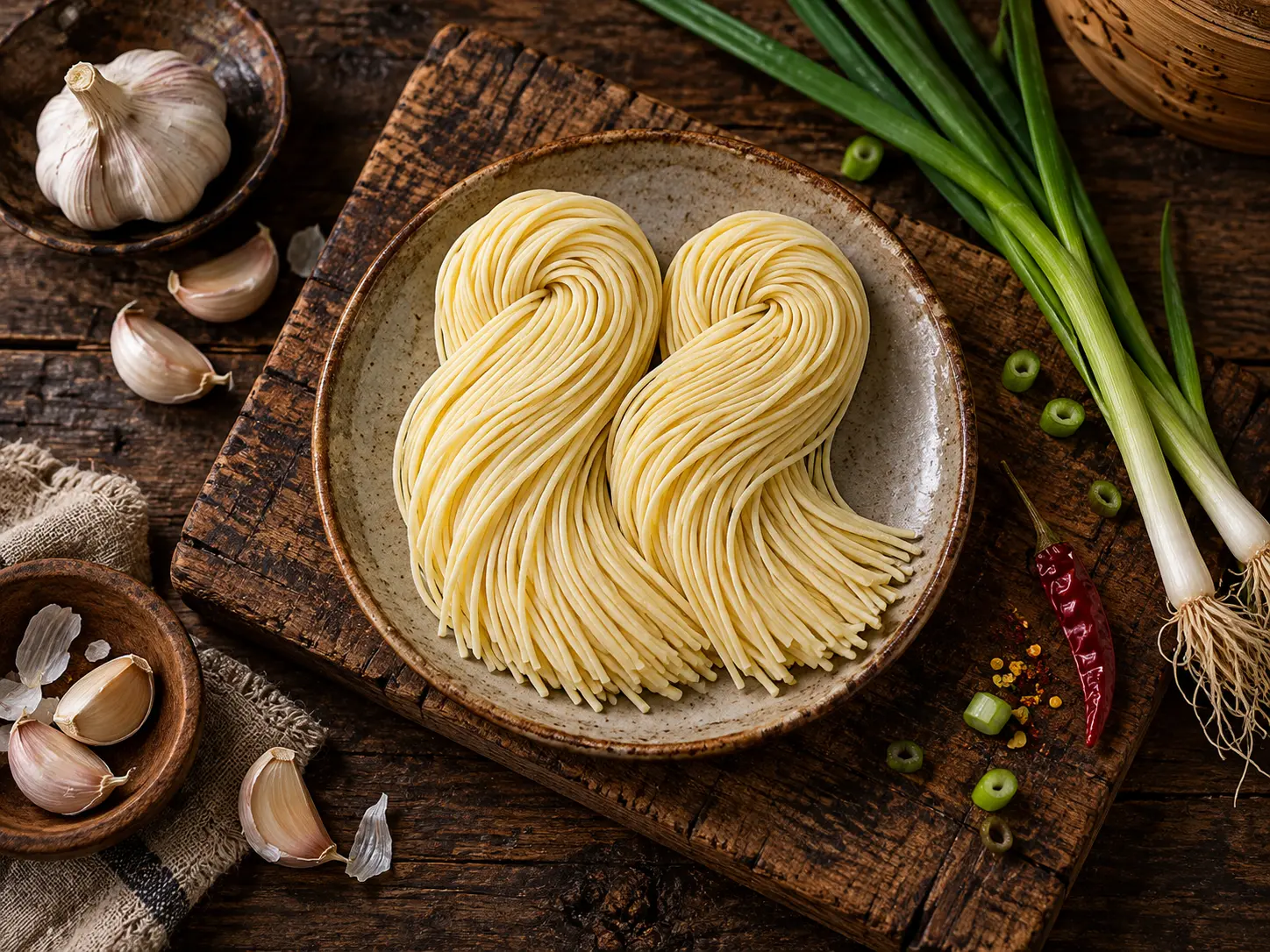
Photos provide fresh-noodle and serving references. Each formulation defines its own ingredient composition, hydration and processing conditions; photographs alone do not establish those specifications.
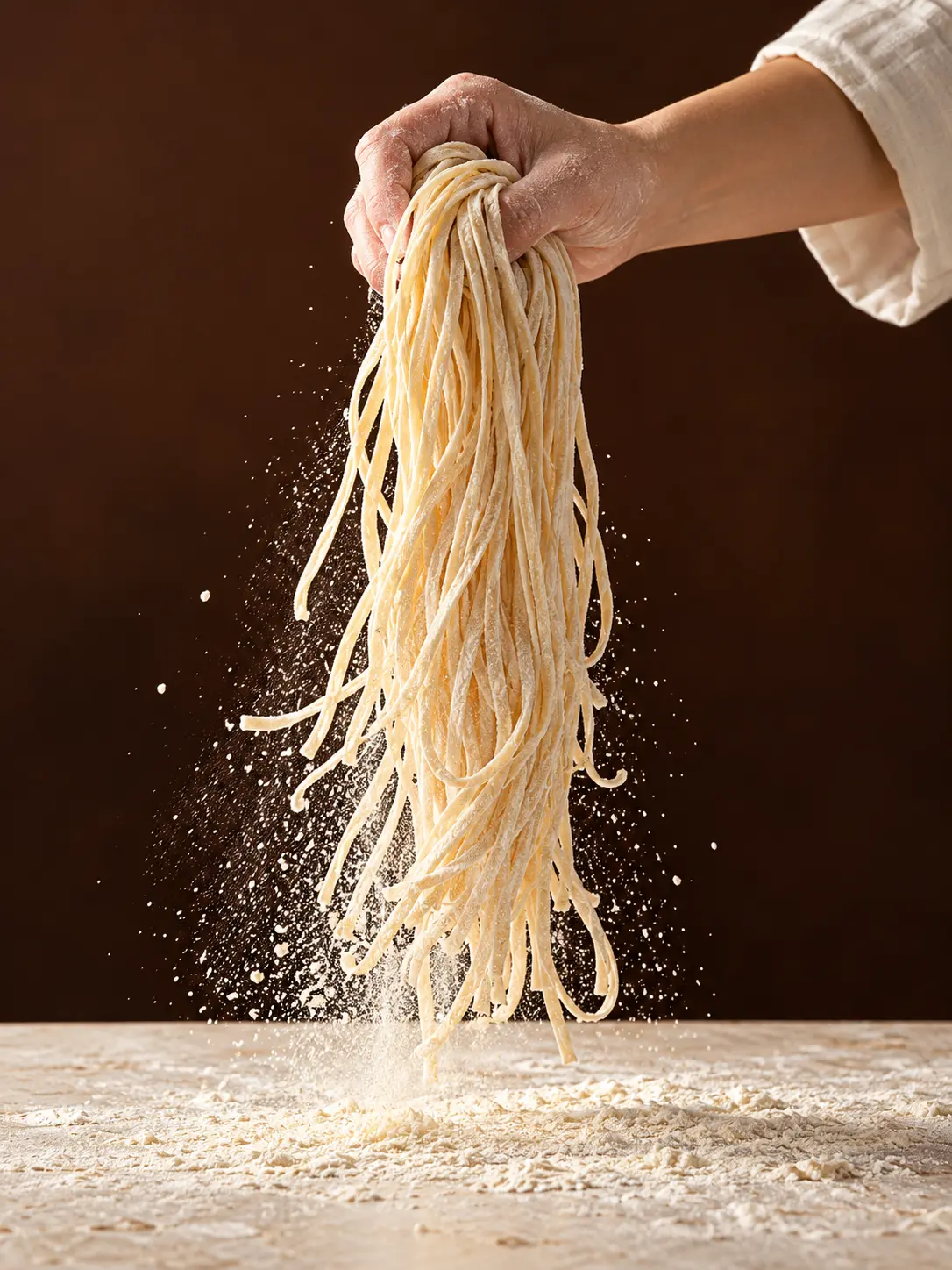
White Salted Fresh Noodles
A neutral-color fresh noodle platform designed for smooth strands, elastic bite, controlled hydration and low cooking loss.
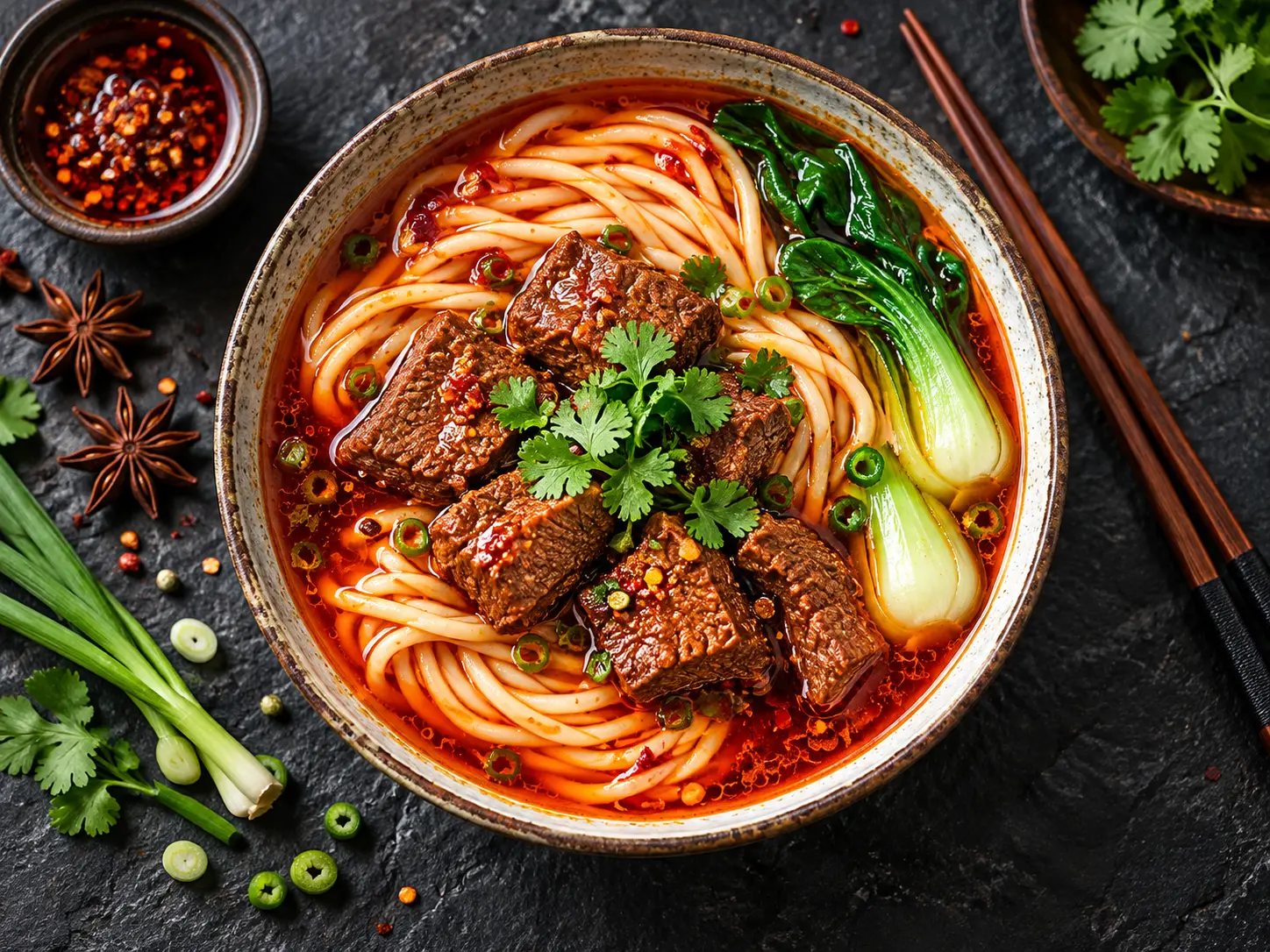
Fresh Alkaline Ramen
A springy ramen platform designed for elasticity, yellow alkaline character, rapid cooking and broth stability.

Low-Moisture Tonkotsu Ramen
A thin, lower-hydration fresh ramen designed for firm bite, fast cooking and reduced softening in rich broth.
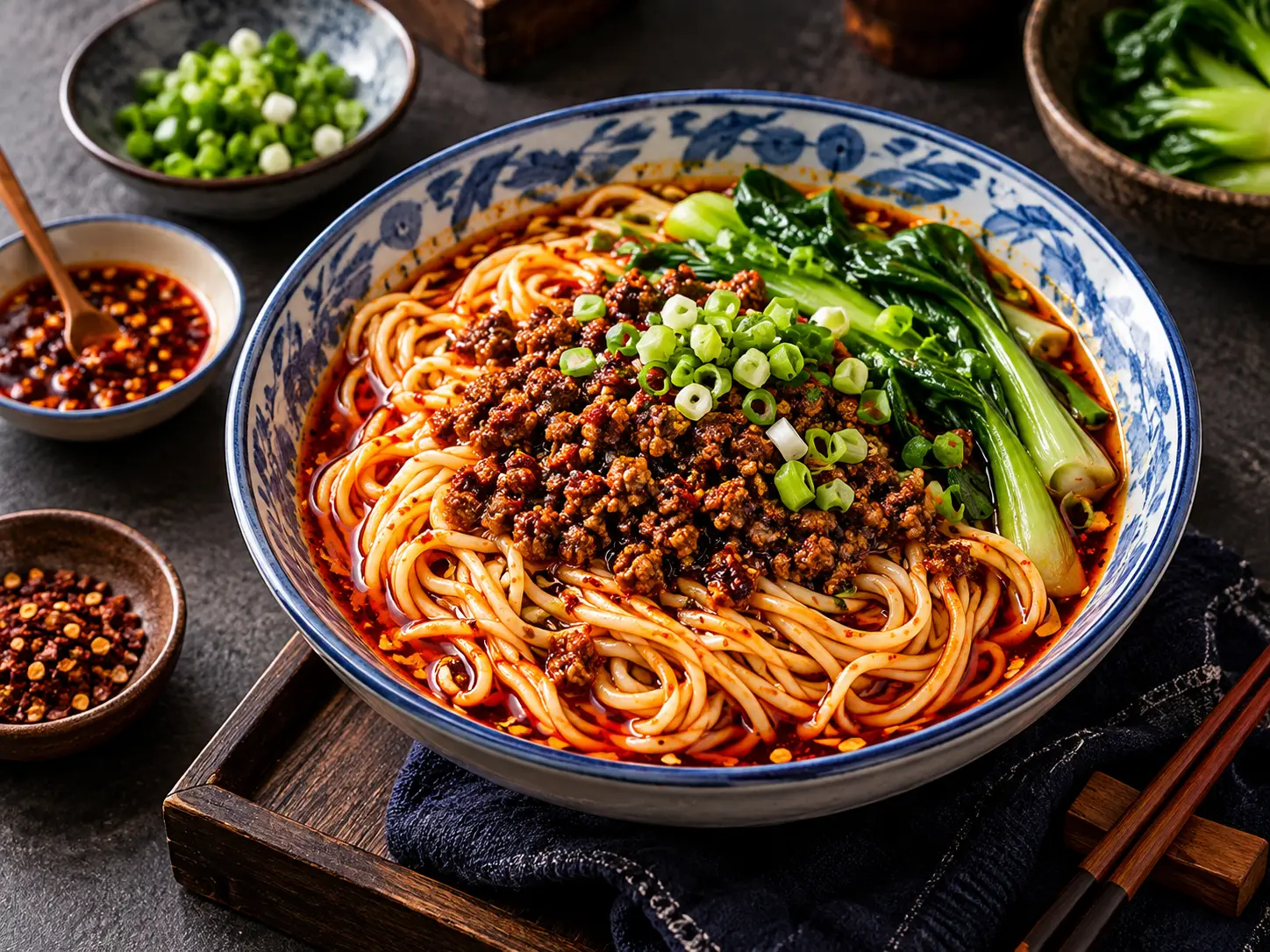
Refrigerated Fresh Yakisoba
A fresh pan-fry noodle designed for strand separation, flexibility and texture stability during steaming and reheating.
These are independent Tianjiang application-development formulas built from established fresh-noodle processing principles. Public commercial noodle formats and published noodle research were used to identify relevant technical targets; third-party proprietary production formulas were not reproduced.
03 / TIANJIANG COMMERCIAL PRODUCTION FORMULA
Tianjiang Fresh Wet Noodles Production Formulas
Select a fresh noodle platform, enter the required wet dough batch and compare Tianjiang modified-starch dosage using wheat flour as the 100-part basis.
Fresh Wet Noodles Formulation Batch Calculator
Formula values are expressed as parts per 100 parts wheat flour. Actual hydration should be adjusted to flour protein, ash, damaged starch, sheeting conditions and target noodle moisture.
| Ingredient | Parts | Batch Mass, kg | Primary Function |
|---|---|---|---|
| Total Wet Dough | — | 100.000 | Fresh noodle dough |
TJ-FWN-01 · 100 kg wet dough · 6.00 parts Tianjiang modified starch.
When comparing starch grades, keep flour lot, water addition, finished dough temperature, resting time, sheet thickness and cooking method constant.

04 / MODIFIED STARCH PERFORMANCE
How Modified Starch Improves Fresh Wet Noodles
Modified starch can change water distribution and the starch-protein matrix, making starch selection particularly important in high-moisture fresh noodle systems.
Elasticity
Support a flexible, resilient bite while avoiding excessive brittleness.Reduced Breakability
Help strands tolerate sheeting, cutting, packaging and cooking.Water Management
Control moisture distribution between the surface and noodle core.Surface Quality
Reduce excessive surface starch release and post-cook stickiness.Cooking Stability
Support noodle integrity and reduced solids loss during boiling.Refrigerated Texture
Suitable grades can help maintain more consistent texture during cold storage.
05 / COMMERCIAL MANUFACTURING
Fresh Wet Noodles Manufacturing Process
Fresh noodle quality is built through ingredient preparation, hydration, gluten development, sheet resting, cutting, dusting, packing and refrigerated aging.
-
Prepare flour & starch
Standardize flour and dry-blend Tianjiang modified starch uniformly.
-
Prepare liquid phase
Dissolve salt and the required alkaline system into process water.
-
Mix into dough granules
Add liquid gradually to form uniformly hydrated dough particles.
-
Compound & sheet
Combine dough particles and progressively develop a continuous sheet structure.
-
Rest
Allow moisture redistribution and gluten relaxation before final reduction.
-
Final sheet & cut
Control thickness, strand width and noodle geometry for the target application.
-
Dust & portion
Use the validated dusting system to reduce strand adhesion during packing.
-
Pack & refrigerate
Package promptly and maintain the validated cold chain through distribution.
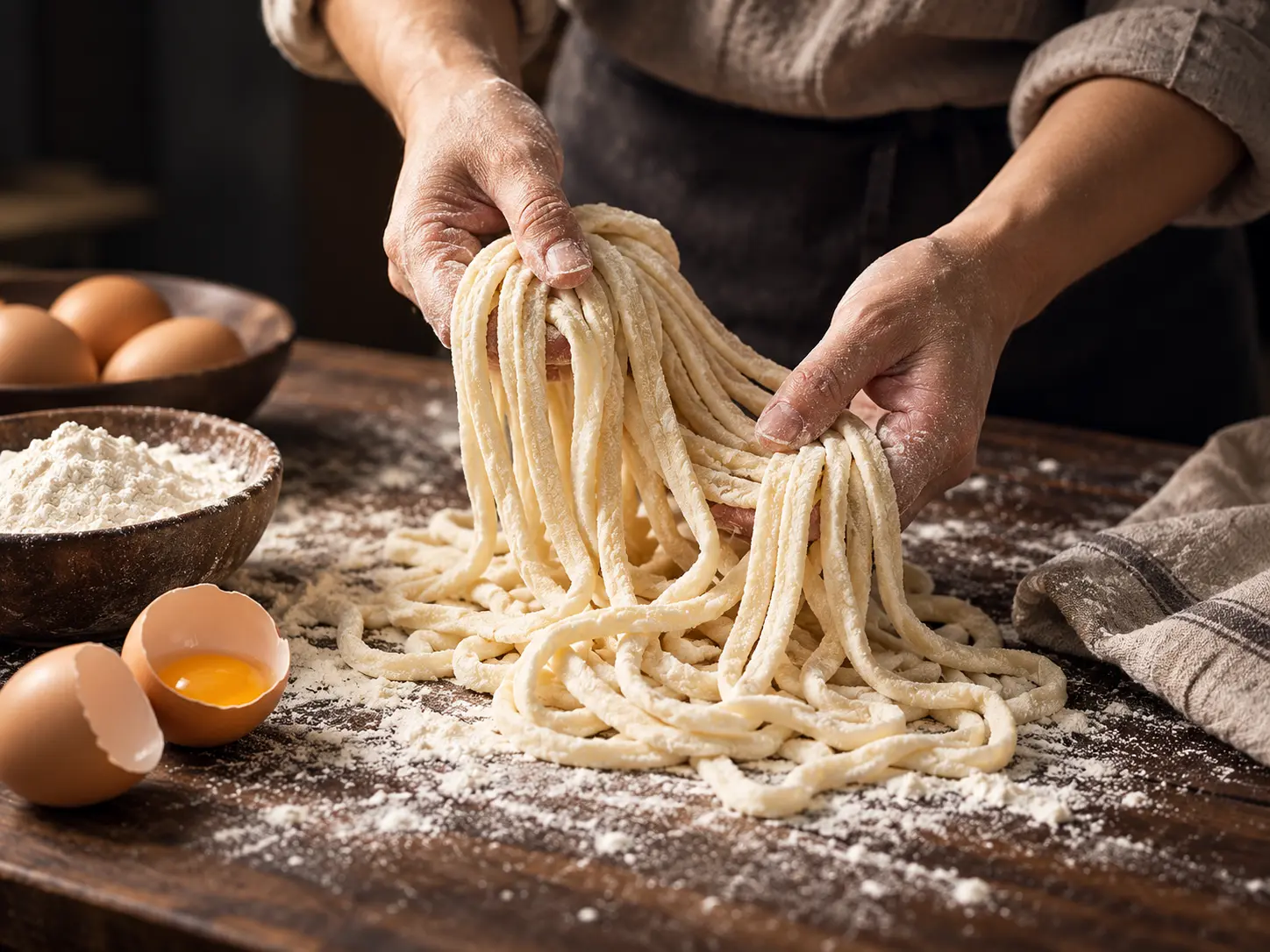
Dough Preparation & Handmade Noodle References
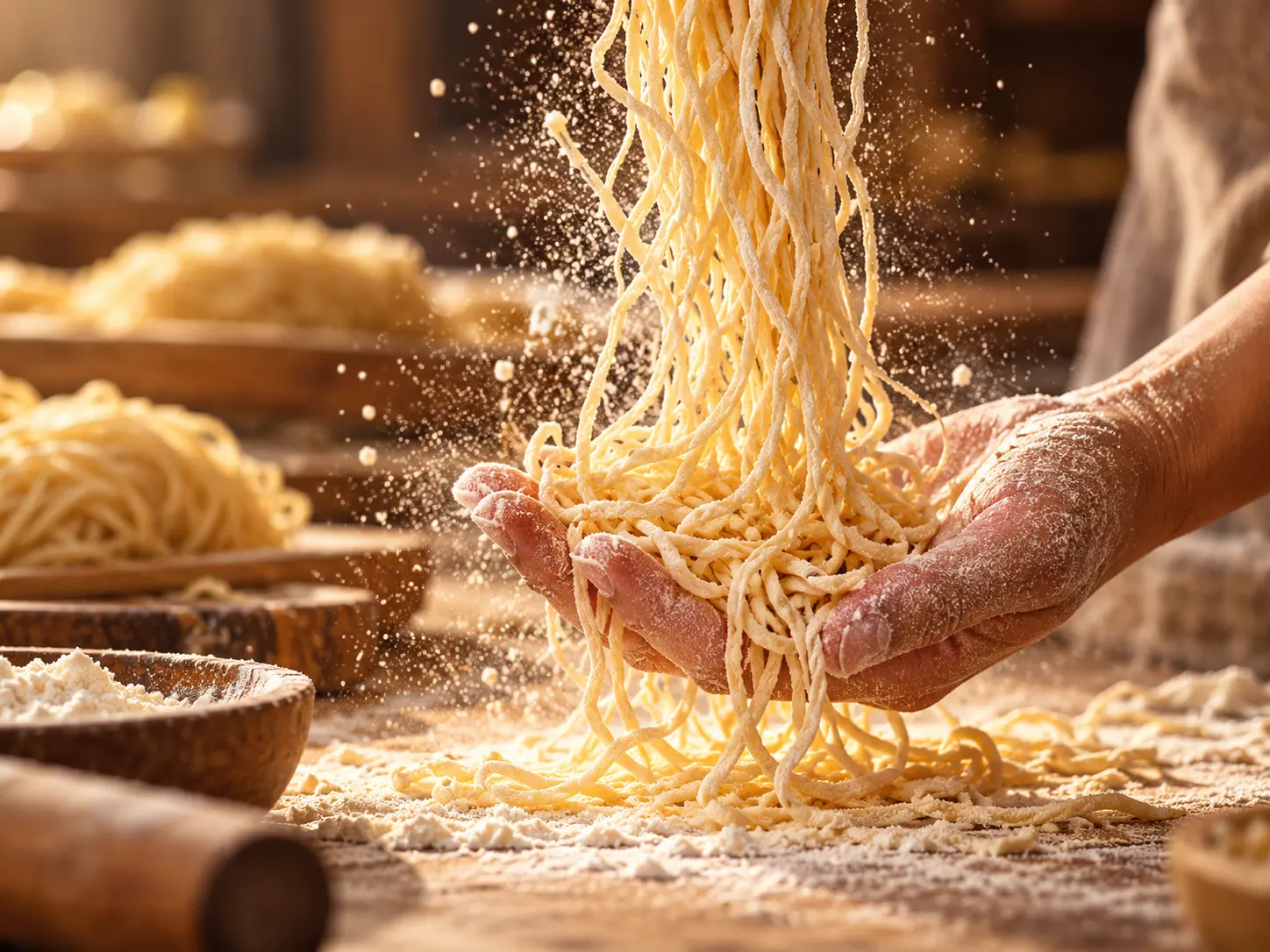
Explore dough pieces, hand stretching and flour-dusted strands alongside the production guide. Handmade preparation images illustrate dough handling rather than the industrial sheeting or packaging steps described above.

06 / FRESH QUALITY CHANGES DURING STORAGE
Fresh Wet Noodles Refrigerated Quality Control
Fresh noodles must be evaluated through the complete intended storage period, not only immediately after production.
Color Stability
Track L*, yellow tone and visible darkening during refrigerated storage.
Surface Stickiness
Monitor adhesion between strands and package surfaces.
Texture Retention
Measure hardness, elasticity, tensile strength and chewiness over time.
Cooking Performance
Track cooking loss, water absorption and strand integrity through storage.
Texture stability is not the same as microbial shelf life.
Modified starch can support texture and water management, but it should not be presented as a stand-alone preservation system. Commercial shelf life must be established through validated hygiene, initial microbial load, cold-chain control, packaging, pH or preservation strategy, and microbiological testing appropriate to the destination market.
07 / DIAGNOSE THE FRESH NOODLE FAILURE
Fresh Wet Noodles Formulation Troubleshooting
Do not change modified-starch dosage before standardizing flour, hydration, sheet thickness, aging, cooking protocol and cold storage.
| Observation | Factors to Investigate | Controlled Next Trial |
|---|---|---|
| Fresh noodles stick together | Excess surface moisture, high starch release, insufficient dusting or packaging pressure. | Standardize surface moisture and dusting before changing starch. |
| Noodles break during cooking | Weak gluten structure, poor hydration, sheeting damage or low strand flexibility. | Evaluate a more flexible Tianjiang modified starch at constant flour protein. |
| Cooking loss is high | Weak starch-protein network, surface damage or excessive cooking. | Compare starch functionality under identical cooking conditions. |
| Noodles soften too quickly in broth | Excessive water uptake or insufficient thermal stability. | Screen a more process-stable modified starch. |
| Fresh noodle color darkens | Flour PPO, oxygen exposure, storage time, temperature or inappropriate pH. | Evaluate flour and browning-control strategy separately from texture optimization. |
| Ramen lacks springiness | Flour protein, hydration, alkali level, resting or starch selection. | Standardize kansui and moisture before increasing starch dosage. |
| Tonkotsu noodles soften too fast | Moisture too high, strand too thick or weak noodle matrix. | Test the lower-moisture TJ-FWN-03 platform. |
| Texture deteriorates in refrigeration | Moisture migration, enzymatic activity, microbial changes or starch-protein restructuring. | Separate texture testing from microbial shelf-life validation. |
08 / SELECT STARCH BY FRESH-NOODLE TARGET
How to Select Modified Starch for Fresh Wet Noodles
Share flour protein, water addition, alkaline system, sheet thickness, strand dimensions, packaging and target storage conditions so Tianjiang can screen the appropriate starch grade.
Elasticity Grade
For fresh noodles requiring flexibility, springiness and lower breakability.
Low-Stickiness Grade
For systems where strand adhesion and surface softness are primary problems.
Cooking-Stable Grade
For noodles requiring greater tolerance during boiling or hot-soup holding.
Modified Tapioca Starch
Suitable grades can support flexibility, water distribution and smooth texture.
Modified Potato Starch
Can be evaluated for springiness, water absorption and resilient bite.
Process-Stable Grade
For steamed, pre-cooked or more severe thermal processing systems.
09 / STANDARDIZE EVERY FRESH-NOODLE TRIAL
Fresh Wet Noodles Formulation and Quality Testing
Compare starch candidates using identical flour lot, water addition, sheet thickness, storage temperature and cooking protocol.
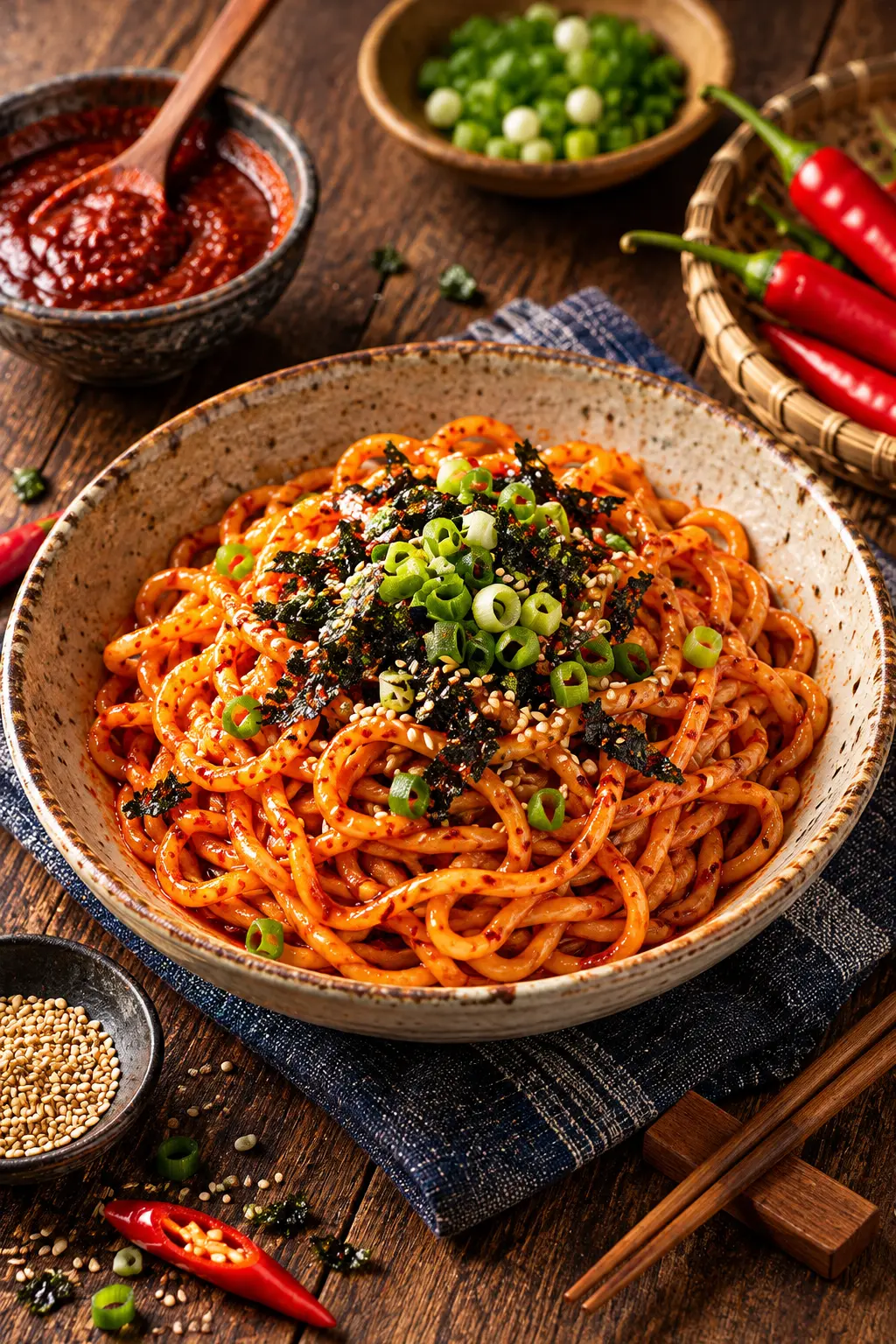
Finished noodle serving reference. Elasticity, cooking loss and refrigerated stability should be assessed through product-specific tests.
Raw Noodle Moisture
Measure after cutting and packaging.Color
Track L*, a* and b* through storage.Tensile Strength
Measure raw and cooked strand strength.Cooking Loss
Quantify solids released during cooking.Surface Stickiness
Compare strand adhesion after refrigerated storage.Texture Profile
Measure hardness, springiness and chewiness.
10 / R&D TO PURCHASING
Modified Starch Specifications for Fresh Wet Noodles Purchasing
After a candidate starch passes production and storage-quality testing, convert the result into a controlled purchasing specification.
Exact Tianjiang Grade
Confirm product code and recommended dosage.Botanical Source
Confirm tapioca, potato, corn or other starch base.Functional Target
Define elasticity, stickiness, cooking loss and moisture priorities.Representative COA
Review relevant incoming quality parameters.Regulatory Documentation
Confirm ingredient identity and destination-market requirements.Commercial Planning
Confirm samples, MOQ, packaging, lead time and monthly consumption.
11 / TECHNICAL QUESTIONS
Fresh Wet Noodles Formulation FAQs
Technical guidance for fresh noodle manufacturers, R&D teams and ingredient buyers.
Why Is Modified Starch Used in Fresh Wet Noodles?
Suitable modified starch can support water management, elasticity, reduced breakability, surface quality, cooking stability and controlled texture.
How Much Modified Starch Can Be Used in Fresh Wet Noodles?
The Tianjiang development platforms on this page use approximately 5–8 parts modified starch per 100 parts wheat flour. The optimum dosage depends on starch grade, flour protein, hydration, noodle geometry and process conditions.
Can Modified Tapioca Starch Improve Fresh Noodle Elasticity?
Suitable modified tapioca starch can be evaluated for improved flexibility, moisture distribution and reduced breakability.
How Can Fresh Noodle Stickiness Be Reduced?
Stickiness is influenced by surface moisture, starch release, dough hydration, dusting, packaging and cooking conditions. The starch grade should be optimized together with these factors.
Can Modified Starch Extend Fresh Noodle Shelf Life?
Modified starch may help maintain texture quality, but microbiological shelf life depends on hygiene, cold-chain control, packaging, pH, preservation strategy and validated microbial testing.
Why Do Fresh Wet Noodles Darken During Storage?
Color deterioration can involve flour enzymes, oxygen, storage temperature, pH and other chemical reactions. Color stability should therefore be evaluated separately from texture optimization.
Can Tianjiang Support Fresh Alkaline Ramen?
Yes. Tianjiang can screen modified starch systems for elasticity, firmness, cooking stability and low-moisture or standard-moisture fresh ramen formats.
What Information Should I Send Tianjiang?
Share flour protein, water addition, current starch, alkaline system, sheet thickness, strand width, storage temperature, packaging, cooking time and primary quality problem.
12 / TALK TO TIANJIANG
Request Modified Starch Samples for Fresh Wet Noodles
Share your current fresh wet noodles formulation and process challenge so Tianjiang can recommend a candidate modified starch for your next production trial.
Prepare Your Fresh Wet Noodle Project Brief
13 / RELATED NOODLE APPLICATIONS