TIANJIANG / MICROENCAPSULATION TECHNOLOGY
Vitamin Microencapsulation with OSA Modified Starch
Oil-soluble vitamins can be difficult to handle directly in food, beverage, premix and nutrition systems.Tianjiang starch sodium octenyl succinate provides both hydrophilic and lipophilic functionality, helping convert vitamin oils into stable oil-in-water emulsions before spray drying.The resulting microencapsulated powder can provide improved handling, dispersion, active protection, oxidative stability and formulation flexibility.
01 / SOLVE THE REAL MICROENCAPSULATION PROBLEM
Vitamin Microencapsulation for Ingredient Manufacturers
The manufacturer is not simply turning oil into powder.A successful system must control emulsion stability, droplet distribution, feed viscosity, wall-to-core ratio, spray-dryer behavior, surface oil, powder recovery, potency retention and storage stability.
Stable Oil-in-Water Emulsion
Keep vitamin oil uniformly dispersed before atomization and during spray-dryer feeding.
Higher Active Loading
Build a wall system that supports useful core loading without excessive feed viscosity.
Oxidation Protection
Reduce direct exposure of sensitive oil-soluble actives to oxygen, light and the external environment.
Spray-Drying Efficiency
Maintain processable viscosity at commercial feed solids for more efficient water removal.
Powder Flowability
Target low caking, controlled moisture and repeatable handling during packing and blending.
Cold-Water Dispersion
Develop the powder format around the intended food, beverage or nutrition application.
02 / FOUR PRODUCT DIRECTIONS
Four Vitamin Microencapsulation Development Platforms
The platform starts with Tianjiang's internal Vitamin A / E oil formula and expands into high-potency vitamin E, cold-water-dispersible vitamin D3 and multi-vitamin fortification systems.
Supplement format reference.
Tianjiang Internal Production Formula TJ-VIT-01Vitamin A / E Oil Microcapsule Powder
The midpoint version of Tianjiang's internal formula, using vitamin oil, starch sodium octenyl succinate, maltodextrin and water before high-pressure homogenization and spray drying.

Supplement format reference.
Tianjiang Commercial-Scale Development Formula TJ-VIT-02High-Potency Vitamin E Powder
A higher-core-loading spray-dried platform designed around a theoretical approximately 50% oil-phase loading on dry solids.
Supplement format reference.
Tianjiang Commercial-Scale Development Formula TJ-VIT-03Vitamin D3 100,000 IU/g Direction
A low-core-loading cold-water-dispersible platform for concentrated vitamin D3 oil, with theoretical potency calculated from the actual potency of the customer's oil concentrate.

Supplement format reference.
Tianjiang Commercial-Scale Development Formula TJ-VIT-04Multi-Vitamin Oil Blend Powder
A customizable fat-soluble vitamin oil microencapsulation platform for premixes, fortification blends and specialized nutrition systems.
TJ-VIT-01 is derived directly from the midpoint of Tianjiang's supplied internal formulation range. TJ-VIT-02 through TJ-VIT-04 are Tianjiang development starting points constructed from the internal OSA-starch process platform and publicly documented commercial and scientific vitamin microencapsulation architectures.
03 / SPRAY-DRYING FORMULATION CALCULATOR
Vitamin Microencapsulation Batch Calculator
Scale the emulsion, change the core loading, adjust OSA starch and maltodextrin, estimate powder recovery and calculate theoretical finished-powder potency before the first pilot run.
Vitamin Spray-Drying Formula Calculator
A. Feed Emulsion Formula
| Component | % of Feed | Batch Mass | Primary Function |
|---|---|---|---|
| Total Feed Emulsion | 100.00 | — | Pre-spray-drying emulsion |
B. Estimated Powder Mass Balance
| Output | Calculation Basis | Estimated Mass | Technical Note |
|---|
TJ-VIT-01 ready.
The potency result is theoretical. It assumes proportional recovery of the vitamin core and wall solids, with no potency loss during homogenization, atomization, spray drying or storage.Actual potency, encapsulation efficiency, surface oil and active retention must be confirmed analytically.
04 / THE FUNCTIONAL WALL MATERIAL
Why OSA Modified Starch for Vitamin Microencapsulation?
Starch sodium octenyl succinate introduces hydrophobic functionality into a normally hydrophilic starch molecule.This amphiphilic behavior allows an appropriate OSA starch to help stabilize oil-in-water emulsions while also providing film-forming carbohydrate solids for spray drying.
Oil-Water Interface
Helps stabilize the vitamin-oil droplets inside the aqueous feed system.High-Solids Processing
Suitable grades can support commercial feed solids without excessive viscosity.Film Formation
Forms a carbohydrate matrix around dispersed oil during rapid water removal.Oil Retention
Helps reduce unprotected surface oil when the complete process is properly optimized.Carrier Compatibility
Can be combined with maltodextrin to tune solids, viscosity, cost and powder behavior.Spray-Dried Powder
Supports conversion of difficult-to-handle vitamin oils into dry ingredient systems.
05 / EMULSION TO POWDER
Vitamin Microencapsulation Manufacturing Process
Tianjiang's internal route uses heated wall-material dissolution, controlled oil addition under shear, high-pressure homogenization and spray drying.Commercial setpoints should then be optimized around vitamin stability, feed viscosity, droplet size and the spray dryer itself.
-
Verify Vitamin Oil
Confirm vitamin type, oil potency, antioxidant system, storage history and oxidation status.
-
Prepare Process Water
Use controlled-quality water and establish the target feed-solids concentration.
-
Dissolve OSA Starch
Disperse Tianjiang starch sodium octenyl succinate into the aqueous phase.
-
Add Maltodextrin
Hydrate the secondary wall material and develop a uniform aqueous phase.
-
Condition the Wall Phase
For Tianjiang's internal platform, use the specified 50–80°C preparation range.
-
Start High Shear
Establish controlled shear before the vitamin oil is introduced.
-
Add Vitamin Oil Slowly
Introduce the oil phase gradually to avoid localized overload and coarse droplets.
-
Pre-Emulsify
Continue high-shear mixing until the emulsion is uniform and macroscopically stable.
-
High-Pressure Homogenize
Optimize pressure and number of passes against droplet size, viscosity and active stability.
-
Evaluate Feed Emulsion
Check viscosity, phase separation, droplet distribution and feed stability.
-
Spray Dry
Optimize inlet, outlet, feed rate and atomization for the specific vitamin and dryer.
-
Cool & Finish Powder
Collect powder, cool quickly, add the validated anti-caking agent and pack under controlled conditions.
Supplement Formats & Preparation References
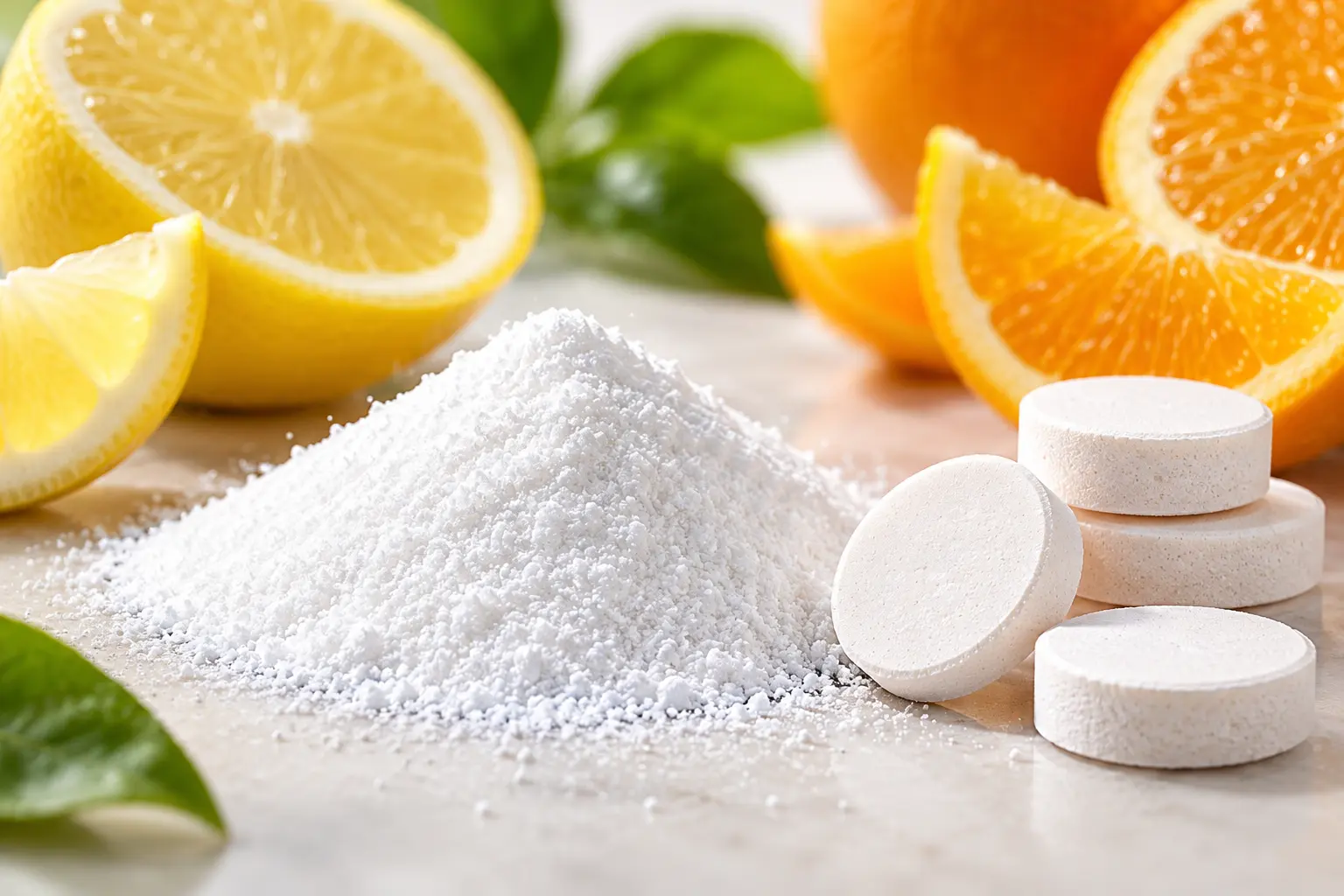
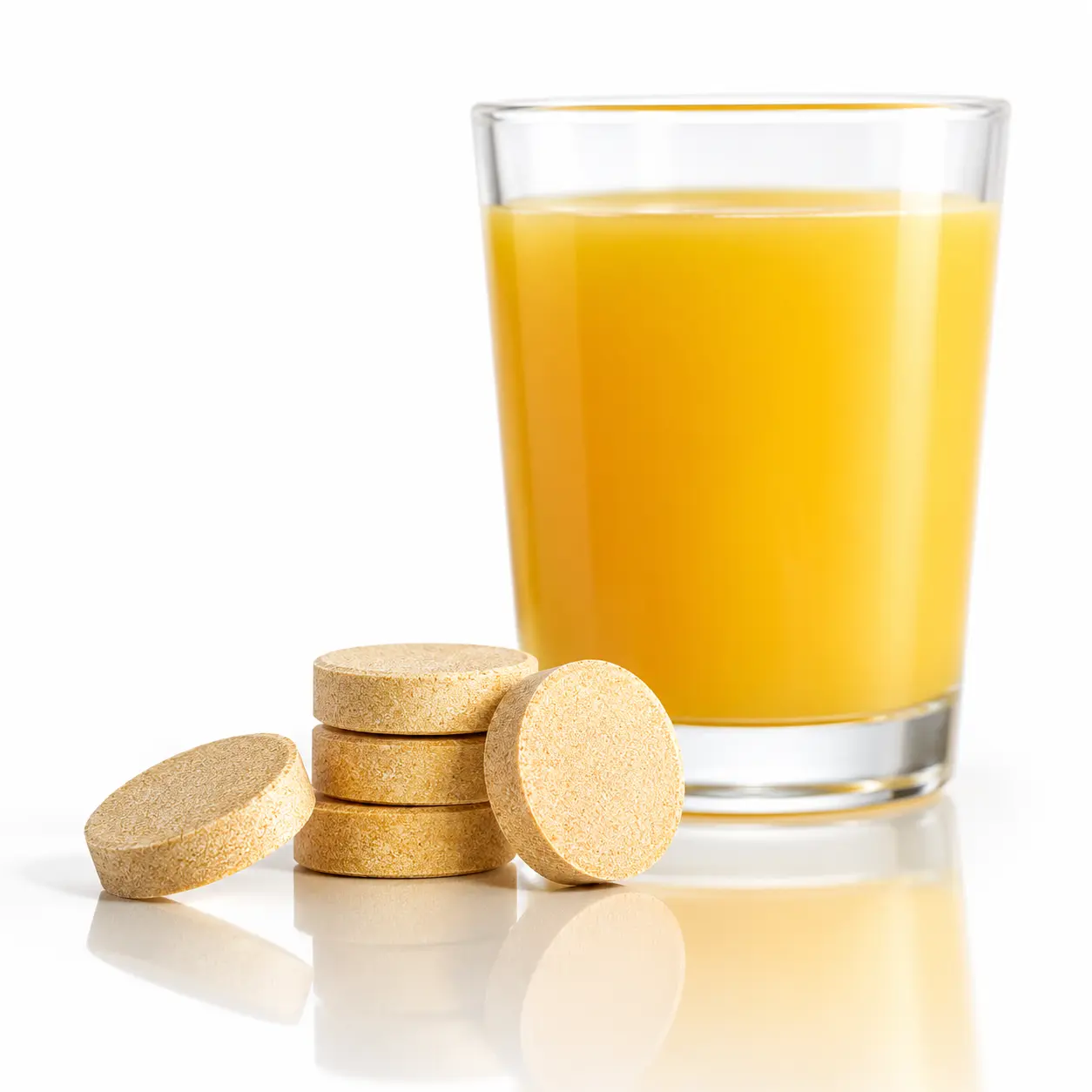
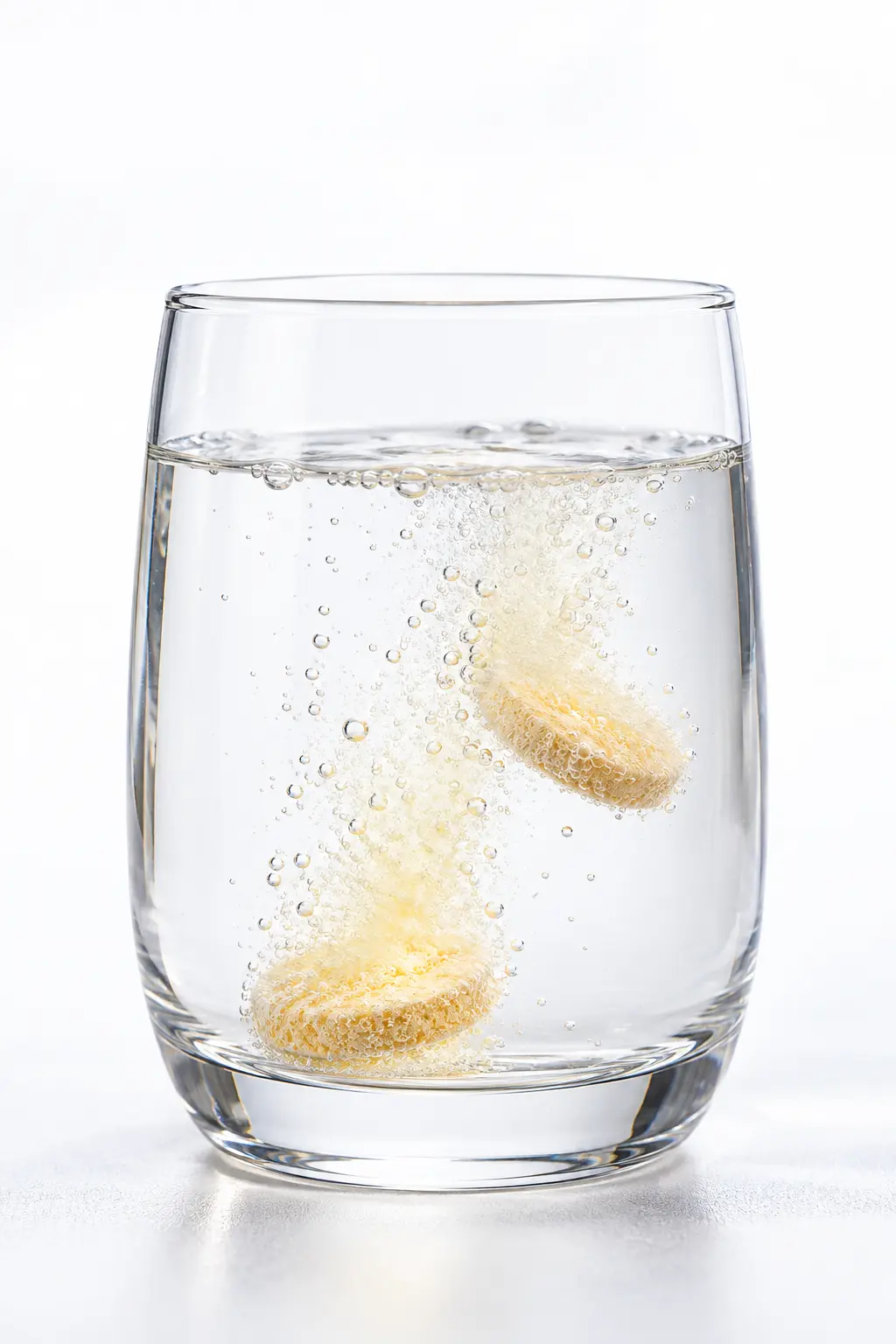
Beverages, effervescent tablets and bottled supplements illustrate end-use formats. These images show product presentation rather than emulsification, homogenization or spray-drying equipment.

06 / APPLICATION LAB & QUALITY CONTROL
Vitamin Microencapsulation Performance Testing
A powder should not be approved only because it looks dry.The emulsion, spray-drying behavior and finished powder should be evaluated as one integrated system.
Emulsion Stability
Measure phase separation during the expected feed-holding period.
Droplet Size
Track emulsion droplet-size distribution before spray drying.
Feed Viscosity
Confirm pumpable, atomizable viscosity at the actual feed-solids level.
Powder Moisture
Control residual moisture against storage stability and powder flow.
Surface Oil
Quantify unencapsulated or poorly protected oil at the powder surface.
Encapsulation Efficiency
Determine actual core retention instead of inferring performance from powder appearance.
Potency Retention
Measure the vitamin before processing, after drying and through storage.
Oxidative Stability
Monitor oxidation-related quality indicators where relevant to the vitamin oil.
Cold-Water Dispersion
Measure dispersion and reconstitution behavior in the intended application medium.
Bulk Density
Control packing density for commercial filling and downstream blending.
Flowability
Evaluate caking, bridging and powder handling under realistic humidity.
Storage Stability
Track potency, moisture, odor and powder condition through the target shelf life.
07 / DIAGNOSE THE PROCESS FAILURE
Vitamin Microencapsulation Troubleshooting
When comparing wall systems, keep the vitamin oil, feed solids, homogenization history, dryer conditions and analytical method constant.
| Observation | Likely Factors | Controlled Next Trial |
|---|---|---|
| Oil separates before spray drying | Insufficient emulsifier function, coarse droplets, poor hydration or excessive core loading. | Screen Tianjiang OSA starch at controlled wall-to-core ratio and homogenization conditions. |
| Feed viscosity is too high | Excess wall solids, inappropriate maltodextrin balance or unsuitable starch grade. | Adjust OSA starch / maltodextrin ratio before reducing total solids. |
| Powder has high surface oil | Weak emulsion, coarse droplets, insufficient wall material or poor drying conditions. | Improve emulsion structure before simply increasing spray-dryer temperature. |
| Powder sticks inside dryer | Outlet condition, wall composition, feed solids or product glass transition may be unfavorable. | Review wall composition and dryer mass balance together. |
| Powder cakes during storage | Excess moisture, hygroscopicity, high storage humidity or inadequate anti-caking system. | Check moisture, water activity, packaging and anti-caking agent. |
| Vitamin potency falls rapidly | Oxidation, light, heat, surface oil or insufficient wall protection. | Measure potency and surface oil through an accelerated stability study. |
| Powder does not disperse well | Particle agglomeration, surface hydrophobicity or unsuitable wall balance. | Optimize OSA/MD ratio and downstream powder finishing. |
| Encapsulation efficiency varies | Raw-material variability, emulsion instability, droplet-size drift or atomization changes. | Define emulsion QC limits before spray-dryer release. |
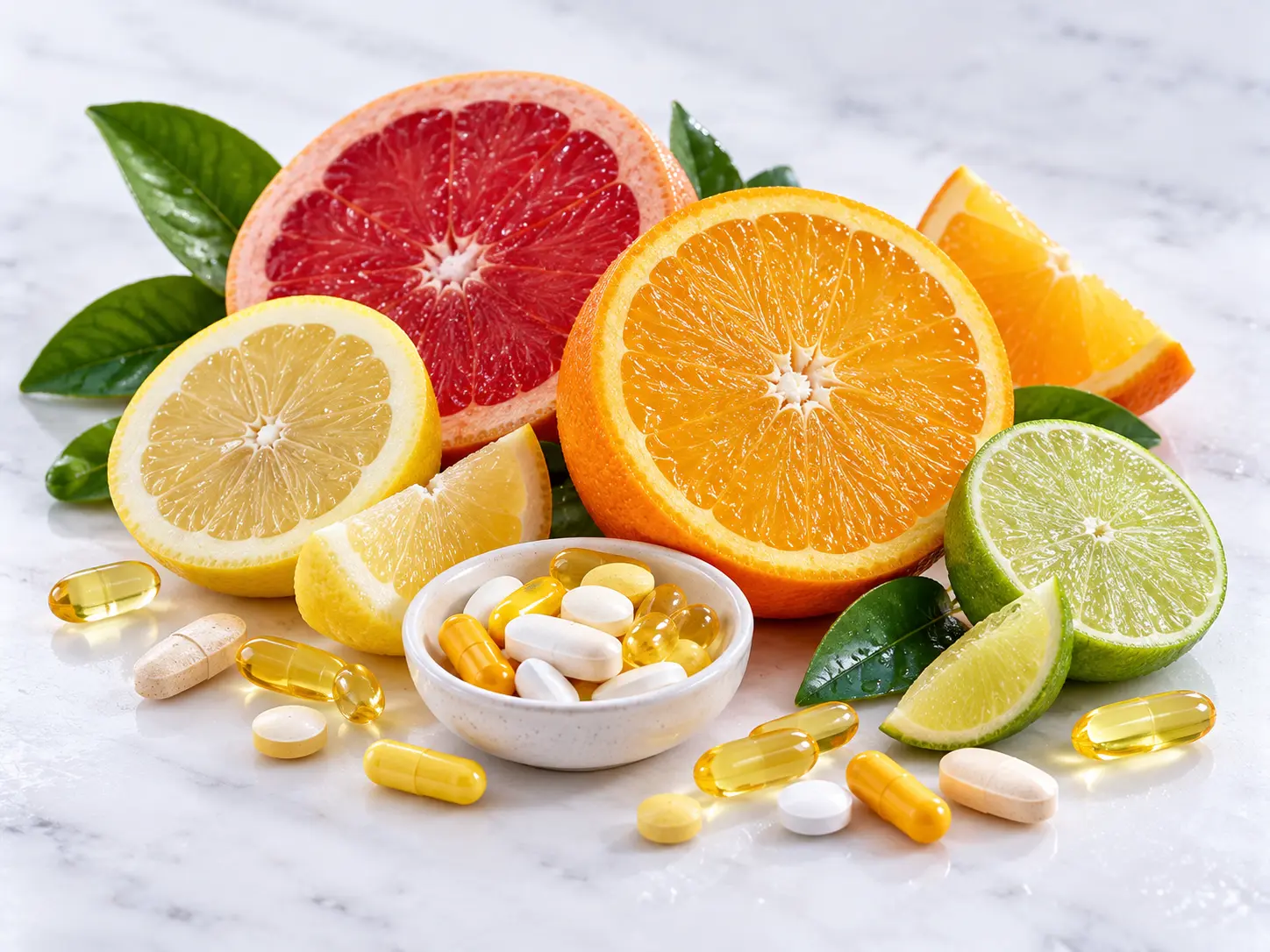
Citrus & Supplement Presentation
Define the intended product format and ingredient presentation when preparing your development brief.
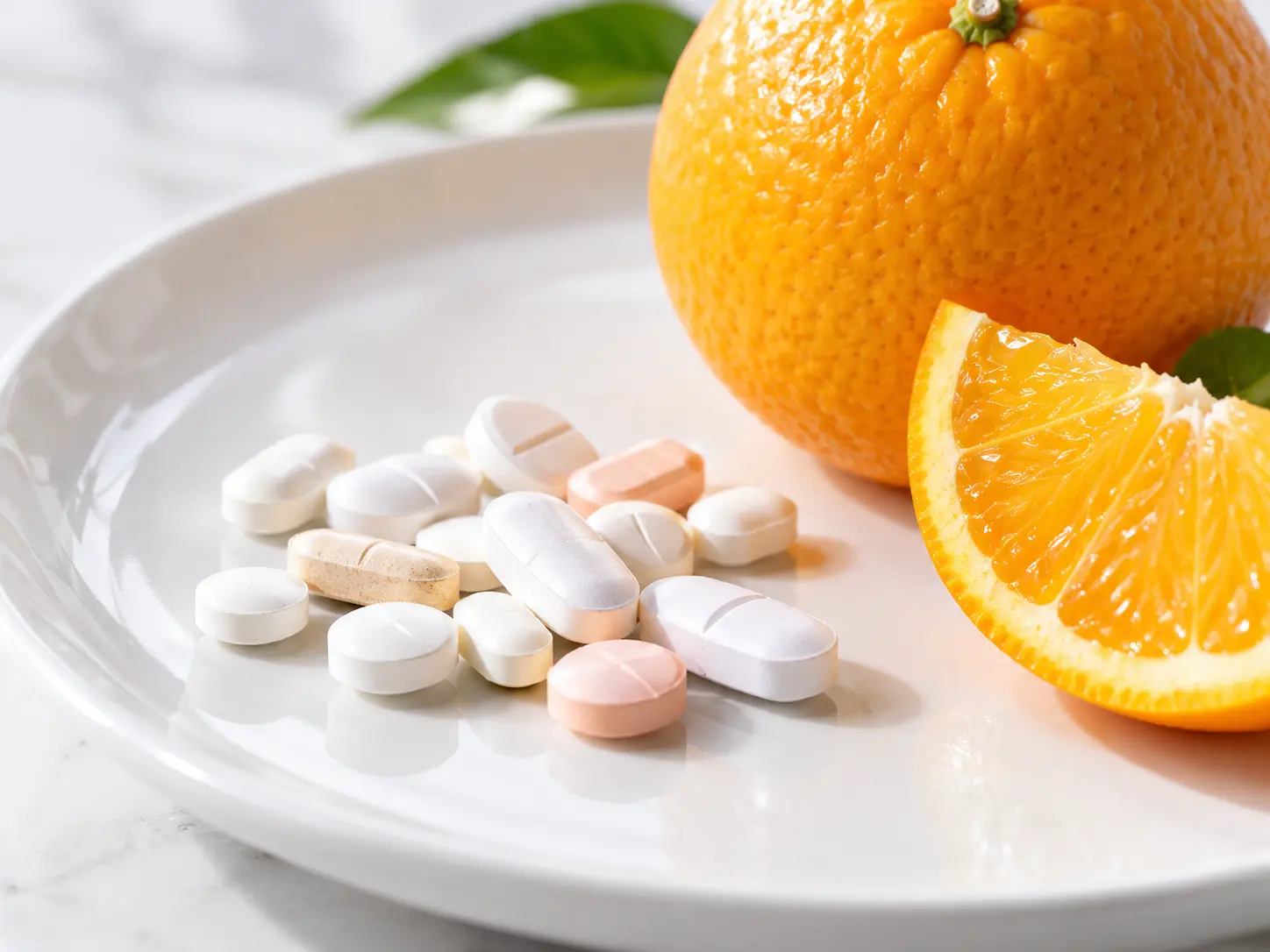
Powder & Tablet Formats
Share your target application, active specification and handling requirements for formulation discussions.
08 / SELECT BY ACTIVE & PROCESS
How to Select OSA Modified Starch for Vitamin Microencapsulation
The appropriate Tianjiang grade depends on vitamin type, core-oil chemistry, active loading, total feed solids, homogenization equipment, dryer design, powder application and target shelf life.
High-Oil-Loading Grade
For concentrated vitamin E or other high-core oil systems.
Low-Viscosity Grade
For manufacturers targeting higher spray-dryer feed solids.
Emulsion-Stability Grade
For systems experiencing creaming, oil separation or poor feed stability.
Cold-Water-Dispersible System
For vitamin powders intended for beverages, nutrition products or premix dispersion.
OSA + Maltodextrin System
For balancing emulsification, dry solids, viscosity and formulation economics.
Custom Wall System
For specific potency, powder morphology, oxidation or downstream application targets.
09 / TECHNICAL QUESTIONS
Vitamin Microencapsulation FAQs
Technical guidance for vitamin manufacturers, premix producers, spray-drying plants, food ingredient companies, R&D teams and procurement professionals.
Why Is OSA Modified Starch Used for Vitamin Microencapsulation?
Suitable OSA modified starch has both hydrophilic and hydrophobic functionality, which allows it to help stabilize oil-in-water emulsions and form a carbohydrate wall during spray drying.
Which Vitamins Are Most Suitable for This System?
The page primarily targets oil-soluble or oil-carried fat-soluble vitamins, including vitamin A, vitamin D3 and vitamin E.Water-soluble vitamins may require a different encapsulation strategy.
Why Combine OSA Starch with Maltodextrin?
OSA starch provides emulsifying and film-forming functionality, while maltodextrin can help adjust total solids, viscosity, drying behavior and formulation economics.
Can Tianjiang OSA Starch Be Used for High Vitamin Oil Loading?
A high-oil-loading system can be developed, but the practical maximum depends on the oil, OSA starch grade, wall-to-core ratio, feed solids, homogenization and spray-dryer conditions.
What Is the Best Spray-Drying Temperature?
There is no universal temperature.The correct inlet and outlet conditions depend on vitamin heat sensitivity, feed composition, droplet size, dryer configuration and required powder moisture.
How Should Vitamin Microencapsulation Efficiency Be Measured?
It should be determined analytically from the actual retained core and relevant surface-oil or extraction measurements, rather than estimated only from formulation percentages.
Can the Formula Calculator Predict Final Potency?
The calculator provides a theoretical potency based on formulation mass balance.Actual potency retention must be measured after homogenization, spray drying and storage.
What Information Should I Send Tianjiang?
Provide the vitamin type, oil form, core potency, target finished-powder potency, target active loading, feed solids, current wall system, homogenizer, spray dryer, powder application and stability requirement.
10 / TALK TO TIANJIANG
Develop Your Next Vitamin Microencapsulation Powder
Send Tianjiang your vitamin oil specification, target potency, current wall materials and spray-drying conditions.Our application team can help screen an OSA modified starch for emulsion stability, active loading, spray-drying performance and powder quality.