
Global Sauce Formulations
Explore sauce families, ingredient frameworks and texture systems from around the world. Move from a regional sauce name to the formulation questions that matter for your product.
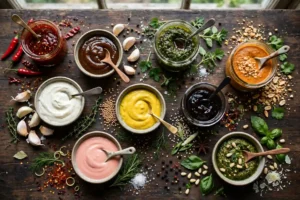
Use the Directory as a Development Starting Point
Explore the range of sauce styles, then define a balanced formulation and process for your own product.
Read the measurement basis
Ingredient ranges are indicative design references, not tested Tianjiang specifications. Values are % by weight unless stated as parts, ratios, volumes or a compound ingredient.
Balance each selected recipe
Ranges are independent alternatives, not a recipe that automatically totals 100%. Choose values, account for all ingredients and process losses, and check final yield. Partial examples are marked.
Match texture to the product
The “Starch-focused” label identifies examples for exploring starch use. It does not mean a traditional sauce requires starch or that a particular grade is guaranteed to perform.
Explore Sauces by Region & Cuisine
Browse regional names and related styles. Some names recur across regions; grouped variants are kept together. Directory entries are not individual validated recipes.
China20 directory entries
- Oyster sauce / 蚝油
- Hoisin / 海鲜酱
- Char siu / 叉烧酱
- Black bean / 豆豉酱
- Pixian doubanjiang / 郫县豆瓣酱
- Chili crisp / 辣椒脆
- XO sauce
- Shacha / 沙茶酱
- Tianmianjiang / 甜面酱
- Plum sauce / 梅子酱
- Duck sauce / 鸭子酱
- Ginger–scallion oil / 姜葱油
- Sichuan red-oil / 四川红油
- Mala / 麻辣酱
- Dan-dan / 担担酱
- Sesame paste / 芝麻酱
- Black-vinegar dip / 黑醋蘸汁
- Master-stock jus / 卤汁
- White-cut chicken dipping sauce / 白切鸡蘸料
- Hot mustard / 辣芥末
Japan16 directory entries
- Ponzu
- Teriyaki
- Yakitori tare
- Tonkatsu
- Okonomiyaki
- Yakisoba
- Mentsuyu / tsuyu
- Goma-dare
- Dengaku miso
- Unagi tare
- Warishita
- Nikiri
- Yuzu-kosho
- Wasabi mayo
- Mentaiko mayo
- Karashi
Korea10 directory entries
- Gochujang / cho-gochujang
- Ssamjang
- Doenjang dip
- Yangnyeom-ganjang
- Yangnyeom-chicken
- Bibimbap gochujang
- Tteokbokki
- Bulgogi
- Galbi marinade
- Japchae sauce
Thailand8 directory entries
- Nam jim gai
- Thai sriracha
- Nam prik phao / Thai chili jam
- Nam jim seafood
- Nam jim jaew
- Suki sauce
- Nam chim kai
- Pla-ra seasoning sauce
Vietnam7 directory entries
- Nước chấm
- Nước mắm chấm
- Mắm nêm
- Mắm tôm
- Tương ớt
- Peanut hoisin dipping sauce
- Nước màu
Indonesia10 directory entries
- Sambal oelek
- Sambal terasi
- Sambal ijo
- Sambal matah
- Kecap manis
- Sambal kecap
- Bumbu kacang
- Dabu-dabu
- Colo-colo
- Rica-rica
Malaysia & Singapore8 directory entries
- Sambal belacan
- Sambal nyonya
- Kuah kacang
- Percik
- Asam pedas
- Rojak sauce
- Laksa
- Malaysian chili
Philippines8 directory entries
- Banana ketchup
- Sawsawan
- Toyomansi
- Lechon liver sauce
- Kare-kare
- Adobo
- Sinamak
- Escabeche
India12 directory entries
- Imli chutney-sauce
- Hari chutney
- Coconut chutney
- Garlic chutney
- Mango chutney sauce
- Raita
- Makhani
- Tikka masala
- Korma
- Bhuna masala
- Rogan josh
- Jalfrezi / Madras / Vindaloo / Pathia / Dhansak
Pakistan, Sri Lanka, Nepal & Bangladesh9 directory entries
- Karahi masala
- Nihari
- Chaat
- Aloo-bukhara chutney
- Seeni sambol
- Lunu miris
- Kiri hodi
- Nepali tomato sesame achar
- Kasundi
Middle East & Maghreb12 directory entries
- Tahini tarator
- Toum
- Shatta
- Zhug / schug
- Muhammara
- Harissa
- Pomegranate glaze
- Amba
- cacık
- Shawarma white sauce
- Ezme
- Fesenjān
France: Mother Sauces & Derivatives45 directory entries
- Béchamel
- Mornay
- Soubise
- Crème
- Nantua
- Écossaise
- Velouté
- Allemande
- Suprême
- Poulette
- Cardinal
- Bercy
- Normande
- Mushroom / herb velouté derivatives
- Espagnole
- Demi-glace
- Bordelaise
- Lyonnaise
- Chasseur
- Poivrade
- Bigarade
- Charcutière
- Robert
- Madeira
- Périgord
- Tomate
- Portugaise
- Milanaise
- Provençale
- Napolitaine
- Hollandaise
- Béarnaise
- Choron
- Foyot / Valois
- Paloise
- Mousseline
- Maltaise
- Noisette
- Bavaroise
- Mayonnaise
- Rémoulade
- Tartare
- Gribiche
- Andalouse
- Samouraï
Italy11 directory entries
- Marinara
- Arrabbiata
- Puttanesca
- Amatriciana
- Ragù Bolognese
- Pesto Genovese
- Pesto rosso
- Salsa verde
- Bagna càuda
- Agrodolce
- Salmoriglio
Spain9 directory entries
- Romesco
- Allioli
- Salsa brava
- Salsa verde
- Mojo rojo
- Mojo verde
- Salbitxada
- Sofrito
- Escabeche
Britain & Ireland11 directory entries
- Brown sauce
- Worcestershire
- Bread sauce
- Horseradish sauce
- Mint sauce
- Apple sauce
- Cumberland
- Marie Rose
- Parsley sauce
- Cheese sauce
- Custard
Germany & Central Europe7 directory entries
- Grüne Soße
- Senfsoße
- Meerrettichsoße
- Jägersoße
- Rahmsoße
- Currywurst
- Schaschlik sauce
Eastern Europe, Caucasus, Balkans & Greece13 directory entries
- Adjika
- Tkemali
- Satsebeli
- Bazhe
- Sos tatarski
- Chrain
- Ajvar
- Lutenica
- Zacuscă
- Tzatziki
- Avgolemono
- Ladolemono
- Skordalia
North America22 directory entries
- Tomato ketchup
- Yellow mustard
- Kansas City BBQ
- Memphis BBQ
- Carolina Gold mustard BBQ
- Carolina vinegar BBQ
- Alabama white sauce
- Texas mop
- Buffalo wing
- Ranch
- Blue-cheese
- Thousand Island
- Fry sauce
- Comeback sauce
- Rémoulade
- Cocktail sauce
- Honey mustard
- Nacho cheese
- Country gravy
- Red-eye gravy
- Cranberry sauce
- Maple / bourbon glaze
Latin America & Caribbean28 directory entries
- Salsa roja
- Salsa verde
- Salsa chipotle
- Salsa habanero
- Salsa macha
- Mole poblano
- Mole negro
- Coloradito
- Mole verde
- Almendrado mole
- Pipián rojo / verde
- Manchamantel
- Enchilada roja / verde
- Chamoy
- Chimichurri
- Salsa criolla
- Llajwa
- Pebre
- Ají criollo
- Hogao
- Guasacaca
- Mojo
- Jerk
- Escovitch
- Pikliz / epis
- Sofrito / recaíto
- Bajan pepper
- Shado-beni
Africa11 directory entries
- Peri-peri / piri-piri
- Shito
- Obe ata
- Groundnut / maafé
- Chermoula
- Harissa
- Dersa
- Berbere wot
- Shiro wot
- Pili pili
- Chakalaka
Oceania & Pacific Islands15 directory entries
- Australian tomato sauce
- Australian BBQ sauce
- Diane
- Pepper sauce
- Mushroom sauce
- Garlic butter sauce
- Seafood Marie Rose sauce
- Mint sauce
- Hawaiian soy poke sauce
- Hawaiian teriyaki
- Chili-pepper water
- Guava BBQ glaze
- Lilikoi sauce
- Samoan palusami-style coconut sauce
- Fijian kokoda coconut-citrus dressing
No directory names match this keyword. Check the formulation results below or try a broader term.
Sauce Formulation Frameworks by Family
Compare ingredients, ratios and development considerations. Each row describes a representative approach; grouped variants should be developed as separate recipes.
Tomato-Based Sauces
Tomato solids; optional starch or gum system. E1422 / E1442 candidates where process-resistant body is needed. Compare native or functional starch alternatives in the actual recipe.
| Sauce / variant | Ingredient framework & indicative ranges | Process & texture considerations |
|---|---|---|
| Tomato ketchupStarch-focused | Tomato paste (28–36 °Brix) 25–41; water 38–41; sugar 9–20; vinegar (10% acidity) 5–8; salt 1.5–3.5; aromatics 0.5–1.5; starch 0–4.5. | Compare tomato solids, squeeze flow, gloss and separation. Treat the ingredient ranges as alternatives to balance, not one finished recipe. |
| Curry ketchup / Currywurst sauceStarch-focused | Ketchup base with curry powder 1–3 and additional sugar or honey 2–5; Worcestershire-style seasoning as required. | Rebalance the ketchup base after adding spices and sweeteners. |
| Marinara / sugoStarch-focused | Crushed tomato 70–85; water or tomato juice 5–15; olive oil 3–8; onion 3–6; garlic 0.5–1.5; salt 0.8–1.5; sugar 0–2; herbs 0.2–1. | Evaluate reduction, tomato particles and serving consistency. Added starch is optional. |
| Arrabbiata / Puttanesca / AmatricianaStarch-focused | Marinara-style base. Variant additions: chili 0.3–1; olives 3–5, capers 1–3 and anchovy 0.5–1.5; or cured pork 8–15 with pecorino. | These are separate variants. Meat and fish additions change the complete product and process requirements. |
| Ragù BologneseStarch-focused | Tomato 25–40; beef or pork 25–35; soffritto 10–15; milk 5–10; wine 3–8; salt 1–1.8; stock or water to balance. | Evaluate sauce and meat together after cooking, storage and reheating. |
| British-style brown sauceStarch-focused | Water 23–28; apple purée 19.6–22.1; malt vinegar 18; molasses 9; sugar 9; tomato purée 7.8–13.8; apple concentrate about 2; cooking starch 2.5; spices 1.3; caramel color 0.17. | The alternative purée levels require a corresponding water balance. Confirm vinegar strength and final texture. |
| Australian tomato sauceStarch-focused | Tomato purée or diluted paste; sugar 15–25; vinegar 5–10; salt 1.5–2.5; spices below 1; optional starch 1–3. | Define tomato concentration separately. Compare a pourable table-sauce target rather than assuming ketchup consistency. |
Soy & Fermented Bases
Fermented solids, dissolved solids or optional starch. Thin soy and fish sauces may need no thickener. Composite sauces may use a starch system matched to their cooking conditions.
| Sauce / variant | Ingredient framework & indicative ranges | Process & texture considerations |
|---|---|---|
| Soy sauce / shoyu / ganjang | Fermented soybean and wheat base. Soybean:wheat may be about 1:0.8–1:1 by weight. Styles vary widely in salt and solids. | Use the specifications of the selected finished soy sauce; this is not a fermentation production protocol. |
| Tamari / light soy / dark soy | Tamari uses a soybean-rich base; dark styles may include caramel or molasses additions around 2–5. | Record the actual ingredient declaration, salt and solids. Dark color does not define viscosity or salt content. |
| Fish sauce / nước mắm / nam pla / patis | Fermented fish and salt form the base. Select the finished ingredient by flavor, salt and nitrogen specification. | Use a controlled finished ingredient. No fermentation schedule or storage guarantee is implied. |
| Oyster sauce / 蚝油Starch-focused | Water 40–55; oyster extract 10–30 depending on strength; sugar 10–20; salt 8–12; soy sauce 0–10; caramel 0.5–2; starch 3–6. | Extract concentration matters. Include salt contributed by other ingredients and evaluate pouring, gloss and coating. |
| Hoisin / 海鲜酱Starch-focused | Fermented bean paste 25–40; water 20–35; sugar 15–25; salt 3–6; vinegar 2–5; garlic, chili or sesame 1–4; starch 2–5. | Bean solids and any added starch contribute body. Measure the finished recipe rather than inferring it from additions. |
| Kecap manis | Soy sauce base 40–60; palm sugar 35–50; galangal, star anise or garlic 0.5–2; balance remaining ingredients. | Record salt already present in the soy base. Compare sweetness, stringiness and pouring behavior. |
| Black bean sauce / Tianmianjiang / ShachaStarch-focused | Bean or flour-bean base 30–50; water 20–40; oil 5–15; sugar 5–15; optional starch 0–4. Shacha uses a distinct seafood, garlic and chili base. | These are separate sauce families, not interchangeable recipes. Match the base and oil level to the selected style. |
| Doubanjiang / Doenjang / Miso bases | Fermented paste, water or stock, seasoning and optional oil. Dilution depends on the paste's salt and solids. | Record supplied paste specifications. Evaluate the prepared sauce rather than assigning one percentage to all fermented pastes. |
| Worcestershire-style sauce | Vinegar, water, molasses or other sweetener, salt, tamarind and spices; anchovy may be included. | Specify vinegar acidity and flavor concentration. Thin flow is usually the target; starch is not automatically required. |
Chili & Hot Sauces
Pepper solids, oil or optional suspension system. Some sweet chili sauces use starch; other hot sauces rely on pepper solids or a gum. Keep oil-based chili products distinct.
| Sauce / variant | Ingredient framework & indicative ranges | Process & texture considerations |
|---|---|---|
| Louisiana-style thin hot sauce | Fermented pepper base; vinegar 30–50; water and seasoning to balance; finished salt design range 2–5. | Confirm the pepper base and vinegar specifications. Evaluate pourability and separation; preservation needs its own validation. |
| Vinegar-based hot sauce | Chili 40–60; vinegar 20–40; salt 1–3; garlic or spices 1–5; sugar 0–5; optional xanthan 0.1–0.3. | Vinegar means an ingredient of declared acidity, not pure acetic acid. Compare flow before adding more thickener. |
| Fermented chili sauce | Controlled fermented pepper ingredient, water or brine, vinegar where required, and seasoning. | Record measured pH, salt and fermentation controls from the actual ingredient; no general fermentation time is specified here. |
| Sriracha | Chili 60–70; vinegar 10–15; garlic 5–10; sugar 2–5; salt 2–5; balance according to the intended style. | Thai and other commercial styles differ. Evaluate chili particle size and squeeze flow; the range is not a brand formula. |
| Thai sweet chili / Nam jim gaiStarch-focused | Water 30–45; sugar 25–40; fresh or prepared red chili 10–20; vinegar 4–8; garlic 2–5; salt 1.5–3; starch 2–4; optional gum. | Specify vinegar strength. Compare chili suspension, clarity and coating after the complete process. |
| Sambal oelek / terasi / ijo | Chili 70–90; salt 3–7; vinegar or lime 0–5. Terasi variation: shrimp paste 3–8. Ijo uses green chili, green tomato, shallot and oil. | Treat each variation separately and retain the desired coarse texture. |
| Sambal matah | Shallot 30–40; lemongrass 15–25; chili 10–20; coconut or vegetable oil 15–25; lime, salt and optional shrimp paste. | A fresh chopped condiment. Assess freshness, particle size and oil distribution rather than a starch-thickened texture. |
| Harissa | Rehydrated dried red chili 50–65; olive oil 10–20; garlic 5–10; coriander, caraway or cumin 2–5; salt 2–4; lemon or vinegar 0–3. | Record whether chili weights are hydrated or dry. Assess paste consistency and oil separation. |
| Peri-peri / piri-piri | Bird's-eye chili 15–30; oil 15–30; lemon or vinegar 10–20; onion and garlic 10–20; salt 1.5–3; herbs and water to balance. | Determine whether the target is a marinade, pourable sauce or creamy emulsion. |
| Shito | Oil 35–50; onion 15–25; dried chili 8–15; ginger and garlic 5–10; dried fish or shrimp 5–15; tomato paste 0–10; salt 2–4. | Control ingredient moisture and frying conditions. Oil content alone does not establish storage safety. |
| Salsa macha | Oil 45–60; dried chili 15–25; nuts or seeds 10–20; garlic 5–10; salt 1–3; optional vinegar. | Assess oil distribution, crispness and solids. Do not assume an oil-based product has low water activity. |
| Chili crisp / 油辣椒 | Oil 50–65; chili flakes 15–25; fried shallot, garlic, peanuts, sesame or other inclusions 10–20; salt and seasonings 2–5. | Control the moisture of inclusions and evaluate crispness. Added starch is generally not the design focus. |
| Gochujang-based sauce | Gochujang paste 40–70 with vinegar, sweetener, sesame and soy sauce as needed. | Use the actual paste specification. Cho-gochujang, bibimbap sauce and cooking sauces require different balances. |
| Bajan pepper / habanero / adobo styles | Chili 30–60; onion 10–25; salt 2–4; sugar 0–8; vinegar and other ingredients to balance. Bajan styles may include mustard; adobo uses dried chili, tomato and spices. | Build separate variants; pepper variety and prepared chili concentration are important inputs. |
Emulsified & Oil-Based Sauces
Emulsion structure and optional body-building system. Consider emulsification separately from thickening. Cold-process grades or E1450 may be candidates for specific designs.
| Sauce / variant | Ingredient framework & indicative ranges | Process & texture considerations |
|---|---|---|
| Full-fat mayonnaise | Oil 65–80; egg yolk 4–8; vinegar or lemon 3–7; salt 1–1.8; sugar 0.5–2; mustard 0.3–1; water to balance. | These are design ranges, not a legal definition. Confirm emulsification, ingredient suitability and the finished product requirements. |
| Reduced-fat mayonnaiseStarch-focused | Partial example: water 59.76; soybean oil 21; whole egg 1.47; sugar 4.65; salt 1.9; vinegar 5; starch 3.91; guar 0.5; CMC 0.5; xanthan 0.2; mustard 0.5. Listed total: 99.39. | The partial example must be completed and evaluated. Alternative systems must be designed separately, not combined at their maximum gum levels. |
| Salad cream / spoonable dressingStarch-focused | Example components: prepared starch paste 30; water 26.4; oil about 31.7; egg yolk solids 7; vinegar 3; xanthan 0.5; salt 0.9. Listed total: 99.5. | Starch paste is a compound ingredient, not dry starch. Define its solids and the vinegar strength before balancing the formulation. |
| Aioli / allioli / rouille | Mayonnaise-style base with garlic 2–6; traditional allioli can use garlic and oil without egg. Rouille adds chili and saffron, sometimes bread or potato. | Keep egg-based and egg-free versions distinct. Evaluate emulsification and garlic texture. |
| ToumStarch-focused | Oil 60–75; garlic 10–20; lemon juice 5–10; cold water 5–15; salt 1–2. | Develop the emulsion using a defined addition sequence. High oil content is not a storage guarantee. |
| Tartar / rémoulade / ranch & mayo derivativesStarch-focused | Mayonnaise base commonly 60–90 in design examples. Tartar additions 8–20; chili additions 3–8; tomato ketchup in Marie Rose 15–35. Ranch includes buttermilk or sour cream 20–40. Fry sauce mayo:ketchup about 2:1–1:1 parts. | Each variation is a separate recipe. Rebalance water, acid and solids after adding inclusions or dairy. |
| Hollandaise / Béarnaise familyStarch-focused | Clarified butter 55–70; egg yolk 12–20; water or wine-vinegar reduction 8–15; lemon 1–3; salt 0.5–1. | Evaluate a controlled warm emulsion. Béarnaise uses a tarragon-shallot reduction; serving and holding conditions require separate controls. |
| Vinaigrette / ladolemonoStarch-focused | Classic oil:acid culinary ratio about 3:1. Illustrative design ranges: oil 65–75; vinegar or lemon 20–28; mustard 1–3; herbs and seasoning. | Ratios and percentage ranges are alternative expressions. Define whether a temporary or persistent emulsion is desired. |
Dairy, Cream & Cheese Sauces
Dairy proteins, fat and optional starch / gum. E1442 or E1422 may be candidates; compare smoothness and stability with the actual dairy ingredients and process.
| Sauce / variant | Ingredient framework & indicative ranges | Process & texture considerations |
|---|---|---|
| Processed cheese / nacho cheese sauceStarch-focused | Cheese-rich direction: cheese 25–32 with water or whey, emulsifying salts and other ingredients. Lower-cheese direction: water 70–85; cheddar 5–18; modified waxy starch 4–7; vegetable fat 3–10; carrageenan 0.03–0.08; gum blend 0.2–0.4. | These are different systems. Select and balance one approach, then evaluate protein, fat and texture ingredients together. |
| Mornay / Alfredo-style sauceStarch-focused | Mornay: béchamel base with cheese 10–25. Cream-based Alfredo-style: cream 50–65; butter 10–20; Parmesan 15–25; garlic and seasoning. | Describe the intended style. Cheese solids and emulsification affect texture; compare at serving temperature. |
| Cream / white wine / mushroom cream sauceStarch-focused | Partial model: dairy blend 87.14; margarine 4.23; modified corn starch 4.69; xanthan 0.057; remaining ingredients to balance. | Define the dairy blend and seasoning. The listed components are not a complete formula or a prescribed cooking schedule. |
| Raita / tzatziki / cacık / haydariStarch-focused | Yogurt 75–90; cucumber or herbs 5–20; salt 0.8–1.5. Tzatziki may include garlic 1–3 and olive oil 2–5. | Account for water released by cucumber and use the actual yogurt solids. Check appearance during intended refrigerated storage. |
| Sour cream / smetana sauceStarch-focused | Sour cream 60–85; stock or milk to balance; horseradish, mustard or herbs. A cooked version may include flour or starch 1–3. | Evaluate the specific dairy base and whether the sauce is served cold or heated. |
Roux & Flour-Thickened Sauces
Flour roux, stock gelatin and reduction. Roux contributes flavor as well as body. A starch substitution changes the formulation and must be evaluated separately.
| Sauce / variant | Ingredient framework & indicative ranges | Process & texture considerations |
|---|---|---|
| Roux | Butter:flour about 1:1 by weight; white, blond or brown cooking styles. | Browning changes flavor and thickening behavior. Roux is an intermediate ingredient, not a finished sauce. |
| BéchamelStarch-focused | Medium-body example: butter 4.5; flour 4.5; milk 91 before seasoning. Culinary roux:milk ratios can range from about 1:16 to 1:6–1:8. | Reduce the base proportion to allow seasoning. Evaluate cooking completeness and final serving consistency. |
| Mornay / Soubise / Crème / NantuaStarch-focused | Béchamel derivatives: cheese 10–20; onion purée 20–35; cream 10–25; or shellfish butter and cream, depending on the variant. | These additions describe separate variants, not one combined formula. |
| Velouté | White or blond roux with light veal, chicken or fish stock; a culinary starting ratio is around 1 part roux to 8 parts stock. | Specify stock strength and reduce or dilute to the intended body. |
| Espagnole / demi-glace | Brown roux, brown stock, tomato and mirepoix. Demi-glace approach: equal parts espagnole and brown stock, then reduce. | Account for evaporation and stock gelatin rather than comparing input percentages alone. |
| Bordelaise / Lyonnaise / Chasseur / Robert | Demi-glace or espagnole base 70–90; wine reduction, shallot, onion, mushrooms or mustard additions 5–20, depending on the variant. | Use a separate formulation for each derivative and record reduction yield. |
| Sauce Tomate | Tomato, mirepoix, stock and optional pork; some versions use a small roux addition. | Differentiate a tomato mother-sauce style from a simple tomato-herb sauce. |
Pourable Sauces, Gravies & Jus
Starch, flour, reduction or stock gelatin. Choose the thickening route for the desired clarity, flow and reheating behavior. Evaluate E1422 / E1442 where appropriate.
| Sauce / variant | Ingredient framework & indicative ranges | Process & texture considerations |
|---|---|---|
| General cooking / stir-fry sauceStarch-focused | Water or stock 55–75; flavor base 10–25; sugar 3–12; salt 1–3; oil 0–8; starch 2–5; gum 0.05–0.3. | Check salt contributed by the flavor base. Compare the sauce before and after actual cooking use. |
| Brown / onion gravyStarch-focused | Stock or water 75–88; fat 3–8; flour 3–6 OR starch 2–4; salt 1–2; optional onion 0–15. Dry-mix example: starch 20; flour 10; cellulose gum 3; xanthan 0.5; maltodextrin 33; flavor/color 21; fat 12 (partial total 99.5). | Dry-mix percentages refer to powder, not prepared gravy. Define reconstitution and complete the formulation before testing. |
| Country / sausage gravy | Milk 70–80; sausage and associated fat 15–25; flour 4–7; pepper and salt. | Account for meat fat and evaporation. Assess serving and reheating behavior. |
| Jus / demi-jus / pan jusStarch-focused | Reduced stock with no added thickener, or a jus lié using starch 0.5–1.5; butter finishing can be 5–15. | Starch and butter are optional approaches. Record reduction yield and serving temperature. |
| Ankake / starch slurry sauceStarch-focused | Stock and soy seasoning with potato or corn starch 1–3, dispersed before addition; optional sesame oil finish. | Evaluate slurry dispersion, heating, clarity and texture after standing. |
Fruit-Based Savory Sauces
Fruit solids, pectin or optional starch. Assess fruit acidity, solids, particle structure and the desired flow before choosing a texture system.
| Sauce / variant | Ingredient framework & indicative ranges | Process & texture considerations |
|---|---|---|
| Banana ketchupStarch-focused | Partial example: water 55; banana 15; sugar 14; vinegar 10.34; garlic 1.5; salt 1.3; modified starch 1; CMC 0.70; onion 0.5; chili 0.3; bell pepper 0.3; pepper 0.03; allspice 0.03. Listed total: 100. | Confirm banana ripeness, vinegar acidity and raw material specifications. A balanced mass total does not validate performance or preservation. |
| Tamarind / imli sauce | Tamarind extract 25–40; water 25–40; sugar or jaggery 25–40; salt 1–2; cumin, chili or ginger 1–3. | Specify extract strength; compare sweet-sour balance and flow. |
| Plum sauce / tkemali / aloo-bukharaStarch-focused | Sweet plum-sauce direction: plum purée 35–60; sugar 15–30; vinegar 5–12; salt 1–3; aromatics 1–4; optional starch 0–3. | Tkemali is a distinct sour-plum and herb style; do not automatically apply the sweet plum-sauce sugar range to it. |
| Mango chutney sauce | Mango 35–55; sugar 25–40; vinegar 8–15; onion, ginger, chili and spices 3–8; salt 1–2. | Define particle size, fruit maturity and whether the target is a chunky relish or pourable sauce. |
| Apple / cranberry / Cumberland sauce | Apple: purée 80–95 with sugar 0–10. Cranberry: berries 40–55 and sugar 35–50. Cumberland: redcurrant jelly 40–55 with port, citrus, mustard and ginger. | Three separate systems. Record fruit or jelly solids and assess the intended serving texture. |
| Duck sauce / sweet-and-sour sauceStarch-focused | Water 35–50; sugar 25–40; vinegar 8–15; apricot, peach or plum purée 5–20 for duck sauce; pineapple and tomato for sweet-and-sour; salt 1–2; starch 2–4. | Specify the fruit base and vinegar acidity. Compare gloss and coating after cooking. |
| Amba / chamoy | Amba: pickled mango base 50–70 with fenugreek 2–5 and spices. Chamoy: preserved fruit or hibiscus base, sugar 15–30, chili 3–8, lime and salt 3–6. | These are separate styles; account for acid and salt already present in the prepared base. |
Nut, Seed & Coconut Sauces
Nut / seed solids, oil and hydration. A thick nut or seed system does not automatically need added starch. Assess graininess and separation first.
| Sauce / variant | Ingredient framework & indicative ranges | Process & texture considerations |
|---|---|---|
| Satay / bumbu kacang / kuah kacangStarch-focused | Coconut milk 50–65; peanuts or peanut butter 15–25; palm sugar 3–8; curry paste 3–6 for a Thai-style variation; fish or soy sauce 2–4; tamarind 1–3; water to balance. | Not all regional satay sauces use coconut milk or curry paste. Select the intended style and record nut particle size. |
| Tahini tarator | Tahini 35–50; water 35–50; lemon juice 8–15; garlic 1–3; salt 1–1.5. | Record addition sequence and evaluate the final hydrated sesame system. |
| Muhammara | Roasted red pepper 35–50; walnuts 20–30; breadcrumbs 5–12; olive oil 8–15; pomegranate molasses 4–8; chili 1–3; lemon and cumin. | Account for pepper moisture and molasses concentration. Target a coarse or smooth dip deliberately. |
| Romesco / salbitxada | Roasted tomato and prepared pepper 35–50; almonds and hazelnuts 15–25; olive oil 12–20; vinegar 2–5; bread 3–8; garlic. | Define the vegetable and nut preparations before adjusting consistency. |
| Pipián / mole almendrado | Pumpkin seeds, sesame or almonds may represent 15–25 of a paste formulation, with chili, aromatics and liquid to balance. | Paste concentration differs from serving-sauce concentration. Record the dilution ratio. |
| Bazhe / skordalia | Bazhe: walnuts 25–35; stock or water 50–65; garlic, spices and vinegar. Skordalia: potato or bread base 40–55; garlic 3–6; olive oil 20–30; optional nuts and acid. | Separate the walnut sauce from the potato/bread emulsion. Their texture mechanisms differ. |
| Coconut chutney / palusami-style coconut sauce | Chutney direction: coconut 40–60 with water, tempered oil and spices 3–8, optional pulses and acid. Palusami-style coconut sauce uses coconut cream with aromatics. | A coconut chutney is not the same formulation as the coconut component of palusami. |
Herb-Based Sauces
Herbs, oil or dairy base. Preserve the intended fresh character and particle texture. Use the actual base to guide any stabilizer trial.
| Sauce / variant | Ingredient framework & indicative ranges | Process & texture considerations |
|---|---|---|
| Chimichurri | Oil 45–60; parsley 15–25; vinegar 8–15; garlic 3–6; oregano and chili 0.5–2; salt 1–2; water 0–10. | Define the herb cut and oil distribution. Assess flavor and color during intended storage. |
| Pesto Genovese | Basil 25–35; olive oil 35–50; Parmesan or pecorino 8–15; pine nuts 3–7; garlic 1–3; salt 1–2. | Record cheese and nut specifications. Evaluate oxidation, oil separation and the actual serving application. |
| Salsa verde: Italian / Spanish / Mexican | Italian: parsley, capers, anchovy, garlic, oil and acid. Spanish: parsley, garlic, fish stock, wine and optional flour. Mexican: tomatillo and green chili base. | The same name describes different systems; choose the regional identity before formulating. |
| Zhoug / hari chutney / Grüne Soße | Zhoug: herbs 35–50, green chili 15–25 and oil 20–35 with spices. Hari chutney: coriander and mint 50–70 with water or yogurt and seasoning. Grüne Soße: mixed herbs in a dairy or egg-based system. | These are separate herb sauces. Determine whether the base is oil, water or dairy. |
| Mint sauce | Mint leaves 15–25; vinegar 40–55; sugar 10–20; water and salt to balance. | Specify vinegar strength and leaf preparation. A pourable condiment does not necessarily need starch. |
Vinegar-Based Sauces & Thin Dips
Thin liquid; usually no starch target. Maintain the intended fluid dipping or brushing behavior. Increasing viscosity is not always desirable.
| Sauce / variant | Ingredient framework & indicative ranges | Process & texture considerations |
|---|---|---|
| Ponzu | Soy sauce:citrus juice:mirin about 1:1:0.5 parts. Alternative reference basis, soy sauce=100 parts: citrus and vinegar 110–120; mirin and sake 15–20; dried fish 5; kombu 3–5. | These are alternative ratios, not percentages of a complete formula. Record extraction and straining yield. |
| Nước chấm | Fish sauce:water:lime:sugar approximately 1:4–5:1:1 by volume, with garlic and chili. | Do not treat volume ratios as mass percentages. Specify fish sauce strength and finished flavor balance. |
| Toyomansi / sawsawan | Soy sauce:calamansi juice or vinegar about 1:1–2:1 parts, with chili, garlic or onion. | Declare whether the ratio is by mass or volume. Compare acidity and salt from the selected ingredients. |
| Mignonette / escovitch | Mignonette: wine vinegar 70–85; shallot 10–20; pepper. Escovitch: vinegar, Scotch bonnet, carrot, onion and allspice. | Distinct culinary styles. Mignonette is a thin accompaniment; escovitch includes vegetables and a cooking application. |
| Carolina vinegar BBQ / Texas mop | Cider vinegar 60–75; water 10–20; sugar 3–10; pepper or chili 1–3; salt 1–3; ketchup 0–10. | Use a defined vinegar strength. Evaluate brushing and flavor delivery rather than a thick glaze target. |
Mustard-Based Sauces
Hydrated mustard solids or a composite base. Differentiate prepared mustard from a mayonnaise, cream or white-sauce derivative.
| Sauce / variant | Ingredient framework & indicative ranges | Process & texture considerations |
|---|---|---|
| Prepared mustard | Mustard seed or powder 15–30; vinegar, wine and water 55–70; salt 2–5; sugar 0–5; spices. | Mustard variety and hydration affect flavor and body. Specify the intended regional style. |
| Honey mustard / Carolina Gold / mustard creamStarch-focused | Honey mustard: mustard:honey about 1:1 parts with optional mayonnaise. Carolina Gold: mustard 45–60, vinegar 15–25, sugar 12–20. Senfsoße: white-sauce base with mustard 5–12. Cream pan sauce: Dijon 3–8. | Four different approaches. Rebalance the base and assess after dilution or heating. |
Curry Sauces & Pastes
Vegetable / coconut solids, roux or optional starch. A paste and a diluted cooking sauce have different needs. Evaluate the ready-to-use product.
| Sauce / variant | Ingredient framework & indicative ranges | Process & texture considerations |
|---|---|---|
| Thai red / green / massaman / panang paste | Chili 25–45; shallot 15–25; garlic 10–18; lemongrass and galangal 8–15; shrimp paste 5–10; salt 5–10; dry spices 2–6. | Specify hydrated versus dry ingredients and account for shrimp-paste salt. Paste levels are not ready-to-serve sauce levels. |
| Bhuna masala / Indian curry base | Onion:tomato about 1:1 by weight; oil 5–8; garlic 2–3; ginger 2–3; salt about 1; combined spices 1–3; water to balance. | Balance onion, tomato and water after setting other ingredients. Track cooking and reduction yield. |
| Makhani / tikka masala | Curry base with additional tomato purée 10–20; butter 5–10; cream 10–20; sweetener 1–3; kasuri methi and seasoning. | These additions displace part of the base; they are not added on top of an already complete 100% formula. |
| Korma | Curry base with yogurt, coconut or cream 20–35; almonds or cashews 5–12; mild spices. | Choose the dairy or coconut style first. Assess the complete nut, fat and water system. |
| Kiri hodi / coconut curry sauce | Coconut milk 70–85; onion and tomato 5–12; tempered spices, curry leaves and lime. | Record coconut milk solids and fat. A relatively thin target may not require starch. |
| Japanese curryStarch-focused | Curry block direction: flour 15–25; fat 20–30; curry powder 10–20; seasoning balance. Prepared sauce direction: block 12–18 in stock or water with desired inclusions. | Block percentages and prepared sauce percentages use different bases. Evaluate the final diluted product. |
| Rendang / asam pedas bases | Rendang: coconut milk and rempah, reduced to the intended texture. Asam pedas: tamarind, chili paste, shrimp paste and herbs in a thinner liquid base. | Separate a reduced coconut-spice system from a thin sour-hot sauce. Record yield and preparation method. |
Latin Salsas, Mole & Cooking Sauces
Vegetable, nut, seed or avocado solids. Reduction and natural solids can provide body. Starch use depends on the selected product format.
| Sauce / variant | Ingredient framework & indicative ranges | Process & texture considerations |
|---|---|---|
| Salsa roja / verdeStarch-focused | Tomato or tomatillo 65–80; onion 8–15; jalapeño or serrano 3–8; garlic 1–2; salt 1–1.5; coriander and lime. | Define fresh versus cooked style, particle size and the desired liquid phase. |
| Mole poblano & regional variants | Serving-sauce direction: stock 50–65; dried chili 10–18; nuts and seeds 6–12; raisins 2–4; tortilla or bread 3–6; tomato, onion and garlic 5–10; spices 1–2; chocolate 1–3; fat 4–8. | Balance the selected ingredients to the intended yield. Negro, verde and pipián variants require distinct bases, not just color changes. |
| Enchilada roja / verdeStarch-focused | Prepared chili or tomatillo purée 25–40; stock or water 50–65; flour-based thickening or starch 2–4; garlic, cumin, oregano and salt. | Clarify whether the thickener percentage refers to dry material or prepared roux. |
| Guacamole / guasacaca | Avocado 60–85 with onion, tomatillo or pepper, coriander, lime and salt; guasacaca may include oil. | Freshness, browning and particle texture are key evaluation points. Do not infer shelf life from lime addition. |
BBQ, Glazes & Marinades
Dissolved solids, reduction or optional starch. Compare marinade penetration, brushing or glazing targets separately. E1422 / E1442 are candidates for selected thickened versions.
| Sauce / variant | Ingredient framework & indicative ranges | Process & texture considerations |
|---|---|---|
| Kansas City-style BBQStarch-focused | Example blend: water 41.5; tomato paste 18; brown sugar 12; white sugar 10; vinegar 10.25; salt 3.5; BBQ seasoning 2.75; modified corn starch 1.9; black pepper 0.1. Total: 100. | Specify tomato concentration, vinegar acidity and seasoning composition before testing. This example is not a Tianjiang performance claim. |
| Memphis / Texas tomato BBQStarch-focused | A tomato BBQ base adjusted toward more water and vinegar and less sugar; optional starch design range 0–1.5. | Rebalance the complete recipe rather than simply adding water to a finished batch formula. |
| Teriyaki / yakitori tareStarch-focused | Soy sauce:sake:mirin about 2:2:3 parts, or a separate 50:25:25 liquid blend with sugar at 10–15 parts per 100 parts liquid. | These are alternative culinary ratios. Account for reduction and dilution when converting to finished percentages. |
| Char siu / bulgogi / galbi marinade | Soy sauce 20–35; sweetener or fruit; Korean pear/onion purée direction 15–30; sesame oil 2–6; garlic and ginger. Char siu may use hoisin, maltose and fermented bean curd. | Select one regional style; compare marinade delivery and final cooked coating. |
| Jerk marinade | Scotch bonnet 10–20; scallion 15–25; allspice 2–4; thyme, ginger, garlic, soy sauce, vinegar or lime, oil, brown sugar and salt. | Control pepper strength and herb preparation. Test on the intended food using its actual cooking process. |
| Cuban mojo | Sour orange or lime juice 40–55; olive oil 25–40; garlic 8–15; cumin, oregano and salt. | Record citrus acidity and whether the target is a marinade or a serving sauce. |
Additional Dipping Sauces
Liquid dip, paste solids or sesame hydration. Choose the sauce identity first; thin citrus dips and sesame dips should not share an assumed texture system.
| Sauce / variant | Ingredient framework & indicative ranges | Process & texture considerations |
|---|---|---|
| Ssamjang / 쌈장 | Illustrative parts: doenjang 50; gochujang 30; garlic 12; sesame oil 6; sesame 2. Other styles add sweetener, onion or scallion. | Adjust to the salt and flavor strength of the selected pastes; this is one ratio direction, not a universal definition. |
| Gyoza / dumpling dip | Soy sauce:rice vinegar:chili oil about 3:2:0.5–1 parts, with optional sugar, ginger or scallion. | Specify ratio basis and vinegar strength. Keep the intended thin dipping consistency. |
| Thai suki sauceStarch-focused | Red fermented bean curd 10–20; chili or tomato sauce base 30–45; sugar, garlic, sesame and coriander; liquid to balance. | Record the composition of compound sauces and evaluate their combined salt, sugar and texture. |
| Hawaiian chili-pepper water | Water and vinegar together 85–95; Hawaiian chili, garlic and salt 2–4; balance remaining ingredients. | Specify the water-to-vinegar split. A thin condiment still needs product-specific storage controls. |
| Shabu dips / goma-dare | Ponzu-style liquid dip, or a separate sesame dip using sesame paste 30–45 with stock, soy sauce, mirin, sugar and a little vinegar. | Keep the thin citrus dip and creamy sesame dip as separate formulations. |
Sweet Sauces & Dessert Toppings
Sugar, cocoa, egg, pectin or optional starch. Evaluate dispensing temperature and crystallization as appropriate. E1442 may be a candidate for selected water-based toppings.
| Sauce / variant | Ingredient framework & indicative ranges | Process & texture considerations |
|---|---|---|
| Chocolate fudge sauceStarch-focused | Water-based direction: water, sugars, cocoa (example 8%), starch and seasoning. Dairy direction in parts: chocolate 20–30; cream 30–40; corn syrup 20–30; sugar 10–20; butter 5–10. | Do not combine the two approaches. Evaluate flow at dispensing and serving temperatures; no shelf-life or viscosity specification is assigned. |
| Caramel / butterscotch / dulce de lecheStarch-focused | Caramel direction: sugar 40–55; glucose syrup 10–25; cream/butter 15–30 or a separate water-based approach; salt 0.5–1.5 for salted styles. Dulce de leche culinary milk:sugar ratio about 5:1 parts. | Caramelization, dairy concentration and water-based toppings are distinct processes. Control yield and evaluate crystallization and flow. |
| Fruit coulis / lilikoi toppingStarch-focused | Fruit purée 60–85; sugar 12–30; lemon juice or separately specified acid ingredient; pectin 0.3–1 OR starch 1–3 where appropriate. | Lemon juice and pure citric acid are not interchangeable. Define acidity and texture without assuming storage stability. |
| Crème anglaise / custard sauceStarch-focused | Milk or cream 75–85; egg yolk 8–12; sugar 10–15; vanilla. | Balance the selected levels. Evaluate controlled cooking, smoothness and serving-temperature flow; a starch-stabilized variant is a separate design. |
| Maple / fruit syrup glazes | Maple syrup or fruit-and-sugar concentrate as the base; flavor additions as needed. | Record actual soluble solids and water activity where relevant. Neither syrup appearance nor sugar level alone establishes shelf life. |
Compare Thickening & Stabilizing Systems
Start with the required function: body, emulsion support, suspension or serving flow. Ingredient identity alone does not establish processing tolerance.

Evaluate the Whole Sauce System
Match the texture ingredient to the base, process and intended use. A tomato glaze, dairy sauce and oil-based condiment need different development approaches.
Record ingredient specifications and test one planned change at a time. Compare appearance, flow, coating and separation under consistent conditions.
Choose a Development Scenario
Select a scenario to see the questions to investigate.
| System | Identity | Indicative design reference | What to evaluate |
|---|---|---|---|
| Acetylated distarch adipate | E1422 | Illustrative starch trial range: 1.5–4.5% | Selected cooked sauces, ketchup, BBQ and gravies. Match the grade to heat, acid and shear conditions. |
| Hydroxypropyl distarch phosphate | E1442 | Illustrative starch trial range: 1.5–4%; some dairy directions 2–3% | Selected cream sauces, toppings and chilled or frozen applications. Check the finished recipe and thawing or reheating sequence. |
| Other modified starches | E1412 / E1414 / E1420 / E1404 / E1440 | Illustrative range: 1–5%; grade-dependent | These modifications are not interchangeable. Compare cooking behavior and product-specific requirements. |
| OSA starch | E1450 | Illustrative emulsification direction: 1–5% | Consider for a defined emulsifying role. Check the actual grade and oil-phase design; it is not an automatic substitute for egg. |
| Native starch | Corn / tapioca / potato / rice | Illustrative cooked-sauce range: 2–6% | Evaluate the botanical source, cooking, storage and process intensity. Native and functional native products differ. |
| Flour roux | Flour and fat | Illustrative flour range: 3–9% in selected sauces | Suitable for flour-based culinary styles. Confirm the basis is flour, not prepared roux. |
| Xanthan gum | E415 | Illustrative trial range: 0.1–0.3%; higher levels require texture assessment | Explore suspension and flow as part of the complete system. Control dispersion and avoid assuming universal dosage limits. |
| Guar gum | E412 | Illustrative trial range: 0.1–0.5% | Evaluate hydration, body and compatibility with other texture ingredients. |
| Other hydrocolloids | E410 / E407 / E466 / E440 | Selected gum directions: 0.03–0.5%; fruit pectin directions 0.3–1% | Locust bean gum, carrageenan, CMC and pectin have different functions. Pectin behavior depends on its type and formulation. |
| Egg yolk | Culinary emulsifying ingredient | Mayonnaise direction: 4–8%; hollandaise direction: 12–20% | Consider the egg ingredient, process and holding conditions. Protein behavior and emulsification matter together. |
| Reduction & inherent solids | Tomato, fruit, nuts, seeds, stock or cheese | No universal addition rate | Record solids, concentration and yield. Added thickener may not be needed. |
Plan Processing & Storage Together
Define the intended route early, then evaluate the complete product and package. Ingredient ranges in this guide are not validated preservation schedules.
| Route | Product directions | Development requirement |
|---|---|---|
| Hot-fill / hold | Selected acid or acidified sauces | Determine the actual formulation, equilibrium pH where relevant, package and validated process. No universal fill temperature or shelf life is assigned here. |
| Retort / aseptic processing | Selected ambient cooking, dairy or meat sauces | Evaluate heat penetration or the applicable process design with qualified expertise, as well as texture after processing. |
| Cold-processed emulsions | Mayonnaise and dressings | Assess ingredient controls, the complete formulation and the intended distribution conditions; acidity alone is not a complete preservation plan. |
| Reduced-water-activity products | Selected concentrated or low-moisture condiments | Measure water activity in the finished product. Oil content or apparent thickness does not demonstrate low water activity. |
| Refrigerated products | Fresh herb, dairy, egg or avocado sauces | Define and validate storage and handling conditions. Review microbiological suitability alongside color, flavor and texture. |
| Frozen products | Selected cooking sauces, gravies and meal components | Evaluate freezing, storage, thawing and reheating. A particular starch or gum is not automatically required or sufficient. |
Sauce Formulation Questions
Understand the scope of the tables before converting a framework into a development trial.
Are these complete production-ready formulas?
No. The tables contain representative ingredient frameworks, independent design ranges and selected partial examples. Define specifications, balance the chosen recipe and validate performance, processing and storage before production.
Why do some ranges add up to more than 100%?
They describe alternative design choices, not simultaneous maximum additions. Select a coherent combination, account for compound ingredients and balance the full formula to 100% on a stated basis.
Does every sauce in the directory have a separate formula?
No. The directory includes regional repeats, grouped variants and related styles. The formulation tables describe representative approaches; a local name does not automatically inherit every numeric range in a family.
What does “Starch-focused” mean?
It identifies examples where starch can be considered during development. It does not say that starch is compulsory in the traditional recipe or that one grade works in all variants.
How should viscosity be compared?
Use the same instrument or method, sample temperature, preparation and measurement settings. Record flow and coating observations separately from measured viscosity.
What should I send to Tianjiang?
Share the sauce type, intended texture, major ingredient specifications, heating and mixing conditions, storage route and the issue you want to resolve.
Discuss Your Sauce Formulation with Tianjiang
Share your product type, process and target texture to start a formulation discussion.
- Product type and serving format
- Ingredients and available specifications
- Heating, mixing and filling conditions
- Storage and reheating requirements
- Target texture or current challenge