
TIANJIANG / DRIED NOODLES FORMULATION
Dried Noodles Formulation with Modified Starch
This dried noodles formulation platform uses Tianjiang modified starch to help noodle manufacturers improve raw strand strength, drying stability, firm cooked texture, water absorption, cooking tolerance, surface smoothness and reduced cooking loss across commercial air-dried noodle systems.

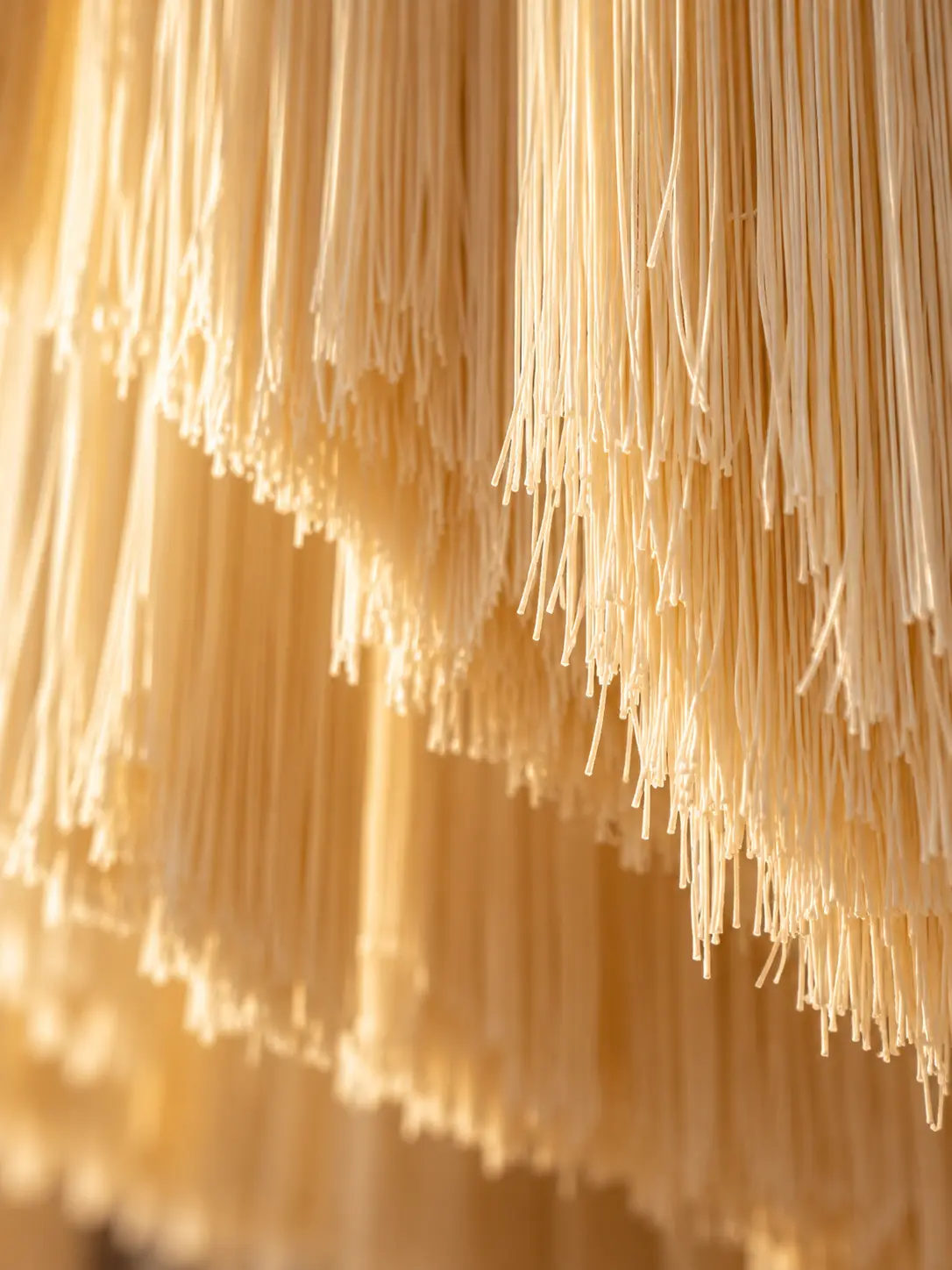
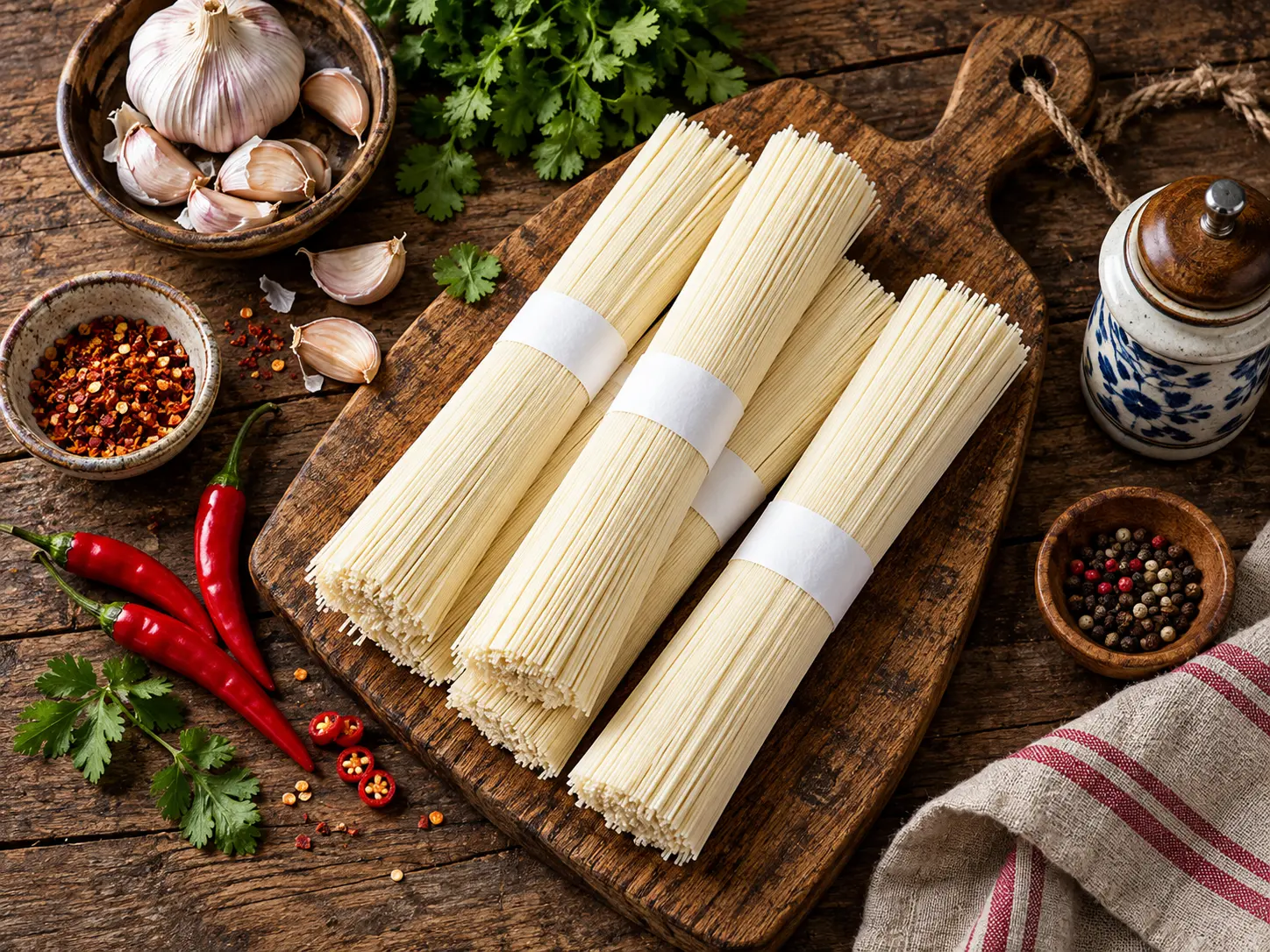
Rice vermicelli bundles shown as a dried-noodle format reference.
01 / DESIGN FOR DRYING AND COOKING
Dried Noodles Solutions for Manufacturers and R&D Teams
Successful dried noodles require a balanced relationship between flour protein, starch functionality, water addition, sheeting reduction, strand dimensions and drying conditions.
Dry Strand Strength
Reduce brittle breakage during packaging, transport and retail handling.
Low Cooking Loss
Limit starch and solids release for clearer cooking water and better noodle integrity.
Firm, Elastic Bite
Balance hardness, springiness and chewiness after cooking.
Controlled Water Uptake
Achieve sufficient hydration without producing a soft, swollen or sticky noodle.
Smooth Surface
Improve strand appearance and reduce excessive surface starch release.
Drying Tolerance
Maintain strand integrity through staged moisture removal and shrinkage.
02 / FOUR COMMERCIAL DRIED NOODLE DIRECTIONS
Four Dried Noodles Formulation Platforms
The Tianjiang platform covers classic white salted noodles, Taiwanese-style air-dried noodles, alkaline ramen-style noodles and higher-fiber whole-grain noodles.
White Salted Dried Noodles
A clean, mild noodle platform designed for smooth appearance, firm bite, controlled water absorption and low cooking loss.
Air-Dried Taiwanese Thin Noodles
A thin-strand, non-fried platform designed for short cooking time, clean separation and resilient texture.
Alkaline Ramen-Style Dried Noodles
A firmer yellow-noodle platform designed for elastic bite, soup stability and clean cooked strands.
Whole Wheat & Multigrain Dried Noodles
A higher-fiber platform designed to improve strand cohesion, reduce brittleness and maintain acceptable cooked texture.
Rice Vermicelli Formats & Serving Inspiration
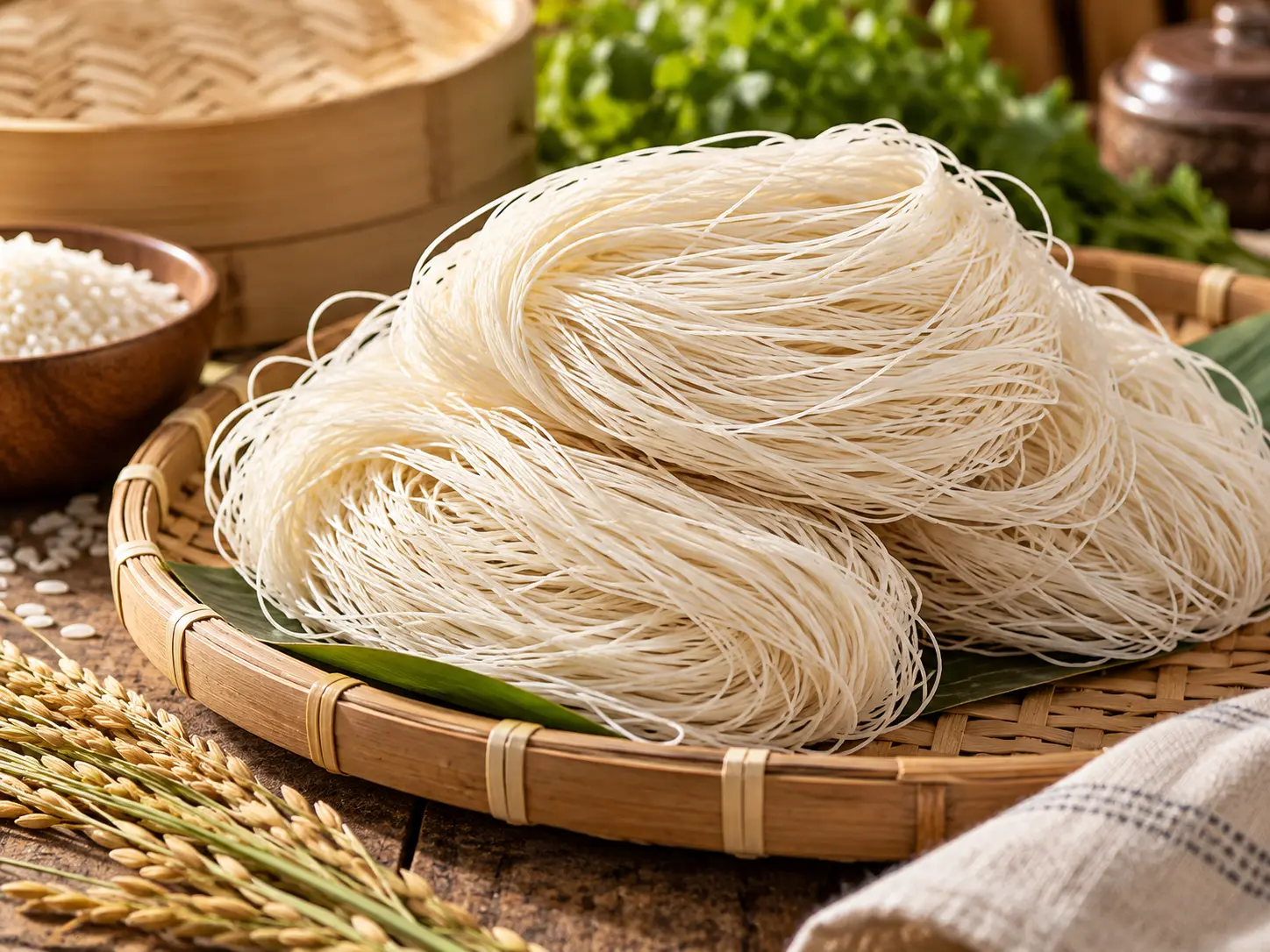
Explore fine strands, rolled formats and finished rice vermicelli dishes. These rice-based products are visual references alongside this dried-noodle guide; the four formulation platforms above use wheat flour.
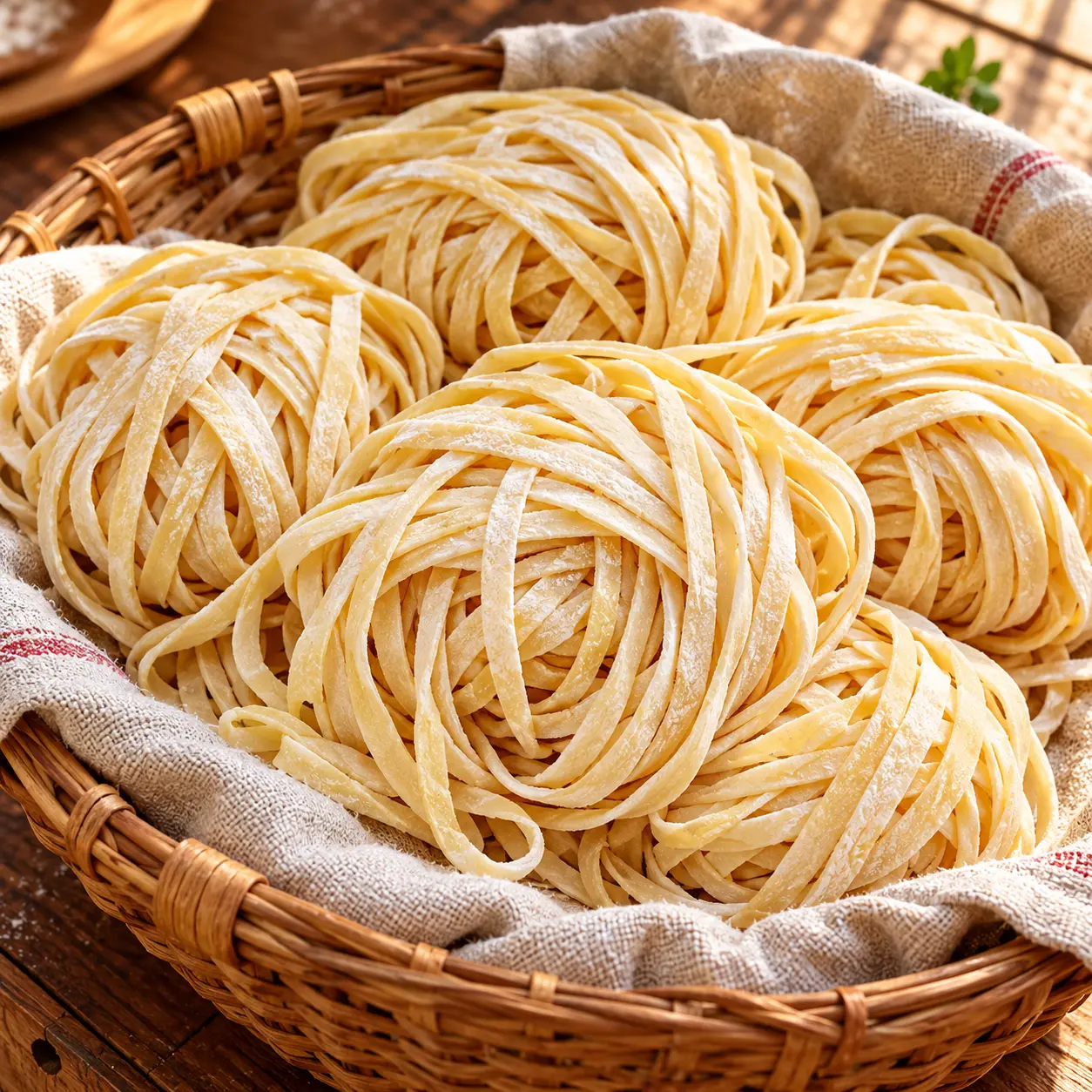
Rolled Vermicelli
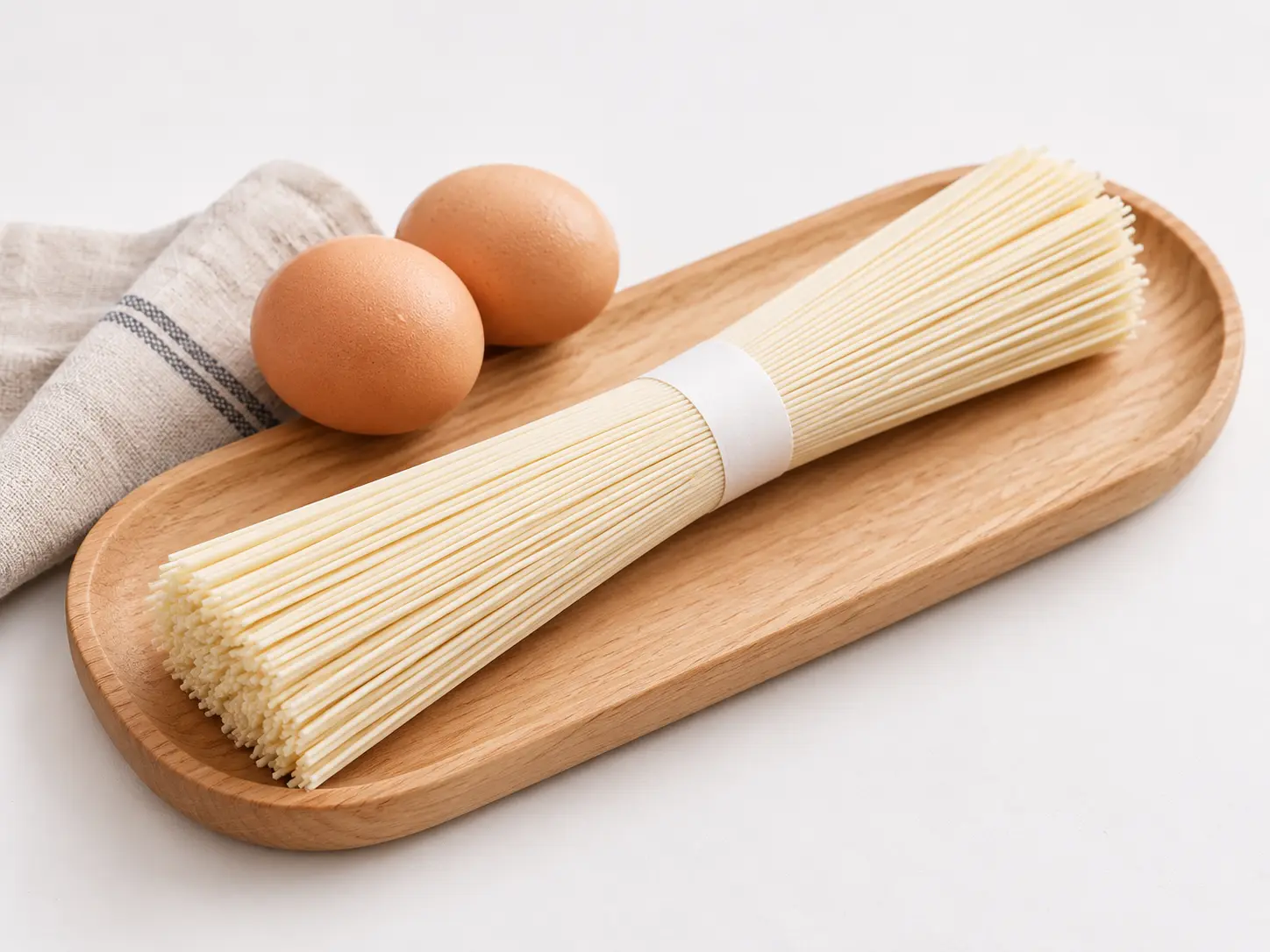
Fine Strand Formats
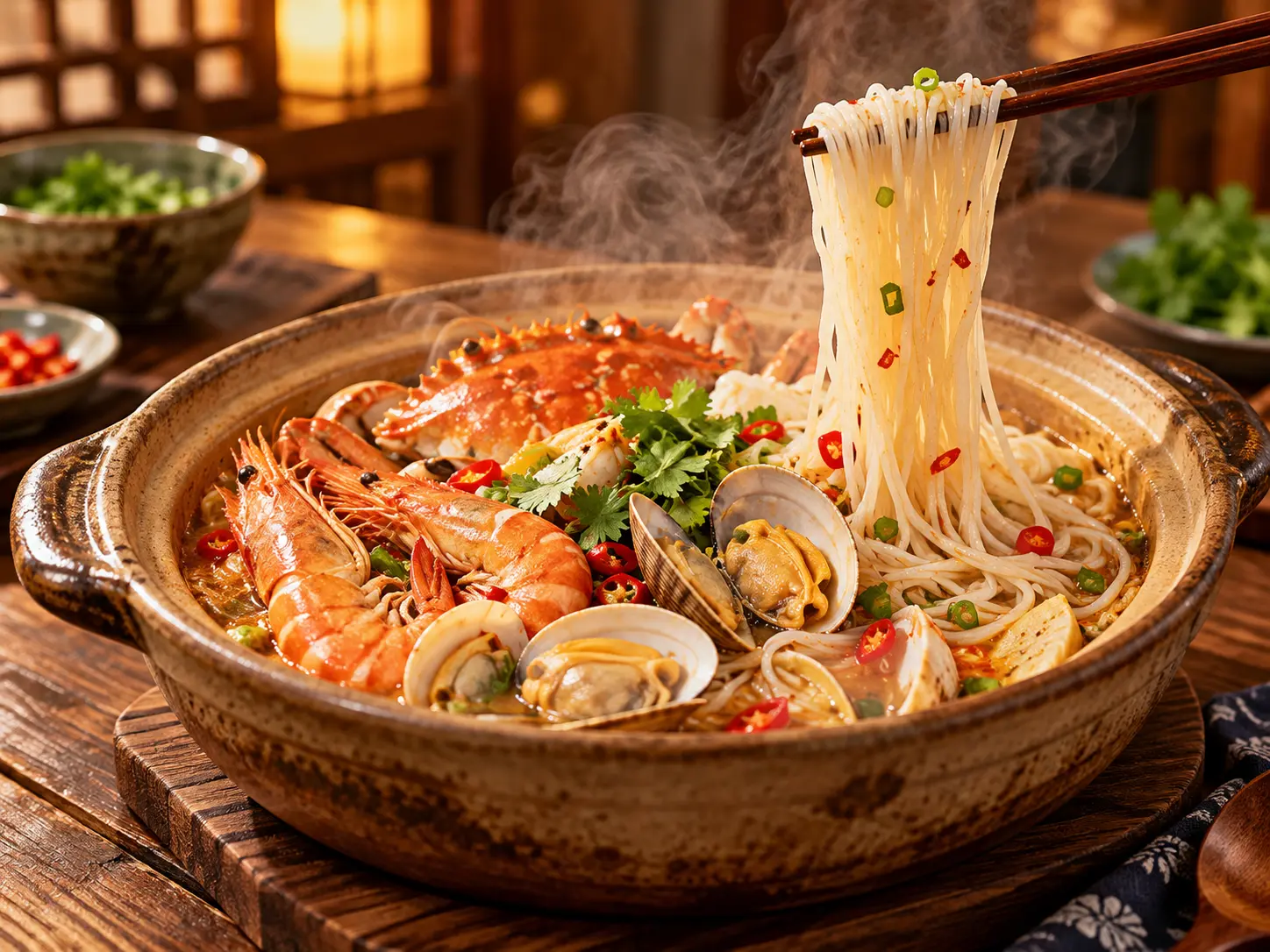
Seafood Serving Ideas
Vegetable Serving Ideas
These are independent Tianjiang application-development formulations built from established commercial dried-noodle processing principles. Public international product ingredient lists and published noodle science were used to identify relevant product structures and technical targets; no third-party proprietary production formula has been reproduced.
03 / TIANJIANG COMMERCIAL PRODUCTION FORMULA
Tianjiang Dried Noodles Production Formulas
Select a noodle platform, enter the required wet dough batch and compare Tianjiang modified-starch dosage using total wheat flour as the 100-part basis.
Dried Noodles Formulation Batch Calculator
Formula values use 100 parts total wheat flour as the reference basis. Actual water addition must be adjusted to flour absorption, protein content, sheeting equipment and drying conditions.
| Ingredient | Parts | Batch Mass, kg | Primary Function |
|---|---|---|---|
| Total Wet Dough | — | 100.000 | Pre-drying noodle dough |
TJ-DN-01 · 100 kg wet dough · 6.00 parts Tianjiang modified starch.
For controlled starch comparisons, keep flour lot, water addition, finished dough temperature, sheet thickness, strand width and drying curve constant.
04 / MODIFIED STARCH PERFORMANCE
How Modified Starch Improves Dried Noodles
A suitable starch should work with the wheat protein network, help control hydration and support the noodle through both drying and cooking without producing an excessively soft texture.
Cooking Loss Control
Support noodle integrity and limit excessive starch release into cooking water.Strand Strength
Reduce breakage during handling, drying, packaging and cooking.Water Absorption
Control hydration for a cooked noodle that is neither too hard nor too swollen.Reduced Breakability
Suitable modified starches can improve flexibility of the cooked strand.Surface Smoothness
Support a more uniform starch-protein matrix and cleaner eating texture.Cooking Tolerance
Maintain acceptable bite across a wider cooking-time window.
05 / COMMERCIAL MANUFACTURING
Commercial Dried Noodles Manufacturing Process
Dried-noodle quality is created across mixing, resting, sheeting, cutting and controlled moisture removal.
-
Prepare dry blend
Uniformly mix wheat flour, Tianjiang modified starch and any dry functional ingredients.
-
Prepare process water
Dissolve salt or the selected alkaline system into the process water.
-
Mix the dough
Add liquid gradually to obtain uniform hydrated dough particles without overmixing.
-
Rest the dough
Allow moisture to redistribute and the gluten system to relax.
-
Sheet progressively
Reduce thickness in controlled stages to protect the gluten-starch matrix.
-
Cut the strands
Standardize thickness and width according to the target cooking time.
-
Dry in stages
Control temperature, relative humidity and moisture gradient to reduce cracking and internal stress.
-
Condition & package
Equalize final moisture, check strand breakage and protect noodles during distribution.
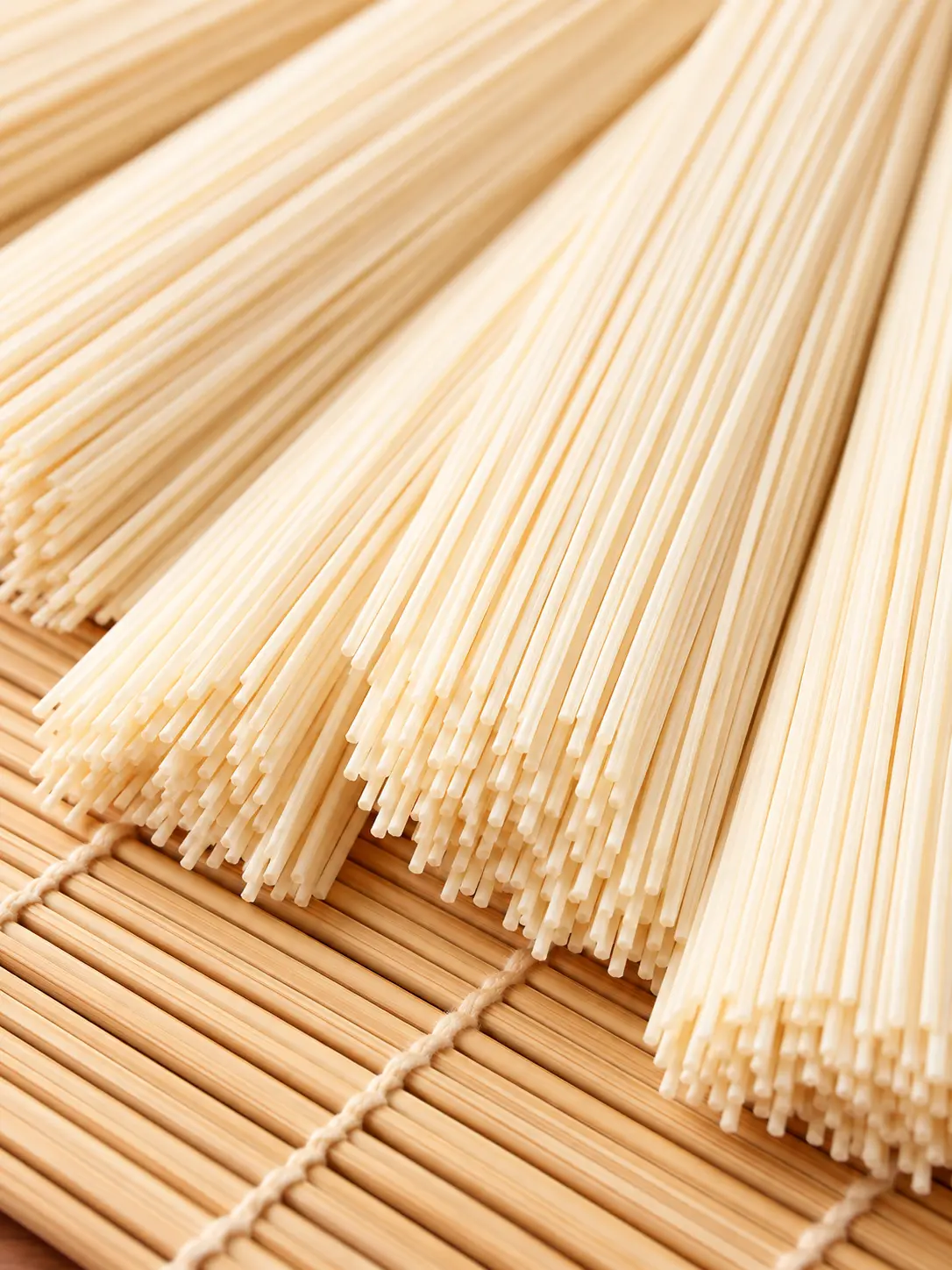
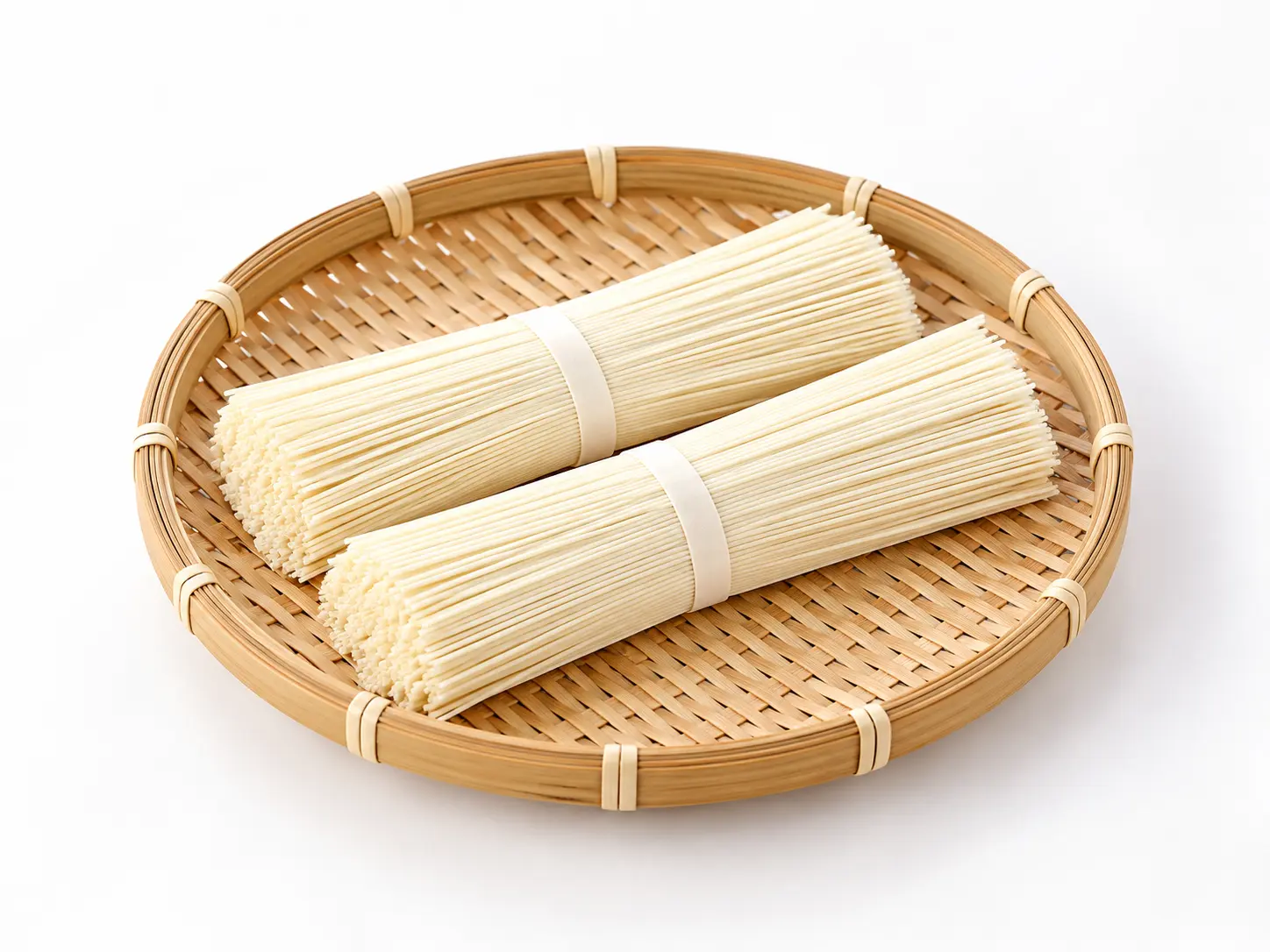
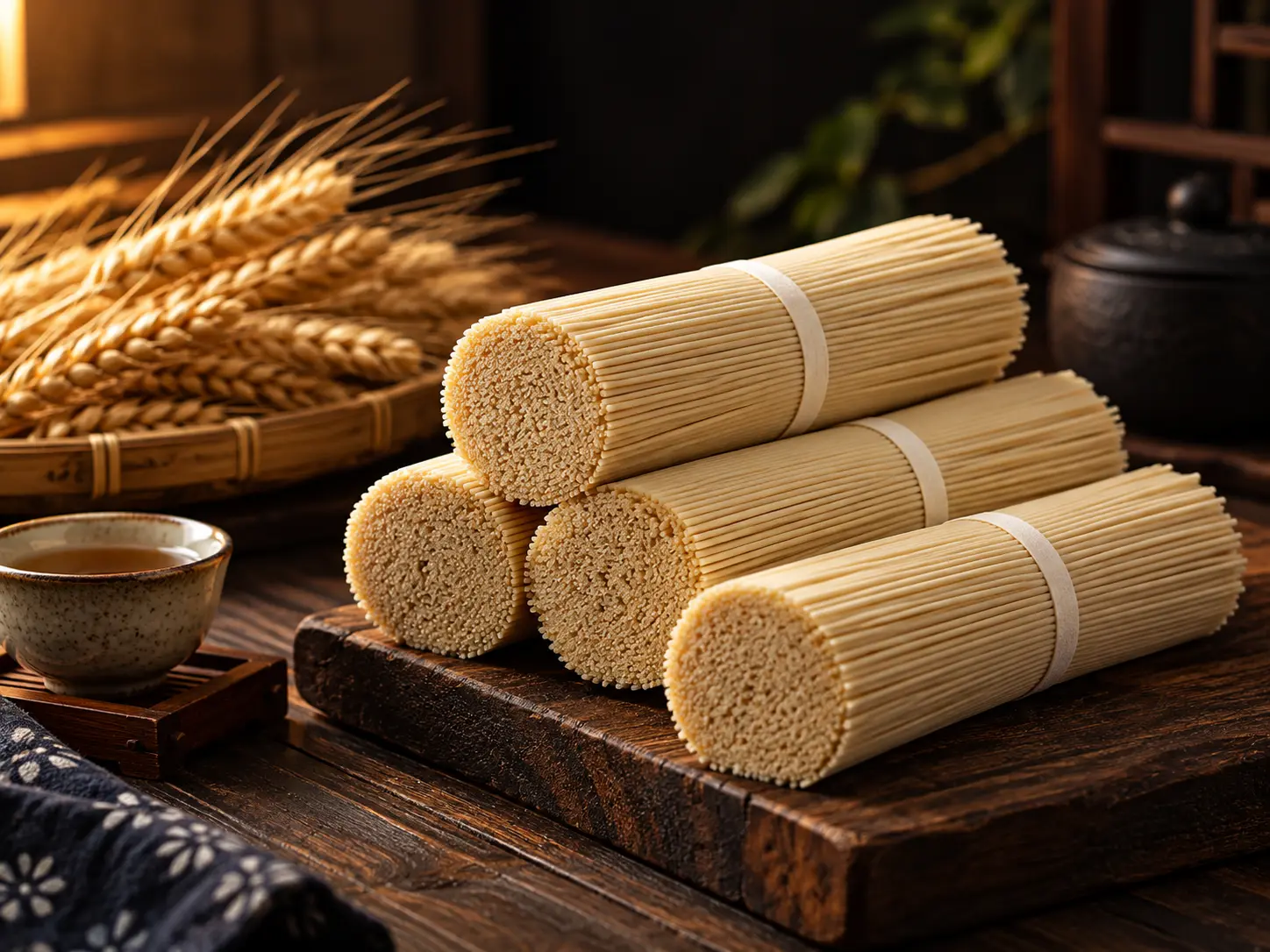
Rice Vermicelli Product Formats
Compare sheets, rolls and dried strands as product-format references alongside the processing guide.
06 / MEASURE BOTH DRY AND COOKED NOODLES
Cooking Loss, Strand Strength and Texture Performance
A dried noodle must be evaluated twice: first as a dry commercial product and again after standardized cooking.
Dry Breaking Force
Measure the force required to break the uncooked strand before packaging.
Cooking Loss
Quantify solids released into the cooking water.
Water Absorption
Measure noodle weight gain during standardized cooking.
Tensile & Chewiness
Evaluate strand strength, springiness and bite after cooking.
07 / DIAGNOSE THE NOODLE FAILURE
Dried Noodles Formulation Troubleshooting
Do not change modified-starch dosage until flour, hydration, strand dimensions and drying conditions have been standardized.
| Observation | Factors to Investigate | Controlled Next Trial |
|---|---|---|
| Dry noodles break during packaging | Low moisture, rapid drying, weak gluten or excessive mechanical stress. | Standardize final moisture and drying gradient before increasing starch. |
| High cooking loss | Weak gluten-starch network, surface damage or excessive starch solubility. | Compare a more stable Tianjiang modified starch under identical cooking conditions. |
| Noodles are too hard | Low water uptake, high protein, thick strands or excessive drying. | Measure hydration and optimal cooking time before reformulation. |
| Noodles become too soft | Excess water uptake, weak starch structure or overcooking. | Evaluate a more processing-stable starch. |
| Noodles become sticky | High surface starch release, overcooking or poor strand structure. | Measure cooking loss and evaluate surface stability. |
| Cracks appear during drying | Drying rate too high, uneven moisture gradient or weak dough structure. | Adjust drying curve before changing starch dosage. |
| Whole wheat noodles are brittle | Bran disrupts gluten, low hydration or insufficient binding. | Optimize water and gluten support with TJ-DN-04. |
| Texture collapses after longer cooking | Weak thermal stability or excessive starch swelling. | Screen a more stable modified-starch grade. |
08 / SELECT STARCH BY NOODLE TARGET
How to Select Modified Starch for Dried Noodles
Share flour protein, strand dimensions, water addition, drying curve, target cooking time and desired bite so Tianjiang can screen an appropriate starch grade.
Low-Cooking-Loss Grade
Prioritize network stability where cloudy cooking water and solids loss are major problems.
Breakage-Control Grade
Use where dry strands or cooked noodles fracture too easily.
Firm-Texture Grade
Use for noodles requiring a resilient bite and wider cooking tolerance.
Modified Tapioca Starch
Suitable grades can support flexibility, smoothness and controlled hydration.
Modified Potato Starch
Can be evaluated for water absorption, springiness and resilient texture.
Process-Stable Grade
Use where high cooking tolerance or more severe thermal processing is required.
09 / STANDARDIZE EVERY NOODLE TRIAL
Dried Noodles Formulation and Quality Testing
Compare starch candidates with identical flour, water, sheet thickness, strand width, drying conditions and cooking protocol.
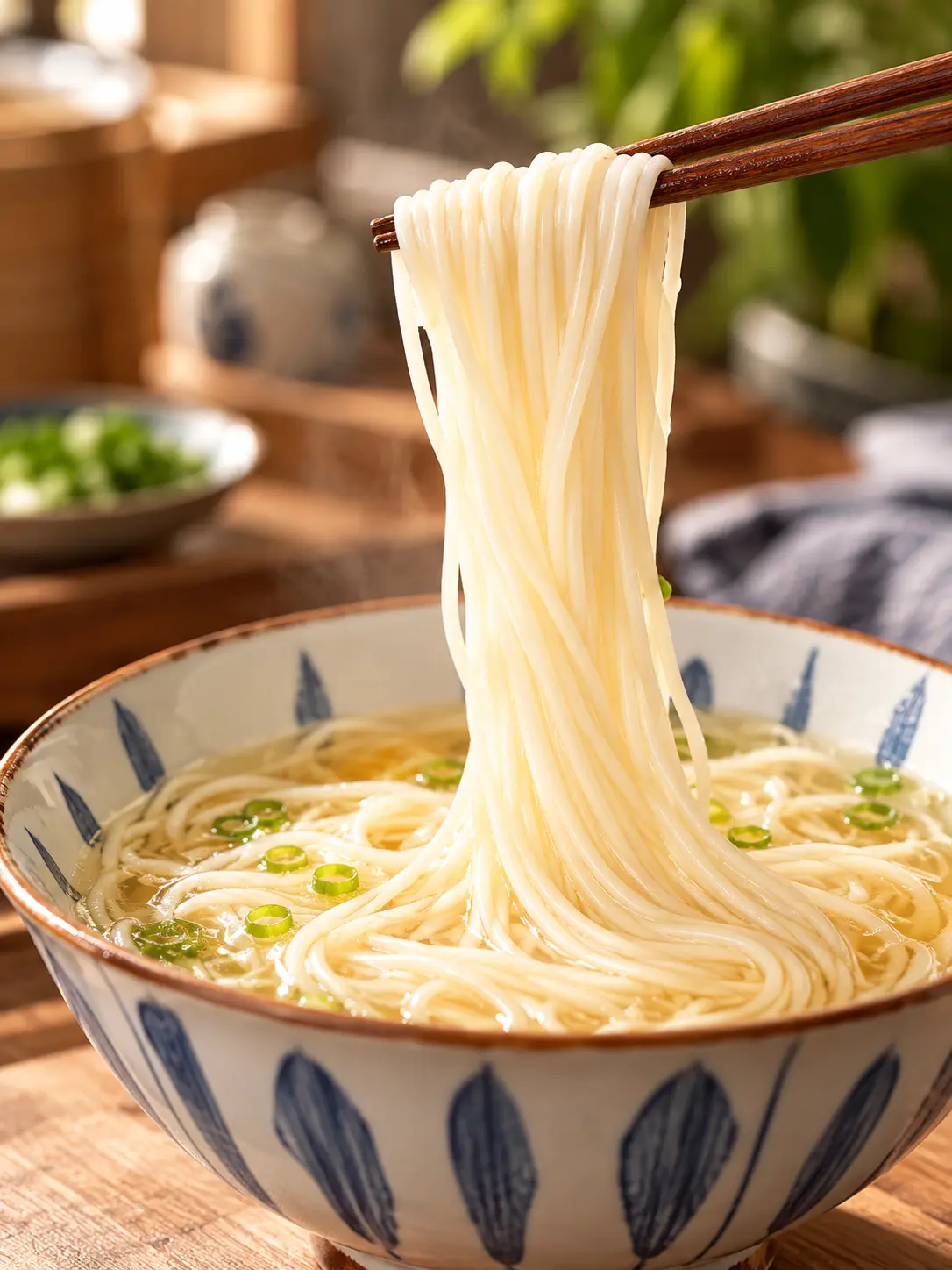
Cooked rice vermicelli serving reference. Cooking loss, strand strength and holding performance require product-specific measurements.
Final Moisture
Measure after drying and conditioning.Dry Breaking Force
Evaluate strand durability before packaging.Optimal Cooking Time
Measure until the uncooked core disappears.Cooking Loss
Quantify soluble solids in the cooking water.Water Absorption
Measure cooked weight gain.Texture Profile
Measure hardness, springiness, chewiness and tensile strength.
10 / R&D TO PURCHASING
Modified Starch Specifications for Dried Noodles Purchasing
Once the selected starch passes plant and cooking trials, convert the result into a controlled purchasing specification.
Exact Grade
Confirm Tianjiang modified starch code and dosage.Botanical Source
Confirm tapioca, potato, corn or other starch source.Functional Target
Define cooking loss, texture, hydration and strand-strength priorities.Representative COA
Review relevant incoming quality parameters.Regulatory Documents
Confirm labeling and destination-market requirements.Commercial Planning
Confirm samples, MOQ, packaging, lead time and monthly usage.
11 / TECHNICAL QUESTIONS
Dried Noodles Formulation FAQs
Technical guidance for dried noodle manufacturers, R&D teams and modified-starch buyers.
Why Is Modified Starch Used in Dried Noodles?
Suitable modified starch can support strand strength, controlled water absorption, smooth texture, reduced breakability, cooking tolerance and lower cooking loss.
How Much Modified Starch Can Be Used in Dried Noodles?
The Tianjiang development platforms on this page use approximately 5–8 parts modified starch per 100 parts total wheat flour. The optimum level depends on starch functionality, flour protein, noodle dimensions and drying process.
Can Modified Tapioca Starch Be Used in Dried Noodles?
Yes. Suitable modified tapioca starch can be evaluated for flexibility, controlled hydration, smooth texture and reduced breakability.
How Can Cooking Loss Be Reduced?
Cooking loss is influenced by the gluten-starch network, flour quality, starch properties, surface damage and cooking time. A suitable modified starch can be screened as part of that complete system.
Why Do Dried Noodles Break During Packaging?
Common causes include excessively low moisture, rapid or uneven drying, weak dough structure and mechanical stress during handling.
Can Modified Starch Shorten Cooking Time?
Some starch systems can change water penetration and gelatinization behavior, but cooking time also depends strongly on strand dimensions, flour composition and drying conditions.
Can Modified Starch Be Used in Whole Wheat Dried Noodles?
Yes. Higher-fiber formulas often require additional attention to water management, gluten strength and strand cohesion. A suitable starch can support these targets.
What Information Should I Send Tianjiang?
Share flour protein, current formulation, water addition, sheet thickness, strand width, drying temperature, relative humidity, final moisture, cooking time and primary quality problem.
12 / TALK TO TIANJIANG
Request Modified Starch Samples for Dried Noodles
Share your current dried noodles formulation and processing challenge so Tianjiang can recommend a candidate modified starch for your next production trial.
Prepare Your Dried Noodle Project Brief
13 / RELATED NOODLE APPLICATIONS