
TIANJIANG / MOCHI CREAM CAKE FORMULATION
Mochi Cream Cake Formulation with Modified Starch
This mochi cream cake formulation uses Tianjiang modified starch to help manufacturers develop a soft and chewy mochi layer, stable cream structure, controlled moisture migration, clean slicing and consistent refrigerated or frozen texture.
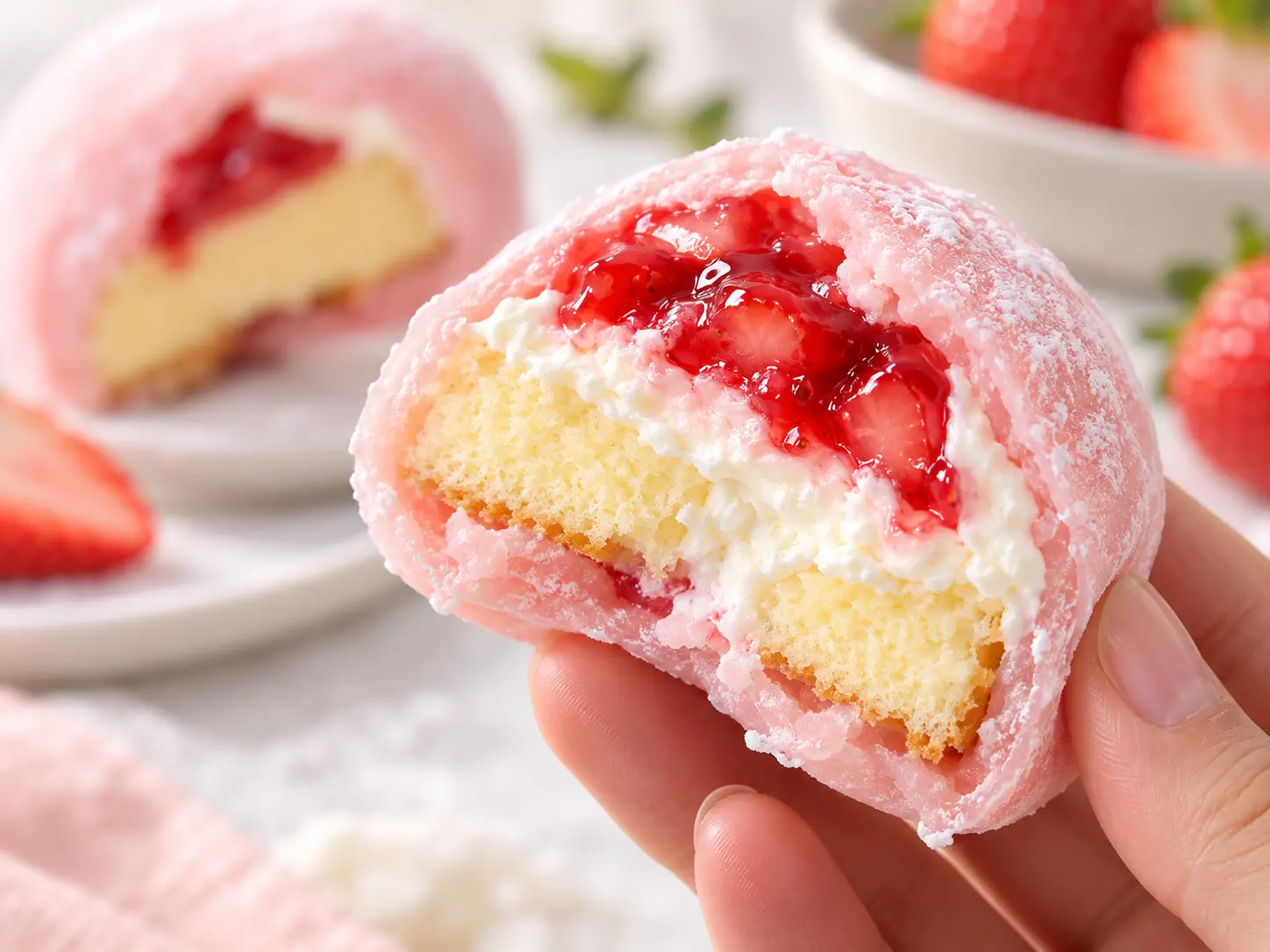
01 / DESIGN THE COMPLETE DESSERT SYSTEM
Mochi Cream Cake Solutions for Manufacturers and R&D Teams
Define the mochi texture, cream system, sponge structure, storage temperature and shelf-life target before selecting the modified starch.
Soft Mochi Layer
Maintain chewiness and flexibility without excessive stickiness or rapid hardening.
Cream Stability
Control water release, cream deformation and layer movement during chilled storage.
Clean Cutting
Balance mochi elasticity with enough structure for clean industrial slicing and attractive cross sections.
Moisture Migration
Limit excessive moisture movement between cream, mochi and sponge layers.
Chilled Stability
Protect mochi softness and cream structure through refrigerated distribution.
Frozen Distribution
For frozen products, select a starch system that maintains flexibility after freeze-thaw.
02 / FOUR COMMERCIAL PRODUCT DIRECTIONS
Four Mochi Cream Cake Formulation Platforms
These Tianjiang development platforms cover vanilla, fruit, tea-and-mascarpone and frozen cake-roll concepts seen across international mochi dessert markets.
Product images illustrate flavor and presentation ideas. They are not documented outcomes of these formulas or evidence of frozen-storage performance.
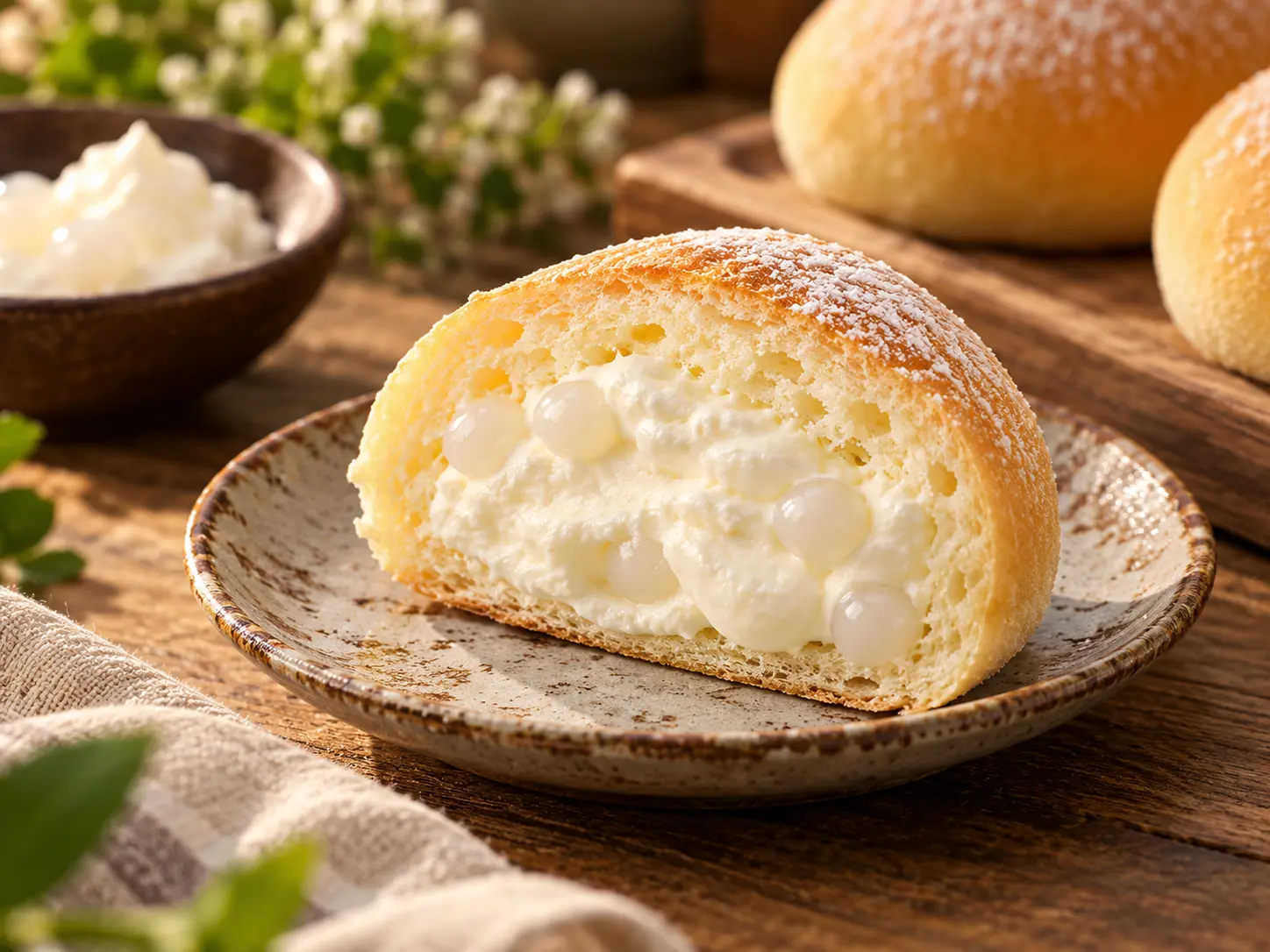
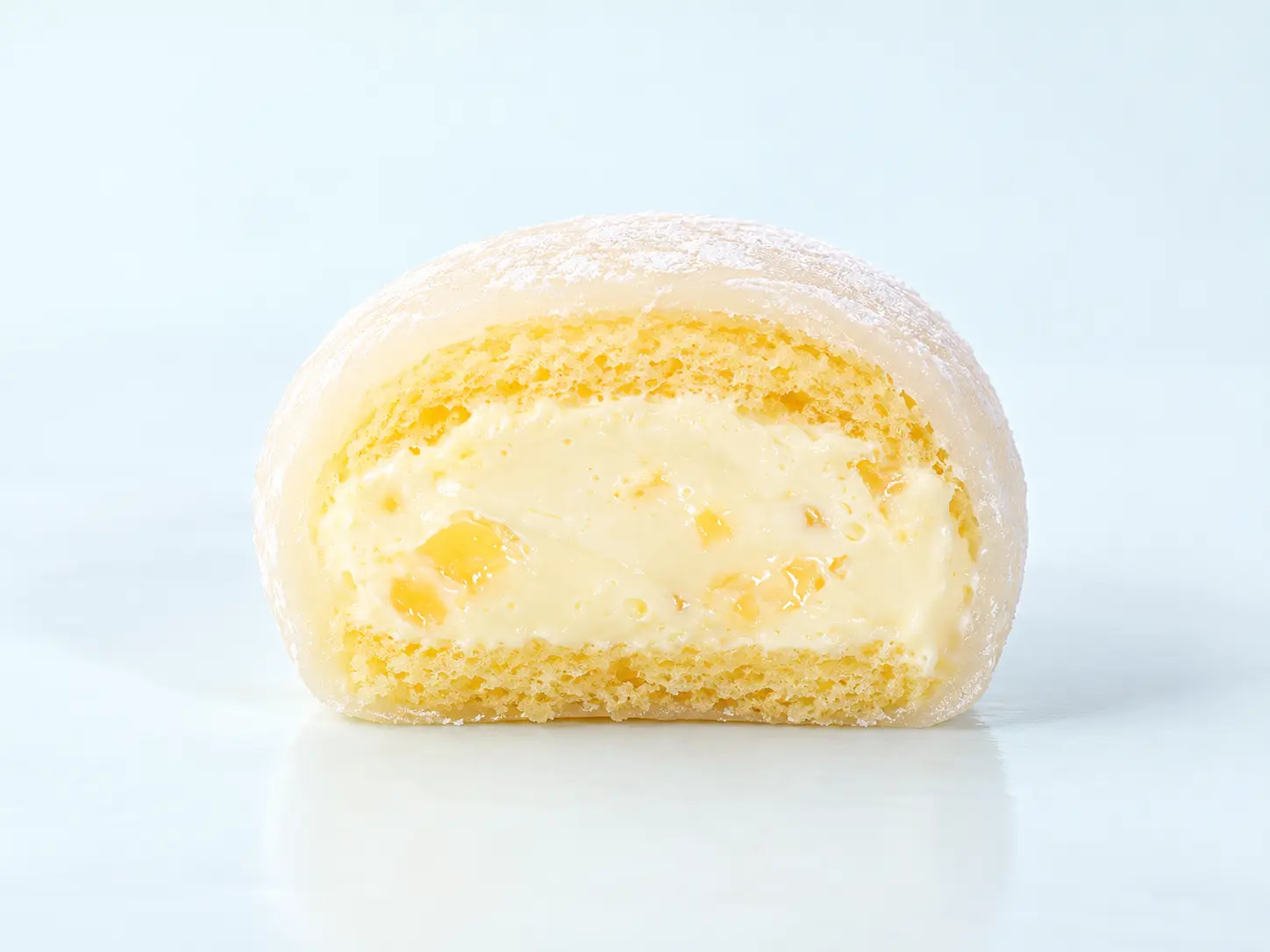
Vanilla Fresh Cream Mochi Cake
A neutral benchmark combining vanilla sponge, milk-style mochi and stabilized fresh cream.
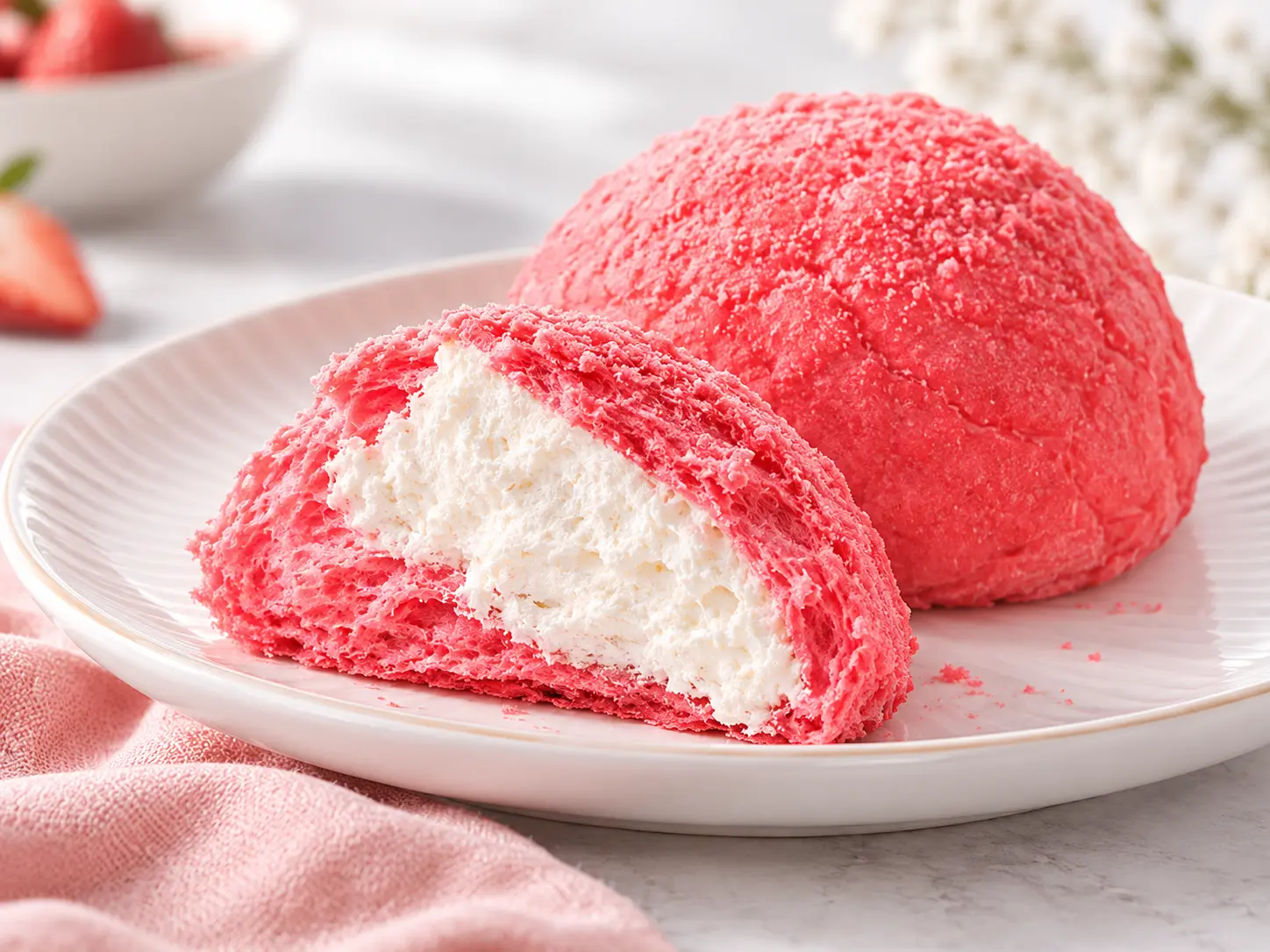
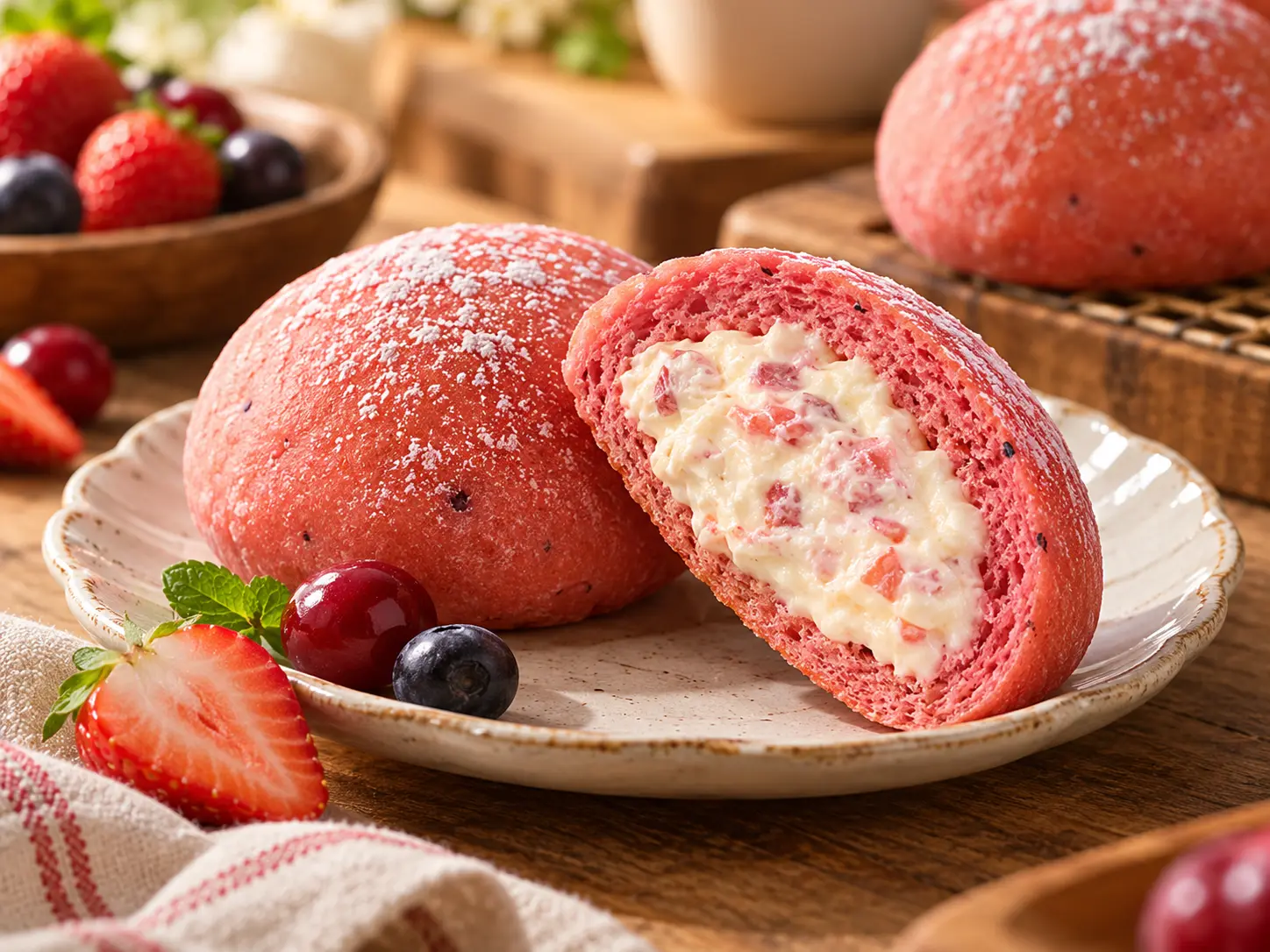
Strawberry Cream Mochi Cake
A fruit-forward chilled dessert with strawberry mochi, soft sponge and light dairy cream.
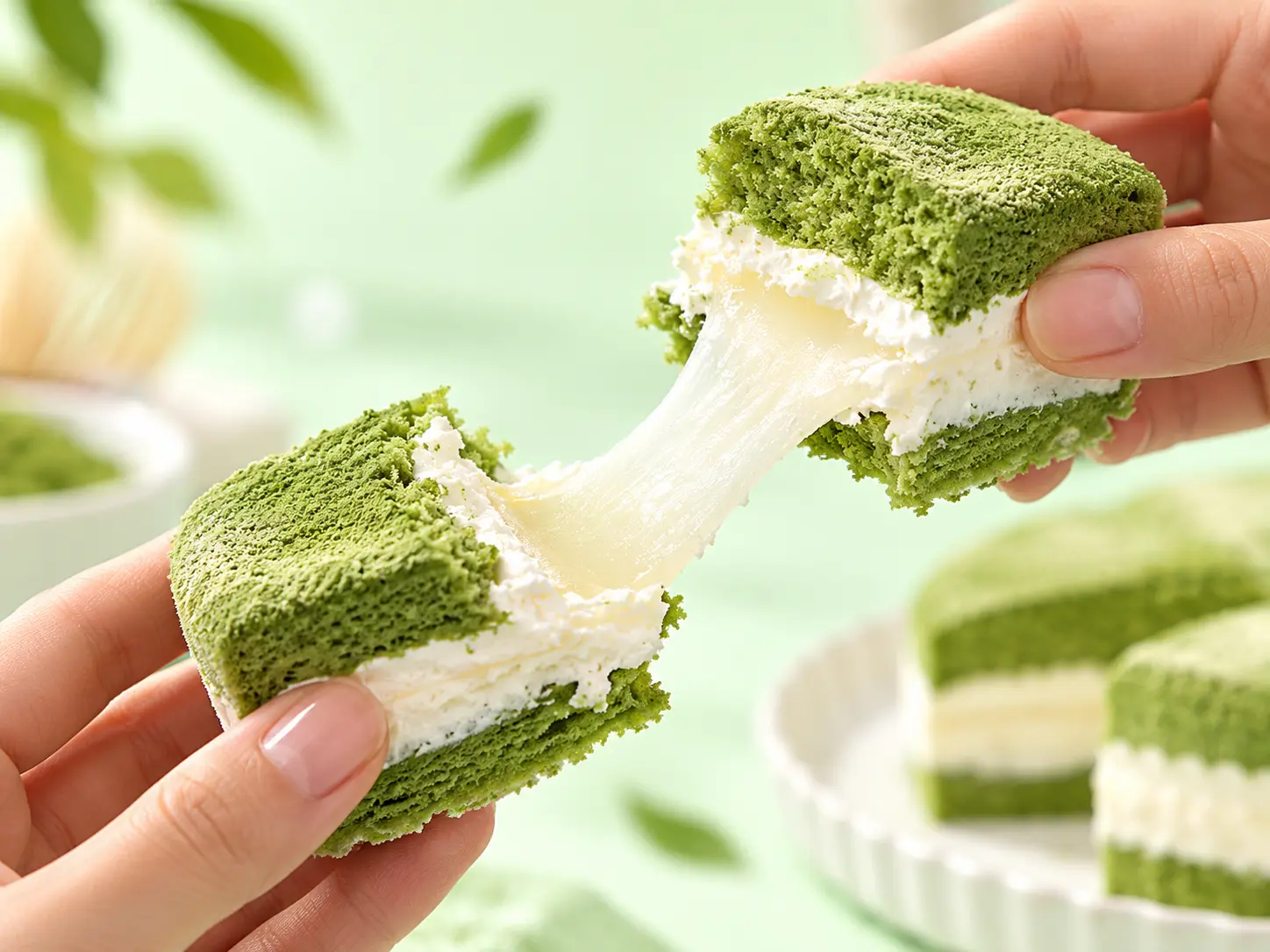
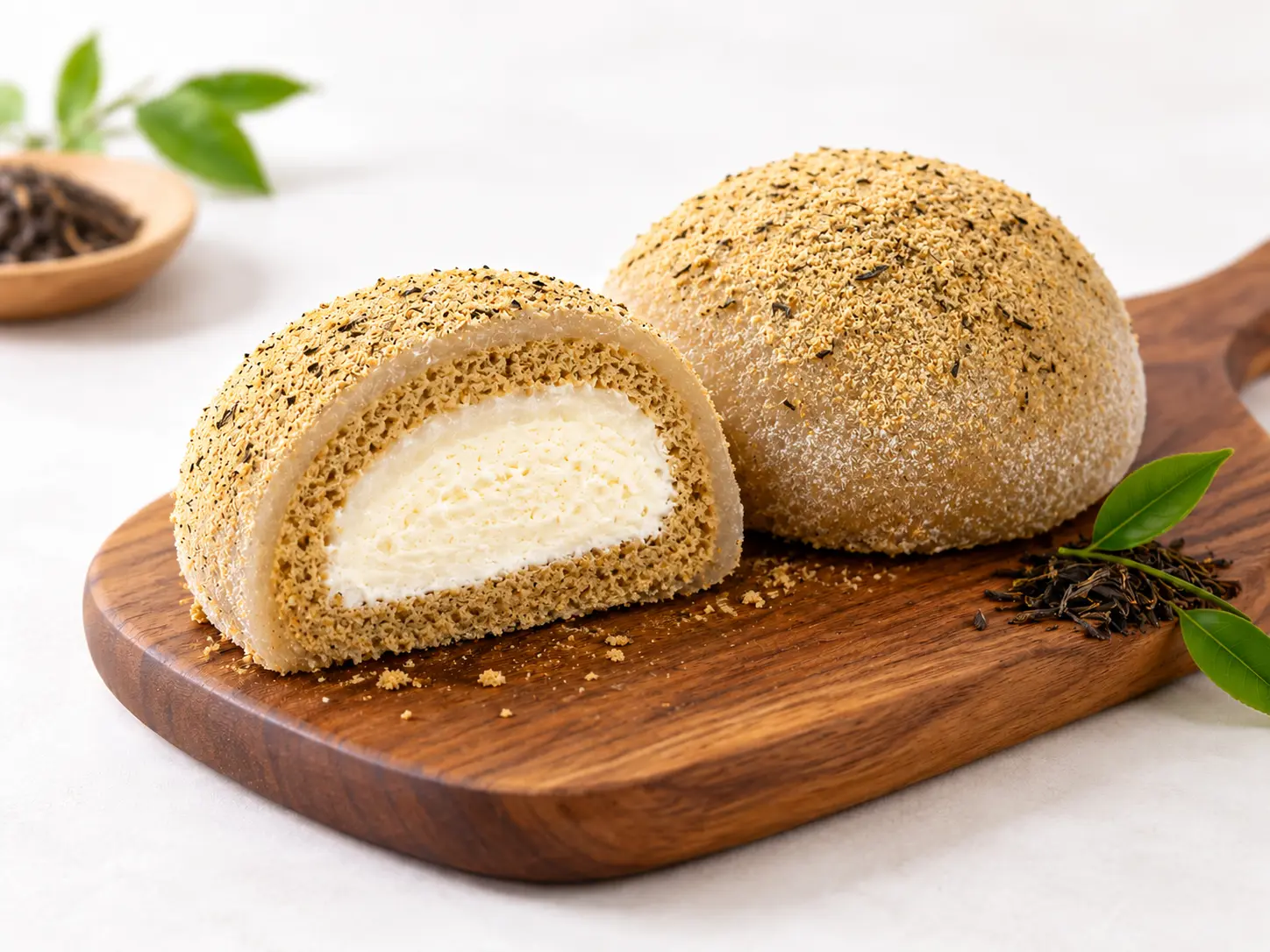
Matcha Mascarpone Mochi Cake
A premium tea profile combining matcha mochi, cake sponge and smooth mascarpone-style cream.
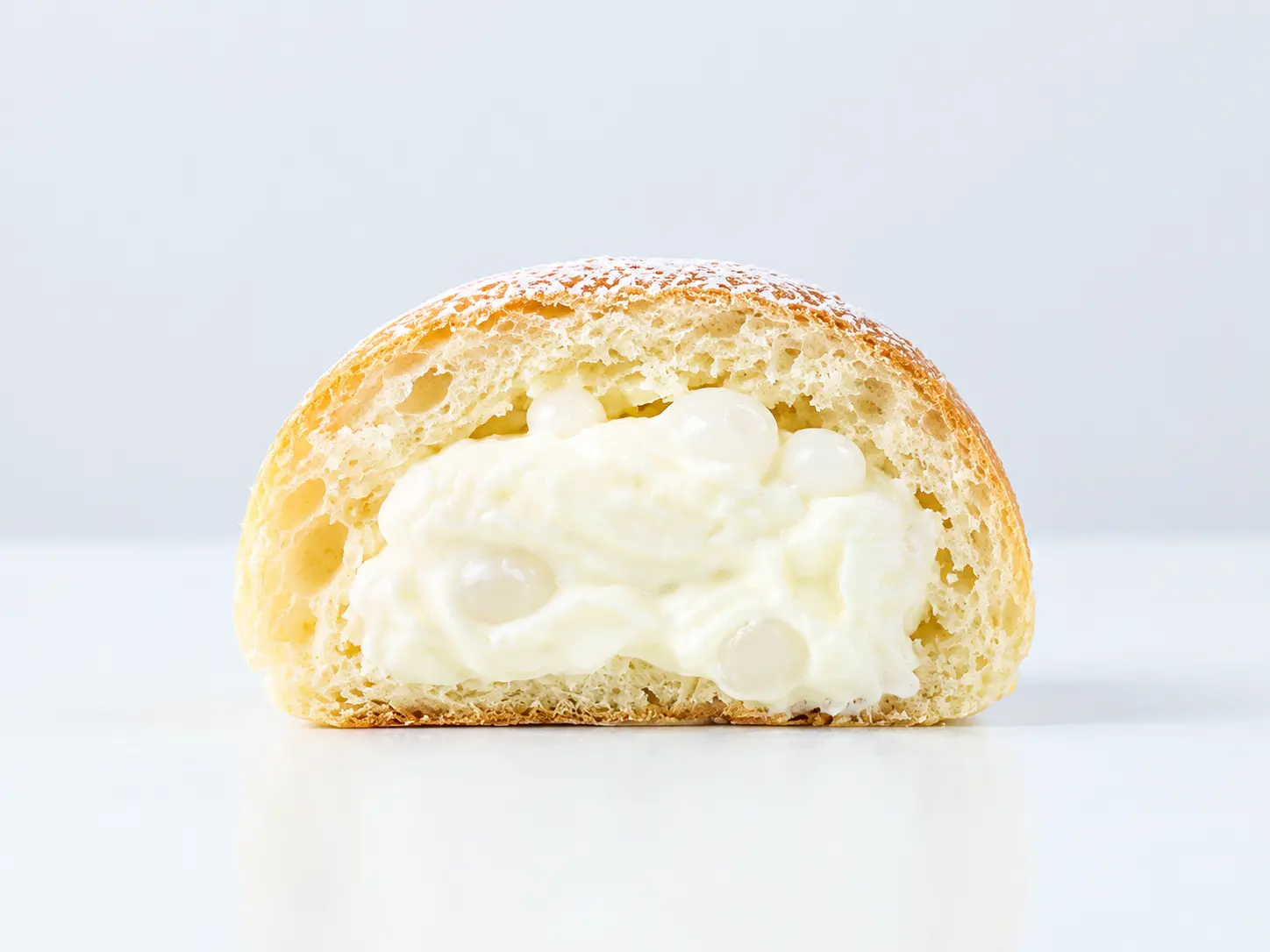
Frozen Mochi Cream Cake Roll
Designed for frozen distribution with a flexible mochi layer, soft sponge and freeze-thaw-stable cream.
03 / COMMERCIAL PRODUCTION REFERENCE FORMULA
Tianjiang Mochi Cream Cake Production Formulas
Because modified starch performs most directly in the mochi phase, the calculator below scales the mochi layer formula for each finished cake platform.
Mochi Cream Cake Formulation Batch Calculator
The starch comparison changes Tianjiang modified starch and balances the difference through process water. For comparison trials, keep cooking conditions, final layer thickness and cooling temperature constant.
| Ingredient | Formula % | Batch Mass, kg | Primary Function |
|---|---|---|---|
| Total | 100.00% | 100.000 | Mochi layer formulation |
TJ-MCC-01 · 100 kg mochi layer · 12.00% Tianjiang modified starch.
This calculator covers the mochi component. Sponge cake, cream phase and optional fruit or flavor centers should be manufactured and validated as separate phases before final assembly.
Optional Stabilized Cream Phase Reference
| Ingredient | Starting % | Function |
|---|---|---|
| Whipping cream | 68.00 | Primary cream phase |
| Mascarpone or cream cheese | 12.00 | Body and dairy richness |
| Sugar | 10.00 | Sweetness and solids |
| Milk | 7.50 | Viscosity adjustment |
| Tianjiang cold-process modified starch | 1.50 | Cream stabilization and water control |
| Stabilizer / emulsifier | 0.50 | Aeration and structure support |
| Vanilla / flavor | 0.50 | Flavor profile |
For an unheated whipped-cream system, use only a food-grade starch specifically designed for cold processing. A cook-up modified starch requires a different cream process.
04 / MODIFIED STARCH PERFORMANCE
How Modified Starch Improves Mochi Cream Cake Texture
The goal is not simply to make the mochi thicker. The starch system must control elasticity, water distribution and temperature stability without creating a rubbery eating texture.
Softness Retention
Reduce rapid firming of the mochi layer during refrigerated storage.Chewiness & Elasticity
Create cohesive stretch and a clean mochi bite without easy tearing.Water Management
Control free moisture between mochi, cream and sponge.Cream Stability
A suitable cold-process or cook-up starch can support viscosity and reduce syneresis.Clean Slicing
Improve layer definition by balancing softness with sufficient structure.Freeze-Thaw Stability
Use a stabilized grade for frozen cake rolls and thaw-and-serve products.
05 / COMMERCIAL MANUFACTURING
Mochi Cream Cake Manufacturing Process
The sponge, mochi layer and cream phase should be prepared independently, cooled to controlled temperatures and combined only when their textures are compatible.
-
Prepare the sponge cake
Mix, deposit and bake the selected vanilla, fruit or tea-flavored sponge.
-
Blend mochi dry ingredients
Combine glutinous rice flour, Tianjiang modified starch, sugar, trehalose and milk powder uniformly.
-
Add liquids and syrup
Add milk, water, syrup and oil under controlled mixing.
-
Cook the mochi phase
Heat or steam until the rice flour and starch system are fully developed.
-
Cool and sheet the mochi
Cool to a workable temperature before sheeting to the specified thickness.
-
Prepare the cream phase
Whip the stabilized cream to the target overrun and firmness under refrigerated conditions.
-
Assemble the layers
Combine sponge, mochi, cream and optional fruit or flavor center.
-
Set, slice and pack
Chill or freeze to the validated setting point before slicing, packing and distribution.
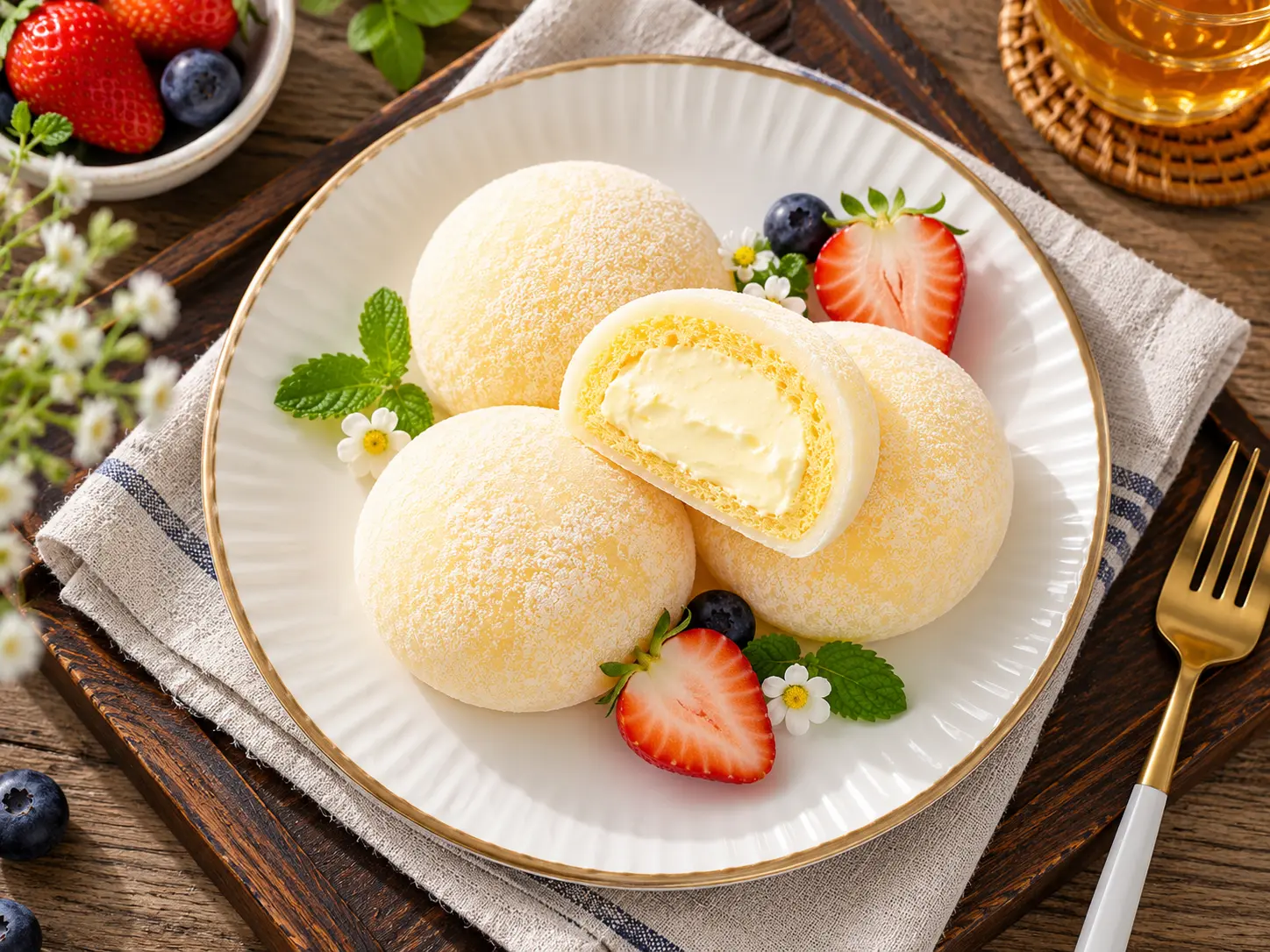
Finished Product & Layer References
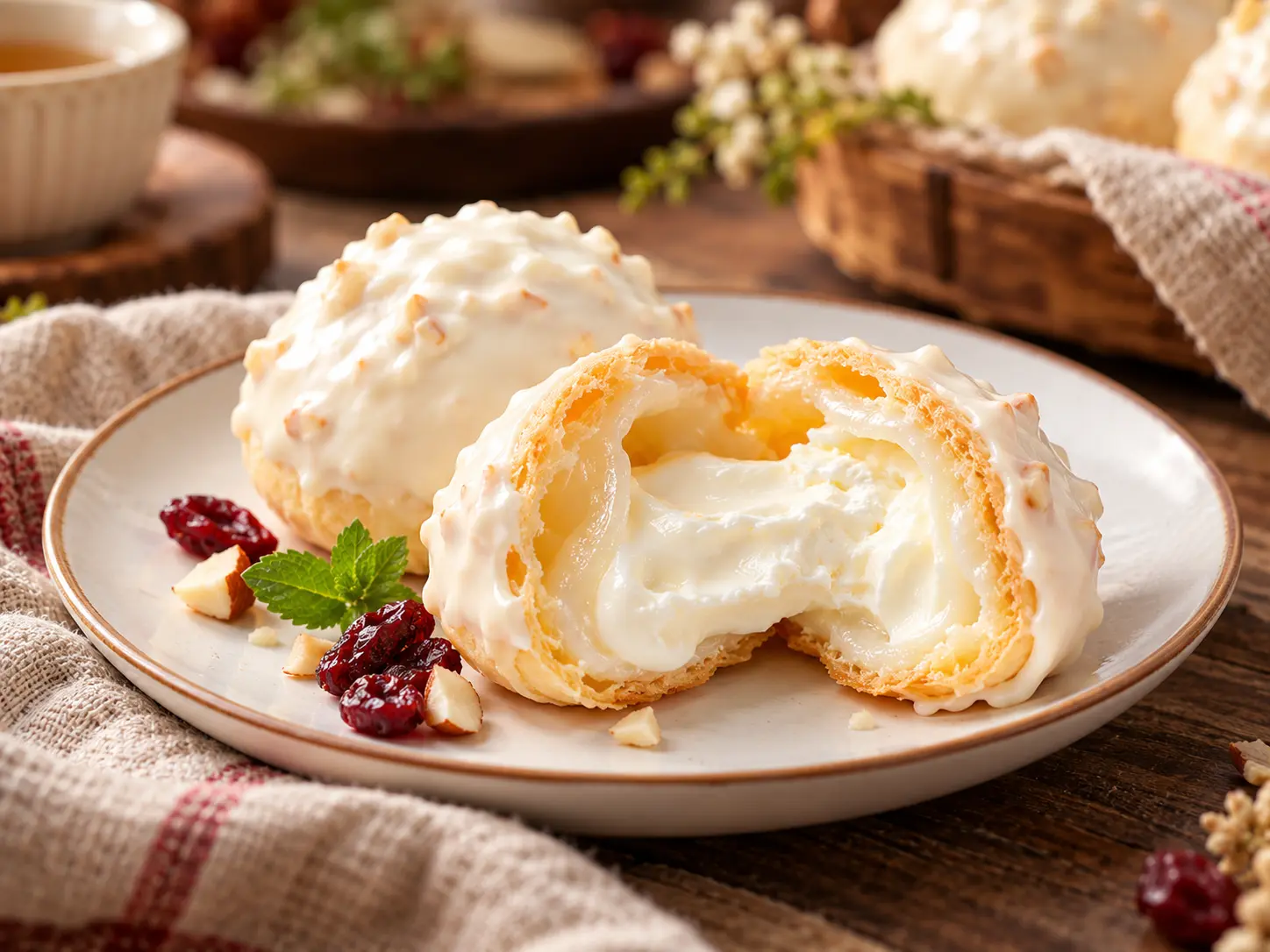
Finished cake photographs illustrate layer structure and presentation; they do not show manufacturing steps.
06 / MEASURE THE COMPLETE DESSERT
Chewiness, Cream Stability and Clean Cutting
The preferred starch must perform in the finished multi-layer cake, not only in an isolated mochi laboratory sample.
Mochi Softness
Track compression force after production and throughout refrigerated storage.
Cream Stability
Record cream collapse, serum release and loss of layer definition.
Clean Cutting
Measure mochi dragging, cream smearing and layer displacement during slicing.
Freeze-Thaw Texture
For frozen products, evaluate cracking, syneresis and mochi firmness after thawing.
07 / DIAGNOSE THE MULTI-LAYER FAILURE
Mochi Cream Cake Formulation Troubleshooting
Evaluate the mochi, cream and sponge phases separately before reformulating the complete finished cake.
| Observation | Factors to Investigate | Controlled Next Trial |
|---|---|---|
| Mochi hardens in refrigeration | Retrogradation, low water, insufficient humectant or unsuitable starch. | Screen a more stabilized starch at identical moisture. |
| Mochi is too sticky to sheet | High water, high syrup, temperature or insufficient structural strength. | Standardize mochi temperature before changing water. |
| Cream releases water | Low cream stability, temperature abuse, weak emulsification or unsuitable thickener. | Evaluate an appropriate cream-stabilizing starch. |
| Sponge becomes wet | Moisture migration from cream or mochi, high water activity or long storage. | Measure each phase separately before changing the cake ratio. |
| Cake slices poorly | Mochi too elastic, cream too soft or incorrect slicing temperature. | Standardize product temperature and blade conditions. |
| Layers slide during storage | Cream viscosity, surface moisture, poor adhesion or handling temperature. | Increase interlayer stability without making cream gummy. |
| Frozen mochi cracks after thawing | Poor freeze-thaw stability, moisture redistribution or low flexibility. | Screen a freeze-thaw-stable modified starch. |
| Texture becomes rubbery | Excess modified starch or insufficient liquid. | Reduce starch dosage in controlled 1% steps. |
08 / SELECT STARCH BY PRODUCT SYSTEM
How to Select Modified Starch for Mochi Cream Cake
The mochi layer and cream phase may require different Tianjiang starch grades. Select each starch according to its actual processing conditions.
Soft Mochi Grade
Use for refrigerated products requiring soft, cohesive and elastic texture.
Anti-Staling Grade
Prioritize slower firming when chilled shelf-life is the main challenge.
Freeze-Thaw Grade
Use for frozen distribution, cake rolls and thaw-and-serve products.
Modified Tapioca Starch
Suitable grades can provide neutral flavor, softness, elasticity and translucent appearance.
Cream Stabilizing Grade
Use a compatible cold-process or cook-up starch for cream viscosity and water management.
Heat & Shear Stable Grade
Select where the mochi system experiences intensive heating and mechanical mixing.
09 / STANDARDIZE EVERY TRIAL
Mochi Cream Cake Formulation and Quality Testing
Compare starch candidates using identical mochi thickness, cream overrun, sponge ratio, product temperature and storage conditions.

- Mochi hardness Measure at the same storage and testing temperature.
- Stretchability Record extension before tearing.
- Cream firmness Track structure and serum separation.
- Cut quality Evaluate smearing, dragging and layer displacement.
- Water migration Monitor sponge and mochi moisture during storage.
- Freeze-thaw For frozen systems, compare texture before freezing and after thawing.
10 / R&D TO PURCHASING
Modified Starch Specifications for Mochi Cream Cake Purchasing
Once the preferred formulation meets texture, storage and processing targets, convert the trial into a controlled ingredient specification.
Exact Grade
Confirm the Tianjiang modified starch grade for mochi and cream separately.Botanical Source
Confirm tapioca, waxy corn or other starch source.Processing Type
Confirm cook-up, cold-process or freeze-thaw requirements.Representative COA
Review relevant quality parameters.Regulatory Documentation
Confirm food additive declaration, certifications and destination-market requirements.Commercial Planning
Confirm MOQ, pack size, lead time and monthly consumption.

11 / TECHNICAL QUESTIONS
Mochi Cream Cake Formulation FAQs
Technical guidance for dessert manufacturers, bakery R&D teams and ingredient buyers.
Why Is Modified Starch Used in Mochi Cream Cake?
Suitable modified starch can help control mochi softness, elasticity, moisture retention, freeze-thaw stability and cream-phase water management.
How Much Modified Starch Is Used in the Mochi Layer?
The Tianjiang development formulas on this page use approximately 12% to 14% modified starch in the mochi layer, depending on storage route and texture target.
Can Modified Tapioca Starch Be Used in Mochi Cream Cake?
Yes. Suitable modified tapioca starch can provide soft, elastic and cohesive mochi texture with a neutral flavor profile.
Why Does the Mochi Layer Become Hard in the Refrigerator?
Possible causes include starch retrogradation, moisture loss, sweetener balance, low water content or an unsuitable starch grade.
Can Modified Starch Stabilize the Cream Filling?
Yes, provided the starch is specifically suitable for the selected cream process. Cold-process cream and cooked cream systems require different starch functionality.
How Can Moisture Migration Into the Sponge Be Reduced?
Control the water activity and water-binding properties of the mochi and cream phases, then validate the complete assembled product during storage.
Can the Product Be Distributed Frozen?
Yes, but the mochi and cream systems should both be designed for freeze-thaw stability and validated after thawing.
What Information Should I Send Tianjiang?
Share the mochi formula, cream type, cake architecture, storage temperature, freezing conditions, target shelf life, current starch grade and primary texture problem.
12 / TALK TO TIANJIANG
Request Modified Starch Samples for Mochi Cream Cake
Share your finished-product structure and current texture challenge so Tianjiang can recommend a modified starch for the mochi layer, cream phase or both.
Prepare Your Mochi Cream Cake Project Brief
13 / RELATED APPLICATIONS