
Global Mochi Formulations
Explore mochi, daifuku, tteok, tangyuan and Southeast Asian rice cakes. Compare whole-rice, sweetened rice-flour and starch-gel systems for the texture your product needs.
Explore Formulations
Read the Powder & Water Basis First
Unless stated otherwise, ingredient numbers are parts by mass per 100 parts of the named rice, flour or starch base. They are indicative development references, not tested Tianjiang specifications. They do not need to total 100. Blend percentages, total-mix percentages and wrapper:filling ratios are identified separately.
Whole-rice systems
Cooked rice is worked or pounded. Rice hydration and mechanical treatment shape the texture.
Sweetened flour doughs
Rice flour, sugar and water develop a cooked, pliable wrapper. Filling moisture and serving temperature matter.
Starch and adjacent gels
Warabi-style, kuzu and tapioca systems differ from rice dough. Agar raindrop cakes are a separate hydrocolloid system.
Find a Mochi or Rice-cake Style
Japan — Mochi & Mochigashi
- Kiri / Maru / Kagami Mochi
- Gyuhi — the Sweetened Platform
- Daifuku Family
- Dango
- Herbal & Leaf-Wrapped Mochi
- Warabi Mochi — Pure Starch Gel
- Kuzu Mochi & the Agar “Raindrop Cake”
- Uiro & Joyo Skins — Non-Glutinous Adjacent
Korea — Tteok
- Injeolmi — Pounded & Gomul-Coated
- Chapssal-tteok — the Daifuku Analogue
- Songpyeon — Half-Moon, Pine-Steamed
- Garae-tteok & Jeolpyeon
China — Gao, Ci, Tuan, Wan
- Tangyuan — Wrapped
- Yuanxiao — Rolled
- Cantonese Nian Gao
- Shanghai White & Fujian Nian Gao
- Lo Mai Chi / Nuomi Ci
- Jian Dui — Fried Sesame Balls
- Ci Ba / Ma Ci — Pounded
- Qing Tuan — Mugwort / Barley-Grass
- Hakka Ban / Caozai Guo
- Water-Chestnut Cake & Starch-Gel Gao
Southeast Asia
- Palm-Sugar Burst Balls
- Ang Ku Kueh — Red Tortoise Cake
- Kuih Koci
- Kue Lapis / Kuih Lapis
- Bánh Da Lợn
- Bánh Trôi / Bánh Xu Xê
- Palitaw
- Kalamay
- Bibingkang Malagkit / Biko
- Khanom Tom · Bua Loi · Mont Lone Yay Paw
Modern Industrial & Fusion Formats
- Mochi Ice Cream — Yukimi Daifuku Type
- Pon de Ring — Read the Label
- Snow-Skin Mooncake
- Ambient Long-Life Filled Mochi
- Korean Mochi Bread — Tapioca Again
- Hawaiian Butter Mochi & Brownie Hybrids
- Drinking Mochi & Beverage Toppings
- Boba — Cassava, Not Rice
No directory matches.
Mochi & Rice-cake Formulation Frameworks
Compare the named base and measurement basis before using a ratio. Each grouped style requires its own complete recipe and validated process.
Japan — Mochi & Mochigashi
Ingredient frameworks, regional styles and texture-development questions.
| Product | Ingredient framework & basis | Development considerations |
|---|---|---|
| Kiri / Maru / Kagami Mochi | Whole glutinous rice 100; salt 0–0.3. Soaking/steaming water is process water, not automatically retained water. A finished-moisture direction is 45–52%. | Soak, steam and pound to the chosen consistency; measure absorbed water and final yield. Compare fresh texture and reheating behavior without assuming drying establishes shelf stability. |
| Gyuhi — the Sweetened Platform | Shiratamako/mochiko 100; sugar 60–115; water 120–190; optional starch syrup 0–30 replacing a defined part of the sweetener; salt 0–0.5. | Specify syrup solids and cooking loss. A finished-moisture direction is 38–48%; evaluate extensibility, stickiness and firmness over the intended storage period. |
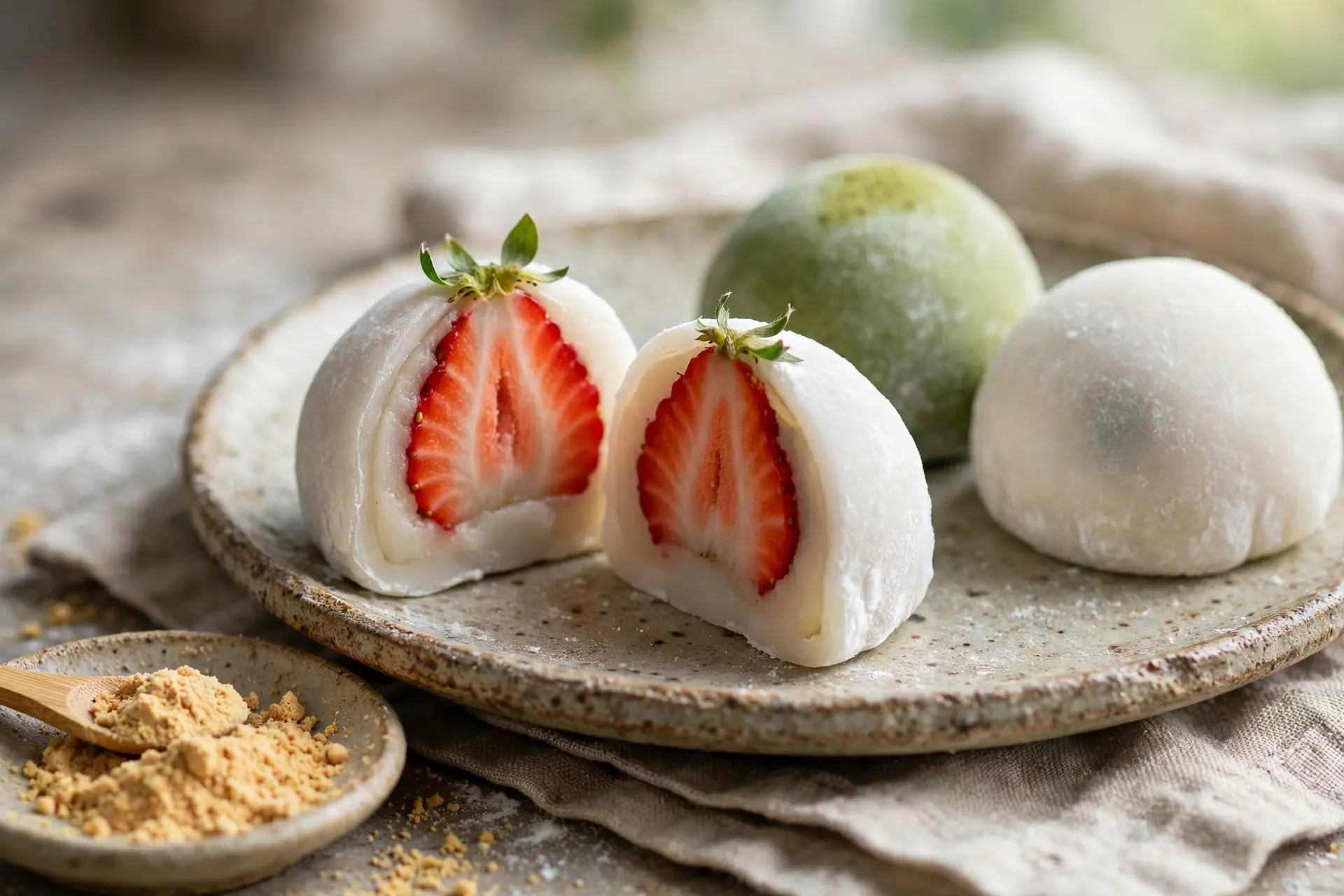
| Daifuku Family | Gyuhi wrapper around 2–3 mm thick; a wrapper:filling mass direction is approximately 1:1. One portion example uses wrapper 27 g and bean paste 30 g. | Ichigo daifuku adds a whole strawberry; account for fruit moisture and piece size. Cream and fresh-fruit variants require their own hygienic process and cold-chain assessment. |
| Dango | Shiratama direction: flour 100, water 85–95, sugar 0–10. A separate blended dango direction: powder blend 100, water 80–90, sugar 5–15. | Specify glutinous versus non-glutinous rice flour. Cooking, cooling and glazing affect chew; mitarashi sauce is a separate soy/sugar/mirin/starch system. |
| Herbal & Leaf-Wrapped Mochi | Kansai sakuramochi direction: domyoji 100, water 100–110, sugar around 30; wrapper:bean-paste filling around 1:1. | Coarse preprocessed rice gives a granular texture. Kanto sakuramochi uses a thin wheat-based pancake and is not the same mochi dough. Identify the selected leaf and herbal ingredients. |
| Warabi Mochi — Pure Starch Gel | Selected starch 100; sugar 50–100; water 200–260. | Specify actual warabi starch versus a blended commercial preparation. Cook with agitation to the required gel development, then evaluate cut, clarity and serving texture. |
| Kuzu Mochi & the Agar “Raindrop Cake” | Kuzu gel direction: kuzu starch 100, sugar 40–80, water 250–350. Separate raindrop-cake direction: agar around 0.3–1% of total mix, with water and optional sugar. | Agar gel is not a starch gel. Gel strength and setting behavior depend on the specific ingredient; do not transfer ratios between the two systems. |
| Uiro & Joyo Skins — Non-Glutinous Adjacent | Uiro direction: non-glutinous rice flour 100, sugar 60–100, water 120–180. | Regional wheat-flour and starch-based variants differ. Joyo-style skins use a separate steamed-cake approach; the uiro ratio is not a universal formula for all adjacent products. |
Korea — Tteok
Ingredient frameworks, regional styles and texture-development questions.
| Product | Ingredient framework & basis | Development considerations |
|---|---|---|
| Injeolmi — Pounded & Gomul-Coated | Glutinous rice or flour base 100; salt around 0.5; sugar 0–5. Set water from the actual rice/flour moisture and cooking route. Coating direction: 15–25% of finished unit mass. | Whole-rice and dry-flour water requirements differ. Evaluate pounding, chew and attachment of roasted soybean, bean or sesame coating. |
| Chapssal-tteok — the Daifuku Analogue | Glutinous rice flour 100; sugar 15–40; water 90–120. Wrapper:filling mass direction 1:1 to 1:1.5. | Lower sugar changes hardening behavior. Compare sealing, filling moisture and texture under the intended storage and serving conditions. |
| Songpyeon — Half-Moon, Pine-Steamed | Moist non-glutinous rice flour 100; added hot water 35–45; salt 0.5–1. Filling direction: 20–30% of finished unit mass. | These additions use moist flour as the basis, not dry flour. Measure its starting moisture; evaluate forming, steaming and the selected sesame or bean filling. |
| Garae-tteok & Jeolpyeon | Non-glutinous rice flour 100; salt 0.5–1; water adjusted to flour moisture and processing; no added sugar in this direction. | Steam and work/extrude to the selected shape. Garae-tteok and jeolpyeon are non-glutinous-rice products, not direct substitutes for sweet gyuhi. |
China — Gao, Ci, Tuan, Wan
Ingredient frameworks, regional styles and texture-development questions.
| Product | Ingredient framework & basis | Development considerations |
|---|---|---|
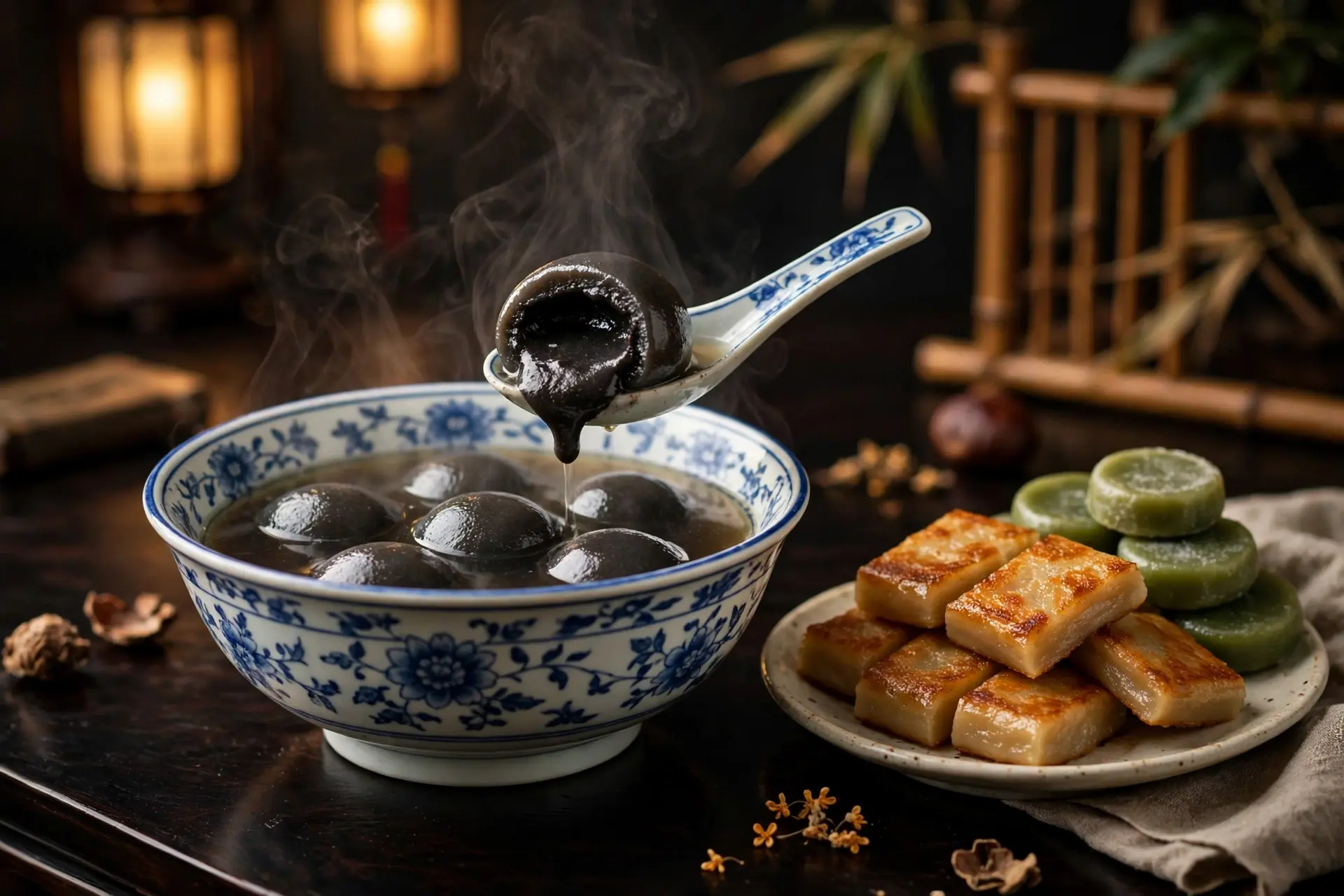
| Tangyuan — Wrapped | Water-milled glutinous rice flour 100; water direction 75–90. Wrapper:filling around 1.5–2:1. Sesame filling, sesame basis 100: sugar 50–80 and fat 40–70. | A pre-cooked dough portion may be evaluated for crack resistance, with its flour/water included in totals. Check sealing, frozen cracking, cooking loss and filling flow. |
| Yuanxiao — Rolled | Firm sweet filling is portioned, wetted and repeatedly coated with dry glutinous rice flour; an illustrative process uses 5–8 coating cycles. | Record retained flour and water rather than treating cycle count as a recipe. Rolled yuanxiao and wrapped tangyuan have different surface and cooking behavior. |
| Cantonese Nian Gao | Glutinous rice flour 100; slab sugar 70–100; water/coconut milk 90–120; oil 2–4; salt around 0.3. Alternative powder blend: rice flour 300 g plus wheat starch 110 g. | The alternative contains about 26.8% wheat starch in the powder blend. Specify coconut-milk solids, cooking loss and cooling before comparing sliceability. |
| Shanghai White & Fujian Nian Gao | Shanghai-style powder direction: glutinous:non-glutinous rice flour from 1:1 to 3:2; water 55–65 per 100 total powder; salt selected separately. | Define dry versus moist flour. Fujian taro-containing variants require separate solids and water balancing; compare slicing and subsequent pan cooking. |
| Lo Mai Chi / Nuomi Ci | Glutinous rice flour 100; sugar 30–60; water/coconut milk 130–180; oil 3–8. Wrapper:filling mass direction 1:1 to 1:1.5. | Evaluate a soft cooked wrapper, coconut coating and the actual filling. Fruit and dairy fillings change moisture migration and storage requirements. |
| Jian Dui — Fried Sesame Balls | Glutinous rice flour 100; sugar 20–35; hot-water direction 70–85. Filling direction 25–35% of finished unit mass; sesame coating specified separately. | Compare dough hydration, sealing and expansion in the actual frying process. Evaluate internal cooking and oil uptake rather than prescribing one universal time or temperature. |
| Ci Ba / Ma Ci — Pounded | Whole glutinous rice cooked and pounded; brown-sugar syrup, roasted soybean powder, peanut or sesame coatings prepared separately. | Measure cooked-rice moisture and pounding consistency. Coatings and syrup change the assembled product but should not be counted as dough hydration. |
| Qing Tuan — Mugwort / Barley-Grass | Glutinous rice flour 100 plus rice flour or wheat starch 10–30; sugar 5–15; fat 3–6; mugwort/barley-grass preparation supplies part of the liquid. | Specify herbal solids and include all powder in the blend calculation. Compare wrapper extensibility, color, sealing and hardening; no universal modified-starch dose is assigned. |
| Hakka Ban / Caozai Guo | Glutinous:non-glutinous rice flour mass direction 2:1 to 1:1; herbal preparation and water adjusted to the blend. Sweet peanut or savory fillings are separate systems. | Define herb identity and moisture. Evaluate steaming, wrapper toughness and filling compatibility for the chosen local style. |
| Water-Chestnut Cake & Starch-Gel Gao | Water-chestnut starch 100; sugar 120–150; water 400–450; chopped water chestnut around 100; oil 1–2. | This is a starch-gel cake, not a glutinous-rice dough. Evaluate suspension, partial pre-cooking where used, final set and clean slicing. |
Southeast Asia
Ingredient frameworks, regional styles and texture-development questions.

| Product | Ingredient framework & basis | Development considerations |
|---|---|---|
| Palm-Sugar Burst Balls | Klepon/ondeh-ondeh direction: glutinous rice flour 100; tapioca starch 0–25; pandan liquid/coconut milk 80–95; sugar 0–18; salt around 0.5. Palm-sugar center direction 25–35% of unit mass. | Specify the powder denominator when adding tapioca. Evaluate seal integrity, cooking and the molten center; coating and holding conditions require separate checks. |
| Ang Ku Kueh — Red Tortoise Cake | One partial wrapper example: glutinous rice flour 300 g, sweet-potato purée 100 g, water 250 g and oil 4 g; sugar adjusted separately. Wrapper:filling around 2:1. | Purée moisture affects hydration. A mung-bean filling direction uses bean base 100, sugar 65 and oil 10; specify cooked versus dry bean basis before scaling. |
| Kuih Koci | Glutinous rice dough hydrated with coconut milk. A culinary example uses flour:coconut milk 2:1 by volume; convert to measured masses before scaling. | Prepare coconut/palm-sugar filling separately. Evaluate leaf wrapping, steaming, oil release and the texture of the finished assembly. |
| Kue Lapis / Kuih Lapis | Tapioca starch 100; rice flour 10–20; optional sago/mung-bean starch 0–30; coconut milk 200–250; sugar 70–100; salt selected separately. | All values use tapioca starch as the reference, not total powder. Recalculate the blend and evaluate sequential layer cooking, adhesion and peelability. |
| Bánh Da Lợn | One mung-bean-layer direction, bean base 100: tapioca starch 115, rice flour 17, sugar 100, coconut milk 165. | Define bean moisture and balance pandan and bean layers separately. Match layer thickness, cooking and adhesion rather than applying one ratio to both layers. |
| Bánh Trôi / Bánh Xu Xê | Bánh trôi direction: glutinous rice flour 100 with optional rice flour 10; water 80–90; filling separately specified. Bánh xu xê uses a distinct translucent starch wrapper and coconut/bean filling. | The two products have different wrapper mechanisms. Specify the chosen starch and local style before setting gel strength or wrapper thickness. |
| Palitaw | Glutinous rice flour 100; water 85–100; no added dough sugar in this direction. Wet-milled galapong requires a moisture-adjusted calculation. | Form and cook the flattened pieces, then apply coconut, sesame and sugar coatings. Floating is a process observation, not by itself a validated cooking endpoint. |
| Kalamay | Wet-milled glutinous-rice base, coconut milk and sugar. Sugar direction 40–70 per 100 dry-equivalent rice flour. | Determine dry-equivalent flour from the actual paste solids. Concentration and agitation control texture; record final yield and moisture rather than using time alone. |
| Bibingkang Malagkit / Biko | Whole glutinous rice 100; coconut milk 150–200; brown sugar 40–90. | These are initial ingredient ratios. Define rice cooking and topping concentration separately; evaluate grain integrity, set and moisture distribution. |
| Khanom Tom · Bua Loi · Mont Lone Yay Paw | Khanom tom direction: glutinous rice flour 100, optional rice flour 25, coconut/pandan liquid 50–70. Bua loi uses small unfilled rice-flour balls; mont lone uses a palm-sugar center. | Treat the three products separately. Added flour changes the liquid-to-total-powder ratio; test sealing, cooking and texture in coconut soup or the selected coating. |
Modern Industrial & Fusion Formats
Ingredient frameworks, regional styles and texture-development questions.
| Product | Ingredient framework & basis | Development considerations |
|---|---|---|
| Mochi Ice Cream — Yukimi Daifuku Type | Glutinous rice flour 100; sugar 60–120; water 120–260 as independent wrapper trial ranges. Wrapper:ice-cream mass direction 1:2.5 to 1:3.5; wrapper thickness around 1–2 mm. | Choose a balanced trial rather than all maximum values. Evaluate bite at serving temperature, wrapping, ice-cream melt and actual freeze/thaw cycles; starch and syrup grades require testing. |
| Pon de Ring — Read the Label | Tapioca starch direction 40–60% of the flour/starch blend, with the balance defined, often wheat flour; sugar 15–25 on powder; egg, milk and fat balanced separately. | A chewy ring doughnut is not necessarily rice-based. Define leavening and frying method; compare elasticity, oil uptake and the applied glaze. |
| Snow-Skin Mooncake | Cold-prepared wrapper example: cooked glutinous rice flour 260 g, icing sugar 110 g, shortening 70 g, water 260 g. Alternative steamed blend: glutinous flour 100, rice flour 55–65, wheat starch 30–40, sugar 60–85; liquid/fat separately balanced. | These are alternative routes. Wrapper:filling may be around 1:1; calculate the actual unit mass and mold capacity. Do not label a 65–70 g assembly as a 50 g product. |
| Ambient Long-Life Filled Mochi | Gyuhi-based wrapper with a sugar/syrup direction of 80–130 on flour; specify actual syrup solids. Filling, wrapper and packaging require a complete product design. | Ambient stability must be demonstrated through measured water activity, processing, hygiene and package performance. Sugar level, gas flushing or an oxygen absorber alone is not a validated preservation system. |
| Korean Mochi Bread — Tapioca Again | Selected tapioca-based premix with egg, milk, butter and sesame; use a defined premix composition and addition instructions. | The common name does not establish a glutinous-rice formula. Compare expansion, hollow structure, crust and chew for the actual powder blend. |
| Hawaiian Butter Mochi & Brownie Hybrids | Mochiko 100; butter 25–35; sugar 80–110; coconut milk/milk 150–200; egg 25–35; baking powder 1–2. | Specify milk solids and choose a balanced batter. Evaluate baking, cooled chew and storage texture; brownie variants need separate cocoa and solids adjustments. |
| Drinking Mochi & Beverage Toppings | Selected soft starch gel or sauce-like topping, formulated for the intended milk or tea base; no universal powder or additive ratio is assigned. | Evaluate particle size, serving format, viscosity and holding behavior in the actual beverage. A drinkable sauce and discrete chewy pieces require different targets. |
| Boba — Cassava, Not Rice | Tapioca starch with a controlled hot-water process and optional brown sugar; determine water from the selected flour/starch grade and forming route. | Boba is an adjacent cassava-starch product, not rice mochi. Assess core cooking, syrup uptake and holding texture; determine handling and shelf life for the actual product. |
No matching frameworks. Clear the filters or try another term.
Compare Hardening, Elasticity & Water Release
Specify the rice or starch
Glutinous and non-glutinous rice, dry and wet-milled flour, pre-cooked powder and tapioca starch are not interchangeable. Record moisture and cooking requirements.
Test the complete product
Measure firmness, stretch, stickiness, sealing and water migration with the actual filling and coating. Compare at a consistent sample temperature and age.
Evaluate candidate grades
Selected E1422 or E1442 grades may be investigated for defined texture or freeze–thaw problems. No universal mochi dose or performance guarantee is assigned; compare with a control and rebalance water.
Define Processing & Storage Together
Record hydration, cooking, mechanical working, forming, cooling and packaging. Compare fresh, chilled, frozen and ambient-intended formats separately. Sugar content, apparent dryness or modified starch alone does not establish shelf life.
Dusting & Coating
Dusting starch reduces sticking at the surface; it is not the same as starch included within a dough formula. Specify food suitability and handling of dusting powders, roasted coatings and coconut, and account for retained mass.
Mochi Formulation Questions
Does every chewy product contain glutinous rice?
No. Tapioca-based bread, boba and some ring doughnuts use different structures. Agar gels are also distinct.
Can I use the same water ratio for wet and dry flour?
No. Include the water already present in wet flour and compare on a defined solids basis.
Are these production-ready recipes?
No. They are development frameworks. Balance the full recipe and validate cooking, handling, packaging and storage.
Does glutinous mean gluten-containing?
The term describes sticky rice. A complete product may nevertheless contain wheat or other gluten-containing ingredients; ingredient and process controls determine any gluten-free claim.
Discuss Your Mochi Formulation with Tianjiang
Share your rice or starch base, wrapper:filling ratio, target texture, process and storage route.
Discuss My Formulation →