TIANJIANG / UDON NOODLES FORMULATION
Udon Noodles Formulation with Modified Starch
Tianjiang's udon noodles formulation platform uses functional modified starch to help commercial manufacturers build the characteristic soft-yet-elastic bite, smooth surface, strong noodle structure, controlled water absorption and cooking stability expected from premium udon.

01 / DEFINE PREMIUM UDON TEXTURE
Udon Noodles Formulation for Manufacturers and R&D Teams
Udon performance depends on wheat protein quality, starch composition, hydration, salt level, sheeting, resting, strand thickness and final thermal treatment.
Elastic Chew
Build the distinctive soft, springy and resilient udon bite.
Smooth Surface
Improve slurping quality and reduce rough or excessively sticky surfaces.
Low Breakage
Maintain thick-strand integrity through sheeting, boiling, cooling and packaging.
Low Cooking Loss
Reduce excessive starch release while maintaining a soft cooked exterior.
Freeze-Thaw Stability
Support frozen udon through rapid freezing, storage and reheating.
Hot-Hold Stability
Maintain noodle structure in curry, hot pot and prolonged soup contact.
02 / FOUR COMMERCIAL UDON SYSTEMS
Four Udon Noodles Formulation Platforms
The platform covers Tianjiang's core cooked udon, frozen Sanuki-style udon, dried udon and high-stability udon for curry and hot-pot applications.
Photos illustrate udon formats and serving ideas. Freezing method, ingredient composition and cooking performance should be confirmed against the selected formula and production trials.

Classic Cooked Udon
Based directly on Tianjiang's internal udon formulation, developed for elastic texture, lower breakage, smooth mouthfeel, controlled turbidity and stable cooked strands.
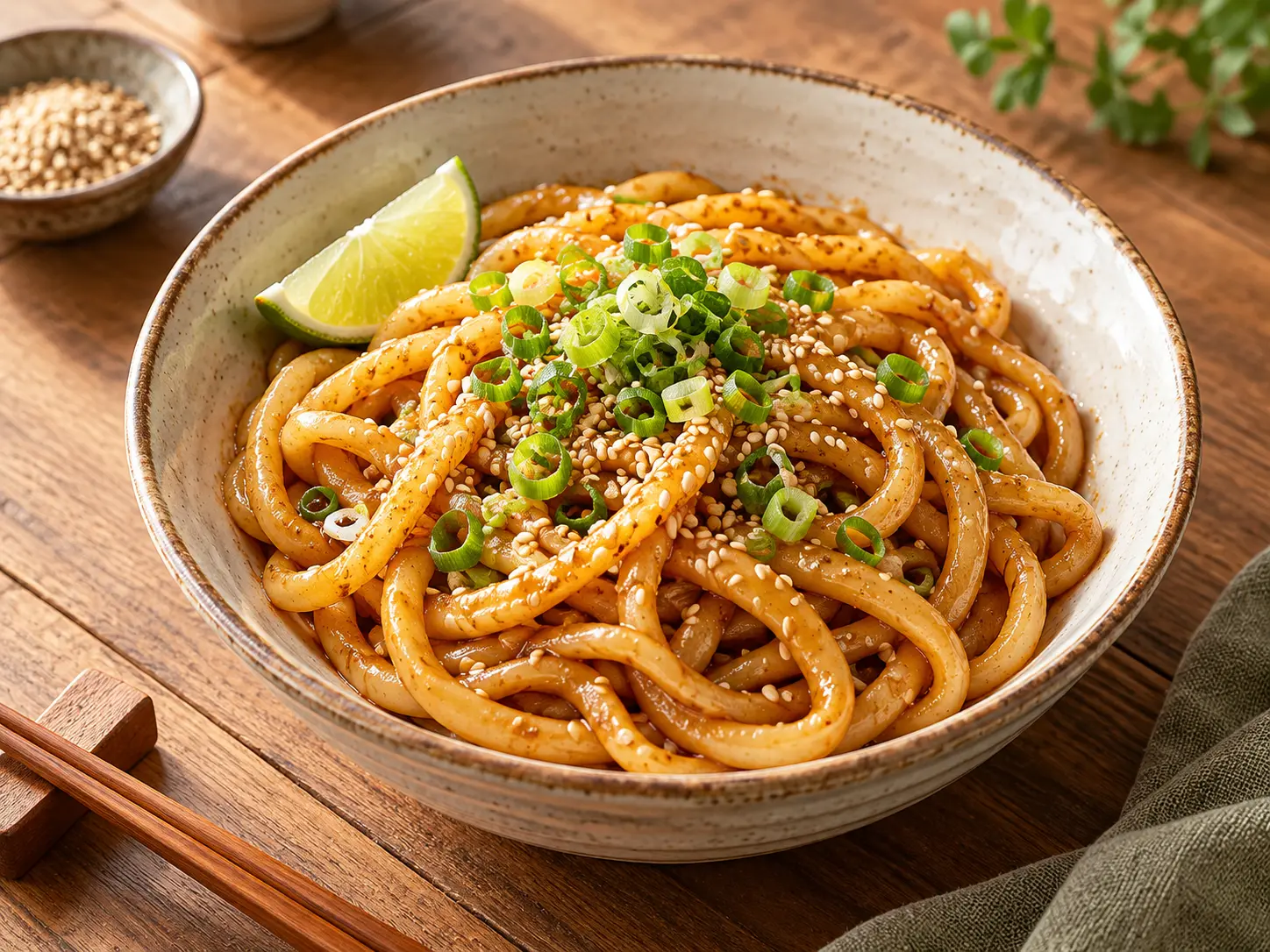
Frozen Sanuki-Style Udon
A frozen platform for thick, smooth, mochi-like strands requiring elastic recovery after rapid freezing and reheating.

Premium Dried Udon
A dried-noodle system designed for good dry-strand strength, smooth cooked texture, controlled water absorption and low cooking loss.
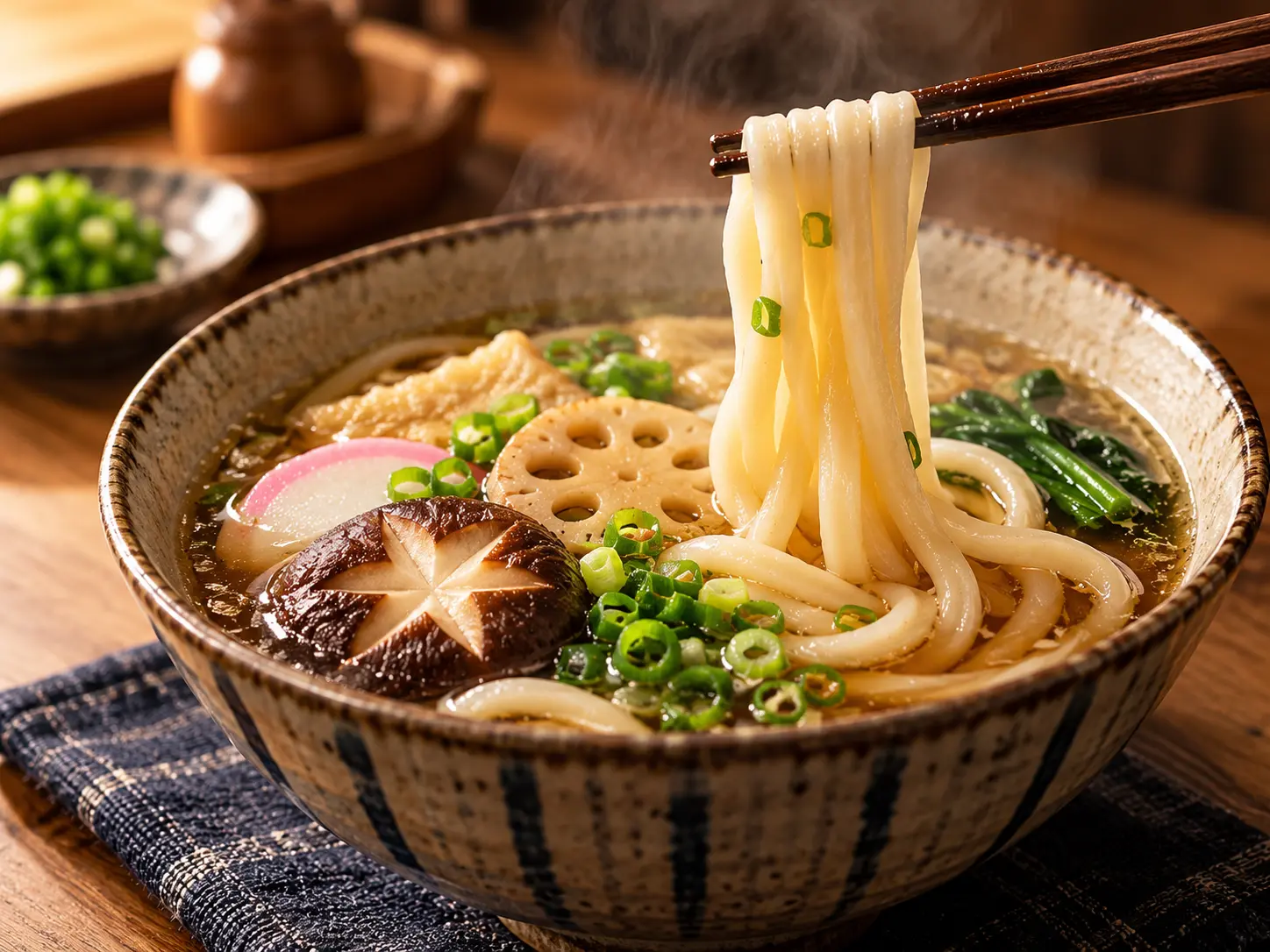
Hot-Pot & Curry Udon
A higher-stability platform for thick noodles that must tolerate extended heating, rich sauces and prolonged broth contact.
03 / COMMERCIAL PRODUCTION FORMULATION
Udon Noodles Formulation Batch Calculator
Calculate production quantities from either a flour-starch dry-base batch or a final wet-dough batch, then adjust Tianjiang modified starch and process-water levels without losing the 100-part flour-starch balance.
Advanced Udon Production Calculator
| Ingredient | Basis | Parts | Production Mass | Primary Function |
|---|---|---|---|---|
| Calculated Total | — | — | — | Production mix before cooking |
TJ-UD-01 ready.
Changing the modified-starch level automatically changes the wheat-flour level so that wheat flour + native tapioca starch + Tianjiang modified starch always remain at 100 parts. This provides a cleaner A/B trial design than simply adding starch on top of the existing formula.
04 / MODIFIED STARCH PERFORMANCE
How Modified Starch Improves Udon Noodles
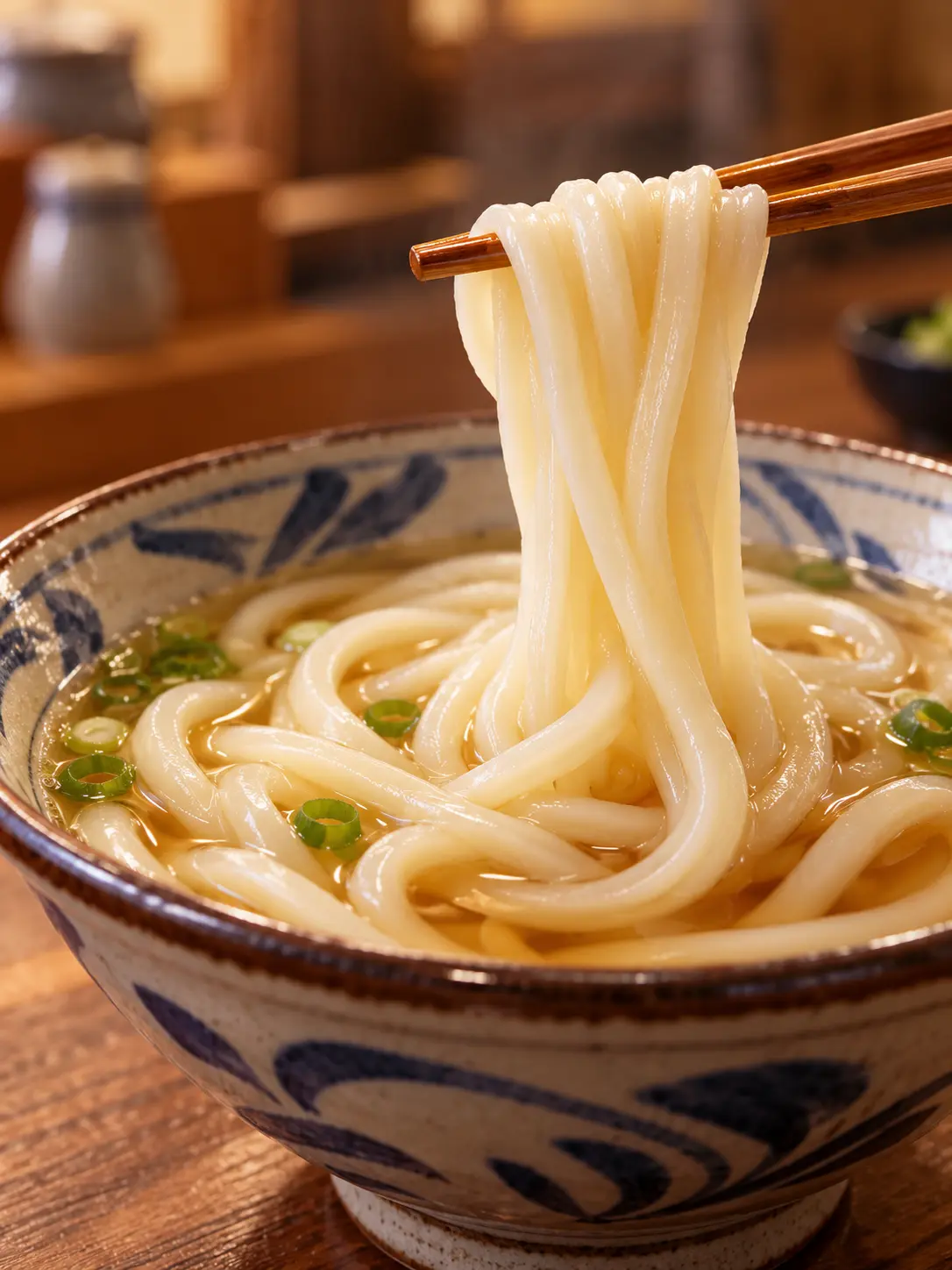
Udon quality depends on the relationship between gluten structure, starch swelling and water migration. The correct starch should soften the bite without destroying elastic recovery.
Elasticity
Build springy recovery and reduce brittle strand fracture.Softness
Create the characteristic soft exterior without producing a weak noodle.Smoothness
Improve surface lubrication and the clean, slippery mouthfeel associated with premium udon.Water Distribution
Control moisture movement from the surface toward the noodle core.Cooking Loss
Support strand integrity and reduce excessive soluble solids in cooking water.Freeze-Thaw Performance
Suitable modified starches can support texture recovery in frozen udon systems.
05 / TIANJIANG UDON PROCESS
Commercial Udon Noodles Manufacturing Process
This process follows the logic of Tianjiang's internal udon formulation while allowing manufacturers to adapt sheet dimensions, cooking and post-processing to their equipment.
-
Prepare brine
Fully dissolve salt and any validated alkaline ingredients into process water.
-
Dry blend
Uniformly combine medium-protein wheat flour, native tapioca starch, Tianjiang modified starch and sodium alginate.
-
Mix the dough
Add brine gradually while mixing, then continue until hydration is uniform without overdeveloping the dough.
-
First resting stage
Rest approximately 30–60 minutes to allow moisture distribution and dough relaxation.
-
Compound & sheet
Build a dense, continuous sheet through progressive reduction rather than one severe pass.
-
Second resting stage
Rest the sheet before final reduction to improve uniformity and reduce internal stress.
-
Final thickness & cutting
For thick cooked udon, a 3–4 mm starting target can be evaluated and adjusted to the required product.
-
Boil
Cook until the target starch gelatinization, core hydration and elasticity are reached.
-
Rinse & cool
Remove surface starch and stop further cooking using a controlled cooling process.
-
Portion & package
Drain consistently, control portion weight and package according to the required product format.
-
Frozen route
For frozen udon, rapidly freeze after cooking and cooling to preserve noodle structure.
-
Shelf-stable route
For ambient products, use a professionally validated thermal process based on product pH, water activity, package geometry and destination-market requirements.
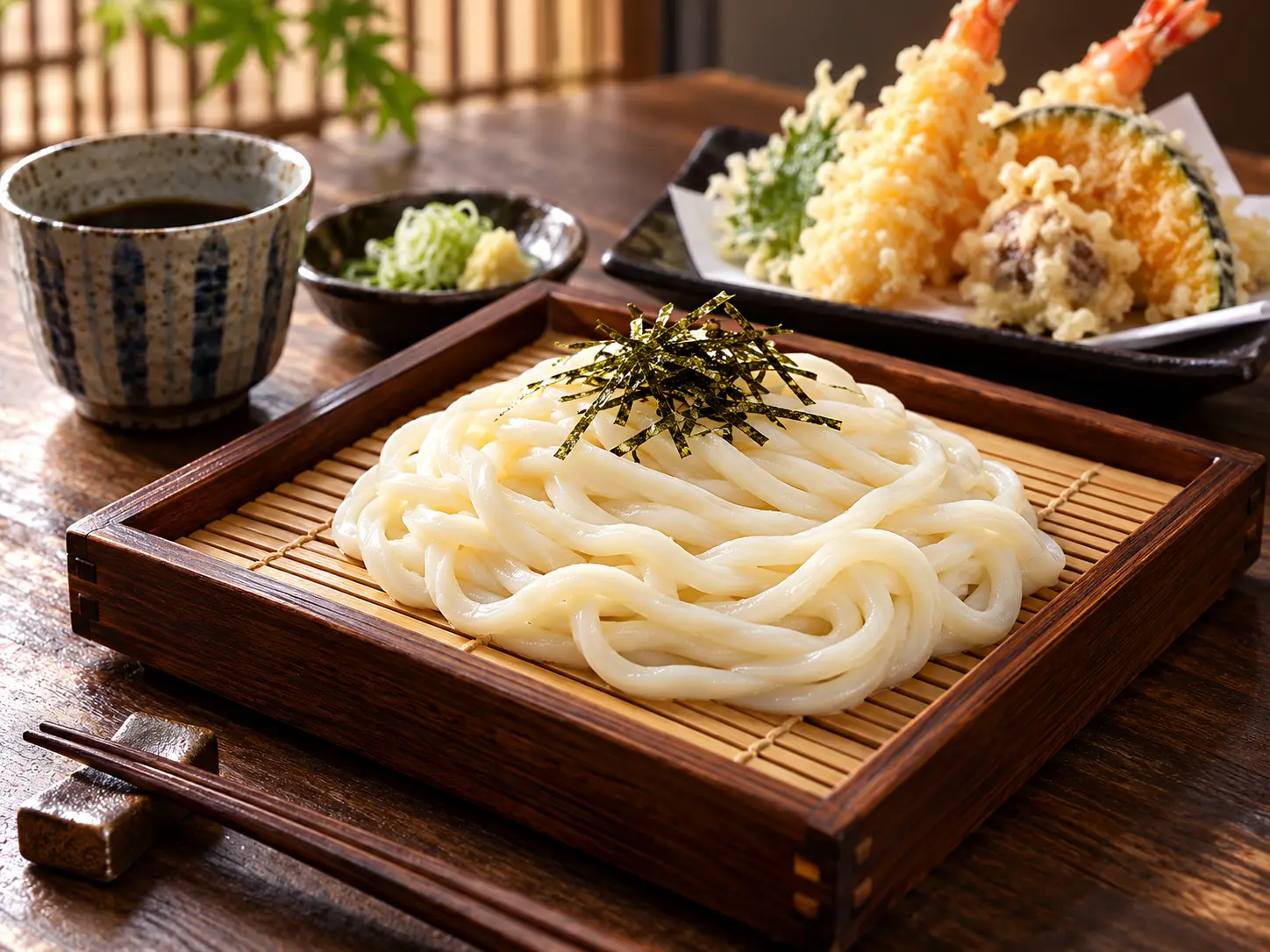
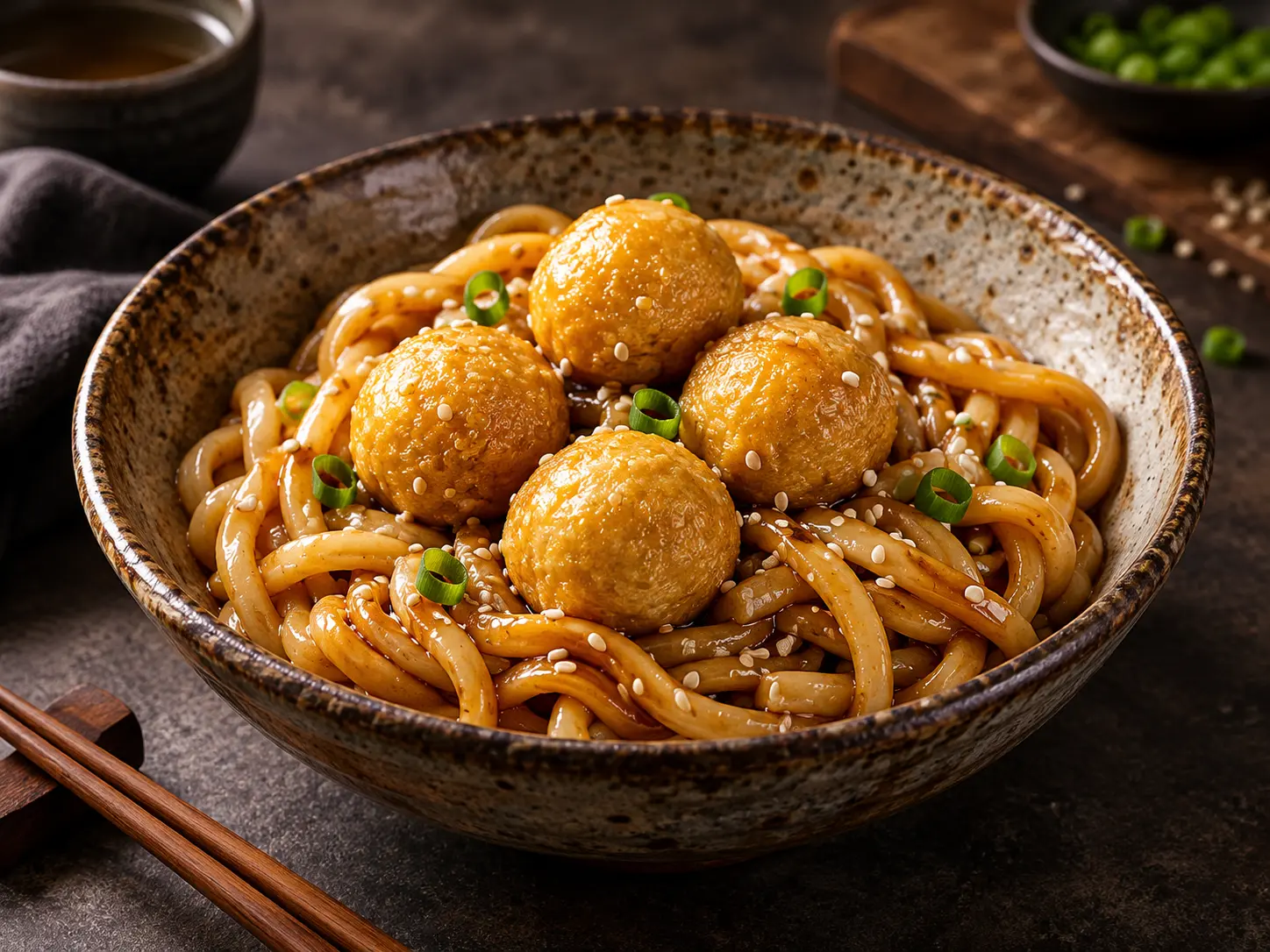
Udon Preparation & Serving References
Handmade preparation and finished soup bowls illustrate noodle handling and presentation alongside the production guide.

06 / MEASURE THE UDON EXPERIENCE
Udon Noodles Formulation and Quality Testing
Udon should not be evaluated only by hardness. A professional test protocol should separately measure elasticity, softness, smoothness, water absorption and cooking stability.
Elasticity
Measure tensile behavior and recovery of the cooked thick noodle strand.
Softness
Evaluate compression and bite after standardized cooking and cooling.
Smoothness
Evaluate surface friction, stickiness and sensory slurping quality.
Cooking Loss
Measure soluble solids released into standardized cooking water.
Water Absorption
Measure weight gain and internal hydration after cooking.
Strand Breakage
Track breakage through sheeting, cooking, cooling and packaging.
Freeze-Thaw Texture
Compare fresh-cooked and frozen-reheated texture for frozen udon.
Hot-Hold Stability
Measure firmness and elasticity after prolonged broth or sauce contact.
07 / DIAGNOSE THE UDON FAILURE
Udon Noodles Formulation Troubleshooting
Change one variable at a time. Before adjusting starch, standardize wheat flour, water, resting, sheet thickness and cooking conditions.
| Observation | Likely Factors | Controlled Next Trial |
|---|---|---|
| Udon breaks too easily | Weak gluten network, poor hydration, insufficient resting or low strand flexibility. | Screen a more elastic Tianjiang modified starch while holding water constant. |
| Texture is too hard | Low hydration, high flour protein, insufficient cooking or starch system too firm. | Evaluate hydration before increasing starch dosage. |
| Texture is too soft | Excessive swelling, overcooking or insufficient starch stability. | Use a more process-stable starch or reduce hydration. |
| Surface is sticky | Surface starch release, poor cooling, overcooking or excessive hydration. | Measure cooking loss and review post-cook rinsing. |
| Cooking water is cloudy | High solids loss, surface damage or weak noodle structure. | Compare cooking loss at fixed cooking time. |
| Frozen udon loses elasticity | Freeze-thaw damage, slow freezing or unsuitable starch system. | Evaluate TJ-UD-02 under controlled freezing conditions. |
| Udon softens in curry | Extended hot holding and excessive water absorption. | Evaluate TJ-UD-04 with higher process stability. |
| Noodles stick after packaging | High surface moisture, insufficient draining or unsuitable post-cook handling. | Standardize cooling, draining and packaging temperature. |
08 / SELECT BY PRODUCT FORMAT
How to Select Modified Starch for Udon Noodles
Tianjiang starch selection should begin with the required noodle format, wheat protein, hydration, strand thickness, cooking process and post-cook handling.
Elasticity Grade
For thick udon requiring springy bite and lower breakability.
Smooth-Texture Grade
For premium products where softness, surface smoothness and slurping quality are priorities.
Frozen Udon Grade
For products that must recover elastic texture after freezing and reheating.
Modified Tapioca Starch
A strong candidate for elastic, smooth and flexible udon texture.
Low-Cooking-Loss Grade
For applications where broth clarity and noodle integrity are important.
Hot-Hold Grade
For curry, hot pot and long-hold systems requiring improved texture stability.
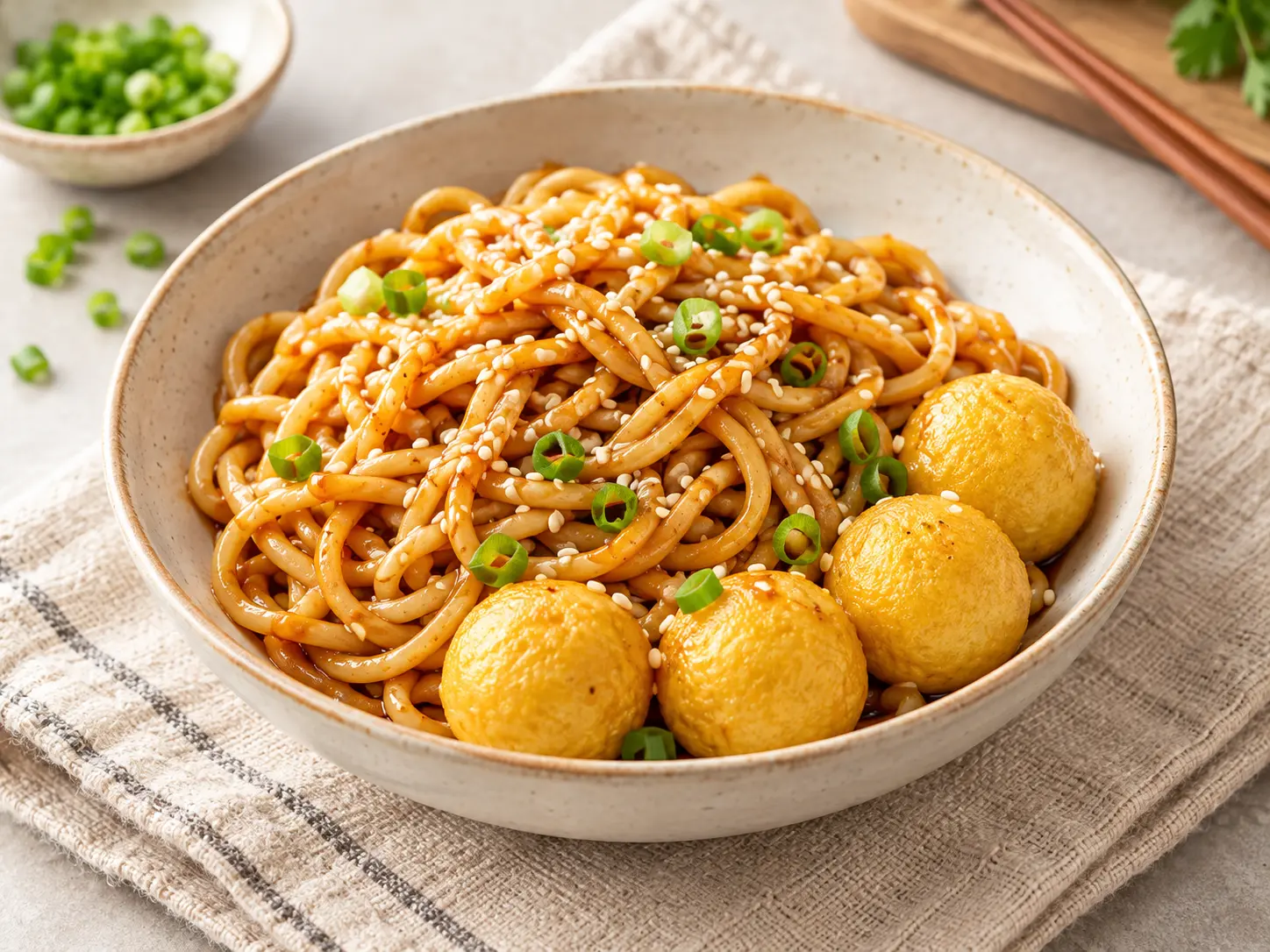
Vegetable Udon & Sauce Presentation
Explore a savory serving format with vegetables and sauce. Select texture and processing targets through formulation trials.
09 / R&D TO PURCHASING
Modified Starch Specifications for Udon Manufacturers
After the selected starch passes pilot and production trials, convert the result into a controlled purchasing specification.
Exact Tianjiang Grade
Confirm product code and approved dosage.Botanical Source
Confirm tapioca, potato, corn or other starch base.Functional Target
Define elasticity, softness, cooking loss and processing priorities.Representative COA
Review incoming quality-control parameters.Regulatory Documentation
Confirm ingredient identity and destination-market requirements.Commercial Planning
Confirm sample quantity, MOQ, packaging, lead time and monthly usage.

10 / TECHNICAL QUESTIONS
Udon Noodles Formulation FAQs
Technical guidance for udon manufacturers, R&D teams and modified-starch buyers.
Why Is Modified Starch Used in Udon Noodles?
Suitable modified starch can help control water distribution, elasticity, smoothness, breakability, cooking loss and processing stability in commercial udon.
How Much Modified Starch Can Be Used in Udon Noodles?
Tianjiang's core internal udon formulation uses approximately 7.5–10 parts modified starch within a 100-part flour-and-starch base. Final dosage should be verified against wheat quality, product format and processing conditions.
Why Is Tapioca Starch Used in Udon?
Tapioca starch is useful for developing a softer, more elastic and smoother eating texture. Its level must be balanced against gluten strength and modified-starch functionality.
What Makes Sanuki Udon Chewy?
Sanuki-style texture comes from the combined effects of wheat quality, hydration, salt, resting, sheeting, strand thickness, starch behavior and cooking conditions.
Can Modified Starch Improve Frozen Udon?
Suitable modified starch can be evaluated for improved freeze-thaw texture, elasticity and reheating stability. Rapid freezing and correct cooking conditions remain important.
How Can Cooking Loss Be Reduced?
Cooking loss is influenced by wheat protein, starch functionality, sheet damage, cooking time and hydration. A more stable modified starch system can be screened as part of the complete formulation.
Which Udon Formula Is Best for Curry or Hot Pot?
For prolonged hot holding, TJ-UD-04 provides a higher modified-starch level and is designed as the starting platform for curry, hot-pot and long-hold applications.
What Information Should I Send Tianjiang?
Share wheat protein, current starch composition, hydration, salt, sheet thickness, strand dimensions, cooking process, post-cook treatment, storage format and target texture.
11 / TALK TO TIANJIANG
Request Modified Starch Samples for Udon Noodles
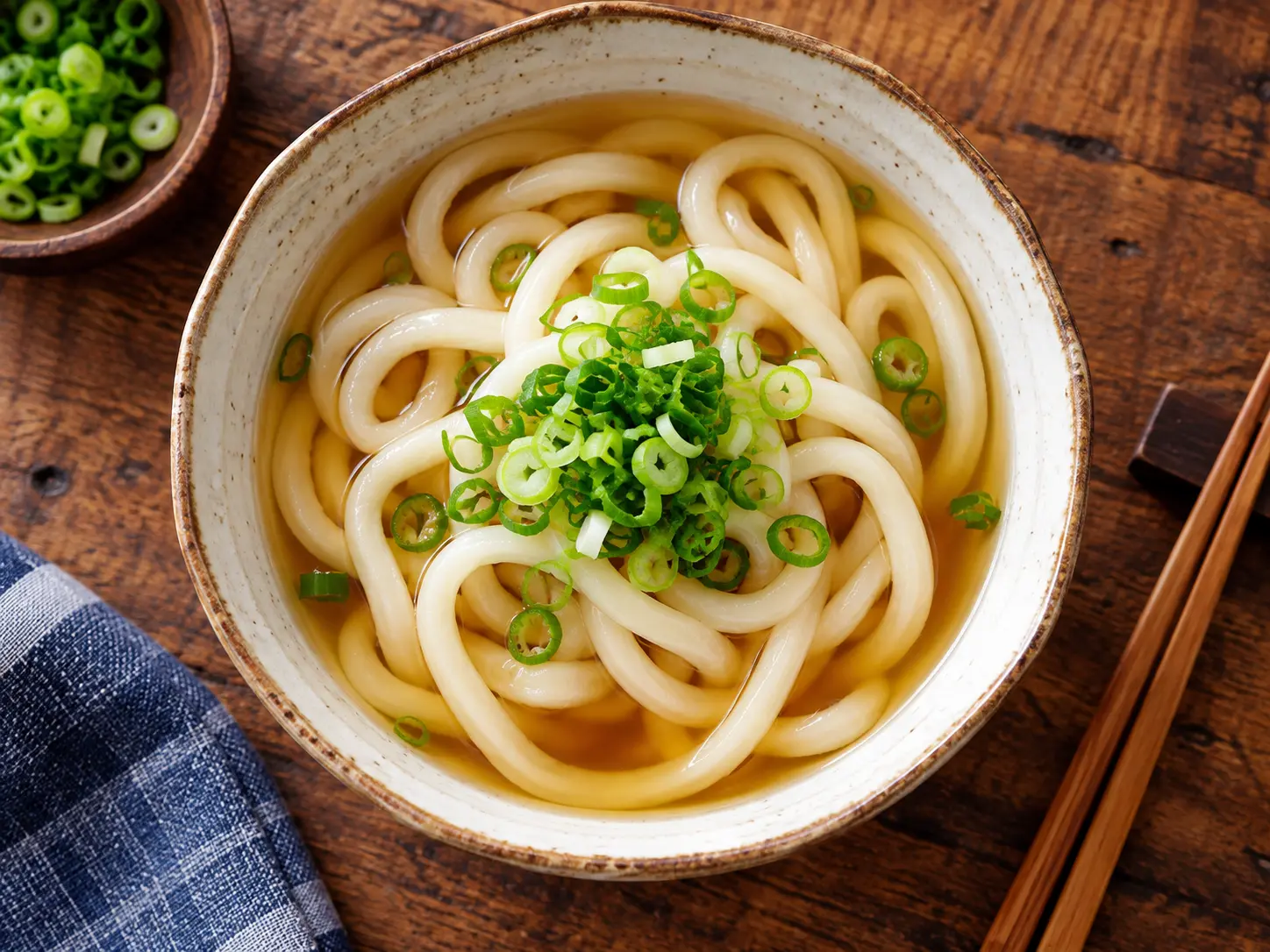
Share your current udon noodles formulation, production route and quality problem so Tianjiang can recommend a candidate modified starch for your next trial.
Prepare Your Udon Project Brief
12 / RELATED NOODLE APPLICATIONS