
Modified Starch Solutions for Acid & Salt Resistance
Build the texture your sauce needs. Explore starch selection for low-pH sauces, high-salt seasonings and formulations where acidity, salt and processing conditions work together.
Is your sauce losing the texture you designed?
Start with what changes, when it changes and the conditions around it. The same visible defect can have more than one cause.
Less body after acid addition
Review final pH, when acid enters the process, and the time spent under heat. Assess viscosity at a consistent measurement temperature.
Different texture after changing salt
Compare salt concentration, total solids and starch cooking conditions. A previous grade or dosage may need to be reassessed.
Water separation over time
Evaluate the full formulation and storage conditions. Starch selection is one part of controlling water separation and texture drift.
Bench and production results differ
Check ingredient order, heating time, mixing and pumping. Production conditions should be included in your starch trial.
Acid tolerance and salt tolerance need their own assessment.
An acid-resistant starch recommendation starts with the complete recipe and process, not a single ingredient name.
Acidic formulations
Record pH, acid type and addition stage. Include the duration and temperature of processing when comparing starch performance in low-pH sauces.
High-salt formulations
Specify salt content on a finished-product basis, together with sugar and other solids. Evaluate viscosity development in the actual recipe.
Combined processing demands
Acid and salt conditions often overlap with heating and mechanical stress. Review heat stability and shear resistance alongside formulation tolerance.
From acidic sauces to high-salt seasonings
Use the application as a starting point, then confirm the actual pH, salt content and processing requirements.

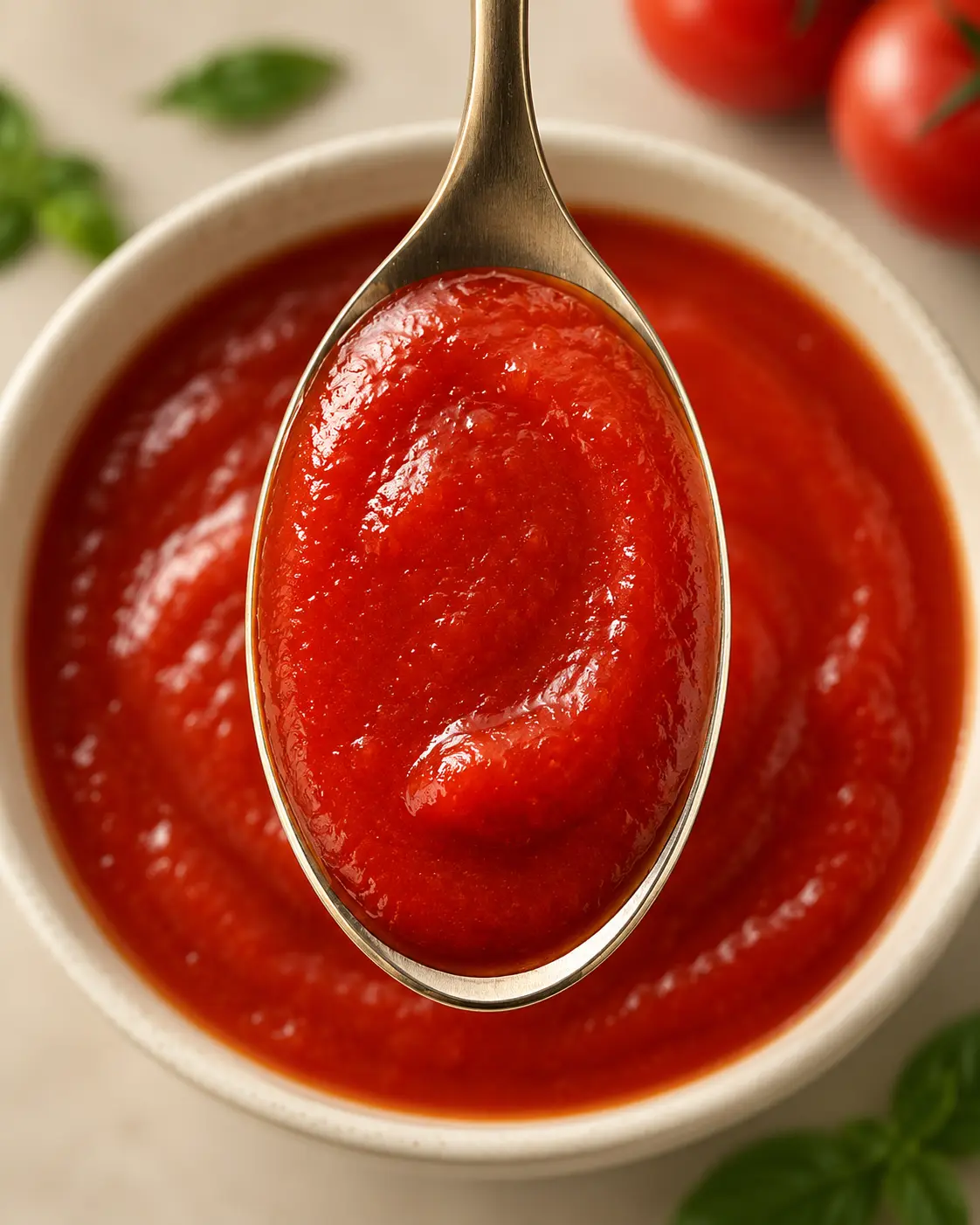
Tomato sauces
Assess body, pourability and viscosity retention in tomato-based recipes with their specific acid and solids content.
Explore tomato sauce applications →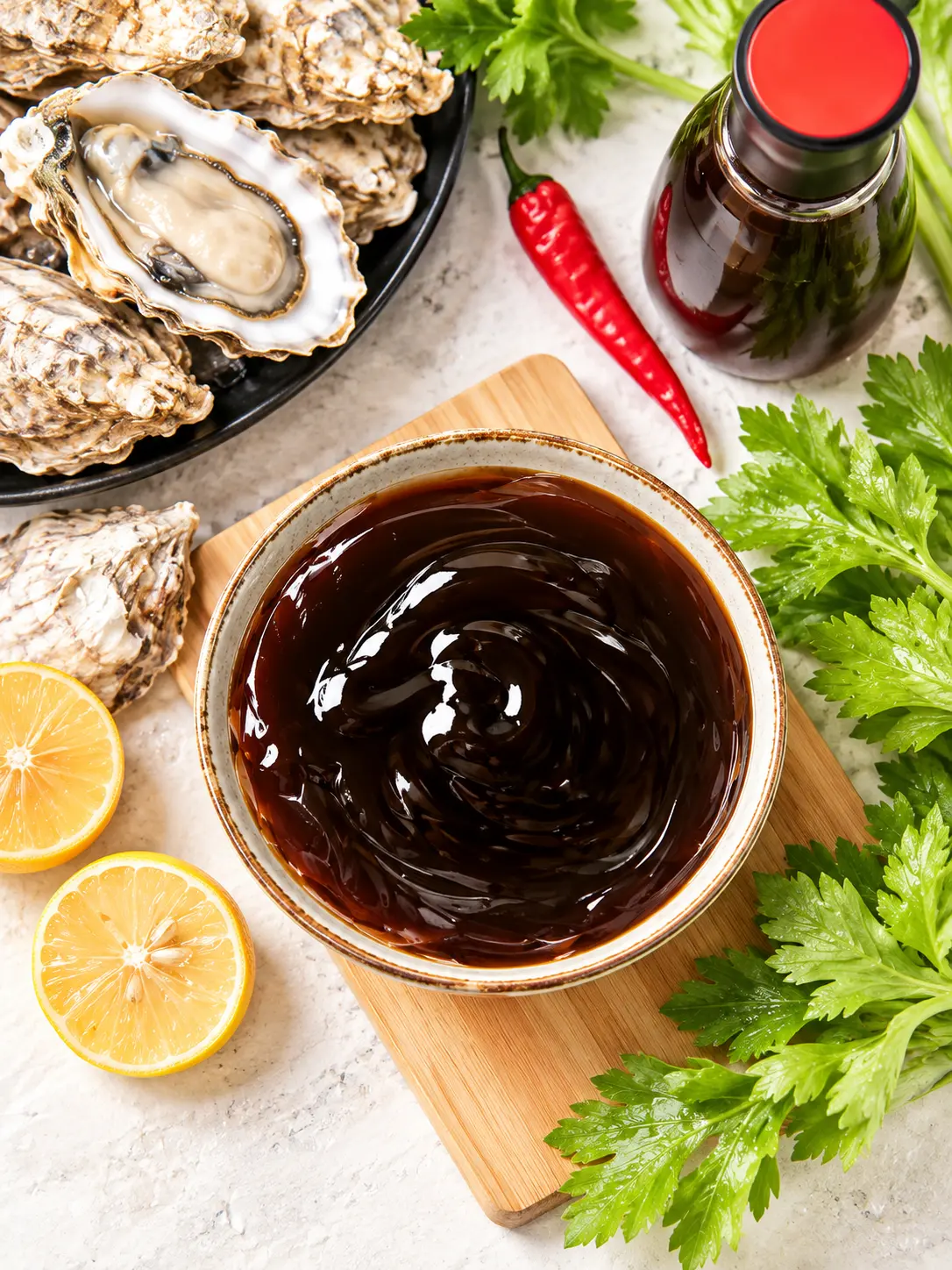
Oyster & savory sauces
Match thickening and coating characteristics to the salt level, soluble solids and cooking process.
Explore oyster sauce applications →
Salad dressings
Define the desired spoonable or pourable texture. Consider the acidified water phase and the wider emulsifying system.
Explore salad dressing applications →
Chili & dipping sauces
Evaluate acid, salt and sugar together to achieve the intended flow, coating and particle suspension.
Explore seasoning sauce applications →Choose the right starch for your formulation and process
Share the conditions below to help narrow the choice of modified starch for acidic or high-salt sauces.
| Selection factor | Information to share | What to assess |
|---|---|---|
| Application & texture | Product type; pourable, spoonable, squeezable or coating texture | Target body and flow behavior |
| Acidity | Final pH, acid type and addition stage | Performance throughout the acidification process |
| Salt & recipe solids | Salt percentage in the finished product; sugar, oil and other solids | Viscosity development in the complete recipe |
| Processing | Cold or hot process; time, temperature, mixing and pumping | Cooking requirements and process tolerance |
| Storage | Ambient, chilled or frozen conditions; target storage period | Texture drift and water separation over time |
E1422 / Acetylated Distarch Adipate
Review available grades with Tianjiang against your recipe, processing conditions and target texture.
View E1422 product information →E1442 / Hydroxypropyl Distarch Phosphate
Explore grade options and identify the application tests needed for your acid- or salt-containing formulation.
View E1442 product information →An E-number identifies a modification type, not a guaranteed acid or salt tolerance level. Confirm suitability, dosage and processing limits for the specific grade through technical documentation and application trials.
Tianjiang’s Guide to Acid & Salt Evaluation
Choose starch with your complete recipe and process in mind. Use the framework below to compare candidate grades for acidic sauces, high-salt seasonings and formulations that combine both conditions.
What These Experiments Mean for Starch Selection
These independent examples explain why formulation-specific evaluation matters. They are not Tianjiang test results, product specifications or evidence that a Tianjiang grade matches the reported samples.
Acidity changed final viscosity
Lotus-root starch/konjac glucomannan, 8.5:1.5 mass ratio; 6% suspension by mass. Citric-acid-containing phosphate buffers; RVA heating/cooling from 50 to 95 to 50 °C.
| Condition | Mean ± SD |
|---|---|
| pH 7 | 1914.5 ± 7.2 |
| pH 3 | 1163.5 ± 5.3 |
39.2% lower at pH 3, calculated relative to pH 7 from the reported means.
Triplicate experiments. Temperature program: 50 °C/1 min; 7.5 min heating; 95 °C/5 min; 7.5 min cooling; 50 °C/2 min. Stirring: initially 960, then 160 rpm. This starch–gum system is not E1422 or E1442.
Starch base changed salt response
Crosslinked, acetylated potato starch derivatives A (regular) and B (amylopectin). Brabender Type E; 3% dry matter, 75 rpm, 250 cmg. Readings after 20 minutes at 90 °C.
| Sample | Water | 1% NaCl |
|---|---|---|
| A · Regular potato | 1915 | 175 |
| B · Amylopectin potato | 2410 | 1095 |
9.1% vs 45.4% calculated viscosity retention for A and B, respectively: salt reading ÷ water reading × 100.
Both samples lost viscosity. B retained a larger fraction under this protocol. No variability estimates are given in the table. These readings do not establish a high-salt performance guarantee.
How to use this evidence: The studies use different materials, instruments and units. Do not compare their absolute viscosity values or combine them into one performance ranking. The acid study illustrates a formulation challenge; the salt example illustrates sample-specific differences. Neither establishes performance in an acid-and-salt combined recipe. Figures are reproduced without numerical alteration; percentages are calculations from the displayed readings.
Build a test plan for your own product
Define the recipe conditions
Record final pH, acid type, salt content and major recipe solids. State salt and starch concentrations as percentages of the finished formulation so comparisons use the same basis.
Reproduce the production process
Document ingredient addition order, cooking temperature, holding time and mixing conditions. Include pumping or homogenization where these steps affect the finished texture.
Compare against your texture target
Evaluate viscosity, flow, coating behavior and visible water separation. Assess stored samples under the intended storage conditions using consistent measurement methods.
What to include in your starch evaluation
| Evaluation area | Comparison approach | Information to record |
|---|---|---|
| Acid tolerance | Compare candidate starches at the intended product pH. Evaluate additional pH conditions where relevant to your formulation range. | Measured pH, acid type, acid addition stage, starch dosage and processing conditions. |
| Salt tolerance | Compare performance at the target salt content and, where applicable, the expected manufacturing variation. | Salt percentage, calculation basis, major solids, cooking conditions and final texture. |
| Processing stability | Compare samples before and after the relevant process step using a consistent measurement temperature and method. | Temperature history, holding time, mixing conditions, sample conditioning and viscosity measurement method. |
| Storage stability | Examine samples at defined intervals under the intended storage conditions. | Storage time and temperature, viscosity changes, visible water separation and texture observations. |
| Reference comparison | Compare the candidate with your current starch or another clearly identified reference in the same formulation. | Starch identity, dosage, preparation method and any differences between the compared samples. |
About this guide: This test-planning framework is general guidance. The independent research above is not Tianjiang laboratory data or a product specification. Performance and acceptance criteria should be established for the specific starch grade, formulation and process.
From formulation brief to sample evaluation
Share your challenge
Describe the product, current defect and when it appears. Include known pH, salt and processing conditions.
Discuss grade options
Contact Tianjiang to discuss candidate grades, available technical information and sample requirements.
Evaluate in your process
Test the candidate in your own formulation, then assess processing behavior and stored-product texture against your target.
Acid & salt resistance: frequently asked questions
Which starch is suitable for low-pH sauces?
Select a grade using the final pH, acid addition stage, heating time, shear and target texture. “Acid stable modified starch” describes a performance requirement; it does not identify one grade suitable for every acidic sauce.
How does salt content affect starch selection?
Salt content is part of the formulation conditions used to assess viscosity development and final texture. Specify its concentration, the basis of calculation and other major ingredients, then compare candidate grades in the actual recipe.
Can one starch grade handle both acidic and high-salt conditions?
A grade may be suitable for combined conditions, but this needs to be confirmed for the specific recipe and process. Evaluate acidity, salt, temperature and shear together rather than combining results from unrelated tests.
When should acid and salt be added during processing?
There is no single addition order for all grades and processes. Follow the grade's technical guidance and compare feasible addition sequences in trials, including whether the starch has developed the required viscosity before acidification.
Is acid-resistant starch the same as acid-treated starch?
No. Acid resistance describes performance in an acidic formulation. Acid-treated starch describes a starch modification process. The terms are not interchangeable, and acid treatment alone is not evidence of acid tolerance in your product.
What information is needed for a starch recommendation?
Start with the application, current problem, pH, salt content, processing temperature and time, and target texture. Include the current starch and dosage if available. You can contact us even if some parameters are not yet known.
Find the right starch for your acidic or high-salt formulation
Tell us what you make and what needs to improve. Contact Tianjiang to discuss starch selection, technical information and sample availability.
Prefer email? sales@tianjiangmodifiedstarch.com
Helpful details for your enquiry
- Application and current texture problem
- pH and finished-product salt percentage
- Heating temperature, time and mixing process
- Target texture and storage conditions
- Whether you would like to discuss a sample
Not sure of every parameter? Start with what you know.