
FUNCTIONAL NATIVE STARCH
Functional Native Starch is designed for food manufacturers seeking label-friendly texture, viscosity and processing performance while retaining native-starch positioning.
WHAT IS FUNCTIONAL NATIVE STARCH?
Native Starch Foundation
Functional Native Starch is based on edible starch derived from botanical sources such as corn, tapioca, potato or other selected raw materials.
Native starch consists primarily of amylose and amylopectin and develops viscosity and texture when starch granules gelatinize during food processing.
Physical Processing and Functional Performance
Selected functional grades may use controlled physical processing to tailor pasting behavior, texture, viscosity and process tolerance without conventional chemical derivatization.
Actual performance depends on botanical source, processing method, solids level, temperature, shear and finished-food formulation.
KEY BENEFITS OF FUNCTIONAL NATIVE STARCH
Functional Native Starch can be selected to provide controlled viscosity and texture while supporting clean-label-oriented product development.
Controlled Viscosity
Supports targeted thickening and body in suitable aqueous food formulations.
Smooth Texture
Helps create consistent mouthfeel and smooth finished-product texture.
Process Tolerance
Selected grades can provide improved performance under controlled heat and shear conditions.
Water Binding
Supports moisture management and product consistency in appropriate formulations.
Neutral Sensory Profile
A mild flavor and light color help minimize interference with the finished food profile.
Label-Friendly Positioning
Suitable grades can support formulations where conventional chemically modified starch declarations are not preferred.
FUNCTIONAL NATIVE STARCH PROCESSING PERFORMANCE
Functional Native Starch performance should be selected according to process severity, target texture, viscosity profile and storage conditions.
Performance Under Food Processing Conditions
| Processing Requirement | Product Selection Consideration |
|---|---|
| Heating | Choose a grade matched to cooking temperature and holding time. |
| Shear | Viscosity retention should be evaluated under actual mixer, pump or homogenizer conditions. |
| pH | Acidic formulations should be tested at final product pH and thermal process. |
| Freeze–Thaw | For frozen products, syneresis and texture stability should be verified by application testing. |
| Viscosity | Target viscosity is grade-specific and should be confirmed using agreed test conditions. |
| Texture | Selection can be adjusted for body, creaminess, spoonability or short texture. |
FUNCTIONAL NATIVE STARCH TEST SPECIFICATIONS
The values below represent Tianjiang's typical quality-control targets for Functional Native Starch. Final specifications may vary according to botanical source and functional grade, while batch-specific results are confirmed in the applicable Certificate of Analysis (COA).
SENSORY QUALITY CONTROL CRITERIA
MICROBIOLOGICAL TEST LIMITS
PHYSICOCHEMICAL TEST LIMITS
| Test Parameter | Tianjiang Control Range |
|---|---|
| Starch Content | ≥ 85.0% |
| Moisture | ≤ 13.0% |
| pH | 4.5 – 7.0 |
| Total Ash | ≤ 0.20% |
| Protein | ≤ 0.40% |
| Whiteness | ≥ 90.0% |
| Sulfur Dioxide | ≤ 30 mg/kg |
| Particle / Sieve Quality | Grade-specific |
| Peak Viscosity Defined test condition | Grade-specific |

PRODUCT IDENTIFICATION AND FUNCTIONAL TESTING
Quality-control evaluation includes physical inspection, moisture and composition testing, pH measurement, viscosity profiling and microbiological examination using validated methods.
Appearance, color, odor and physical uniformity are evaluated against the approved product specification.
Moisture and mineral residue are controlled to support stable storage and product consistency.
Product pH is measured using an agreed starch dispersion and validated laboratory procedure.
Pasting and viscosity behavior are evaluated using defined solids, heating and instrument conditions for each grade.
Routine microbial controls include total plate count, yeast, mold and relevant indicator or pathogen testing.
Functional Native Starch International References
Independent regulatory resources provide background information relating to native starch, physically processed starch and food-ingredient classification in international markets.
Codex GSFA — Starches
Review Codex international food-category information relating to native starch and starch products.
EU Food Additive Regulation — Starch Classification
Review official European regulatory information relevant to physically modified starch and modified starch food additives.
Regulatory classification, ingredient naming and permitted claims should be confirmed according to the specific Functional Native Starch grade, processing method, application and destination market.
These values represent Tianjiang's typical control targets for Functional Native Starch. Grade-specific specifications and actual batch results should be confirmed through the applicable TDS and COA.
REQUEST TIANJIANG SPECIFICATIONFUNCTIONAL NATIVE STARCH APPLICATIONS
Functional Native Starch can be selected for a range of food systems according to viscosity, texture, process and storage requirements.
Sauces & Gravies
Body, viscosity and smooth texture in suitable cooked formulations.
Soups & Ready Meals
Texture development and viscosity control during heating and filling.
Dairy Desserts
Supports creamy mouthfeel and controlled consistency.
Fruit Preparations
Can support body and suspension in selected fruit-based systems.
Bakery Fillings
Useful where controlled viscosity and filling texture are required.
Frozen & Chilled Foods
Grade selection should be verified for freeze–thaw and refrigerated stability.
FUNCTIONAL NATIVE STARCH FOR LABEL-FRIENDLY FORMULATIONS
Functional Native Starch is often considered when formulators want starch functionality without relying on conventional chemically modified starch additives.
European Ingredient Positioning
EU food-additive legislation states that physically modified starch is not considered a food additive under the Regulation's definition.
VIEW EU REGULATION ↗Destination-Market Review
Ingredient naming and label claims should be confirmed according to botanical source, processing method, final application and the regulations of the destination market.
DISCUSS DOCUMENTATION →FUNCTIONAL NATIVE STARCH PACKAGING & GLOBAL SUPPLY
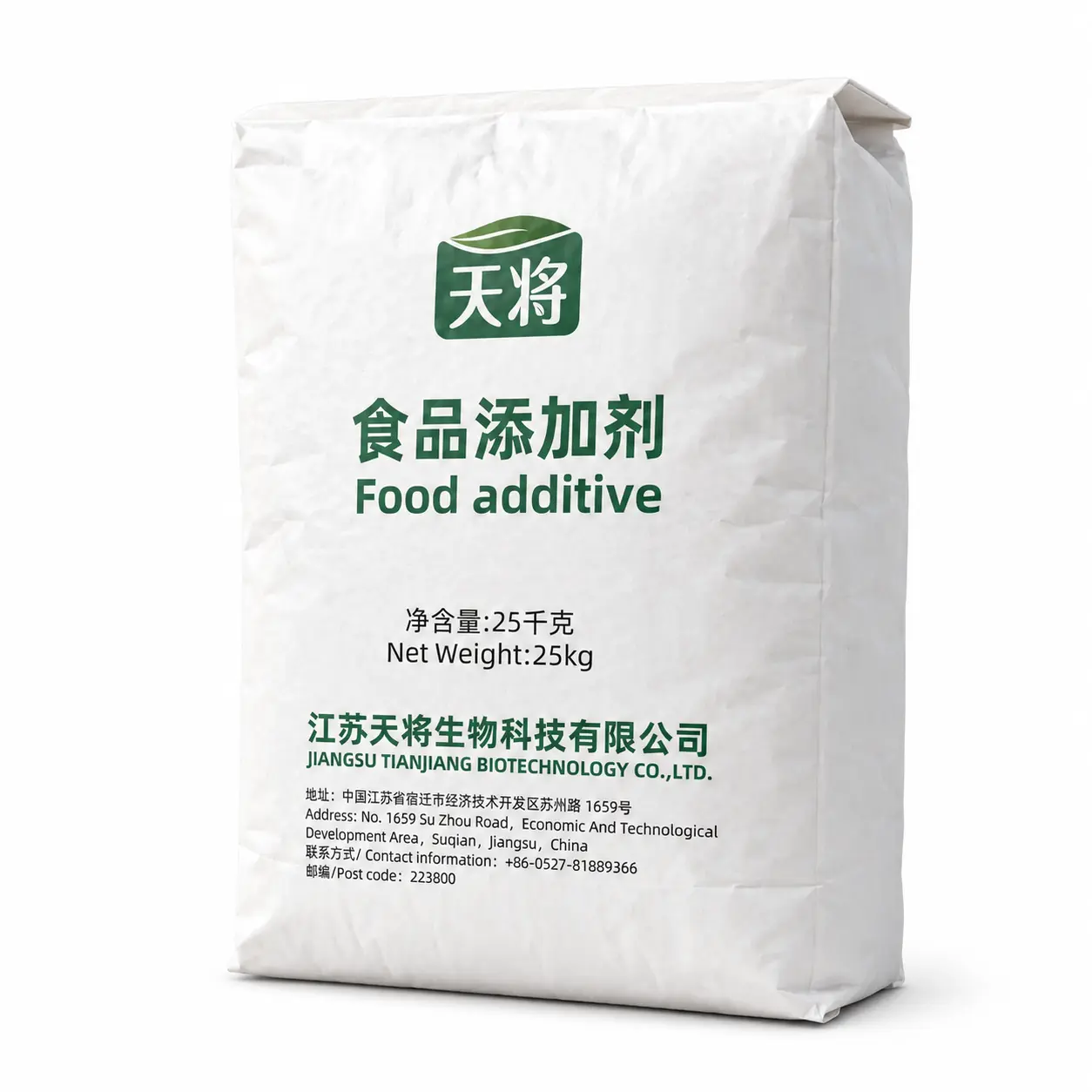
Functional Native Starch is supplied in durable packaging designed for storage, pallet handling and international transportation.
Packaging and Container Loading Details
Pallet configuration and container loading can also be customized according to customer requirements.
FUNCTIONAL NATIVE STARCH QUALITY & DOCUMENTATION
Tianjiang supports Functional Native Starch supply with product specifications, quality documentation and batch-specific analytical records according to commercial requirements.
Product Specification
Defines approved quality-control ranges for the selected grade.
Certificate of Analysis
Provides batch-specific analytical results for commercial lots.
Technical Data Sheet
Summarizes product characteristics, application and functional positioning.
Food Safety Documents
Supporting documentation can be supplied according to product and market requirements.
Export Documentation
Commercial and logistics documentation supports international shipment.
FUNCTIONAL NATIVE STARCH TECHNICAL DOCUMENTS
Technical Data Sheet
Review functional positioning, process recommendations and product characteristics.
REQUEST TDS →Product Specification
Confirm grade-specific chemical, physical and microbiological limits.
REQUEST SPECIFICATION →Certificate of Analysis
Receive batch-specific quality-control data for approved commercial shipments.
REQUEST COA →Application Support
Discuss viscosity, processing conditions, target texture and grade selection.
CONTACT TECHNICAL TEAM →REQUEST A FUNCTIONAL NATIVE STARCH SAMPLE
Share your formulation, process temperature, shear conditions, target viscosity and texture requirements so our team can help select an appropriate grade for application testing.
FUNCTIONAL NATIVE STARCH FAQ
Selected grades are designed or physically processed to provide improved functional performance while maintaining native-starch-oriented ingredient positioning.
Native starch is not presented on this page as a chemically modified starch additive with a dedicated E-number. Regulatory classification should be verified for the specific product and market.
Availability may include selected corn, tapioca, potato or other starch sources depending on grade and commercial requirements.
Grade selection can be matched to target viscosity and processing requirements. Test conditions should be aligned before comparing values.
Suitable grades should be verified through freeze–thaw testing because stability varies by starch source and processing technology.
Yes. Samples can be requested for formulation screening and application testing.
Applicable product specifications, technical information and batch-specific COA can be supplied upon request.
Standard commercial supply is available in 25 kg bags with palletized container-loading options.
RELATED MODIFIED STARCH PRODUCTS
Acetylated Distarch Adipate
For viscosity stability, smooth texture and demanding food processing.
VIEW E1422 →Hydroxypropyl Distarch Phosphate
For heat, shear and freeze–thaw stability in processed foods.
VIEW E1442 →Starch Sodium Octenyl Succinate
For emulsification, stabilization and carrier applications.
VIEW E1450 →Oxidized Starch
For selected viscosity, film-forming and food coating applications.
VIEW E1404 →INTERNATIONAL STARCH & INGREDIENT REFERENCES
These external resources provide authoritative information on native starch classification, physically processed starch and starch functionality.
Codex GSFA — Food Category 06.2.2 Starches
Codex describes native starch as starch separated from plant raw materials by processes specific to each botanical source.
VIEW CODEX REFERENCE ↗ EUROPEAN UNIONEU Regulation on Food Additives
Review the official EU definition distinguishing physically modified starch from chemically modified food-additive starches.
VIEW EUR-LEX REFERENCE ↗ SCIENTIFIC REFERENCEPhysical Modification of Food Starch Functionalities
Scientific review covering thermal and non-thermal approaches used to alter starch functionality without conventional chemical derivatization.
VIEW PUBMED REFERENCE ↗NEED HELP SELECTING FUNCTIONAL NATIVE STARCH?
Tell us about your food application, heating conditions, shear, target viscosity, texture and storage requirements. Tianjiang's sales and technical teams can help evaluate an appropriate starch grade for your formulation.
