
Tianjiang / Oyster sauce formulation
Modified Starch
for Oyster Sauce
Develop the body, gloss and flow your oyster sauce needs. Start with a practical formulation, compare modified starch levels and define a trial for your salt content and production process.

01 / Define the product
Oyster Sauce Solutions for Manufacturers, R&D and Buyers
A retail bottle, a foodservice pack and a cooking ingredient may need different flow and coating behavior. Define the benchmark before choosing the starch.
Production Requirements for Sauce Manufacturers
Assess mixing, pumping, heat exposure, filling and final yield. Compare consistency across batches after the complete production process.
Formulation Priorities for R&D Teams
Balance starch, xanthan gum and flour against the desired body and gloss. Keep salt, oyster extract and test conditions consistent during screening.
Sourcing Requirements for Ingredient Buyers
Request an exact grade, technical specification, sample quantity and quotation basis. Match the proposal to your market, packaging and monthly demand.
This page is for industrial oyster sauce development. The formulation below is a proposed screening baseline derived from Tianjiang’s internal ranges; it is not a validated commercial recipe.
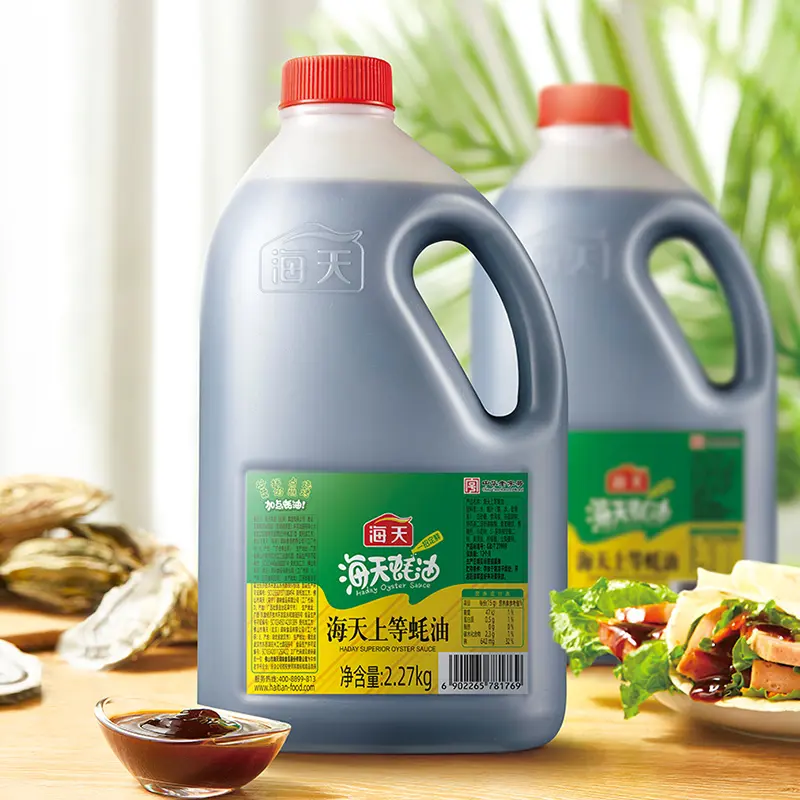
Oyster Sauce Packaging Formats
Compare bottled and bulk sauce formats when defining your benchmark, dispensing needs and finished-product presentation. The Haday packaging photos below are visual references for product-format review.

02 / The formulation starting point
Oyster Sauce Formulation with Modified Starch
Explore the internal ingredient ranges alongside a balanced 100 kg starting formula. Use the calculator to prepare controlled trials at 2.50%, 2.75% or 3.00% modified starch.
Trial Formula and Batch Calculator
Percentages are by weight on a finished-batch basis. The calculator adjusts water only and does not predict viscosity. Use suitable weighing precision for small additions.
| Ingredient | Internal reference range | Trial % | Trial mass, kg | What to control |
|---|---|---|---|---|
| Water | 61.00–71.00% | 70.20 | 70.20 | Balance to 100%; record water quality and any process allowance. |
| Oyster juice / extract | 3.00–3.50% | 3.25 | 3.25 | Confirm extract concentration, solids, salt content and supplier specification. |
| Salt | 9.00–11.50% | 10.25 | 10.25 | Added salt only; extract and other ingredients may also contribute sodium. |
| White sugar | 8.00–10.00% | 9.00 | 9.00 | Hold constant during the first starch comparison. |
| Monosodium glutamate (MSG) | 3.50–5.00% | 4.25 | 4.25 | Internal reference level; assess overall savory balance and target specification. |
| Tianjiang modified starch | 2.50–3.00% | 2.75 | 2.75 | Confirm the exact oyster sauce grade and cooking requirements. |
| Wheat flour | 0.10–0.20% | 0.15 | 0.15 | Record flour specification and include in allergen review. |
| Xanthan gum | 0.10–0.20% | 0.15 | 0.15 | Record grade and dispersion method; evaluate interaction with starch. |
| Total | Finished-batch basis | 100.00% | 100.00 | Process evaporation allowance excluded |
100 kg finished trial batch · 2.75% starch · 70.20% water.
The source ranges are development windows, not values to combine at every maximum or minimum. The eight ingredients above total 100%. Oyster extract strength and the specific starch grade are not identified in the source sheet and must be defined before a meaningful trial.
How the Trial Formula Uses the Internal Reference
The proposed baseline uses 3.25% oyster juice/extract, 10.25% salt, 9.00% sugar, 4.25% MSG, 2.75% modified starch, 0.15% wheat flour and 0.15% xanthan gum. Water is 70.20%. All selected values fall within the supplied ranges. This is a balanced screening proposal, not a tested optimum. Salt and MSG should be reviewed against the intended taste and composition targets; these levels are not universal recommendations.
Preservatives and Color in the Source Formula
The source lists an unspecified preservative at 0.05–0.10% and food color as needed. Neither is included in the baseline because identity, active concentration and target-market requirements are missing. Those source entries are not dosage instructions. Any later addition must replace an equal mass of water and undergo a product-specific review. The screening formula does not establish a preservation system.
How to Account for the 10% Evaporation Reference
The source says to evaporate 10% of water during cooking and bring the finished product to 100%, but does not clearly define the denominator or initial charge. Do not automatically deduct 10% from this formula. If the intended allowance is 10 kg extra water per 100 kg finished sauce, charge 110 kg and lose 10 kg, which is 9.09% of the initial batch. If the target loss is 10% of the initial charge, start with 111.11 kg to obtain 100 kg. Confirm the original basis and measure actual kettle losses.
What the starch contributes
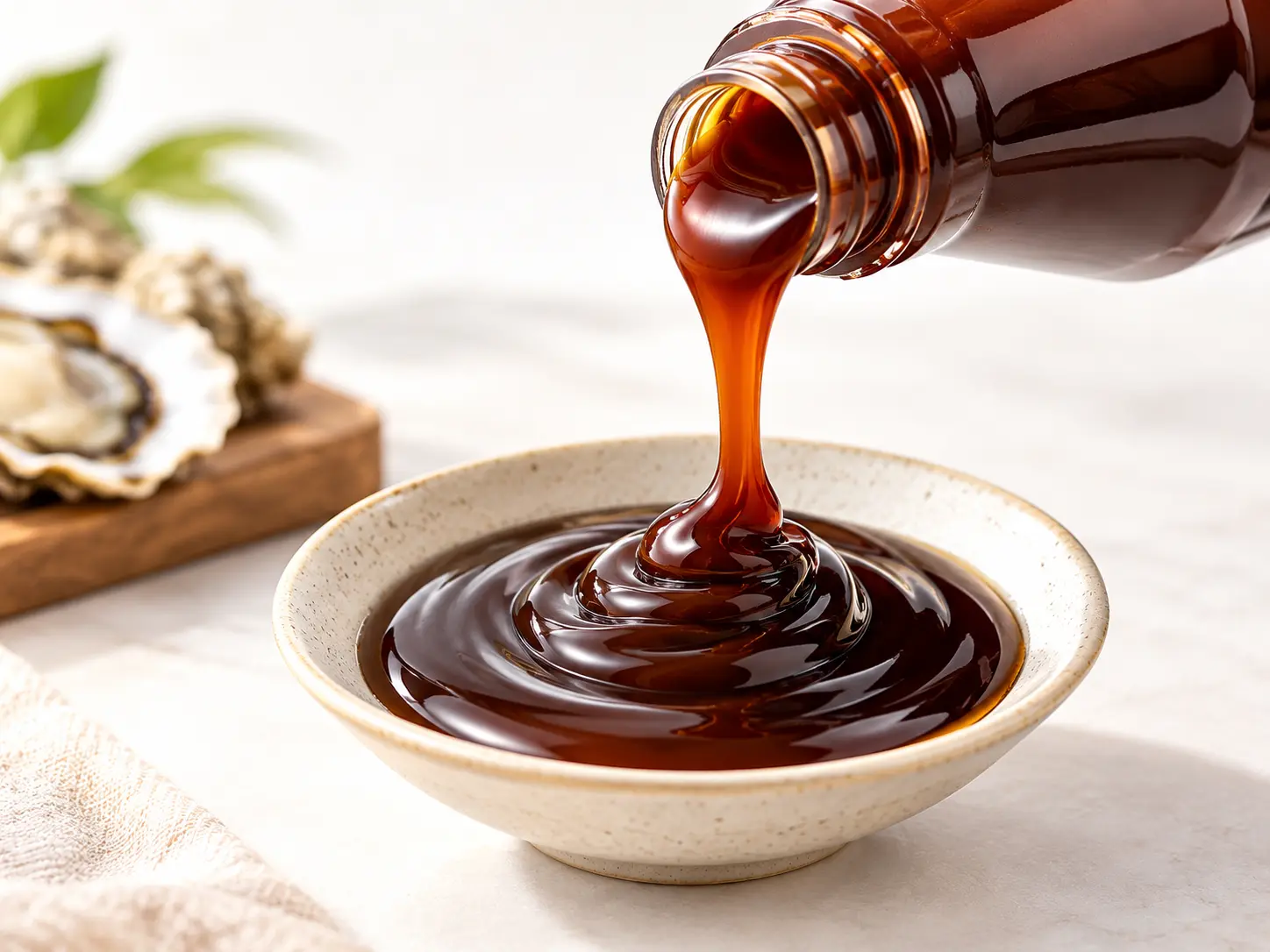
Modified Starch Functions in Oyster Sauce
A suitable modified starch can help build sauce body and manage texture through processing. Tianjiang’s internal sheet highlights water retention, texture stability and tolerance to heat, acid, salt and shear; verify these properties for the exact grade in your formula.
Body and Pourability
Aim for a sauce that pours from the pack and coats food at the intended serving temperature.Gloss and Surface Appearance
Compare sheen under the same lighting and on the same food surface; also check bubbles and color.Water Separation Control
Track visible serum separation during defined storage conditions and after relevant handling.Texture Stability During Processing
Compare cooked, pumped and cooled samples to identify where consistency changes.
03 / From weighing to filling
Oyster Sauce Manufacturing Process
Use the internal process as a documented trial framework. Preserve its core sequence while adding checkpoints for dispersion, cooking, mass balance and finished texture.
Confirm Ingredient Specifications
Record oyster extract solids and salt, starch grade, flour and xanthan specifications, batch weights and the control recipe. Review oyster and wheat ingredients and any allergens carried by compound ingredients.
Preblend and Disperse the Dry Ingredients
The source method preblends dry ingredients. Establish a reproducible dispersion procedure for starch, flour and xanthan, using an appropriate portion of the formula’s dry carrier if needed. Avoid adding powder too quickly into a poorly mixed zone.
Prepare the Liquid Base and Combine
Premix the wet ingredients, then introduce the dry blend with controlled mixing, as described in the source. Record addition rate, order, temperature and mixer settings. Confirm the sequence with the starch supplier.
Cook and Develop the Starch
The internal method uses a product temperature above 90°C for about 20 minutes until starch gelatinization is complete. Treat this as a development reference; verify the exact grade’s requirements in the salt-and-sugar system. It is not a validated microbial kill step.
Control Evaporation and Finished Yield
Weigh the charge and finished batch. Resolve the source’s 10% evaporation basis before applying an allowance. Record cooled viscosity, salt or sodium method, solids, pH and actual yield. Use a controlled procedure for adjustments.
Validate Filling, Packaging and Cooling
The source ends with cooling and filling. Define the appropriate product-specific thermal, filling and cooling process with a qualified specialist. The source sequence alone does not establish ambient shelf stability or aseptic filling.
04 / Diagnose before changing dosage
Oyster Sauce Texture Problems and Troubleshooting
Connect a visible problem to a controlled comparison. Several formulation and process factors can produce a similar symptom.
| Observation | Possible factors to check | Next controlled comparison |
|---|---|---|
| Sauce thins after cooking or pumping | Grade suitability, cooking profile, shear history, solids and weighing accuracy. | Sample after cooking and after pumping. Keep dose fixed while comparing a candidate process-tolerant grade. |
| Water separates during storage | Starch development, ingredient variation, water balance and starch–gum system. | Run a fixed-recipe comparison and record separation at equal sample age, fill and storage conditions. |
| Sauce is too thick or pasty | Starch dose, flour contribution, gum level, concentration and cooling conditions. | Compare the three starch levels at constant flour and xanthan; adjust only one variable at a time. |
| Texture is stringy or gummy | Gum grade and dose, starch–gum interaction and product solids. | After selecting a starch level, screen xanthan separately within the source range. |
| Lumps or uneven texture appear | Dry blending, addition rate, powder wetting and mixing zones. | Keep the formula fixed and compare a documented dispersion procedure. |
| Gloss or batch consistency varies | Air entrainment, concentration, extract specification and thermal history. | Compare samples at the same temperature and lighting; check density, yield and raw-material records. |
05 / Select for the whole formula
How to Select Modified Starch for Oyster Sauce
Share the full sauce composition and process with Tianjiang. Botanical source and modification type can help narrow a discussion, but neither alone guarantees the desired performance.
Salt, Sugar and Solids Compatibility
Provide added salt, extract composition, sugar, MSG and finished solids. Evaluate cooking and texture in the actual formulation, not only in a starch-and-water paste.
Heat and Shear Tolerance
Report peak product temperature, hold time, mixing intensity and pump passes. Compare texture after the entire thermal and mechanical history.
Starch Source and Label Requirements
Discuss modified corn starch, modified tapioca starch and other suitable sources. Confirm the proposed grade’s documentation and label fit for the destination market.
06 / Turn a sample into evidence
Oyster Sauce Formulation Trials and Quality Testing
Start with starch at 2.50%, 2.75% and 3.00%. Keep the other non-water ingredients unchanged; use water at 70.45%, 70.20% and 69.95%, respectively.
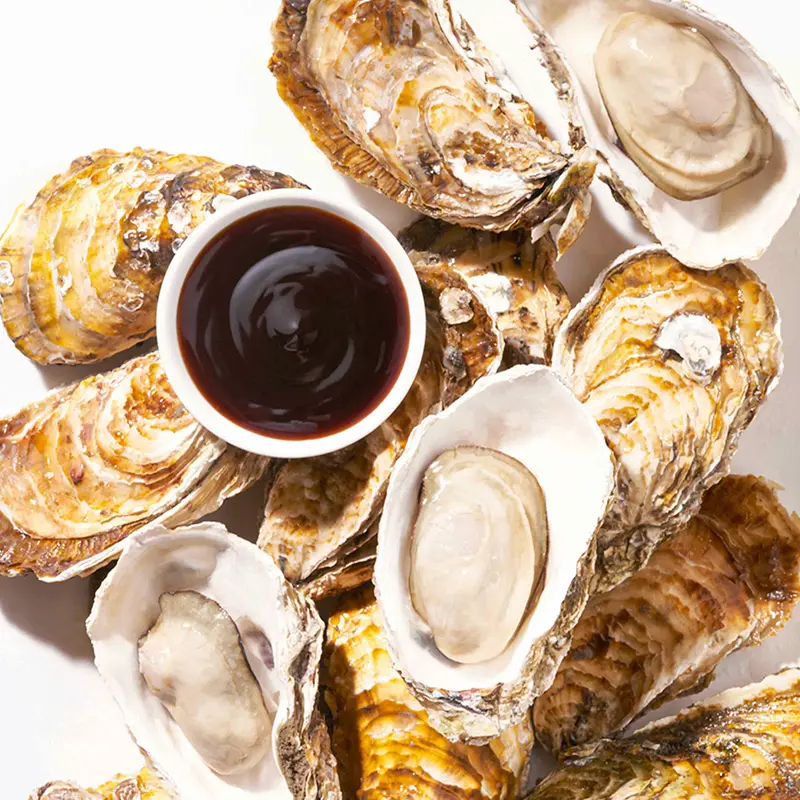
Compare Starch Levels Before Adjusting Xanthan Gum
Use the same ingredient lots, equipment and finished yield across the first trials. After selecting a starch level, compare xanthan at 0.10%, 0.15% and 0.20%, balancing water and holding the other variables fixed. These are proposed experiments, not measured performance results.
- Flow and viscosityRecord instrument, geometry or spindle, speed, temperature, sample age and preparation. Use one consistent method.
- Gloss and coatingUse the same lighting, application surface, sauce mass and drain time. Photograph samples consistently.
- Separation and storageRecord package, fill condition, temperature and observation intervals. Include the intended use conditions.
- Composition and yieldMeasure relevant solids, salt/sodium, pH and water activity with suitable methods. Record batch mass and sensory observations.
Set acceptance limits against your benchmark. Texture trials do not establish microbiological shelf life, a safe filling process or a guaranteed cost reduction.
07 / Procurement and technical review
Modified Starch Specifications and Purchasing Requirements
Build a purchasing brief around the grade that meets your trial target. Confirm technical and commercial details before scale-up.
Technical Specifications and COA
Request the exact grade specification, preparation instructions, representative COA and agreed batch acceptance criteria.Ingredient and Market Documentation
Request source, allergen and relevant market documentation. Review oyster, wheat and all compound ingredients in the finished sauce.Samples, MOQ and Lead Time
Confirm sample quantity, packaging, minimum order, production lead time, destination and quotation basis.Supply Volume and Change Control
Share monthly demand, required batch records, traceability and supplier change-notification expectations.
Grade availability, certifications and commercial terms are subject to confirmation.

08 / Formulation questions
Oyster Sauce Formulation FAQs
Practical questions from manufacturing, formulation and purchasing teams.
How Much Modified Starch Is Used in Oyster Sauce?
Tianjiang’s supplied internal range is 2.50–3.00% by weight. This page uses 2.75% as a screening midpoint. Final dosage depends on the exact grade, extract, salt, sugar, other thickeners and processing conditions.
Why Does Oyster Sauce Use Both Starch and Xanthan Gum?
They are separate formulation variables in the internal reference. Their combined contribution to body, flow and storage behavior should be assessed experimentally. Keep xanthan fixed during the initial starch comparison, then screen gum level separately.
Can Modified Starch Replace Oyster Extract?
Starch contributes texture; it does not replace oyster flavor or oyster-derived solids. Any change in extract level needs a separate flavor, composition and product-naming review.
Should I Choose Modified Corn Starch or Modified Tapioca Starch?
Ask for a grade matched to the full formula and production process. Compare candidate samples under the same conditions rather than assuming one botanical source always gives better gloss or salt tolerance.
How Can I Reduce Water Separation in Oyster Sauce?
Check water balance, starch cooking, ingredient specifications and the starch–gum combination. Compare finished samples at the same age and storage conditions before changing dosage.
Can This Formula Be Used for a Gluten-Free or Vegetarian Product?
The supplied formula includes wheat flour and oyster juice/extract. It is not a gluten-free or vegetarian formulation. A different product concept requires reformulation and verification of every ingredient, production control and intended claim.
Does High Salt Content Guarantee Shelf Life?
No shelf-life claim can be made from the listed salt percentage. The complete formulation, water activity, pH, thermal process, filling, packaging and storage require product-specific assessment and validation.
What Information Is Needed to Request a Starch Sample?
Send the current formula, extract specification, salt and solids targets, heating and mixing profile, package, benchmark texture, destination market and estimated starch demand. Include test methods and existing results if available.
09 / Talk to Tianjiang
Request Modified Starch Samples for Oyster Sauce
Prepare a technical brief and share it through our contact page. Describe the problem and how your team measures success so the candidate starch can be evaluated in a useful trial.
For the first discussion, prioritize the current formula, process profile, target texture and destination market.
Contact Tianjiang