
TIANJIANG / STIRRED YOGURT FORMULATION
Stirred Yogurt Formulation with Modified Starch
This stirred yogurt formulation uses Tianjiang modified starch with pectin and supporting hydrocolloids to help manufacturers build smooth spoonable viscosity, reduce syneresis and maintain consistent texture through fermentation, stirring, cooling and filling.
01 / DEFINE THE PRODUCT TARGET
Stirred Yogurt Solutions for Manufacturers and R&D Teams
Define spoonability, creaminess, serum separation, fruit compatibility, filling viscosity, storage temperature and desired shelf profile before selecting a starch system.
Manufacturing Consistency
Standardize milk composition, powder hydration, homogenization pressure, heat treatment, fermentation end point, curd breaking and cooling.
Texture Development
Balance modified starch, milk proteins, pectin and other stabilizers to achieve a smooth short texture without excessive gel strength or pastiness.
Procurement and Scale-Up
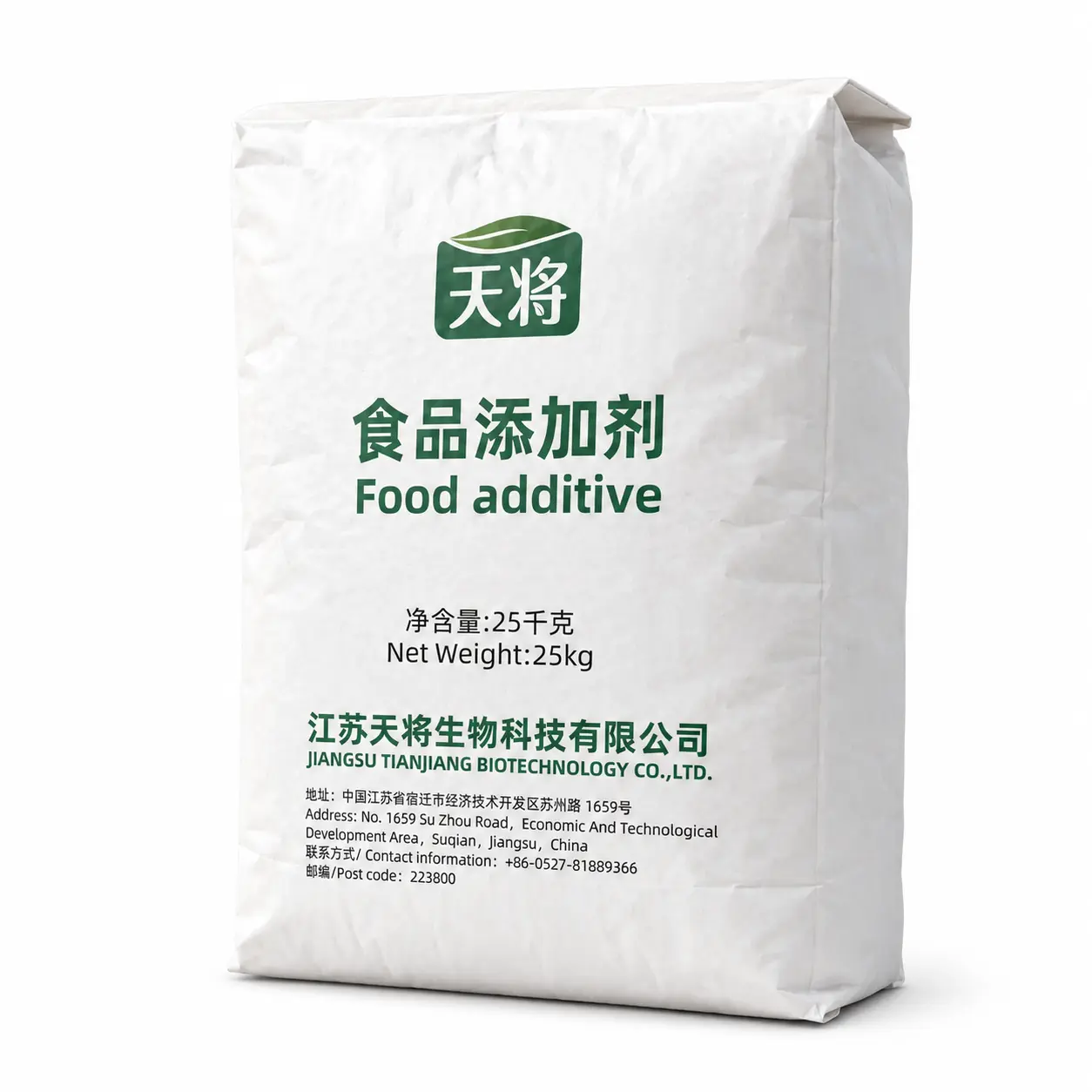
Connect the approved formulation with the exact Tianjiang starch grade, technical specification, COA, preparation requirements, packaging and commercial supply plan.
02 / TIANJIANG PRODUCTION-SCALE REFERENCE
Tianjiang Stirred Yogurt Production Formula
TJ-SY-01 converts Tianjiang's established stirred-yogurt application ranges into a defined production-scale formulation reference for industrial process evaluation.
TJ-SY-01 / 100 kg Production Reference
| Ingredient | Weight % | Primary Function |
|---|---|---|
| Whole milk | 91.00 | Primary dairy phase, protein, lactose and milk fat. |
| Sugar | 7.50 | Sweetness, fermentation substrate contribution and solids. |
| Tianjiang modified starch | 1.25 | Viscosity, creamy body, process tolerance and syneresis management. |
| Pectin | 0.12 | Protein stabilization and serum-control support. |
| Agar | 0.07 | Supports body and gel-network structure. |
| DATEM | 0.06 | Supporting emulsification and process functionality. |
| Formula subtotal | 100.00 | Starter culture added according to supplier recommendation. |
Starter culture is dosed according to the selected culture supplier and plant process. Where exact mass balancing is required, the inoculation quantity should be deducted from the whole-milk phase on the production batch sheet.
03 / SCALE THE FORMULA
Stirred Yogurt Formulation Batch Calculator
Scale TJ-SY-01 by batch size and compare sugar and Tianjiang modified starch levels. The calculator automatically rebalances the whole-milk phase to 100%.
TJ-SY-01 Production Calculator
Pectin, agar and DATEM remain fixed in the first comparison so the effect of modified starch can be evaluated more clearly.
| Ingredient | Formula % | Batch Mass, kg | Control Point |
|---|---|---|---|
| Whole milk | 91.00 | 91.000 | Automatically balances the formula. |
| Sugar | 7.50 | 7.500 | Hold constant during the first starch-grade comparison. |
| Tianjiang modified starch | 1.25 | 1.250 | Confirm exact grade, hydration and processing requirements. |
| Pectin | 0.12 | 0.120 | Keep grade and addition method fixed. |
| Agar | 0.07 | 0.070 | Use accurate low-level weighing. |
| DATEM | 0.06 | 0.060 | Confirm market suitability and ingredient declaration. |
| Total | 100.00% | 100.000 | Starter culture excluded from calculator subtotal. |
100 kg base · 7.5% sugar · 1.25% Tianjiang modified starch · 91.00% whole milk.
04 / MODIFIED STARCH PERFORMANCE
How Modified Starch Improves Stirred Yogurt Texture
The preferred starch should support viscosity and stability while remaining compatible with milk proteins, fermentation acidity, homogenization and post-fermentation shear.
Viscosity and Spoonability
Build the continuous-phase body required for a smooth, creamy stirred yogurt.Syneresis Control
Help reduce visible whey separation during distribution and refrigerated storage.Creamy Mouthfeel
Support smooth body without creating an excessively gummy or pasty texture.Heat Stability
Select a grade able to tolerate the high-temperature pre-fermentation treatment.Shear Resistance
Maintain useful viscosity after curd breaking, pumping, cooling and filling.Acid-System Compatibility
Evaluate the starch after fermentation, not only in the neutral milk base.
05 / COMMERCIAL MANUFACTURING
Stirred Yogurt Manufacturing Process
Control powder dispersion, homogenization, heat treatment, fermentation endpoint and post-fermentation shear to maintain consistent finished yogurt texture.
TJ-SY-01 Recommended Production Sequence
-
Standardize and preheat the milk
Charge the whole milk and preheat to approximately 55–60°C while maintaining controlled agitation.
-
Add the dry ingredients
Preblend sugar, Tianjiang modified starch, pectin and agar where appropriate. Disperse into the warm milk until no visible powder particles or agglomerates remain.
-
Homogenize the yogurt base
Homogenize the prepared milk base under the established production conditions. A Tianjiang reference range is approximately 15–20 MPa, or about 2,175–2,900 psi.
-
Heat treat the mix
Apply approximately 90–95°C for about 5 minutes under controlled processing conditions to develop the starch system and prepare the dairy base.
-
Cool, inoculate and ferment
Cool to the selected culture's fermentation temperature, inoculate, and ferment until the specified acidity endpoint is reached. For TJ-SY-01, pH 4.3 is the primary reference endpoint.
-
Break the curd and cool
Apply controlled gentle agitation to create the desired stirred texture, then cool promptly while minimizing unnecessary post-fermentation shear.

06 / DIAGNOSE THE FAILURE MODE
Stirred Yogurt Syneresis and Texture Troubleshooting
Do not correct every defect by simply increasing starch dosage. Identify whether the problem originates from protein structure, starch development, fermentation, shear or cooling.
| Observation | Factors to Investigate | Next Controlled Trial |
|---|---|---|
| Visible whey separation | Starch grade, pectin system, milk solids, fermentation pH, post-fermentation shear and storage history. | Compare equal samples after identical cooling and refrigerated storage. |
| Yogurt is too thin | Starch level, heat treatment, protein level, homogenization and excessive curd shear. | Compare 1.0%, 1.25% and 1.5% starch under identical processing. |
| Texture is gummy or pasty | Excess starch, agar contribution, pectin interaction and total solids. | Reduce one texture component at a time. |
| Texture becomes grainy | Powder dispersion, protein aggregation, acid development or excessive temperature stress. | Review the thermal and fermentation profile before adjusting starch. |
| Viscosity drops after stirring | Curd-breaking intensity, starch shear tolerance, pump selection and product temperature. | Compare viscosity before and after a standardized shear treatment. |
| Texture varies between batches | Milk composition, fermentation end point, cooling time, culture activity and shear history. | Standardize pH endpoint and process timing before changing the ingredient system. |
| Fruit addition causes thinning | Fruit acidity, soluble solids, fruit-preparation stabilizers and mixing intensity. | Evaluate the yogurt base and fruit preparation as a complete finished system. |
07 / SELECT BY PROCESS AND TEXTURE
How to Select Modified Starch for Stirred Yogurt
Share the milk composition, solids, homogenization conditions, heat treatment, fermentation endpoint and desired texture so Tianjiang can match the starch to the real production environment.
Heat Stability
The starch must tolerate the pre-fermentation heat-treatment profile without excessive breakdown.
Acid Stability
Evaluate finished viscosity and stability after the yogurt reaches its target pH.
Shear Resistance
Consider curd breaking, pumps, coolers, valves and filling equipment.
Modified Corn Starch
Suitable grades can provide robust viscosity, short texture and industrial process tolerance.
Modified Tapioca Starch
Suitable grades can be evaluated for smooth texture, creaminess and specific sensory requirements.
Commercial Documentation
Confirm exact grade, botanical source, specification, COA, certifications, labeling and destination-market requirements.
08 / CHOOSE THE CORRECT FINISHING ROUTE
Chilled vs. Heat-Treated Stirred Yogurt Processing
The post-fermentation process changes the microbiological status, labeling requirements and texture demands placed on the starch system.
Chilled Stirred Yogurt
After fermentation reaches the target pH, gently break the curd, cool rapidly, blend approved flavor or fruit preparation, fill, and maintain the finished product under refrigerated distribution.
Heat-Treated Fermented Dairy Product
For an ambient-style route, the fermented product may receive a controlled post-fermentation heat treatment before aseptic filling. TJ-SY process guidance includes a reference second heat treatment around 75°C for 30 seconds.
Verify Product Naming by Market
Post-fermentation heat treatment can affect live-culture status and the legal product name. Confirm the applicable yogurt or fermented-milk standard for each destination market.
09 / MAKE THE TRIAL COMPARABLE
Stirred Yogurt Formulation and Quality Testing
Compare candidate starches using identical milk composition, heat treatment, culture, fermentation endpoint, curd-breaking conditions and sample age.

Recommended Evaluation Points
- Viscosity Record instrument, spindle or geometry, speed, product temperature and sample age.
- Syneresis Measure visible whey separation after defined refrigerated storage intervals.
- Spoonability and flow Compare body, curd smoothness, cling and recovery after stirring.
- Post-shear viscosity Evaluate samples after a standardized curd-breaking or pumping treatment.
- Acidity endpoint Record pH at fermentation stop, cooling and finished-product testing.
- Sensory quality Evaluate creaminess, smoothness, starchiness, graininess and flavor release.
10 / MOVE FROM R&D TO PURCHASING
Modified Starch Specifications for Yogurt Purchasing
Once the preferred formula is selected, connect the application result with quality, procurement and production requirements.
Exact Grade Specification
Request the exact Tianjiang product, preparation instructions and technical specification.Representative COA
Review relevant acceptance parameters before production approval.Botanical Source
Confirm corn, tapioca or another declared starch source for the selected grade.Regulatory Documentation
Confirm ingredient designation, certifications, allergen information and destination-market fit.Commercial Terms
Confirm sample quantity, MOQ, packaging, lead time and quotation basis.Supply Planning
Share expected monthly demand, delivery destination and change-control needs.
11 / TECHNICAL QUESTIONS
Stirred Yogurt Formulation FAQs
Practical guidance for yogurt manufacturers, R&D teams and ingredient buyers evaluating modified starch.
How Much Modified Starch Is Used in Stirred Yogurt?
TJ-SY-01 uses 1.25% Tianjiang modified starch as its standard production reference. Tianjiang's formulation range is 1.0% to 1.5%, with the optimum level depending on milk solids, starch grade, stabilizer system, processing and target viscosity.
What Does Modified Starch Do in Stirred Yogurt?
An appropriate modified starch can support viscosity, creaminess, syneresis control, heat stability and resistance to post-fermentation shear.
Why Does Stirred Yogurt Release Whey?
Syneresis can be influenced by milk solids, protein structure, fermentation endpoint, starch and pectin selection, cooling rate, mechanical shear and storage conditions.
Why Does Yogurt Become Thin After Curd Breaking?
The gel structure is intentionally disrupted during stirred-yogurt production. Excessive shear, unsuitable starch selection, high product temperature or weak pre-fermentation structure can cause too much viscosity loss.
Can Modified Tapioca Starch Be Used in Stirred Yogurt?
Yes. An appropriate modified tapioca starch can be evaluated when its acid stability, heat tolerance, shear resistance and sensory profile match the application. Modified corn starch can also be screened.
Why Use Pectin Together With Modified Starch?
The ingredients perform different roles. Modified starch primarily contributes body and processing tolerance, while a suitable pectin system can support protein stabilization and control serum separation. Their interaction must be optimized in the complete formula.
What pH Should Stirred Yogurt Reach Before Cooling?
TJ-SY-01 uses approximately pH 4.3 as its process reference. The actual fermentation endpoint should be established around the culture, product specification, acidity target and plant process.
Can the Same Formula Be Used for Ambient Yogurt?
Not automatically. An ambient heat-treated fermented dairy product places different demands on starch, protein stability and post-fermentation processing. It should be evaluated as a separate process route.
12 / TALK TO TIANJIANG
Request Modified Starch Samples for Stirred Yogurt
Share your milk composition, stabilizer system, production process and texture target so Tianjiang can recommend a candidate modified starch grade.

Include current viscosity, syneresis result, pH endpoint, homogenization pressure and cooling conditions when available.
Contact TianjiangPrepare Your Stirred Yogurt Project Brief
13 / CONTINUE EXPLORING