
TIANJIANG / MOCHI BREAD FORMULATION
Mochi Bread Formulation with Modified Starch
This mochi bread formulation uses Tianjiang modified starch to help manufacturers develop a lightly crisp outer crust, soft and chewy interior, controlled volume expansion, strong shape retention and consistent texture through industrial baking and packaged distribution.

01 / DEFINE THE BAKING TARGET
Mochi Bread Solutions for Manufacturers and R&D Teams
Define the required balance between chewy texture, crust crispness, expansion, shape retention, internal porosity and shelf-life softness before selecting the starch system.
Dough Cohesiveness
Develop a dough that can be mixed, portioned and rounded consistently without excessive sticking or tearing.
Expansion & Shape
Generate enough oven expansion to create a light internal structure while limiting collapse and shrinkage after baking.
Shelf-Life Texture
Maintain a soft, elastic and chewy center after complete cooling, packaging and storage.
02 / FOUR GLOBAL MOCHI BREAD DIRECTIONS
Four Mochi Bread Formulation Platforms
The Tianjiang development system covers an original milk profile, Korean-style black sesame, cheese-flavored mochi bread and a packaged product designed for extended softness.
Original Milk Mochi Bread
A neutral baseline for evaluating chewiness, volume, internal structure and starch performance.
Korean-Style Black Sesame Mochi Bread
A nutty savory-sweet platform with black sesame, elastic crumb and a lightly crisp baked surface.
Cheesy Mochi Bread
A savory cheese platform designed for strong aroma, springy bite and controlled expansion.
Extended-Softness Packaged Mochi Bread
A higher-functional-starch platform for projects focused on slower firming, moisture retention and packaged distribution.
The four platforms are Tianjiang application-development references, not reproductions of another brand's formula. Final formulation must be optimized for the selected starch grade, bakery equipment, product weight, oven profile and target shelf life.
Mochi Bread Product Inspiration
Explore baked mochi bread formats, crusts, toppings and crumb structures. These product images are visual references, rather than documented results of the four formulation platforms above.

Baked mochi bread with a hollow interior and airy crumb.

A golden sesame mochi bread roll with a crisp, crackled crust.

Chocolate mochi bread with cookie crumbles and decorative dough swirls.

Golden sesame mochi buns presented on a rustic wooden plate.
03 / COMMERCIAL PRODUCTION REFERENCE FORMULA
Tianjiang Mochi Bread Production Formulas
Select a formulation platform, enter the production dough batch and compare modified-starch dosage while automatically maintaining a 100% formula balance.
Mochi Bread Formulation Batch Calculator
The comparison changes Tianjiang modified starch and automatically balances the difference through the main liquid phase. Keep dough temperature, portion weight and oven conditions constant during starch trials.
| Ingredient | Formula % | Batch Mass, kg | Primary Function |
|---|---|---|---|
| Total | 100.00% | 100.000 | Final dough |
TJ-MB-01 · 100 kg dough · 16.00% Tianjiang modified starch.
Ingredient percentages represent the starting dough formulation. Actual baked moisture, yield, volume and texture depend on mixing, portion weight, oven profile and post-bake cooling.
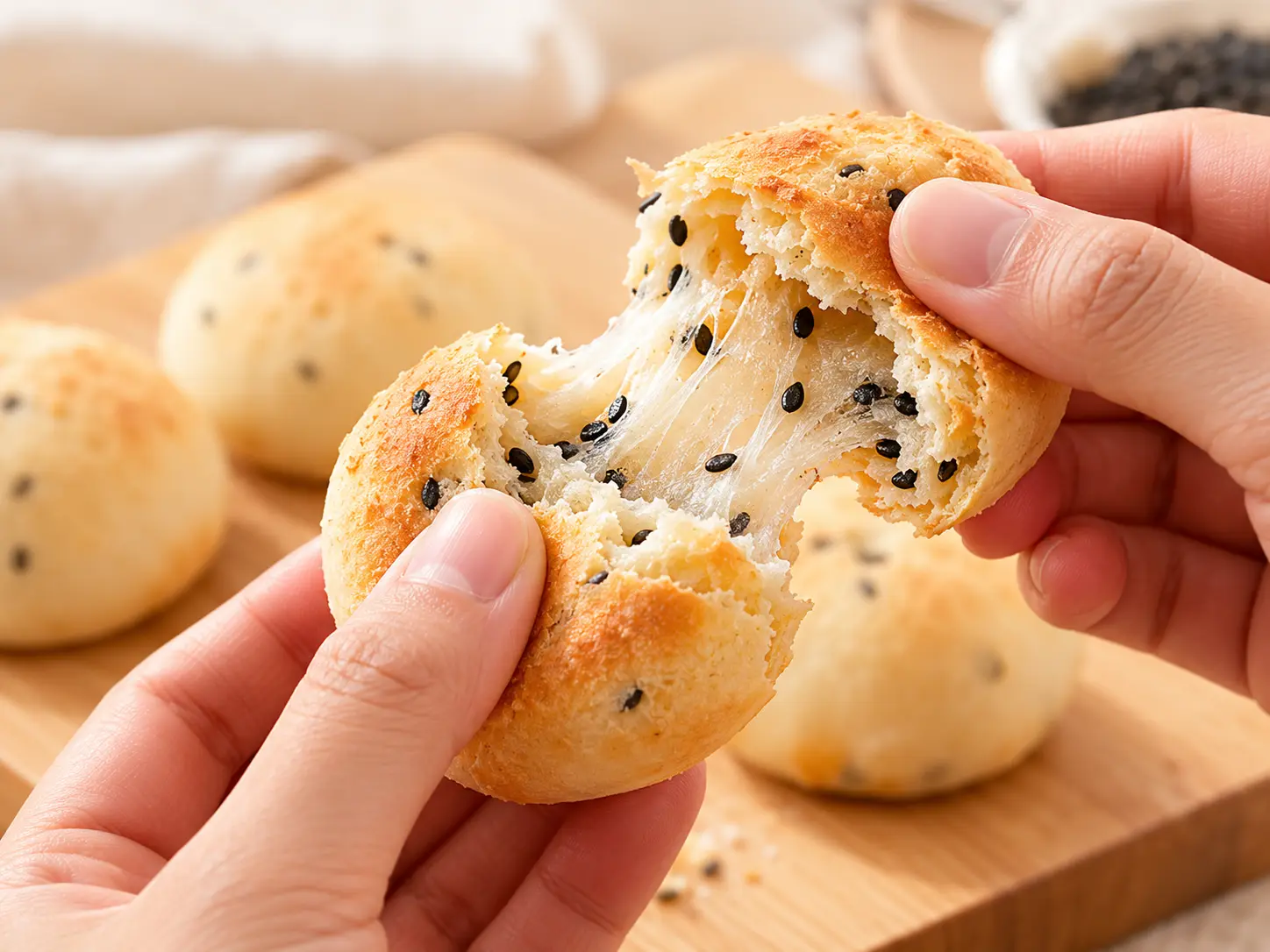
Hand-torn sesame mochi bread showing an elastic interior.
04 / MODIFIED STARCH PERFORMANCE
How Modified Starch Improves Mochi Bread Texture
The starch system must support the dough before baking, the expansion process in the oven, and the final chewy structure after cooling.
Dough Cohesiveness
Help produce a smooth, continuous dough for mixing, portioning and forming.Volume Expansion
Support steam-driven expansion and internal cell development during baking.Chewy Texture
Create the elastic, springy bite associated with mochi-style bakery products.Shape Retention
Reduce excessive collapse and shrinkage after removal from the oven.Moisture Retention
Help maintain a softer interior after cooling and storage.Anti-Staling
Select stabilized starch systems to slow the increase in firmness during shelf life.
05 / COMMERCIAL MANUFACTURING
Mochi Bread Manufacturing Process
Commercial consistency depends on controlled dry blending, liquid addition, dough development, portion weight, surface moisture and oven conditions.
-
Blend dry ingredients
Combine flour, native starch, Tianjiang modified starch, sugar, milk powder, salt and leavening uniformly.
-
Prepare the liquid phase
Blend whole egg, milk or water, oil and other liquid ingredients until homogeneous.
-
Develop the dough
Add the liquid phase to the dry blend and mix until the dough is smooth, cohesive and uniformly hydrated.
-
Add flavor particulates
Add black sesame, cheese powder or other inclusions after the primary dough structure has formed.
-
Portion and round
Control piece weight and surface smoothness to improve baking consistency.
-
Control surface moisture
Where appropriate, apply a light water spray before baking to support surface development.
-
Bake
Use approximately 175–185°C as an initial development range and adjust time to product weight and oven type.
-
Cool and package
Cool completely enough to avoid condensation before packaging or downstream filling.
Finished product references for flavor, filling and baked appearance.

Chocolate and red bean mochi bread — finished product reference.
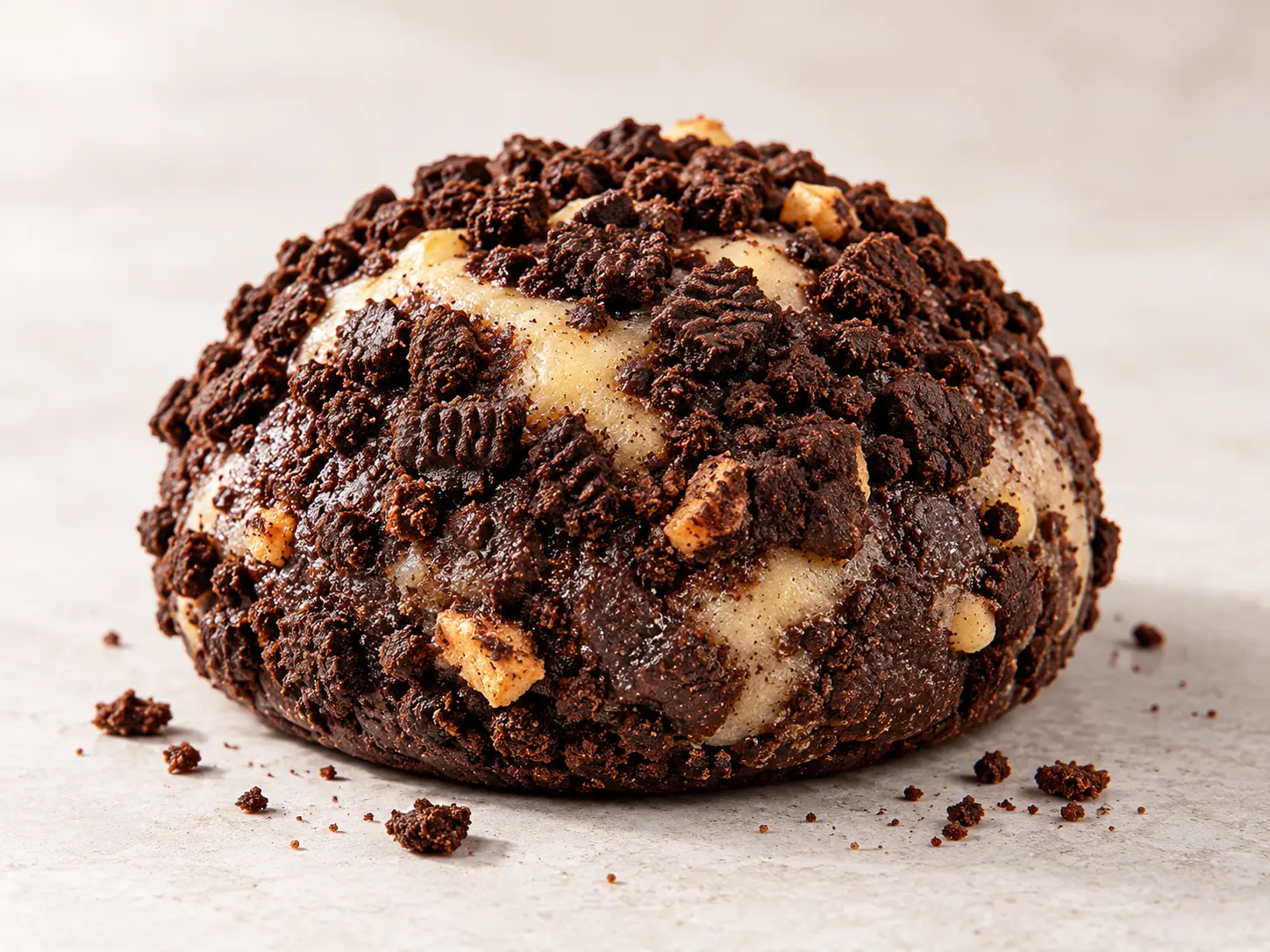
Matcha, almond and red bean mochi bread — finished product reference.
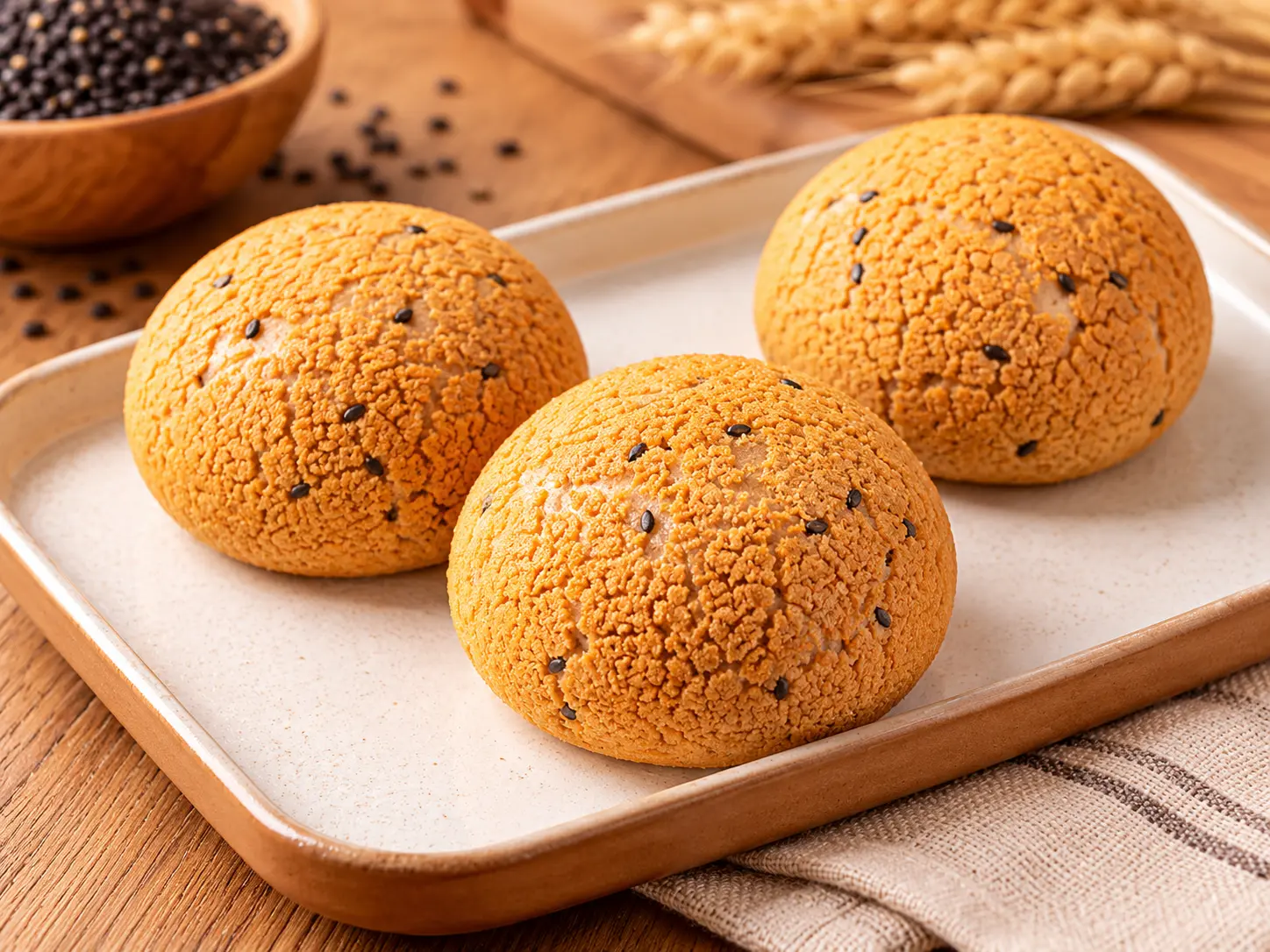
Baked sesame mochi buns — crust and finished shape reference.
Oven temperature and baking time must be validated for the specific dough weight, oven airflow, tray configuration and desired crust color.
06 / MEASURE THE COMPLETE BAKED STRUCTURE
Chewiness, Volume Expansion and Shape Retention
A strong mochi bread formula must balance expansion, internal chewiness and structural stability rather than maximizing a single texture parameter.
Specific Volume
Compare final product volume against piece weight after complete cooling.
Chewiness
Evaluate elastic resistance, springiness and clean bite at a standardized temperature.
Shape Retention
Measure shrinkage and collapse after the product leaves the oven.
Shelf Softness
Track hardness and moisture perception through the intended storage period.
07 / DIAGNOSE THE BAKING FAILURE
Mochi Bread Formulation Troubleshooting
Do not solve every problem by adding more starch. Hydration, egg, fat, mixing, portion size and oven profile all affect mochi bread.
| Observation | Factors to Investigate | Controlled Next Trial |
|---|---|---|
| Low oven expansion | Weak starch expansion, low hydration, dense dough or insufficient oven heat. | Standardize dough temperature and water level before changing starch. |
| Bread collapses after baking | Weak internal structure, excess water, under-baking or excessive expansion. | Compare shape retention at identical baked moisture. |
| Interior is too hard | Low water, excess structural starch or over-baking. | Reduce starch strength or increase hydration in a controlled trial. |
| Texture is too gummy | Excess modified starch, high moisture or incomplete baking. | Reduce functional starch by a small controlled increment. |
| Dough is too sticky | High liquid, dough temperature, starch hydration or insufficient structure. | Standardize final dough temperature before reducing water. |
| Crust becomes soft quickly | High baked moisture, insufficient cooling or packaging moisture migration. | Measure final moisture and cooling time. |
| Bread hardens during storage | Starch retrogradation, moisture loss or insufficient humectant balance. | Screen a more stabilized modified starch at equal moisture. |
| Large irregular internal voids | Uneven mixing, excess gas expansion or inconsistent piece weight. | Standardize mixing and portioning first. |
08 / SELECT STARCH BY BAKING TARGET
How to Select Modified Starch for Mochi Bread
Share the dough formula, starch system, piece weight, oven profile, target expansion, chewiness and shelf-life requirement so Tianjiang can screen an appropriate grade.
Expansion-Oriented Grade
Use where oven volume and internal porosity are the main development targets.
Chewy Texture Grade
Select for elasticity, springiness and characteristic mochi bite.
Shape-Retention Grade
Use where post-bake shrinkage or collapse is limiting commercial consistency.
Modified Tapioca Starch
Suitable grades can provide neutral flavor, cohesiveness, elastic texture and strong baking performance.
Anti-Staling Grade
Prioritize stabilized starch when slower hardening and moisture retention are required.
Freeze-Thaw Grade
Consider for frozen bakery distribution or products intended for reheating.
09 / STANDARDIZE EVERY TRIAL
Mochi Bread Formulation and Quality Testing
Compare candidate starches using identical dough temperature, piece weight, oven conditions and cooling time.

Cut-open sesame mochi bread — crumb structure reference.
- Dough consistency Record stickiness, cohesion and forming behavior.
- Specific volume Measure cooled bread volume against product weight.
- Shape retention Record height loss after complete cooling.
- Texture profile Evaluate hardness, springiness and chewiness.
- Moisture Compare baked moisture between trials.
- Shelf texture Evaluate day 0, day 1, day 3 and longer storage points as required.
10 / R&D TO PURCHASING
Modified Starch Specifications for Mochi Bread Purchasing
Once the preferred starch meets baking and shelf-texture targets, connect the application result with procurement and production requirements.
Exact Grade
Confirm Tianjiang modified starch grade and recommended dosage.Botanical Source
Confirm tapioca, potato, corn or other starch source.Representative COA
Review relevant quality and receiving parameters.Regulatory Documentation
Confirm additive designation, certifications and destination-market requirements.Commercial Terms
Confirm sample size, MOQ, packaging and lead time.Supply Planning
Share projected usage, production location and delivery market.
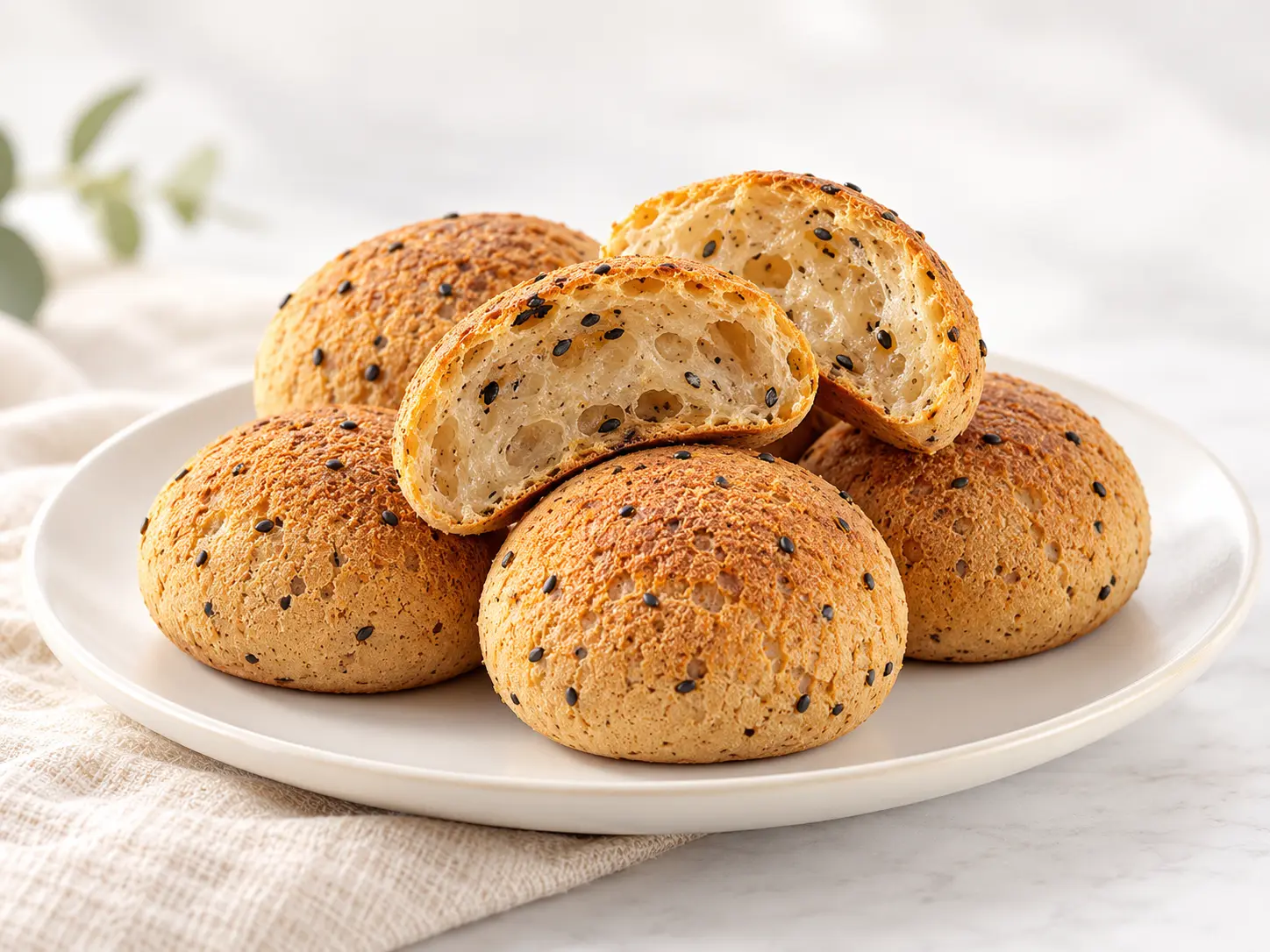
Sesame mochi bread with an airy interior — bakery trial reference.
11 / TECHNICAL QUESTIONS
Mochi Bread Formulation FAQs
Technical guidance for mochi bread manufacturers, bakery R&D teams and modified-starch buyers.
Why Is Modified Starch Used in Mochi Bread?
A suitable modified starch can support dough cohesiveness, mochi-like chewiness, baking expansion, shape retention, moisture retention and shelf-life texture.
What Is the Difference Between Mochi and Mochi Bread?
Traditional mochi is primarily a steamed or cooked rice-based elastic product. Mochi bread is a baked product that combines mochi-style chewiness with bread-like expansion and a baked crust.
How Much Modified Starch Is Used in Mochi Bread?
The Tianjiang development formulas on this page use approximately 14% to 18% modified starch in the total dough. The optimum level depends on the starch grade, native starch, flour, liquid content and texture target.
Can Modified Tapioca Starch Be Used in Mochi Bread?
Yes. Suitable modified tapioca starch is particularly useful where soft, elastic, chewy texture and good baking tolerance are required.
Why Does Mochi Bread Collapse After Baking?
Possible causes include insufficient internal structure, excess moisture, under-baking, excessive expansion or a starch system with weak post-bake shape retention.
Why Does Mochi Bread Become Hard During Storage?
Hardening can result from moisture loss, starch retrogradation, over-baking or an unsuitable starch system.
Can Tianjiang Modified Starch Be Used in Cheese Mochi Bread?
Yes. The starch system can be adjusted to maintain chewiness and expansion while accommodating cheese powder, milk solids and additional fat.
What Information Should I Send Tianjiang?
Share the current formula, starch dosage, piece weight, mixing method, oven temperature, baking time, target volume, texture requirement and shelf-life target.
12 / TALK TO TIANJIANG
Request Modified Starch Samples for Mochi Bread
Share your current mochi bread formulation and baking problem so Tianjiang can recommend a candidate modified starch grade.

Hand-pulled raisin mochi bread — texture target reference.
Prepare Your Mochi Bread Project Brief
13 / RELATED APPLICATIONS