
TIANJIANG / FROZEN STEAMED BUNS FORMULATION
Frozen Steamed Buns Formulation with Modified Starch
Frozen steamed buns formulation requires more than a soft fresh bun. The dough must retain gas-holding capacity, moisture, specific volume, softness and resilient texture through steaming, cooling, freezing, frozen distribution and final reheating. Tianjiang modified starch is designed to help manufacturers control these changes.

01 / DESIGN FOR THE FROZEN LIFE CYCLE
Frozen Steamed Buns Formulation for Manufacturers and R&D Teams
A successful frozen bao must survive fermentation, steaming, cooling, freezing, frozen storage and reheating while maintaining a soft white crumb and resilient structure.
Specific Volume
Maintain a light, well-developed crumb after frozen storage and reheating.
Softness
Reduce excessive post-freeze hardness and dry mouthfeel.
Springiness
Protect elastic recovery and avoid a dense or crumbly bite.
Moisture Retention
Control water migration through cooling, freezing and reheating.
Surface Quality
Reduce cracking, wrinkling and rough skin after reheating.
Filling Stability
Control sauce migration, syneresis and leakage in filled bao products.
02 / FOUR COMMERCIAL FROZEN BUN SYSTEMS
Four Frozen Steamed Buns Formulation Platforms
The platforms cover plain frozen bao, savory meat-filled buns, sweet custard buns and plant-based vegetable bao.
Photos illustrate bun shapes and surface appearance. Fillings are described in the formulations below and are not visible in these exterior product photographs.

Soft Plain Frozen Bao
A soft white unfilled bao platform designed for high volume, smooth surface, moist crumb and reliable steam or microwave reheating.

Frozen BBQ Pork Bao
A savory filled bao designed for soft bun skin, good filling containment, reduced sauce migration and stable frozen reheating.
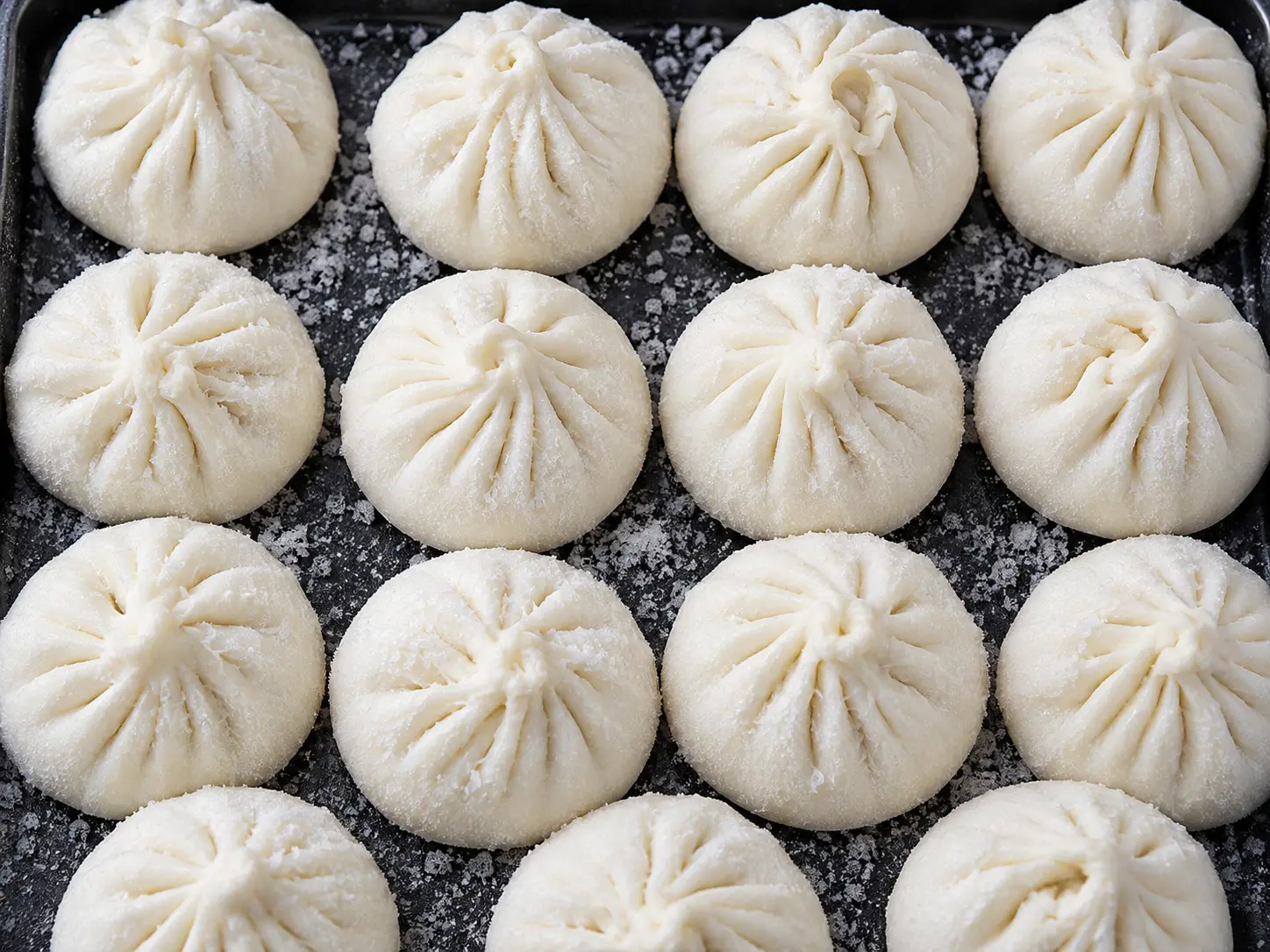
Frozen Sweet Custard Bun
A sweet filled steamed bun platform designed for pillowy dough, smooth custard texture and reduced filling leakage after freezing.
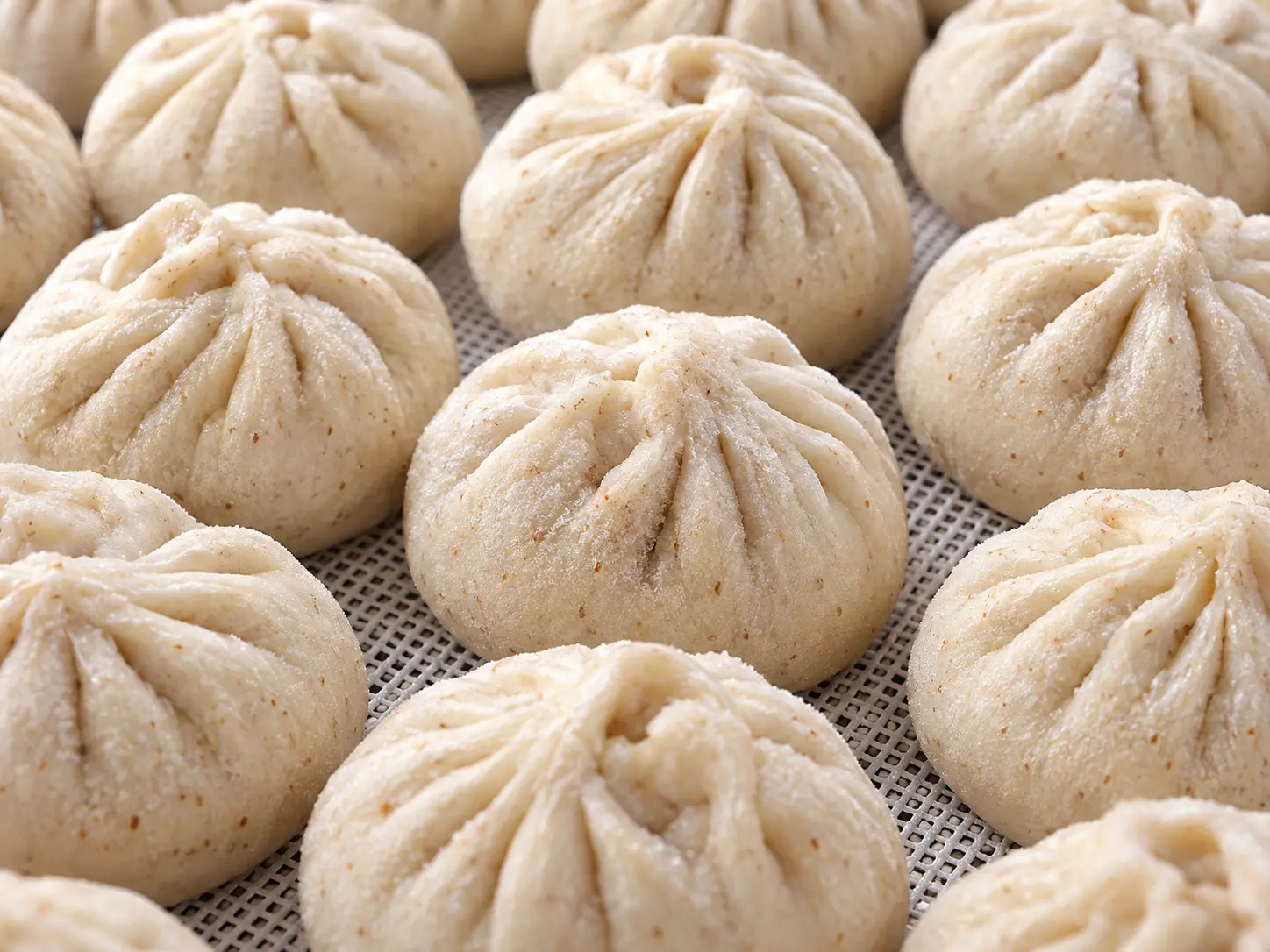
Frozen Vegetable Bao
A plant-forward frozen bao platform designed for soft reheated texture, controlled vegetable moisture and stable filling containment.
The formula platforms are Tianjiang application-development formulations based on commercial frozen-bun ingredient structures, frozen-dough science and steamed-bun processing principles. They are not copies of third-party proprietary formulas. Final commercial specifications should be confirmed under the manufacturer's actual flour, freezing, packaging and reheating conditions.
03 / ADVANCED PRODUCTION FORMULATION
Advanced Frozen Steamed Buns Formulation Batch Calculator
Calculate the complete bun dough and filling system from a target production batch, then adjust modified starch, hydration, shell-to-filling ratio and unit weight for controlled factory trials.
Frozen Steamed Buns Production Calculator
A. Bun Dough Formula
| Ingredient | Baker's % | Production Mass | Primary Function |
|---|---|---|---|
| Total Dough | — | — | Before proofing and steaming |
B. Filling Formula
| Ingredient | Filling % | Production Mass | Primary Function |
|---|---|---|---|
| Total Filling | 100.00 | — | Prepared filling before forming |
TJ-FSB-01 ready.
Use this calculator for controlled application trials. When comparing starch grades, keep flour lot, dough temperature, mixing energy, proofing degree, steaming load, cooling time, freezing rate and reheating method constant.

04 / MODIFIED STARCH PERFORMANCE
How Modified Starch Improves Frozen Steamed Buns
During freezing, water redistributes and ice crystals place mechanical stress on the gluten-starch matrix. The right modified starch helps manage this water and preserve a softer, more resilient bun structure.
Water Management
Reduce uncontrolled water migration during freezing and reheating.Lower Hardness
Help reduce dense, dry or tough texture after frozen storage.Springiness
Support elastic recovery after steaming and reheating.Specific Volume
Support the gas-cell structure required for light fluffy buns.Retrogradation Control
Select appropriate starch to help manage starch recrystallization during storage.Filling Stability
Use functional starch in savory or sweet fillings to control viscosity and water release.
05 / COMMERCIAL FROZEN BUN PROCESS
Frozen Steamed Buns Manufacturing Process
For the fully cooked frozen route, control each stage from dough mixing through reheating validation. The freezing stage should be treated as part of product formulation, not merely storage.
-
Dry Blend
Uniformly combine wheat flour, Tianjiang modified starch, native starch and dry ingredients.
-
Mix & Hydrate
Add water gradually and develop a continuous, extensible dough.
-
First Fermentation
Allow controlled fermentation while avoiding excessive gas loss or overproofing.
-
Divide & Form
Portion accurately and maintain consistent bun-skin thickness.
-
Deposit Filling
For filled buns, control filling temperature, viscosity and shell-to-filling ratio.
-
Final Proof
Proof to the required volume and dough condition before steaming.
-
Steam
Steam uniformly until the bun structure is fully set and the product process is validated.
-
Controlled Cooling
Remove heat without excessive surface condensation or dehydration.
-
Rapid Freezing
Move through the major ice-crystal formation zone as efficiently as plant capability allows.
-
Frozen Storage
Maintain a stable validated frozen cold chain and minimize temperature cycling.
-
Reheat Validation
Test both steaming and microwave routes when both are intended for the market.
-
Final Quality Release
Check volume, surface, texture, filling stability and sensory quality.
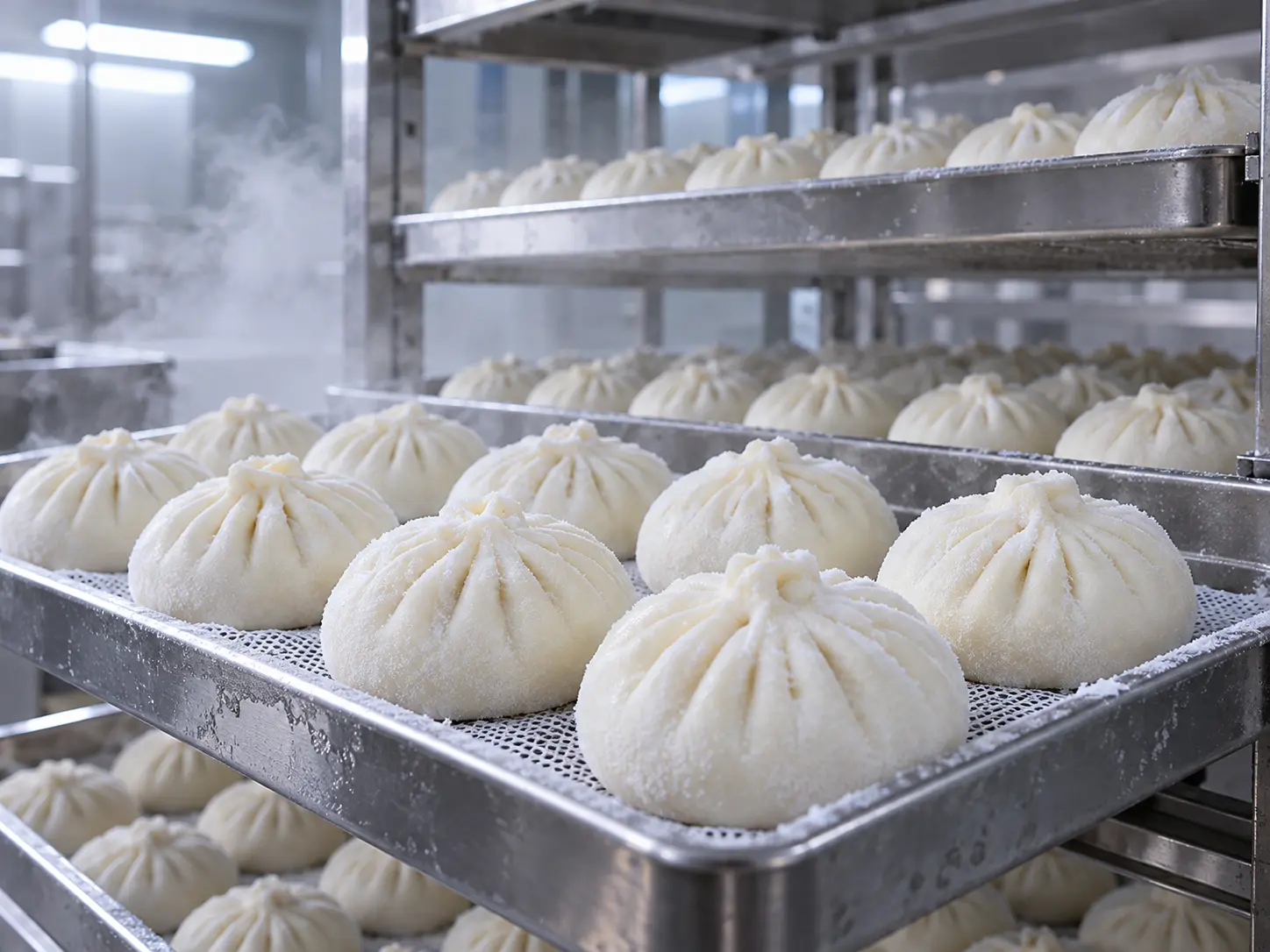
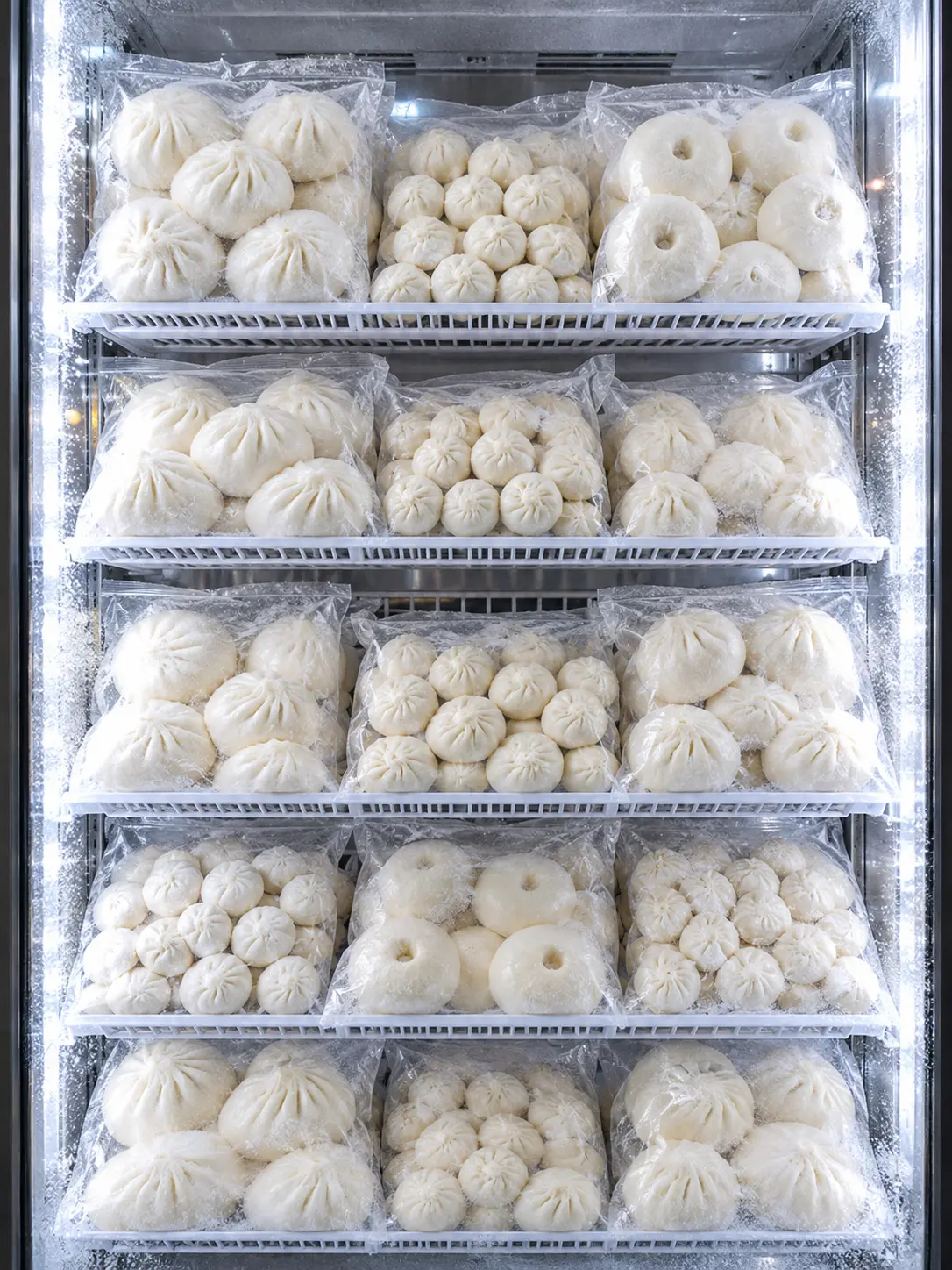
Production Trays & Frozen Product Handling
Tray arrangements, cold-storage settings and frozen bun surfaces provide visual references alongside the process guide.


06 / TEST THE COMPLETE FROZEN LIFE CYCLE
Freeze-Thaw and Reheating Quality Testing
Do not approve a modified starch from fresh-bun texture alone. The candidate should be tested after the intended frozen storage and reheating process.
Specific Volume
Compare bun volume before freezing and after final reheating.
Hardness
Measure compression force after standardized frozen storage and reheating.
Springiness
Evaluate crumb recovery after compression and repeated freeze-thaw stress.
Moisture
Track moisture loss and redistribution through storage.
Surface Cracking
Record skin cracking, wrinkling and collapse.
Crumb Structure
Compare pore size, uniformity and internal density.
Filling Syneresis
For filled products, measure water release, leakage and shell wetting.
Reheat Recovery
Compare steam and microwave texture recovery.
07 / DIAGNOSE THE FROZEN-BUN FAILURE
Frozen Steamed Buns Formulation Troubleshooting
Standardize flour, proofing, steam load, cooling, freezing and reheating before changing modified-starch dosage.
| Observation | Possible Causes | Controlled Next Trial |
|---|---|---|
| Buns become hard after frozen storage | Water migration, starch retrogradation, freezing damage or excessive dehydration. | Screen a freeze-thaw-stable Tianjiang modified starch at constant hydration. |
| Specific volume decreases | Yeast damage, weak gluten network, overproofing or freeze-thaw stress. | Standardize proofing and freezing profile before adjusting starch. |
| Surface cracks after reheating | Moisture loss, rapid cooling, poor skin elasticity or severe freezing stress. | Review water level, fat system and starch functionality. |
| Crumb becomes dense | Poor gas retention, underproofing, overmixing or frozen-dough damage. | Measure proofing volume and crumb structure. |
| Bun becomes sticky after steaming | Excess surface moisture, oversteaming or excessive starch swelling. | Check steam load and starch stability. |
| Filling leaks into the bun skin | Low filling viscosity, syneresis or insufficient gel stability. | Evaluate Tianjiang filling starch and reduce free water. |
| Microwave-reheated bun is dry | Rapid moisture loss, low water binding or unsuitable heating profile. | Compare water retention and microwave time. |
| Quality drops after temperature cycling | Repeated ice-crystal growth and melting damages the structure. | Stabilize the cold chain and run controlled freeze-thaw testing. |
08 / SELECT STARCH BY FROZEN-BUN TARGET
How to Select Modified Starch for Frozen Steamed Buns
Share flour protein, dough hydration, proofing process, steaming parameters, freezing route, frozen-storage target and reheating method so Tianjiang can screen the appropriate grade.
Freeze-Thaw Grade
For buns requiring better texture after long-term frozen storage.
Softness Grade
For formulas where excessive hardness develops after reheating.
Water-Retention Grade
For dry crumb and microwave moisture-loss problems.
Modified Tapioca Starch
Useful where softness, elasticity and moisture management are priorities.
Modified Corn Starch
Can be evaluated for crumb structure, processing stability and filling viscosity.
Filling-Stability Grade
For meat, vegetable, custard and sauce-rich fillings requiring controlled viscosity.

Pleat Definition & Frozen Surface Appearance
Include surface appearance and shape retention in your product review. Evaluate cracking and reheating quality through controlled trials.
09 / R&D TO PURCHASING
Modified Starch Specifications for Frozen Bun Manufacturers
Once the candidate starch passes production, freezing and reheating trials, convert the result into a controlled purchasing specification.
Exact Tianjiang Grade
Confirm product code and approved dosage.Botanical Source
Confirm tapioca, corn, potato or other starch source.Dough or Filling Use
Specify whether the starch is used in bun skin, filling or both.Freeze-Thaw Target
Define storage length, temperature and reheating route.Representative COA
Confirm incoming quality parameters.Commercial Planning
Confirm sample size, MOQ, packaging, lead time and monthly usage.
10 / TECHNICAL QUESTIONS
Frozen Steamed Buns Formulation FAQs
Technical guidance for frozen-bun manufacturers, R&D teams and ingredient buyers.
Why Is Modified Starch Used in Frozen Steamed Buns?
Suitable modified starch can support water management, softness, springiness, crumb structure and freeze-thaw stability during frozen storage and reheating.
How Much Modified Starch Is Used in Frozen Bao Dough?
The Tianjiang development platforms on this page use approximately 6–8 parts modified starch per 100 parts wheat flour. The optimum dosage depends on flour quality, hydration, fat level, freezing route and required reheating performance.
Can Modified Starch Reduce Hardness After Freezing?
Suitable starch systems can help manage water distribution and starch restructuring, which can support a softer reheated texture. Performance should be confirmed after the intended frozen-storage period.
Why Do Frozen Steamed Buns Lose Volume?
Frozen storage can damage yeast activity, the gluten network and starch-water structure. Overproofing, slow freezing and repeated temperature cycling can further reduce finished volume.
Can Modified Starch Be Used in Bao Fillings?
Yes. Suitable modified starch can help control filling viscosity, water release, sauce migration and leakage during freezing and reheating.
How Can Microwave-Reheated Bao Stay Softer?
Moisture retention, bun size, starch selection, packaging and microwave heating conditions all influence the result. The formula should be validated using the exact consumer reheating method.
Should Frozen Bao Be Frozen Before or After Steaming?
Both commercial routes exist. Frozen raw dough places greater stress on yeast and dough structure, while fully steamed frozen buns require strong texture recovery after reheating. The formulation should match the manufacturer's chosen route.
What Information Should I Send Tianjiang?
Share wheat-flour protein, water level, sugar, fat, current starch, proofing conditions, steaming conditions, freezing method, storage target, filling type and intended reheating method.
11 / TALK TO TIANJIANG
Request Modified Starch Samples for Frozen Steamed Buns
Share your current frozen steamed buns formulation, processing route and frozen-storage problem so Tianjiang can recommend a candidate starch for the next production trial.

Prepare Your Frozen Bun Project Brief
12 / RELATED FROZEN FOOD APPLICATIONS
Related Frozen Food Applications
Frozen Rice Balls
Modified starch solutions for freeze-thaw stability, moisture retention and reheated texture.
Frozen Dumplings
Modified starch solutions for wrapper strength, filling stability and frozen processing.
Bread Applications
Modified starch solutions for softness, moisture retention and bakery texture.